Sourcing Tools for Recruiters: What Each Layer Actually Does
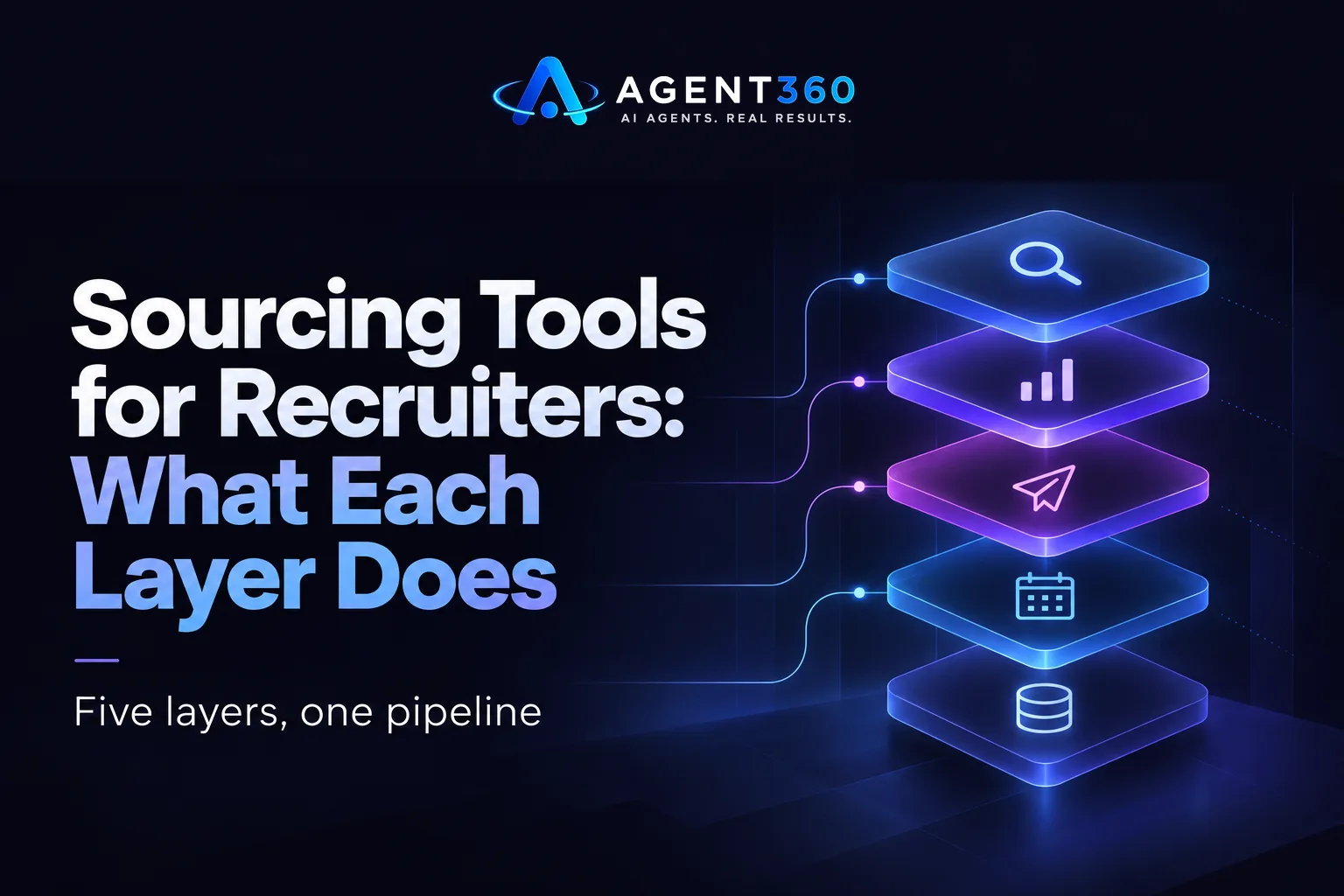
Sourcing tools for recruiters do one of three jobs: find people, decide which of them fit, or get a reply out of them. Most teams buy a tool for the first job, slap “sourcing software” on it, and then wonder six months later why the pipeline is full of names nobody ever answered. All three jobs need covering. It doesn't matter if one person is doing all three with three different tabs open — it matters that nothing falls through the gap between them.
Here's the breakdown, and what to actually look for in each layer.
What tools are commonly used by recruiters?
Strip away the brand names and a recruiter's toolkit usually has five pieces:
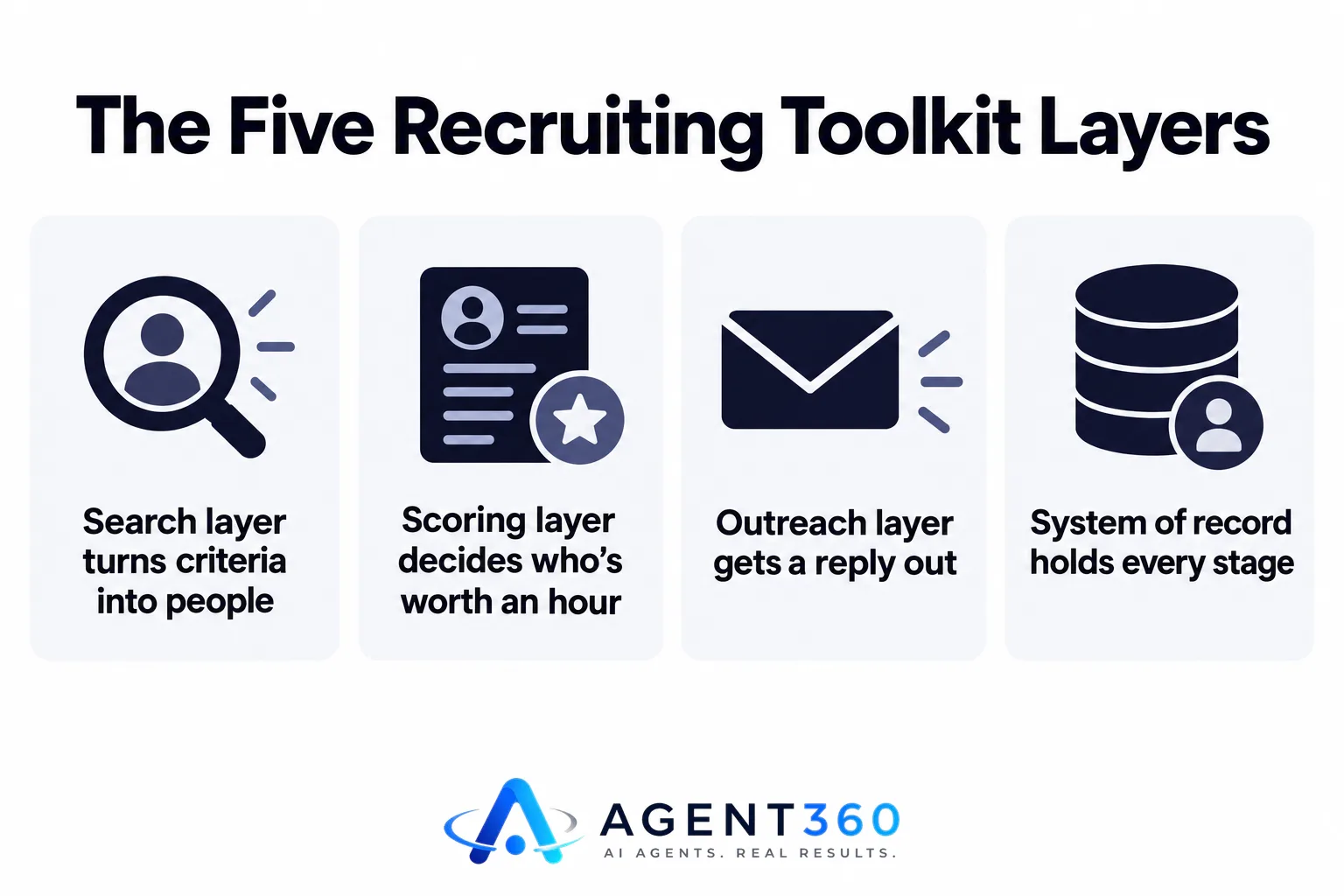
- A search layer — something that turns a job description or a set of criteria into a list of people. This is boolean search, X-ray search against indexed profiles, or a database of public professional profiles searched by title, skill and seniority.
- A scoring or screening layer — a way to decide, before you spend an hour on the phone, which of the 80 people you found are worth the hour. This is resume parsing, match scoring, or a human doing the same thing manually at 11pm.
- An outreach layer — email finders, sequencing tools, or just a well-organized inbox, used to actually contact people once you've found and ranked them.
- A scheduling and first-screen layer — booking links and a way to run a first conversation without a 12-email back-and-forth to find a time.
- A system of record — the applicant tracking system that holds every candidate, every stage, every note, so the search layer's output doesn't evaporate into a spreadsheet nobody updates.
The mistake most teams make: buying tool one and tool five and skipping everything in between. You end up with a long candidate list and a clean pipeline — with nothing moving between them, because scoring and outreach were supposed to happen “manually” and never do, not at volume. If you're sizing up what a modern setup should look like end to end, a modern ATS is supposed to close that gap rather than just store names.
What are some effective sourcing techniques for recruiters?
Tools don't source candidates. Techniques do — the tool just makes the technique faster. Here's what still works:
- Search on the role's real signals, not the job title. “Account Executive” means three different jobs at three different companies. Search on years in quota-carrying seats, deal size and vertical instead, and you'll surface people whose titles don't match but whose experience does.
- Build the filter from the job description, not from memory. A description written for a candidate to read and a search string built from the same description for a recruiter to run are two different documents that should say the same thing. When they drift apart, the search finds people who wouldn't actually pass the screen.
- Re-run searches, don't run them once. The person who wasn't on the market in January might be looking in March. A search that runs once and sits in a spreadsheet is a snapshot; a search that runs again when the role is still open is a pipeline.
- Filter for open-to-work signals before you filter for anything else. A perfect-fit passive candidate who isn't looking converts at a fraction of the rate of a good-fit candidate who is actively job hunting. Who's open to work is often a better first filter than seniority.
- Go wide on titles, narrow on substance. Marketing and ops roles especially have title chaos across companies — search five adjacent titles and let scoring, not the title field, decide who's close.
None of this is exotic. It's ordinary stuff — filtering, re-running, scoring — done consistently enough to compound. Passive candidate sourcing rewards patience over cleverness, especially; the people worth hiring usually aren't checking job boards.
Boolean search is still the baseline most tools are built to replace
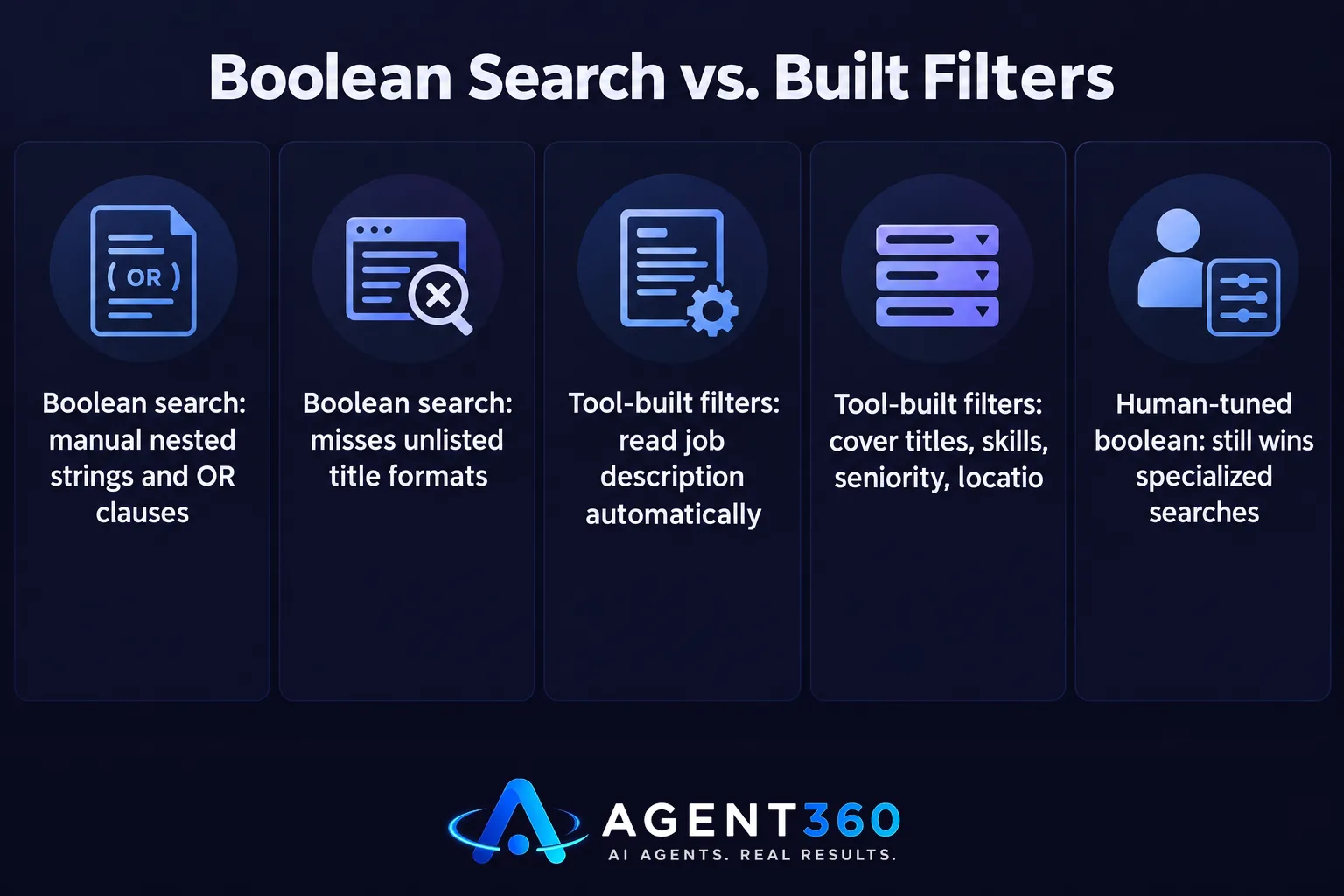
Write a search string with four nested parentheses and six “OR” clauses to cover every spelling of a job title, and you already know the problem. Boolean search is powerful and brittle at the same time. Miss one title format and an entire slice of qualified candidates never shows up in the results — not because they don't exist, but because the string didn't ask for them. Tools that read a job description and build the filters for you — titles, skills, seniority, years, location — exist to remove that fragility. The trade-off: you give up some manual control over the exact string in exchange for not missing people over a formatting guess. For most roles, that trade is worth making. For a handful of highly specialized searches, a human-tuned boolean string still wins. See what a boolean search alternative actually changes before deciding which approach a given role needs.
Pick the layer you're missing, not the tool with the most features
Before adding anything to the stack, write down where candidates actually die. Long list of sourced people, empty calendar? You're missing scoring and outreach, not more search volume. Full calendar, hires that still take forever? The system of record is probably the gap — candidates are getting lost between stages because nothing moves them automatically. Buying a tool that's strong where you're already covered just adds another login. Not more hires.
HiringAgent covers three of those five layers in one place: it reads your job description to build the search, scores every candidate it finds from 0 to 100 against the role, and tracks everyone — sourced or applied — through the same pipeline, with an AI phone screen handling the first call. It won't replace a system you've already standardized on across other departments, and it's not an outreach sequencer for cold email at scale. But if your gap is specifically the search-score-track loop, that's exactly what it's built for. See how it compares to a search-only tool like LinkedIn Recruiter before stacking it on top of what you already pay for.
What are the top 10 recruiting tools?
There isn't one top 10 that holds up across industries, team sizes and role types. A list built for a 500-person tech company's TA team looks nothing like what a three-person agency needs. Skip the ranking. Match tools to the layer they fill: a search/sourcing tool, a scoring step, an outreach sequencer, a scheduler, a system of record. Pick one per layer that fits your volume and your budget, and you'll end up with a better stack than any copied top 10.

What are the 5 C's of recruitment?
Different trainers teach the “5 C's” with slightly different words, but they map to the same lifecycle: clarify the role, communicate it to the right people, create interest among candidates who weren't looking, build credibility through a fast and respectful process, close the hire before a competing offer does. The words shift by source. The sequence doesn't — clarity, reach, interest, trust, close holds up regardless of who's teaching it.
More articles
- Is It Legal to Use AI in Hiring? Here's What Applies
- Hiring With AI: What It Can and Can't Decide
- First-Round Interview Questions That Predict Fit, Not Charm
- How to Write a Job Description That Attracts Candidates
- What a Job Description Generator Should Actually Write
- How to Hire Your First Employee Without Guessing
- Hiring Without a Recruiter: What It Actually Takes
- Recruitment Agency Software Is Usually Three Tools, Not One
