Hiring Without a Recruiter: What It Actually Takes

Hiring without a recruiter is realistic for almost any role below VP, and the money is the smaller part of it. Agencies typically charge 15 to 25 percent of first-year salary — skip one on a $90,000 hire and you keep somewhere between $13,500 and $22,500 in the business. But the real prize is control: who gets seen first, how fast. The real cost is that someone on your team now owns four jobs a recruiter used to handle out of sight — writing the role so it attracts the right people, finding candidates who aren't applying anywhere, running first-round calls, keeping the pipeline from going cold. Here's where that work actually lands, and where founders tend to underestimate it.
A vague job description is why your pipeline is thin, not the market
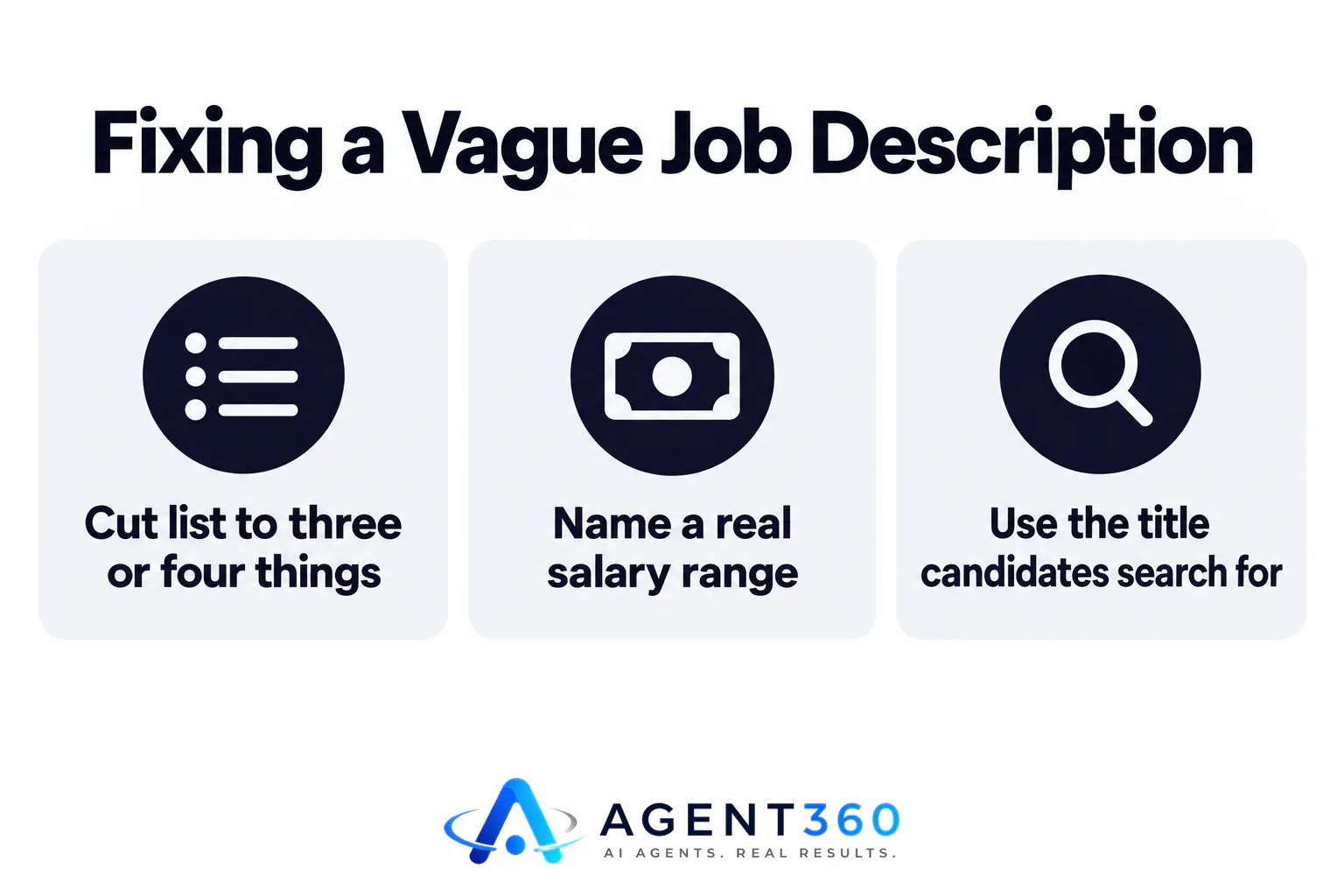
Most self-run searches fail before a single outreach message goes out. The posting lists ten nice-to-haves, no salary range, and a title that doesn't match how candidates search for their own jobs. A recruiter would have rewritten it in the first conversation. Without one, that edit is yours: cut the list to the three or four things that actually determine success in the first 90 days, name a real range, and use the title your target candidates put on their own profile — not the one on your org chart. A job description generator can get you a working draft fast. The editing — cutting it down to what actually matters — is still yours to do.
Sourcing without a recruiter means doing the search yourself or renting the labor
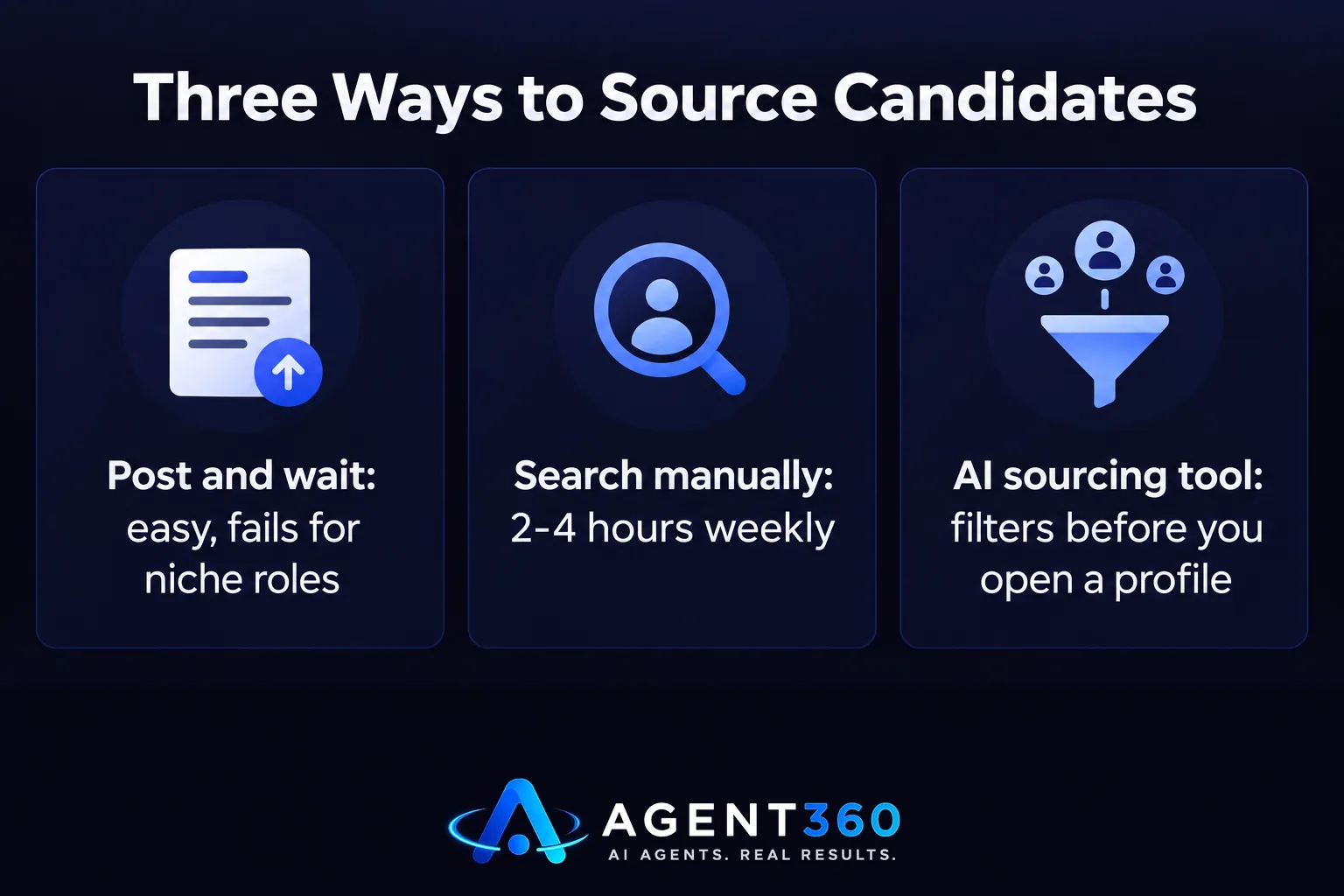
A recruiter's core value is a search most founders never run: boolean strings across LinkedIn, old applicant databases, and a personal network built over years. Without one, you've got three options. Post and wait — fine for roles with high applicant volume, and quietly a failure for anything senior or niche. Search manually — real hours, plan on two to four a week per open role if you're doing it by hand with any seriousness. Or use a tool that turns the job description itself into the search, the way AI candidate sourcing does, so the filtering happens before you ever open a profile. None of these is free. The question is whether the cost shows up as money, as your calendar, or as a worse hire because the search never really happened.
Reach out on week two, not day one
Founders who source their own candidates tend to message everyone the day the list is built. A recruiter wouldn't make that mistake. The first message to a passive candidate needs to reference something specific — a project, a prior company, a skill the role actually needs — and writing that well across even twenty profiles takes time.
Spend the first few days sorting the list by fit instead. Flag the strongest ten and send those messages one at a time. Batch the rest with a template later in the week. A specific message to a strong-fit candidate gets a noticeably higher response than a generic one sent to everyone at once, and you only have the patience to write specific messages for a short list, not a long one.
Screen on the phone before anyone gets on video
Without a recruiter filtering first, the temptation is to put every promising resume straight on your own calendar. That's how a 30-minute first call quietly eats four hours of a founder's week. A short phone screen — 15 to 20 minutes, 8 to 10 questions pulled directly from the job description — catches what a resume hides: a title that doesn't match the seniority, a skill claimed but never actually used, a salary expectation nobody disclosed. Keep this step separate from the interview you actually want to run. If you don't have the hours to do it yourself for every candidate, an AI phone screen can run that first pass on your schedule instead of theirs, and your team only meets the people who clear it — see how AI phone screening works before you decide whether to build this step or skip it.

Decide now what you will never do yourself
Some parts of a recruiter's job are worth keeping even if you're running everything else in-house. Reference checks on a finalist take an hour and catch problems a resume never will. Salary negotiation on a close call benefits from someone who isn't the candidate's future manager. If you're hiring across multiple functions at once — sales, engineering, operations — the patterns differ enough that it's worth reading how the search changes by role before you write one generic process for all of them; role-specific guidance covers what signals matter for each. Pick your non-negotiables before the search starts, not after a candidate is already asking about comp.
Where software closes the gap a recruiter used to fill
HiringAgent exists for exactly this gap: AI candidate sourcing and a modern ATS in one, built for teams hiring without a recruiter on staff. Paste a job description and it sources candidates from public professional profiles, scores each one 0–100 against the role, runs the first phone screen once a candidate books a time, and tracks everyone from applicant to hired in a single pipeline. Plans start at $197 a month, unlimited users, no contract — a fraction of a single placement fee, laid out on the pricing page. It won't negotiate an offer or run a reference check, and it won't decide who gets hired. Your team still owns every judgment call. It replaces the hours, not the decisions.
FAQ
Is it realistic to hire without a recruiter for a senior role?
Yes, but budget more hours for sourcing specifically. Senior candidates rarely apply anywhere; they have to be found and messaged individually, which is the exact work a recruiter's fee usually covers.
How long should a self-run search take before you reconsider?
If you have fewer than five qualified candidates after two full weeks of active sourcing and outreach, the job description or the search itself needs to change — don't keep running the same search a third week hoping for a different result.
What's the single most common mistake founders make hiring solo?
Skipping the phone screen and moving every promising resume straight to a full interview. That single shortcut is what quietly turns hiring into a part-time job.
More articles
- Recruitment Agency Software Is Usually Three Tools, Not One
- Recruiting Software for Agencies: What to Buy
- Recruiting Funnel Metrics That Predict a Bad Hire
- The Time to Hire Metric: What It Measures, What It Hides
- How to Reduce Time to Hire Without Lowering the Bar
- How to Screen Candidates Faster Without Lowering the Bar
- A Boolean Search Alternative for Recruiters Who Are Done With Strings
- What Passive Candidate Sourcing Actually Takes
