First-Round Interview Questions That Predict Fit, Not Charm

A first-round interview has exactly one job: decide who earns another 45 minutes of your team's time. It's not where you test culture fit, probe deep technical skill, or sell someone on the company — save that for round two. Three things matter here, in this order: can the person do the work, do they actually want this job, and is there a disqualifier — location, pay, start date — worth catching now instead of in week three.
Ask what they actually did, not what they would do
“How would you handle an angry customer?” gets you a rehearsed answer. “Tell me about the last time a customer was angry with you — what happened, and what did you do?” gets you a real one. Hypotheticals reward good interviewers. Past behavior rewards people who've actually done the job. Pick two or three recent, specific moments tied to the role's core responsibility — skip the general character questions.
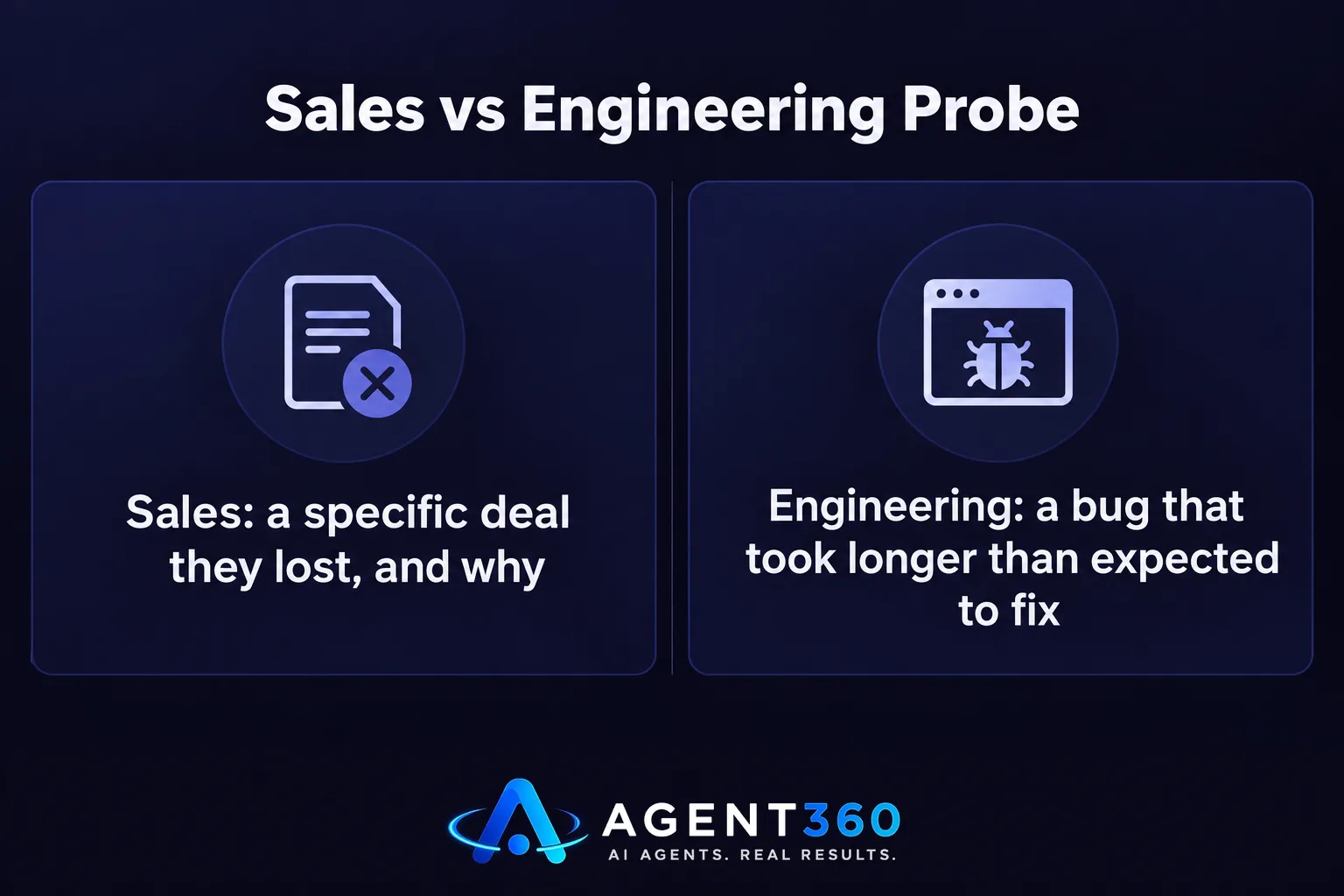
It matters more for some roles than others. For sales, dig into a specific deal they lost, and why. For engineering, ask about a bug that took longer than expected to fix and what they tried first. Write the questions off the actual job description, not a template pulled from somewhere else — if you're already sourcing candidates against that description, the gaps the match score flags make a decent starting list of what to probe.
What are the 5 star interview questions?
This usually means STAR-format behavioral questions — Situation, Task, Action, Result — not a literal list of five. The structure is what's useful: ask for the situation, then stop talking and let the candidate walk through what they were responsible for, what they actually did, and what happened. Weak candidates go vague on the Action step and jump straight to a happy ending. Strong candidates tell you exactly what they decided, why, and what they'd do differently now.
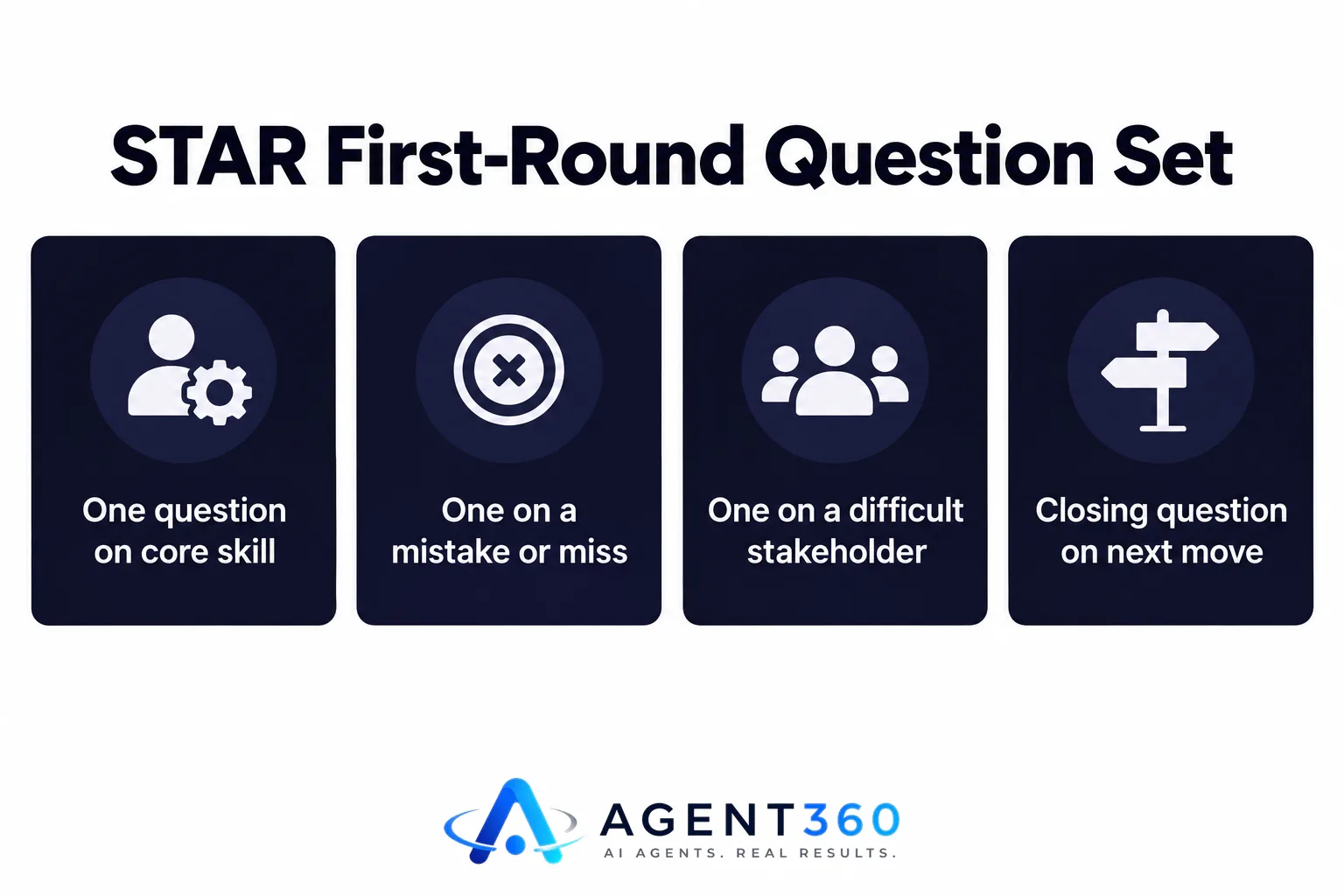
A practical first-round set: one STAR question on the role's core skill, one on a mistake or miss, one on a difficult stakeholder, and a closing question on what they're optimizing for in their next move. Four questions, twenty-five minutes. No more.
What are some good questions to ask in a screening interview?
A screening interview is shorter and more logistical than a full first round — keep it that way. Good screening questions check the must-haves before anyone invests real time:
- What are you currently doing day-to-day, and how much of it overlaps with this role?
- Why are you looking now, and what would make the next move worth it?
- What's your timeline, and does the compensation range we've posted work for you?
- Walk me through one thing on your resume that's most relevant to this job.
- Is there anything about the location, schedule, or travel that would be a problem?
None of these are trick questions, on purpose. A screen eliminates on fact, not on performance — save the harder behavioral questions for the full first round, once logistics check out.
What are the 5 P's of interviewing?
There's no single official version, but most takes land on the same five lenses: Past performance, Problem-solving, Personality, Potential, and Pay or logistics. Used well, it's a check against drift — it's easy to spend forty minutes on rapport and personality and learn nothing about whether the person can do the job. Run through all five, briefly: one past-performance question, one problem posed on the spot, a read on how they communicate, one question on where they want to grow, and confirmation on pay and start date. One question per P is plenty for a first round.
Keep the first round to five questions and thirty minutes
Longer first rounds don't make for better decisions. They produce fatigue and halo effects — an interviewer who liked the first ten minutes starts scoring everything else generously. A tight structure (one must-have check, two behavioral questions, one logistics question, five minutes for their questions) is enough to tell a strong candidate from a weak one. If you still can't tell after five focused questions, the problem is usually the job description, not the interview. Vague requirements produce vague answers.

Automate the screen, keep the judgment
Most of the logistics in a first round — scheduling, the same opening questions every time, confirming the basics — doesn't need a person doing it live. HiringAgent's AI phone screen sends candidates a booking link, calls them at the time they pick, and asks eight to twelve questions written from your actual job description. When the call ends, the candidate's status moves to screened, and your team listens or reads notes and decides who earns the real first round. No recording, no transcript, no AI making the advance call — it just handles the repetitive first pass so your team's thirty minutes goes to people worth it. The mechanics are in the AI phone screening guide.
Questions people ask
What are some good questions to ask in a screening interview? Ask about current role overlap, reason for looking now, timeline, pay expectations, and location or schedule constraints. Save behavioral and skill-based questions for the full first-round interview once those basics are confirmed.
What are the 5 star interview questions? STAR refers to a question format — Situation, Task, Action, Result — not a fixed set of five questions. Ask candidates to walk through a specific past situation and press for what they personally did and what resulted, rather than what they would hypothetically do.
What are the 5 P's of interviewing? There's no single standardized version, but most frameworks cover Past performance, Problem-solving, Personality, Potential, and Pay or logistics — a reminder to touch all five instead of spending the whole interview on rapport alone.
The questions change by role; the structure doesn't — compare how that plays out for sales versus engineering hires.
More articles
- How to Write a Job Description That Attracts Candidates
- What a Job Description Generator Should Actually Write
- How to Hire Your First Employee Without Guessing
- Hiring Without a Recruiter: What It Actually Takes
- Recruitment Agency Software Is Usually Three Tools, Not One
- Recruiting Software for Agencies: What to Buy
- Recruiting Funnel Metrics That Predict a Bad Hire
- The Time to Hire Metric: What It Measures, What It Hides
