What a Job Description Generator Should Actually Write
Most job description generators don't fail on grammar. They fail on specifics — the title, the pay band, the three tasks the role actually does, who it reports to. Feed a generator those and it has something real to work with. Skip them, and it fills the page with “fast-paced” and “self-starter” and other words that describe nothing. The description reads fine. It tells a candidate nothing true about the job. And that's exactly why the applicants who respond are often wrong for it.
The fix isn't to avoid generators. It's knowing what to feed one, and what to throw out before you post the result.
Feed it five facts, not a vibe
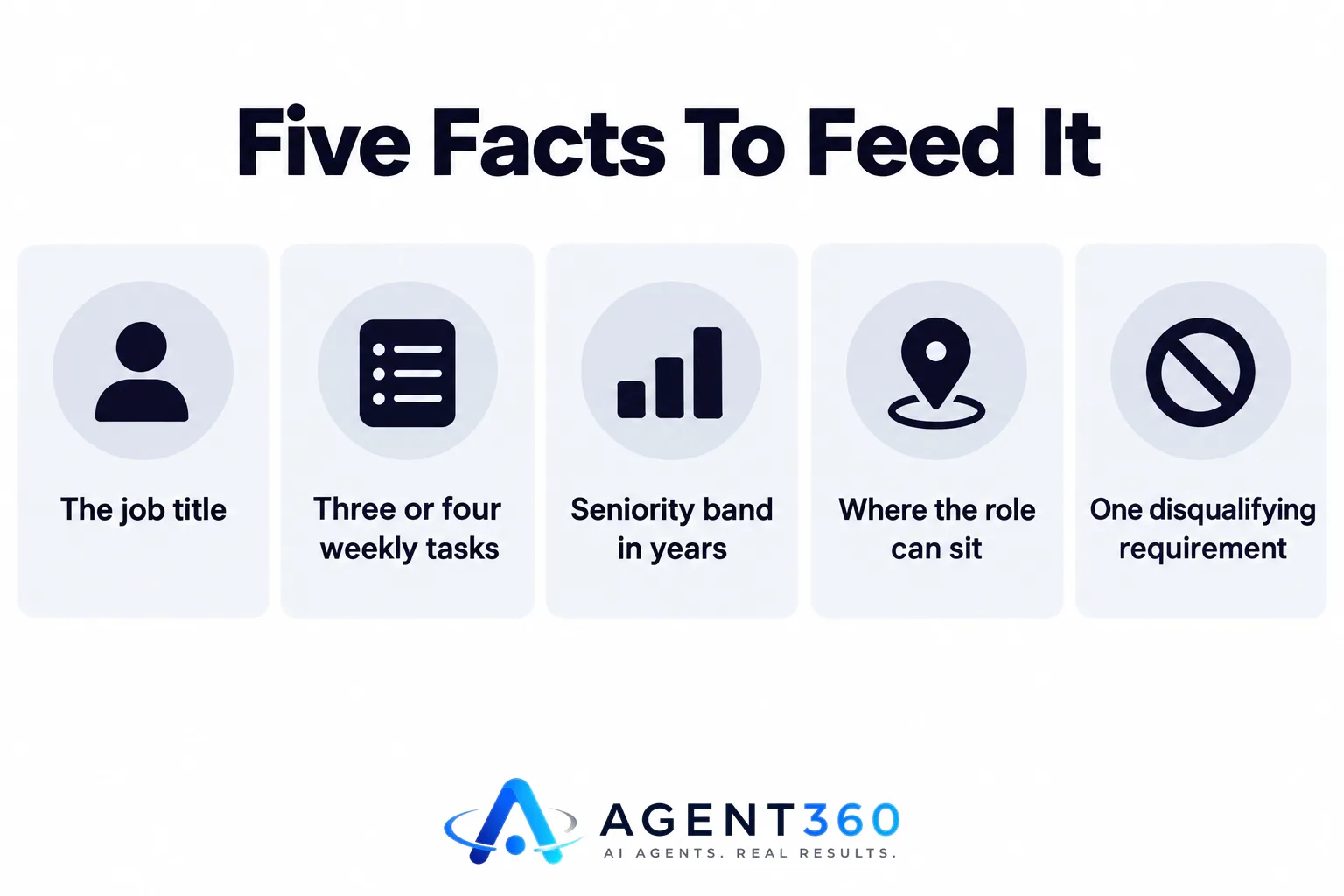
Give a generator the inputs a hiring manager actually knows — a recruiter usually has to pry these out in a meeting — and the draft improves fast: the title, the three or four tasks that eat up most of a week in the role, the seniority band in years, where the role can sit (remote, hybrid, on-site and where), and one thing that would disqualify a candidate outright. Five facts, and it has real material. Type “write me a job description for a mid-level marketing manager” and it will invent the rest. Plausibly. Often wrong.
This matters more when the title alone is ambiguous. A “marketing manager” at a ten-person startup and a “marketing manager” at a 500-person company are different jobs wearing the same title tag. A generator that doesn't know your headcount, your stack, or who the role reports to will write the generic version. Not yours.
Strip the adjectives before you strip the requirements
The easiest edit on any generated draft is also the one most people skip: delete every word describing the candidate's personality instead of the job's output. “Thrives in ambiguity,” “passionate about,” “rockstar” — none of it filters anyone out, and none of it tells a qualified person whether to apply. What actually filters people is a requirements list with real thresholds: years of experience with a specific tool, a certification, willingness to be on-call, a location constraint. Cut the adjectives first. Keep the thresholds — even the ones that feel restrictive. They're doing more sourcing work than any sentence about culture ever will.
This is also where a lot of descriptions quietly scare off good candidates. A requirements list padded with ten “nice to haves” reads like a bar nobody could clear, and strong applicants walk away before applying. A generator that pulls in every possible skill is being thorough, not accurate. Someone still has to decide which three or four actually matter and cut the rest.
The real test is whether it can drive a search, not just a read
A description that only has to look good on a careers page clears a low bar. One meant to drive a search has to clear a higher one: titles a search can use, skills stated as discrete terms instead of buried in a sentence, a seniority band stated as years instead of “experienced.” That's the gap between writing for a reader and writing something that becomes a set of search filters — and it's worth writing the second kind even before you're sourcing, because it forces the same precision a strong applicant is already looking for.
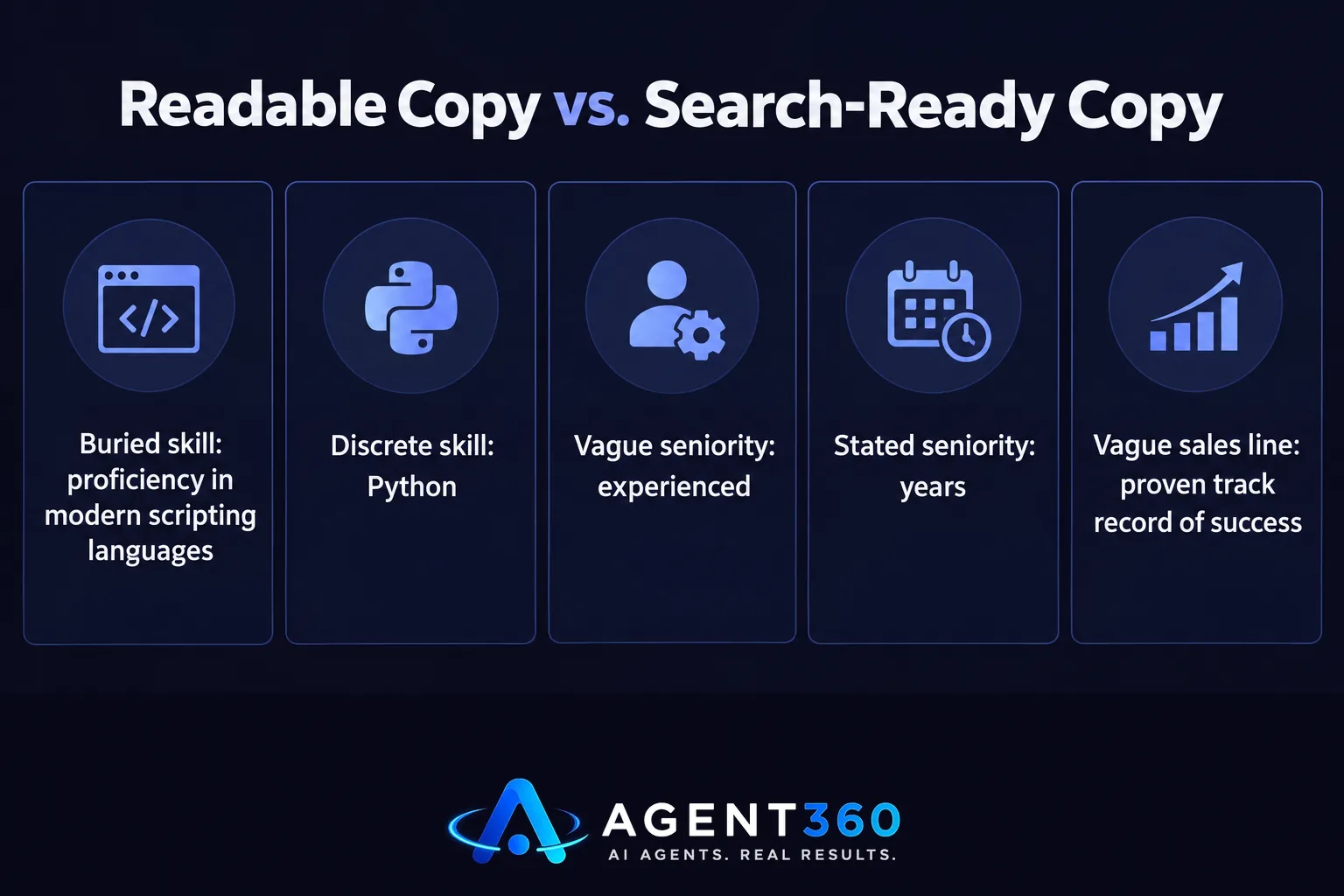
This is the gap between a generator that just writes copy and one built to feed a sourcing step. A description built for engineering roles that lists “Python” as a skill, rather than burying it inside “proficiency in modern scripting languages,” is a description a search engine — human or AI — can actually use. Same logic for sales roles: “5+ years quota-carrying SaaS sales” does more work than “proven track record of success” ever could.
Where HiringAgent fits
HiringAgent's Job Writer Agent takes a title and a few notes and writes the description — or you paste your own — and either way that same description then drives sourcing, match scores and the AI phone screen. The specifics you put in at the start carry through every later step instead of sitting dead on the page. Vague description, vague sourcing filters. One more reason to get the inputs right before you generate anything.
What to check before you post it
Read the generated draft once for truth, not tone. Does the pay band match what you'll actually offer? Does the seniority language match the budget, or did the generator write a senior-sounding description for a role priced at mid-level — a mismatch that wastes everyone's time on the first screening call? Is there a disqualifying requirement stated plainly, or buried in a paragraph a candidate in a hurry will skip right past and apply anyway? None of this is something a generator catches, because it doesn't know your budget or your team. That part stays manual. Every single time.

Questions
What should I put into a job description generator to get a usable draft?
Give it the title, the three or four tasks that take up most of the role's week, the seniority band in years, where the role can sit, and one disqualifying requirement. A generator working from those five things writes a far more specific draft than one working from a title alone.
Can a generated job description be used to source candidates automatically?
Only if it's written in search-usable terms — discrete skills, stated seniority in years, clear titles — rather than narrative language. A description that reads well but buries its requirements in prose gives a sourcing step little to search on, whether that step is a person or an AI sourcing tool.
How long should a generated job description be?
Long enough to state the role's tasks, the requirements that actually disqualify someone, pay band and location — usually 250 to 400 words. Longer drafts tend to pad with adjectives and a wish list of nice-to-haves that talk good candidates out of applying.
More articles
- How to Hire Your First Employee Without Guessing
- Hiring Without a Recruiter: What It Actually Takes
- Recruitment Agency Software Is Usually Three Tools, Not One
- Recruiting Software for Agencies: What to Buy
- Recruiting Funnel Metrics That Predict a Bad Hire
- The Time to Hire Metric: What It Measures, What It Hides
- How to Reduce Time to Hire Without Lowering the Bar
- How to Screen Candidates Faster Without Lowering the Bar
