A Talent Sourcing Strategy That Doesn't Start at Zero
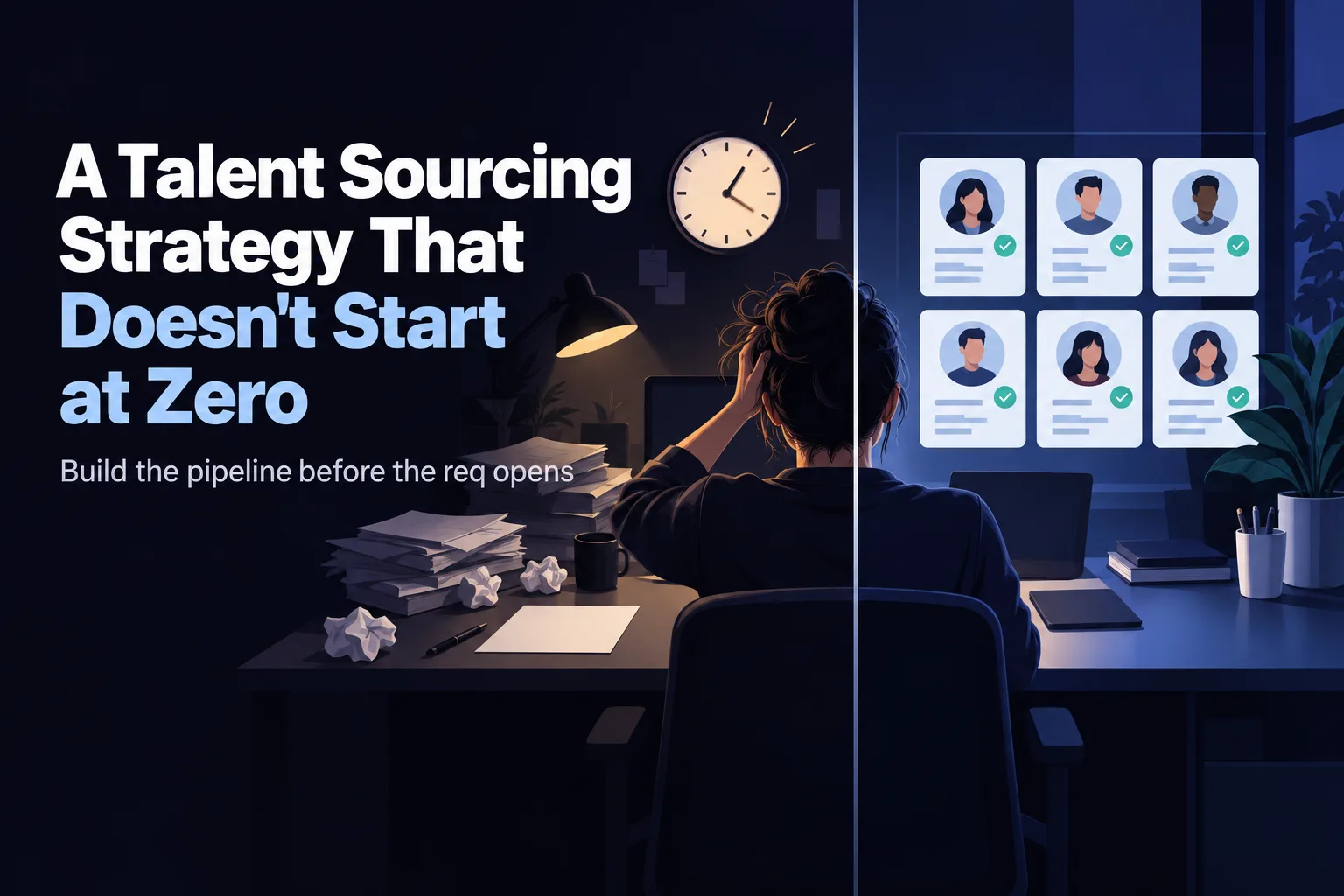
Here's the test: if sourcing only starts once a role is approved, you don't have a strategy. You have a scramble with a head start of zero. A real talent sourcing strategy is the standing plan for finding candidates before a role opens — which role families get a pipeline on a schedule, which channels get used for which seniority, and who owns refreshing the list.
Most teams call their reactive process a strategy because it has steps. Post the role. Search LinkedIn. Email a shortlist. Repeat for the next opening. The steps aren't the problem. The timing is. Every one of them starts from nothing, every single time, for roles the company has hired for a dozen times before.
Treat recurring roles as a standing pipeline, not a fresh search each time
If you hire the same handful of role families every quarter — SDR, mid-level backend engineer, ops analyst — each one deserves a pool that exists before the req does. Refreshed on a schedule, not built from scratch against a deadline. The search work that normally happens in week one of an open role should have happened weeks earlier, against the pattern, not the specific opening. That's the single biggest lever on time to hire — not faster screening, but not starting the clock at zero in the first place.
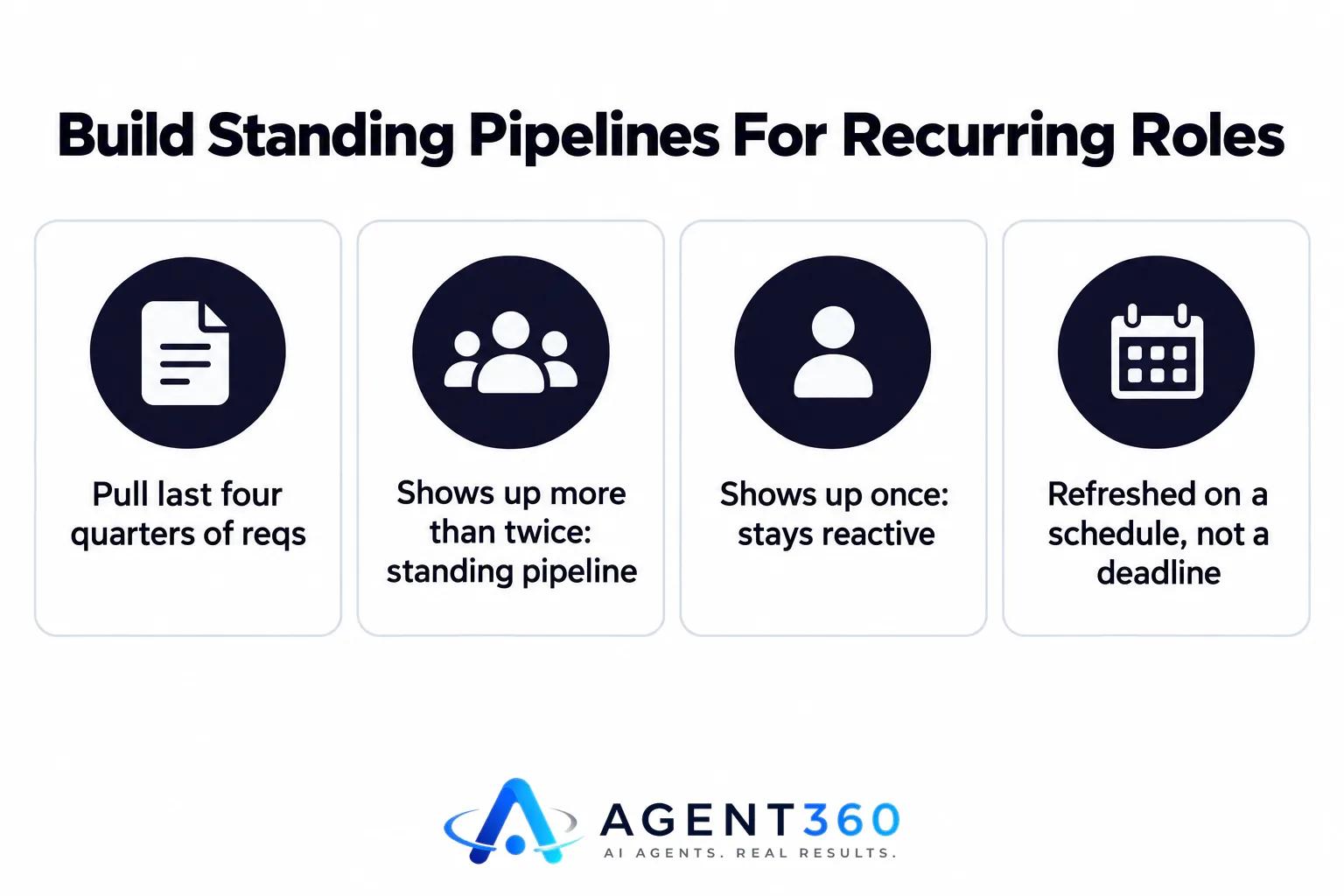
This only works if you can tell which roles actually recur. Pull the last four quarters of reqs by title and level. Anything that shows up more than twice is a candidate for a standing pipeline. Anything that shows up once stays reactive — building a pool for a role you hire every three years wastes more effort than it saves.
Match the channel to how visible the candidate already is
Senior and specialist candidates are rarely checking job boards. They're employed, not actively looking, and the strongest ones never apply anywhere. Reaching them means turning the job description into a search — titles, skills, seniority, years — and going to where those people already have a profile, instead of waiting for them to come to you.
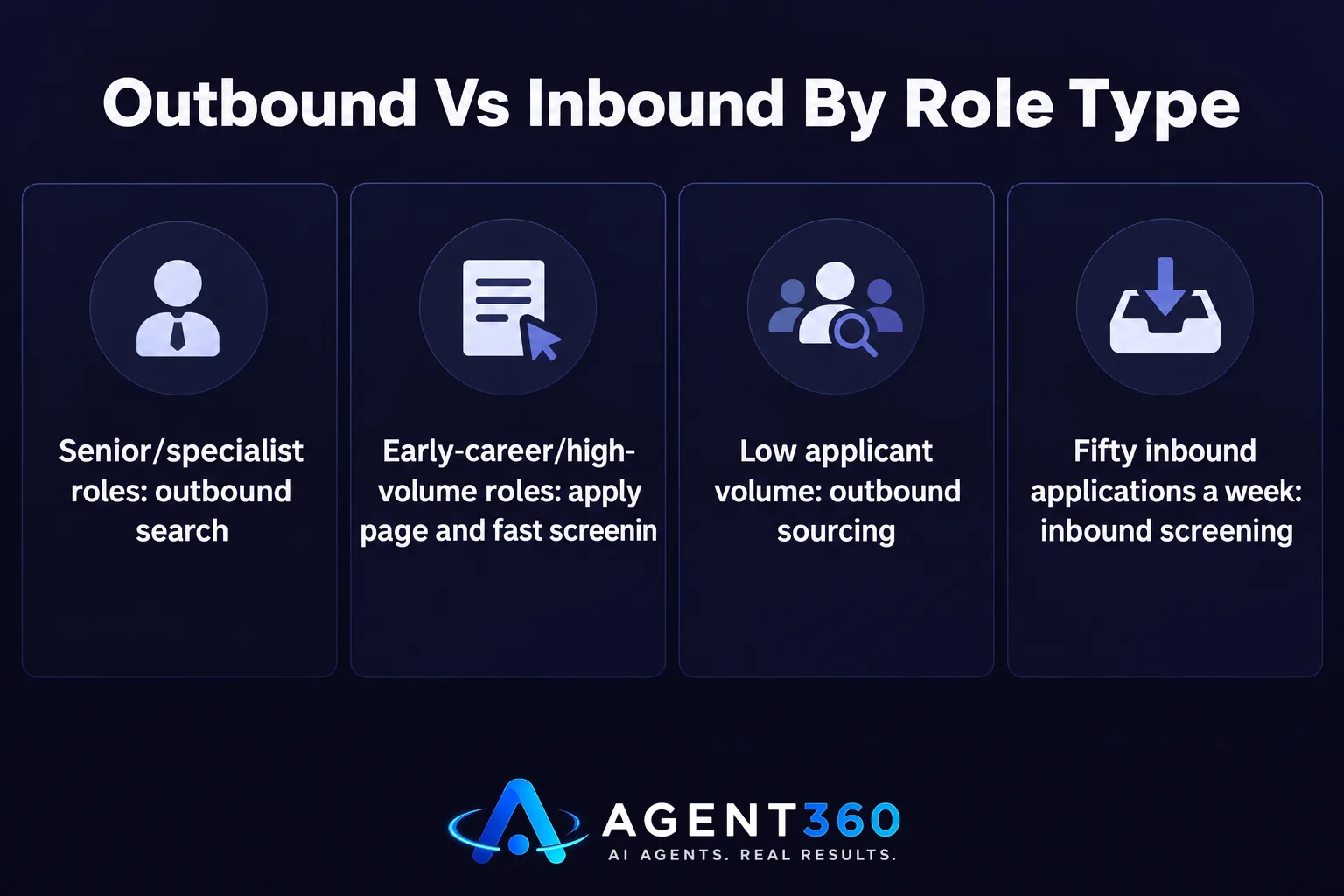
For roles with high natural application volume — early-career, customer-facing, anything with a wide qualified pool — an apply page and fast inbound screening will do more work than outbound ever will. The mismatch that wastes the most time: running outbound search on a role that pulls fifty inbound applications a week, or sitting on inbound for a role where nobody qualified is applying at all.
Score before you reach out, not after
A sourcing list without ranking turns into a queue worked in the order it was pulled. Which means your first ten outreach messages go to whoever happened to get found first, not whoever actually fits. Score every sourced candidate against the role — skills, experience, location — before any message goes out, and outreach starts with the strongest matches instead of burning slots on the weak ones.
The scoring has to run against the actual job description, not a generic seniority filter. Two candidates with the same title and the same years can land forty points apart once skills and location get weighed properly. A 0–100 match score with sub-scores is the difference between a ranked list and a pile.
Set a refresh cadence or the pool goes stale
A sourcing list from six months ago has a failure rate baked in. Some of those people have been placed. Some changed roles. Some are no longer reachable at the contact info you pulled. Open-to-work status changes weekly, not quarterly — someone who wasn't looking in March can be deep in interviews by June, and the reverse happens just as often.
A standing pipeline needs a refresh date attached to it. Checking for open-to-work signals on a cadence is what keeps outreach from landing on people who already accepted an offer somewhere else.
Decide who owns the list when there's no open req to justify it
Standing pipelines die quietly, because nobody's job description includes maintaining a pool for a role that isn't open yet. If sourcing capacity lives entirely in a hiring manager's spare time, it gets zero attention until a role opens — which puts you right back at square one.

In-house teams that actually sustain this give someone explicit ownership of the recurring role families, with time blocked for refresh work, separate from whatever's currently open. For teams carrying more open roles than hours, that ownership is usually the first thing to get dropped under pressure — exactly when the standing pipeline would have paid off.
Where a tool like HiringAgent fits
This is the one place in this post where HiringAgent gets a mention, so here's the fit: HiringAgent takes a job description and turns it into the search filters a sourcer would otherwise build by hand — titles, locations, skills, seniority, years — then scores every candidate it finds from 0 to 100 against that role, badges who's open to work, and keeps everyone in one pipeline whether they were sourced or applied. For a company trying to run the standing-pipeline approach above without a dedicated sourcer, that's the mechanism: refresh a search monthly instead of building one from nothing when a req opens. Plans start at $197 a month with unlimited users and no contract, which matters when the people maintaining the pipeline change over time.
FAQ
How often should a sourcing pipeline be refreshed?
Monthly is a reasonable default for roles you hire often. Open-to-work status and contact accuracy both degrade faster than most teams expect, and a list that's six months old will have a meaningful share of candidates who are no longer reachable or available.
Is a sourcing strategy different from just posting the job?
Yes. Posting a job reaches people actively looking at that moment. A sourcing strategy reaches people who aren't looking yet, on a schedule that doesn't depend on them happening to check a board the week you post.
Is outbound sourcing worth it for every role?
No. Roles with a large, naturally applying pool are usually better served by a strong apply page and fast screening than by outbound search. Outbound pays off most on roles where the people who fit aren't actively job hunting — which is most of the roles worth building a standing pipeline for.
More articles
- Sourcing Tools for Recruiters: What Each Layer Actually Does
- Is It Legal to Use AI in Hiring? Here's What Applies
- Hiring With AI: What It Can and Can't Decide
- First-Round Interview Questions That Predict Fit, Not Charm
- How to Write a Job Description That Attracts Candidates
- What a Job Description Generator Should Actually Write
- How to Hire Your First Employee Without Guessing
- Hiring Without a Recruiter: What It Actually Takes
