Recruiting Software for Agencies: What to Buy
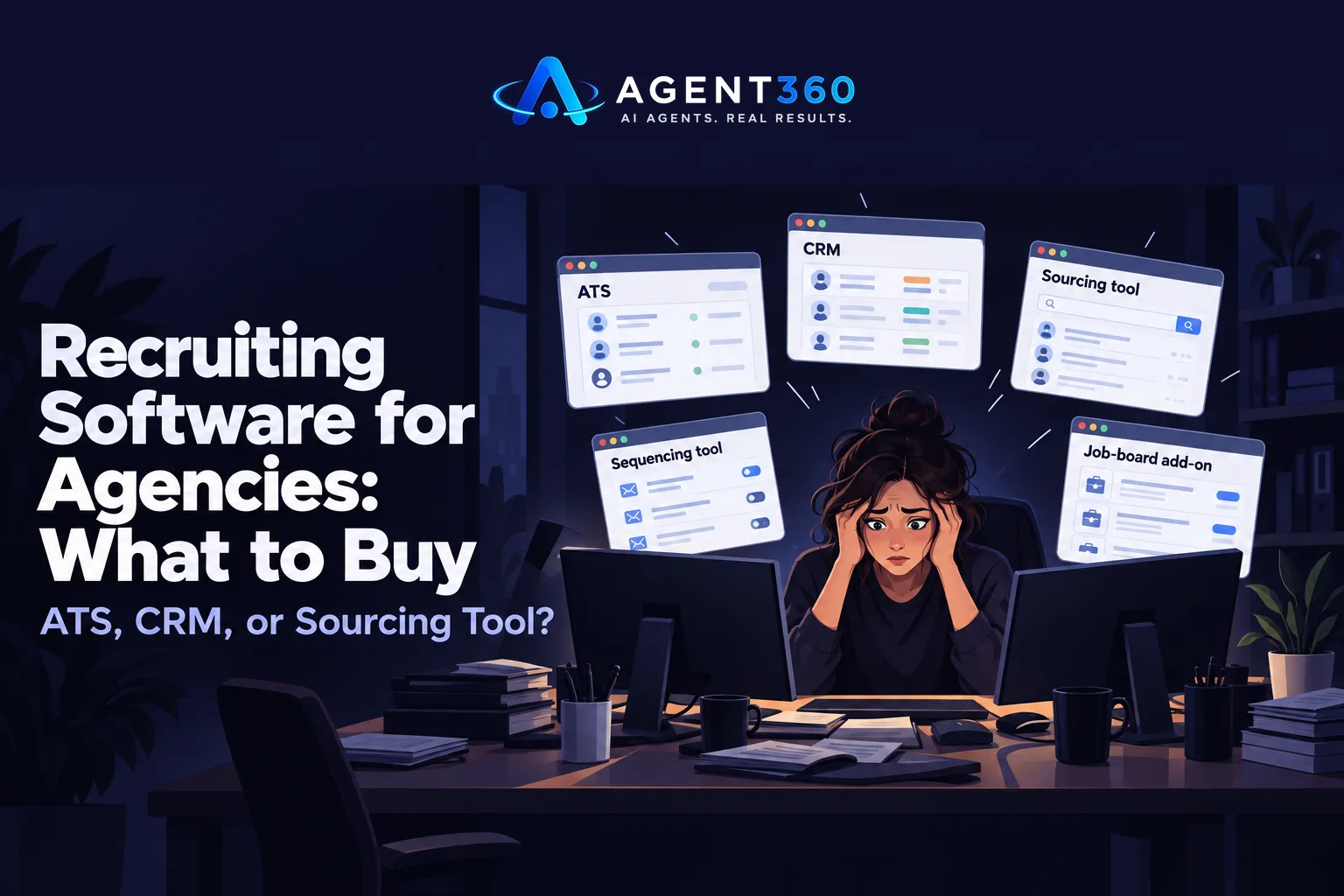
Ask ten agency owners what software they run and you'll get ten different answers, usually five logins bought at five different times, none of them talking to each other: an ATS, a CRM, a sourcing tool, a sequencing tool, maybe a job-board add-on bundled with one of the others. So the question worth answering before you buy anything isn't “what's the best recruiting software.” It's which of three separate jobs you're actually paying to solve, and whether you're paying per recruiter for all three at once.
Here's how to think about the stack, the cost trap most agencies fall into, and the two frameworks people keep asking about when they search this.
What software do recruitment agencies use?
Most agencies run some combination of three distinct systems, even if they've never mapped it out that cleanly:
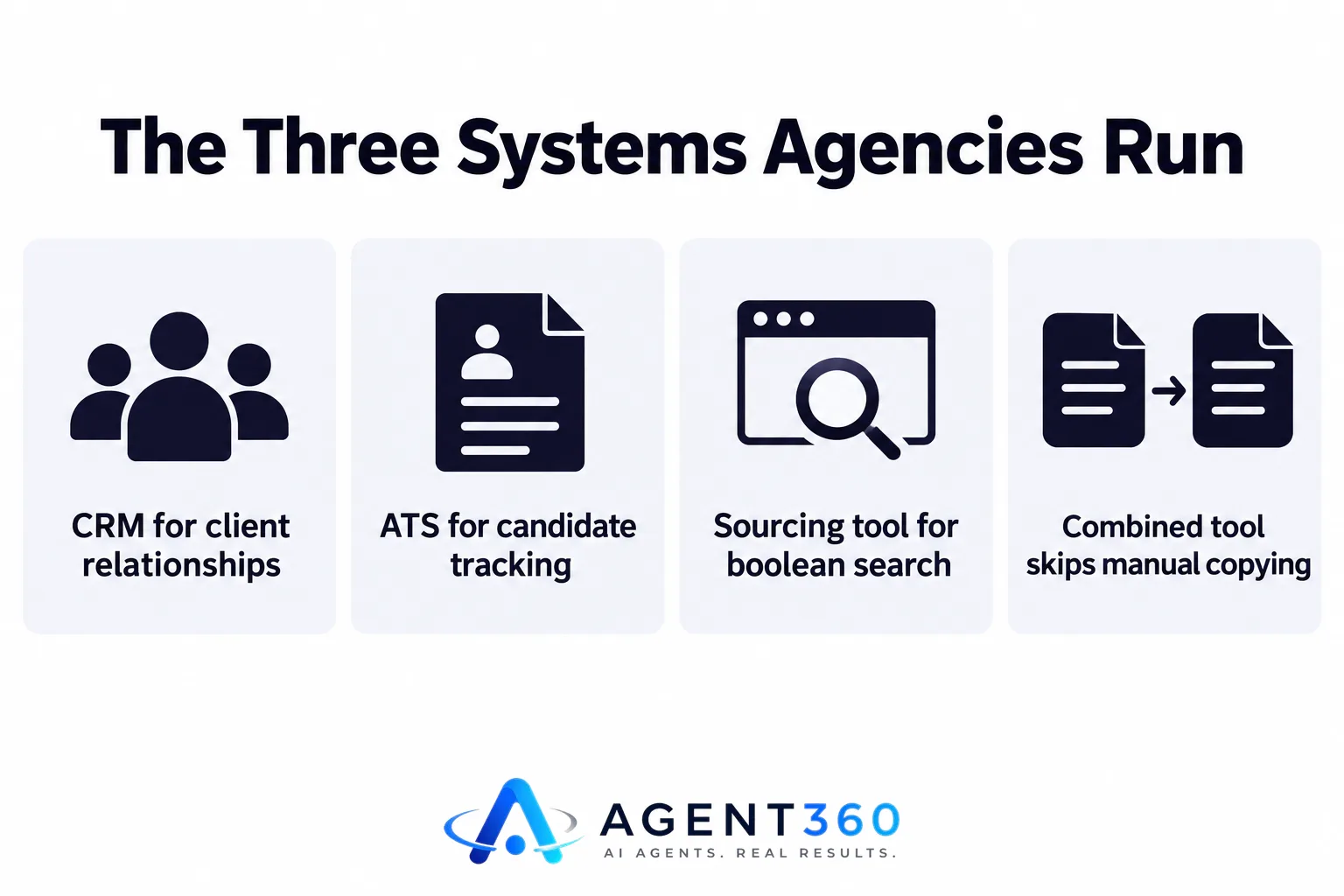
- A CRM for client relationships — the deal pipeline, who owns which account, commission tracking, renewal dates. Sales software wearing a recruiting hat.
- An ATS for candidate tracking — who's in which stage for which requisition, interview notes, offer status. The system of record on the hiring side.
- A sourcing tool — boolean search, a seat on a professional-network search product, or something that scrapes for people who haven't applied anywhere.
Agencies that bolt these together from three vendors end up copying candidates between systems by hand all day. Agencies that buy a combined tool — sourcing and tracking in one pipeline — skip that step, because a candidate found by search and a candidate who applied land in the same place. The tradeoff: a combined tool usually won't match a dedicated CRM's deal-stage reporting. If your business runs on commission splits and renewal forecasting, you probably still want a CRM sitting next to it.
Per-seat pricing is the real agency tax, not the subscription
The sticker price on most recruiting software isn't what it actually costs you. What it costs is the sticker price times every recruiter, sourcer and coordinator who touches it — and agencies are exactly the kind of business that adds and drops seats constantly. A busy quarter means three contract recruiters for eight weeks. A slow quarter means two people covering what five used to. Per-seat licensing charges you for the busy quarter and keeps charging you in the slow one, because nobody remembers to downgrade a seat count on a random Tuesday in March.
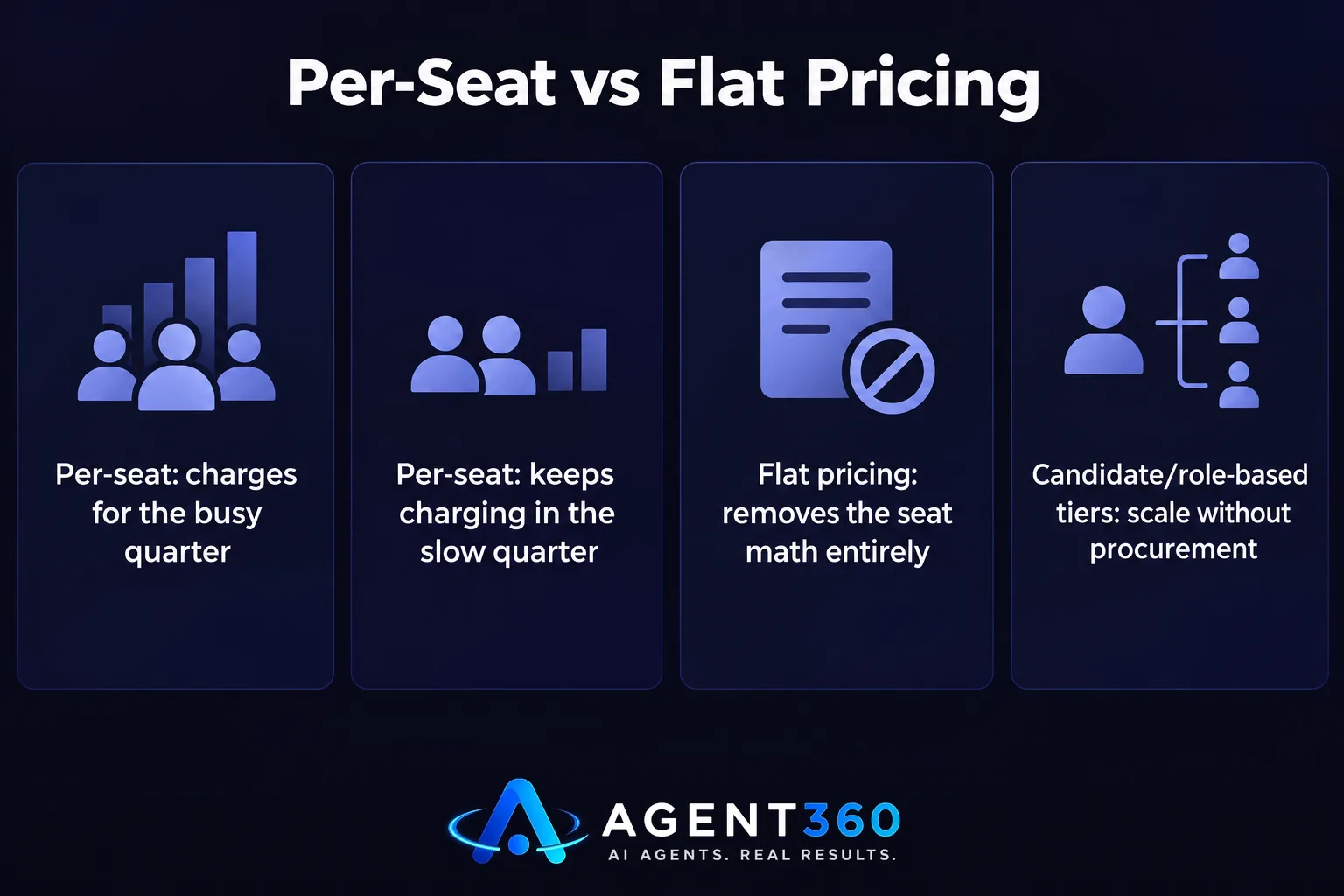
Flat, unlimited-user pricing removes that math entirely. Worth checking, on any pricing page you're evaluating, whether the tiers scale with candidates and open roles or with headcount. The first kind lets you staff up for a client push without a procurement conversation. The second kind punishes you for hiring well.
What is the best recruitment software for staffing agencies?
Staffing agencies carry a different load than an in-house talent team: more open requisitions at once, more candidates moving through each one, and client confidentiality that matters a lot more than it does for a single-company hiring team. A few things to check specifically for staffing work:
- Confidential searches — a candidate you're pitching to Client A should never see Client B's name on an apply page or a status update.
- One pipeline per requisition, not per company — if your tool tracks candidates against your agency instead of the specific role, you lose any read on how a candidate is doing against this client's bar.
- Volume without manual re-entry — if sourced candidates and applicants don't land in the same funnel automatically, someone's retyping names every morning.
These are the questions that separate a tool built for in-house hiring from one built for agency work, and they matter more than any feature list ever will.
What are the 5 C's of recruitment?
This one varies by source, and anyone who hands you a single definitive list is rounding. The version used most in agency training covers: Competency (can they do the job), Character (how they work, not just what they know), Culture fit (fit with the specific team, not a personality test), Cost (comp expectations against the client's range), and a fifth that shifts between sources — sometimes Chemistry (fit with the hiring manager specifically), sometimes Commitment (likelihood of accepting and staying).
It's an interview framework, not a software framework. It should shape your intake call with the hiring manager and the questions your recruiters ask candidates — it has nothing to do with which ATS or sourcing tool you pick. A tool that scores candidates well will still only score what you told it mattered in the job description, so the 5 C's belong in that description, not on a vendor comparison sheet.
Where a combined sourcing-and-ATS tool fits
HiringAgent is built around the first two problems above: candidate sourcing and applicant tracking in one system, with unlimited users on every plan starting at $197 a month. It searches a database of public professional profiles against your job description, scores each candidate 0–100, and tracks sourced candidates and applicants in the same pipeline rather than two separate ones. It doesn't replace a client-facing CRM, and it doesn't post to job boards — it's one of the three pieces, not all three. If you're weighing it against paying an outside firm per hire, that tradeoff is laid out on the agency comparison page.

Common questions
What software do staffing agencies use?
Most staffing agencies run a CRM for client and deal management, an ATS for tracking candidates against each requisition, and a sourcing tool for finding people who haven't applied. Some products combine the ATS and sourcing layer; the CRM usually stays separate because its reporting needs — deal stage, commission, renewal — differ from a hiring pipeline's needs. Read more on how AI candidate sourcing works if that's the piece you're missing.
What is the best recruitment software for staffing agencies?
There's no single best answer independent of your volume and client mix. The traits that matter most for staffing specifically: confidential per-client searches, a pipeline organized by requisition rather than by company, and a way for sourced candidates and applicants to land in the same funnel without manual re-entry.
What are the 5 C's of recruitment?
Most versions list Competency, Character, Culture fit and Cost as the first four, with a fifth — Chemistry or Commitment — varying by source. It's a framework for structuring interviews and intake calls, not a standard for evaluating software. Don't let a vendor sell you on it.
More articles
- Recruiting Funnel Metrics That Predict a Bad Hire
- The Time to Hire Metric: What It Measures, What It Hides
- How to Reduce Time to Hire Without Lowering the Bar
- How to Screen Candidates Faster Without Lowering the Bar
- A Boolean Search Alternative for Recruiters Who Are Done With Strings
- What Passive Candidate Sourcing Actually Takes
- How to Find Candidates Who Are Open to Work
- Resume Parsing Software: What It Gets Right (and Wrong)
