What a Modern Applicant Tracking System Actually Does
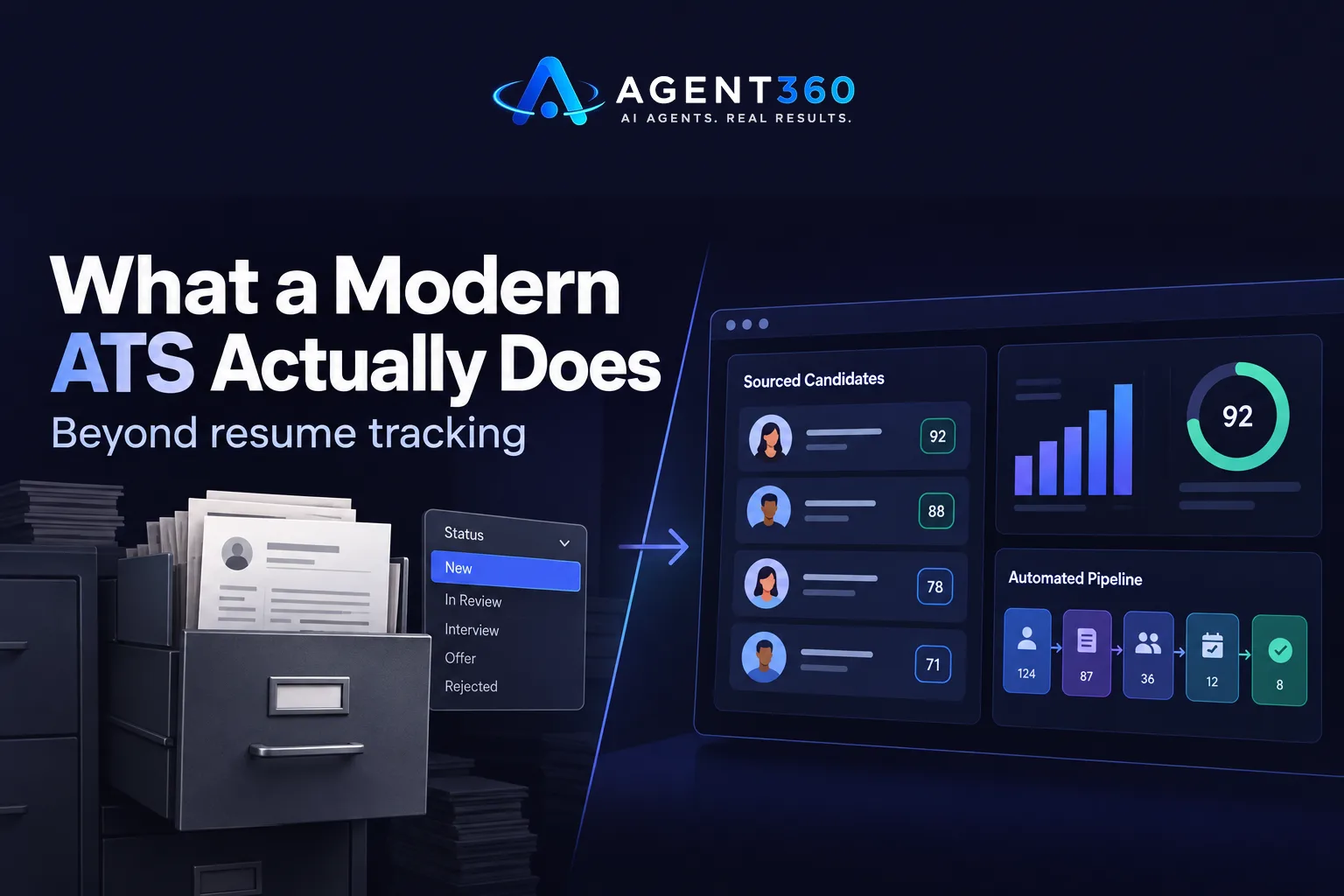
A resume inbox with a status dropdown is not a modern applicant tracking system, no matter what the vendor calls it. An applicant tracker, in its plainest form, logs everyone who applies to a job and records what happens to them next — stage, notes, outcome. That's the baseline, and it's what most companies still run. A modern applicant tracking system does three more things a plain tracker never did: it goes out and finds candidates who haven't applied, it scores every person against the role instead of leaving a human to read resumes cold, and it moves candidates forward on bookings and screens instead of waiting for someone to click a status dropdown.
What is an applicant tracker?
In its original form, an applicant tracker is a database with a pipeline view bolted on. Someone applies through a careers page, their resume lands in a folder, and the tracker lets you tag them as “new,” “phone screen,” “rejected,” or “hired.” It was built to solve one problem: paper resumes piling up on a desk. It was never built to solve the problem most teams actually have now, which is that the strongest candidates for a role rarely apply. They're employed, not looking, and not browsing your careers page.
That's the ceiling on a plain tracker. It can organize whoever walks in the door. It can't go get anyone.
The gap between a tracker and a sourcing system is the whole story
A modern ATS closes that gap by doing the sourcing itself. It reads a job description, turns the requirements into search filters — title, seniority, location, years, skills — and pulls matching candidates from outside your applicant pool, not just inside it. Then it scores each one against the role instead of asking a recruiter to skim fifty LinkedIn profiles and guess. The practical difference shows up in the definition of a modern ATS: whether the system finds people, or only files the people who find you.
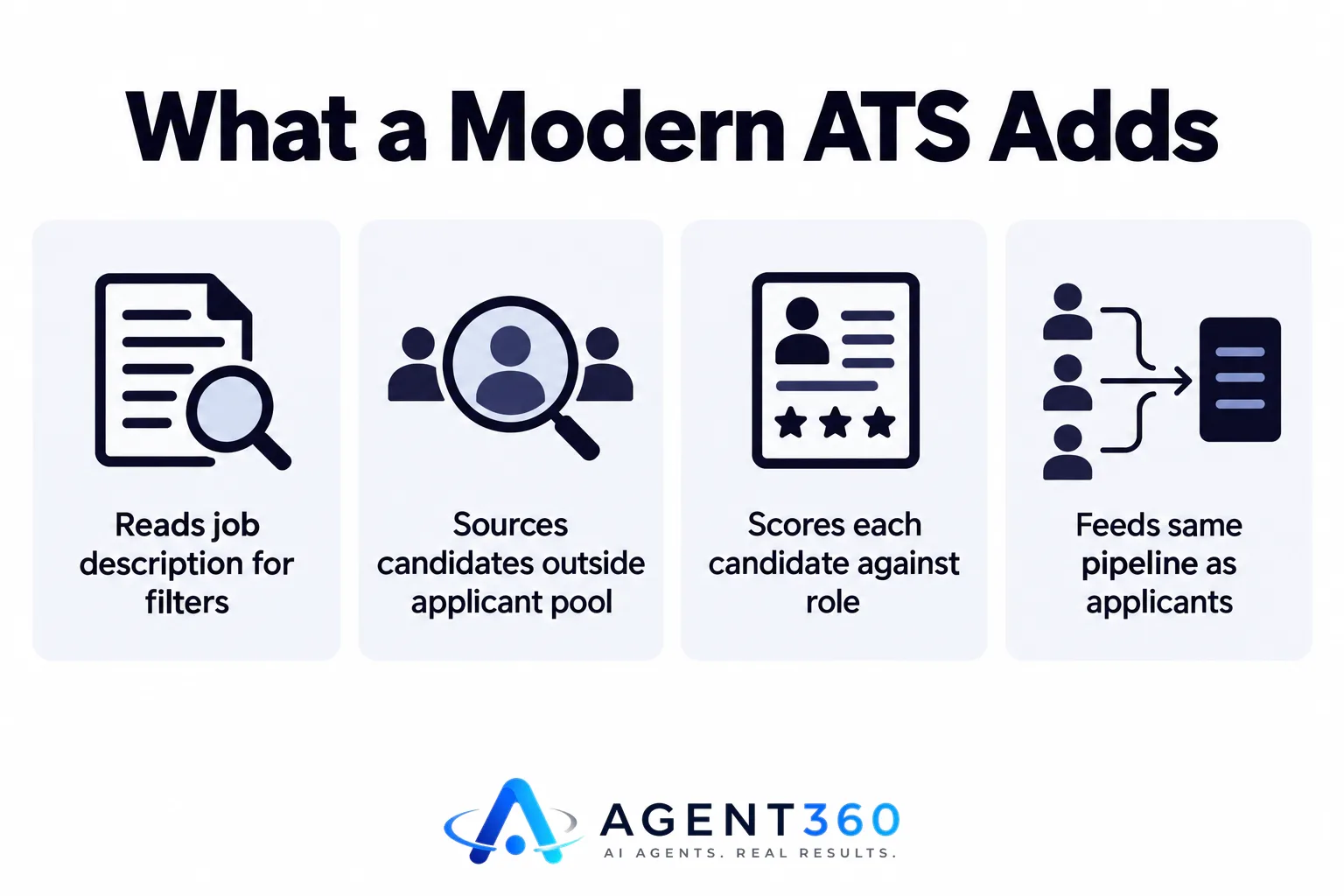
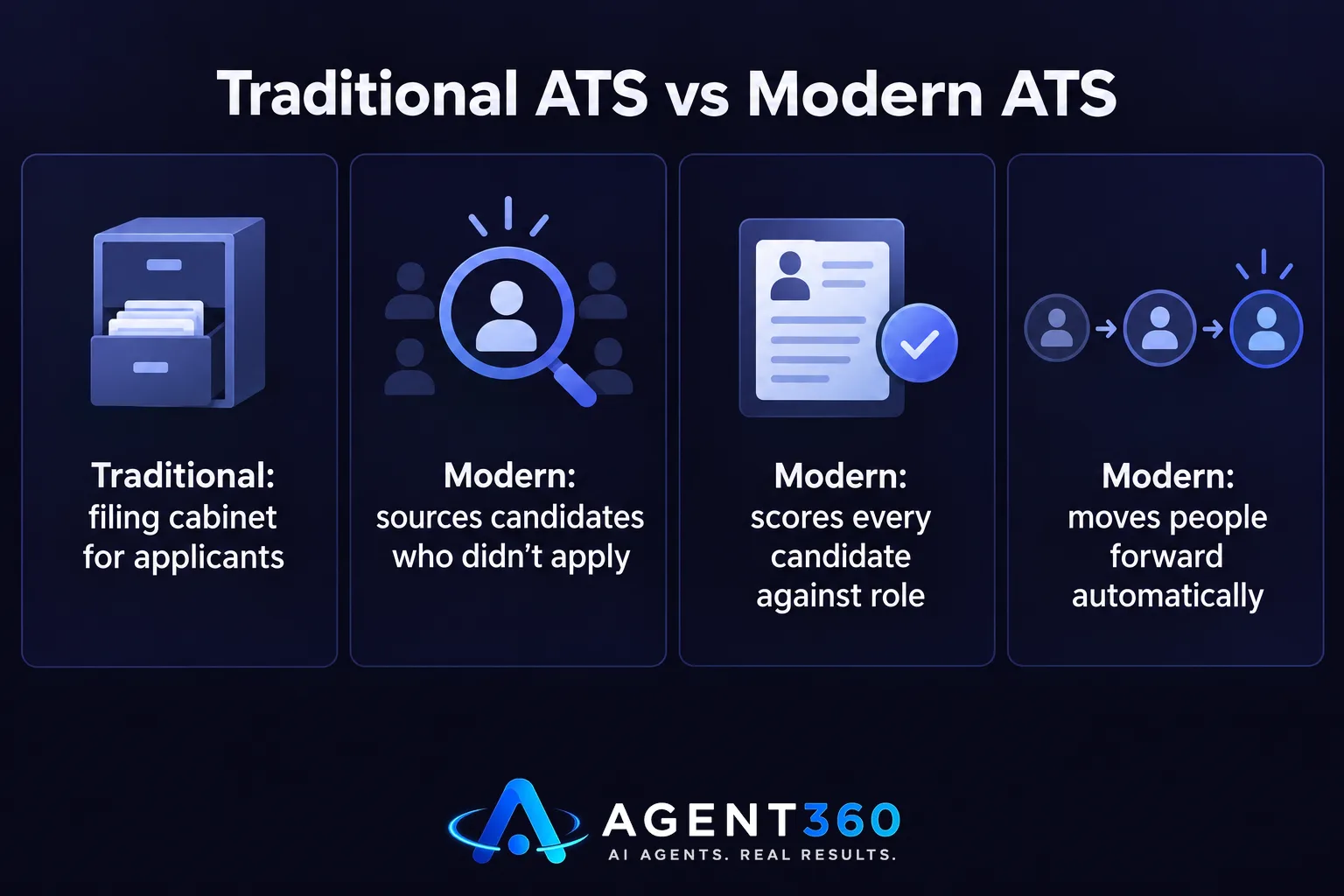
Side by side, the distinction is concrete. A traditional system has a “new applicant” queue and nothing upstream of it. A modern one has that queue plus an outbound engine feeding it, and both land in the same pipeline so a sourced candidate and an applicant are tracked the same way from that point forward. The full comparison, not just the short version, is laid out at vs a traditional ATS.
What is the best recruitment software for agencies?
For an agency, “best” has a narrow definition: whatever gets a client a strong shortlist the fastest, without the agency's recruiters burning a week on manual search. That means three things have to live in one place — sourcing against the client's job description, scoring so the recruiter opens the file already knowing who's worth a call, and a first-round screen that happens before the recruiter's time gets spent. Software that only tracks applicants doesn't help an agency much, because agencies rarely have applicants sitting around. They have a brief and a deadline.
The other requirement specific to agencies is confidentiality: screening candidates under a role name the client controls, without exposing the client's identity before there's a reason to. Most general ATS products don't plan for that workflow, so it's worth checking for explicitly rather than assuming any system handles it. It's covered in more detail for recruiting agencies.
How to get past an applicant tracking system
This question usually comes from the other side of the table — candidates trying to beat keyword filters — but it points at a real design flaw buyers should know about. Older trackers rank resumes by matching literal words in the file to words in the posting. That's why candidates learn to stuff job titles and tools into a resume that reads like a keyword list. They're not applying to a person, they're applying to a filter, and the filter rewards the wrong behavior. It also means a hiring team using that kind of system is quietly rejecting people who did the actual job under a different title, or who wrote a resume for a human instead of for software.

A scoring system built on the job description rather than exact-word matching avoids that failure mode. It weighs skills, experience and location separately, gives a reason for the score, and flags the gap to check rather than issuing a pass or fail on vocabulary. That's the mechanism behind an AI match score, and it's worth asking any ATS vendor a blunt question: does your scoring work on keyword overlap, or on the substance of the description? The two produce very different shortlists.
What are the top 10 applicant tracking systems?
There isn't a single ranked list that means anything, because “best” depends on what a tracker is being asked to do. A 500-person company standardizing on compliance workflows needs something different from a 12-person company hiring its first few roles, which needs something different again from an agency running twenty client searches at once. The more useful question is which category a system falls into: tracking-only systems built for applicants who already exist; sourcing platforms like LinkedIn Recruiter built for search and outreach but not tracking; and systems built to do both — source, score, screen and track in one pipeline. A direct comparison across approaches will tell you more than a ranked list of logos, because it shows what each category is actually built to do, not just what it's called.
Where HiringAgent fits
HiringAgent is built as a modern ATS in the sense above: paste a job description, and it sources candidates from public professional profiles, scores each one 0–100 against the role, runs an AI phone screen once a candidate books a time, and tracks everyone — sourced or applied — through the same 39-status pipeline. Plans start at $197 a month with unlimited users and no contract, and the full breakdown by candidate volume and phone screens is on the pricing page.
Do I still need a separate sourcing tool if I have a modern ATS?
No, not if the ATS actually sources — that's the whole point of the “modern” distinction. If it only tracks applicants, you'll still need something upstream to find people who haven't applied, which defeats the purpose of buying one system to simplify the workflow.
Does a modern ATS replace a recruiter's judgment?
No. Scoring ranks candidates and a first-round screen gathers initial answers, but deciding who advances, who gets an offer, and who's actually the right fit stays a human call. The software removes the slow, repetitive parts — search, reading every resume, scheduling first calls — not the decision itself.
What's the real difference between a modern ATS and a traditional one?
A traditional ATS is a filing cabinet for people who already applied. A modern one adds sourcing, so it finds candidates who didn't apply; scoring, so every candidate is ranked against the role instead of read cold; and automated progression, so bookings and screens move people forward without someone updating a status by hand. Buy the first kind and you're still doing the hard part yourself.
More articles
- Resume Parsing Software: What It Gets Right (and Wrong)
- AI Resume Screening Scores Resumes, Not Hires
- Automated Phone Screening Interviews: What They Replace
- AI Phone Screening for Recruiters: What the Call Should Do
- What an ATS With AI Candidate Matching Should Actually Do
- The Best ATS for Startups Finds Candidates Too
- What an Applicant Tracking System for Small Business Costs
- AI Recruiting Software Won't Pick Your Hire — Here's What It Does
