AI Resume Screening Scores Resumes, Not Hires
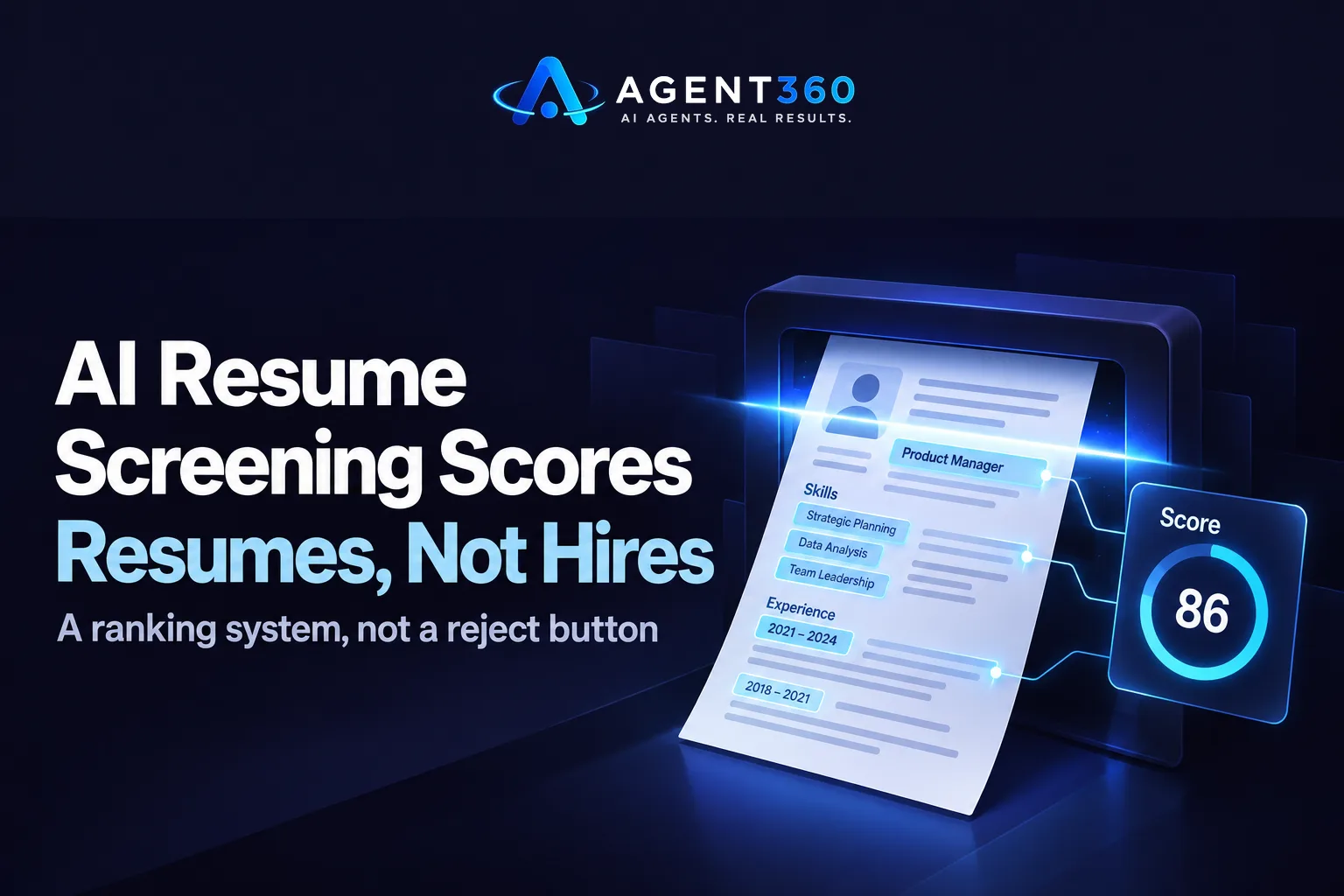
AI resume screening is software that reads a resume, pulls out structured data — titles, employers, dates, skills — and scores that data against a job description. It's not a yes/no gate. It doesn't read a resume the way a person does. It ranks. A human still decides who gets the call.
That distinction matters more than the marketing suggests. Most of the confusion around this tool — on both sides of the desk — comes from treating a ranking system like a decision system.
How to automate resume screening
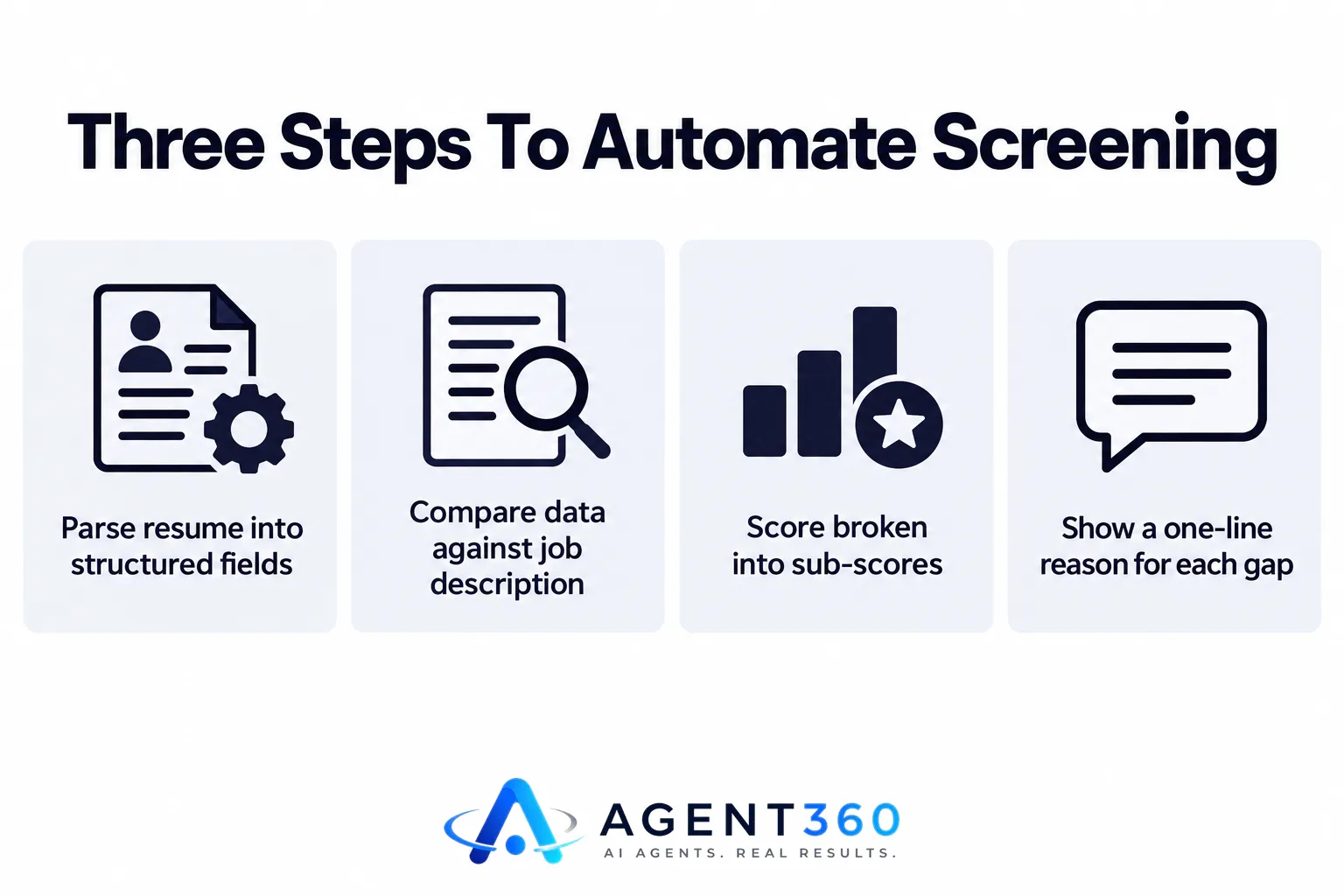
The mechanism breaks into three steps, and skipping any one of them is usually why a company's screening feels unreliable. First, every incoming resume gets parsed into fields: name, contact details, work history, skills, education. Second, that structured data gets compared against the job description — not the job title, the actual description, because two “Account Executive” postings can ask for completely different things. Third, each resume gets a score. Ideally that's broken into sub-scores for skills, experience and location, rather than one blended number that hides where the match is weak.
Skip the parsing step and just keyword-match the raw PDF text, and you get the bad reputation older screening tools earned — a resume formatted in two columns, or saved as an image, would score poorly for reasons that had nothing to do with the candidate's fit. A resume parser built for this extracts the data before any scoring happens. That's also what makes an apply page that reads resumes automatically more useful than a tool that just stores a file attachment.
Automating the front end only pays off if the scores are visible and explained. A number with no reason attached gets ignored by week two. A score with a one-line reason and a named gap gets used — because the person reading it can decide in five seconds whether that gap matters for this role.
A score ranks candidates, it does not reject them
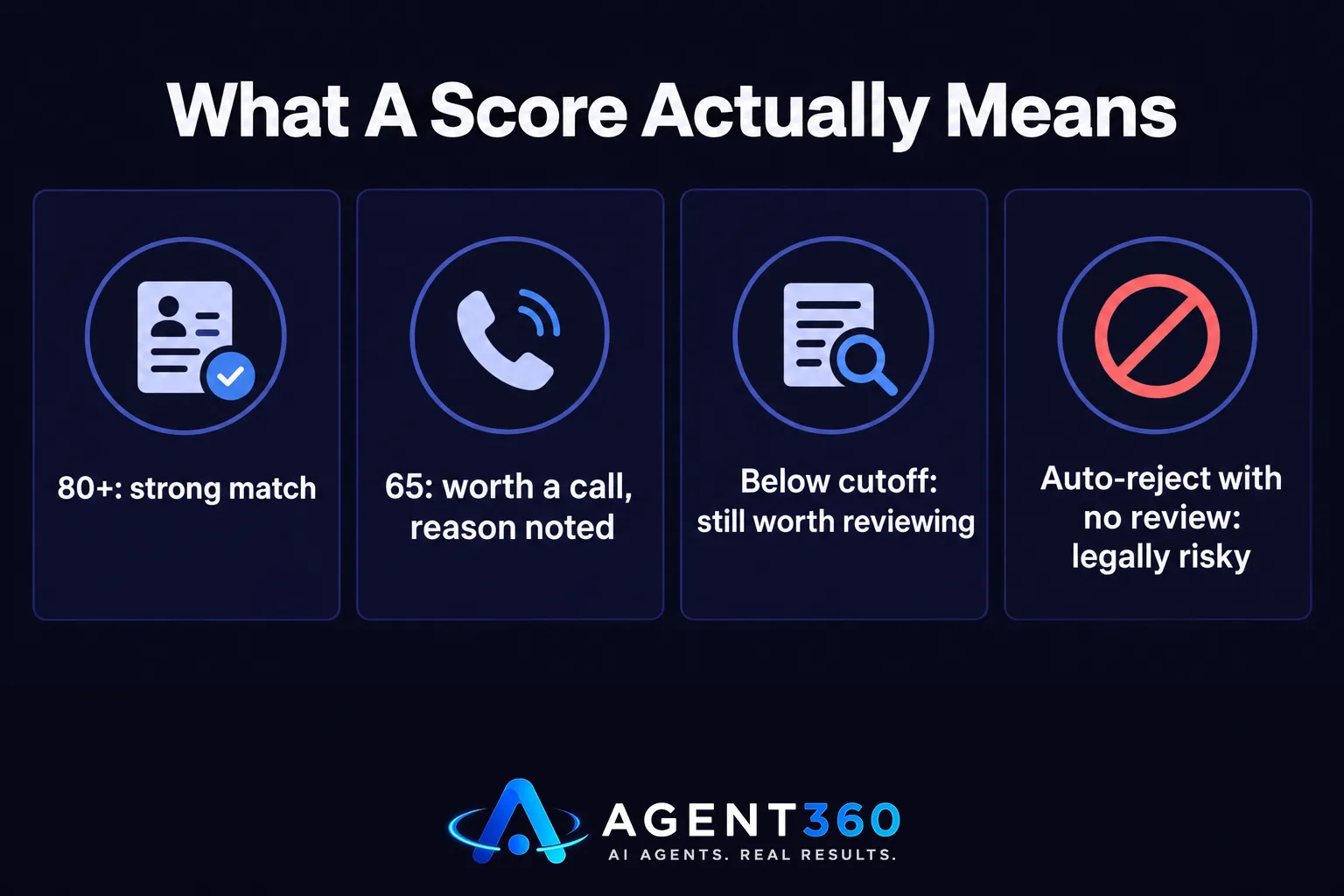
The useful threshold in most screening systems sits around 80 out of 100 — high enough to call a strong match, not high enough to mean “stop looking.” Below that, a candidate might still be worth a call. A 65 with a one-line reason like “strong skills match, location mismatch” tells a hiring manager something a resume stack sorted by date never will. Treating anything under a cutoff as auto-rejected is where companies get into trouble. Practically, because good candidates get filtered on a technicality. Legally, because a fully automated reject decision with no human review is exactly the scenario regulators are watching. Sub-scores exist so a person can override a low overall number when one sub-score explains it.
This is also why resume scores and sourced-candidate scores need to live on the same scale. If a candidate who applies directly scores 72, and a candidate pulled from a search scores 72, those two numbers should mean the same thing. Otherwise a hiring manager is comparing two different measuring sticks without knowing it — which is the case for keeping sourcing and applications in one pipeline instead of two separate tools.
How to beat AI in job application screening
Candidates ask this because they assume the system is a keyword filter. Some older ones still are. A model built on structured data instead of raw text is harder to game, because it checks whether the skills and years of experience in the parsed fields actually line up with the requirements — not whether a particular word shows up somewhere on the page. Pad a resume with a skills list copied from the job posting, with no work history to back it up, and it usually shows up as a low experience sub-score even when the skills sub-score looks inflated. The gap the system flags for a reviewer is often exactly that mismatch.
The honest version of “how to get AI to pick your resume” is the same advice that predates AI screening entirely: match your actual experience to what the role asks for, in the language the posting uses, because the comparison is literal. A sourcing system that turns a job description into search filters runs the same kind of literal matching in reverse — titles, skills, years — worth knowing if you're on the hiring side deciding how specific to make a posting.
Can AI be used in an interview?
Yes, for the first round — and the boundary there is worth being precise about. An AI phone screen is a structured call: the candidate books a time, a voice agent asks questions written from the job description, and when the call ends the candidate is marked screened, with a person deciding who moves forward. It replaces the fifteen-minute recruiter call that exists mainly to confirm basics and ask two or three screening questions. It doesn't replace the rounds where someone is evaluating judgment, chemistry or a work sample. Running resume scoring and phone screening off the same job description keeps the questions and the scores consistent, which is the whole point of pairing them instead of treating them as separate tools.

Where this fits with a hiring tool
HiringAgent scores every resume that comes through a job's apply page from 0 to 100 against that job's description — sub-scores for skills, experience and location, a one-line reason, the gap worth checking. It's the same scoring the Match Agent runs on sourced candidates, so applicants and sourced people sit on one scale, in one pipeline. Plans start at $197 a month; details are on the pricing page.
Questions
How to get AI to pick your resume?
Match your actual skills and years of experience to the specific job description, in similar language — a system built on parsed, structured data checks the real content of your background, not whether a keyword appears somewhere on the page.
Can AI be used in an interview?
Yes, for a structured first-round call: the candidate books a time, an AI voice agent asks questions written from the job description, and a person decides who moves forward. Later rounds should stay human.
How to automate resume screening?
Parse every incoming resume into structured fields — skills, titles, dates, employers — then score that data against the job description instead of reading each one manually. The scoring step only works well once the parsing step is accurate.
How to beat AI in job application screening?
There isn't a trick that beats a system built on structured matching rather than raw keyword counts. Padding a resume with unrelated skills usually shows up as a low experience sub-score, since the comparison checks the work history behind the claim, not just the word itself.
More articles
- Resume Parsing Software: What It Gets Right (and Wrong)
- Automated Phone Screening Interviews: What They Replace
- AI Phone Screening for Recruiters: What the Call Should Do
- What an ATS With AI Candidate Matching Should Actually Do
- The Best ATS for Startups Finds Candidates Too
- What a Modern Applicant Tracking System Actually Does
- What an Applicant Tracking System for Small Business Costs
- AI Recruiting Software Won't Pick Your Hire — Here's What It Does
