How to Hire Software Engineers: A Level-First Playbook
Most engineering hires go sideways in the same three spots: the level in the post doesn't match the salary, the pipeline is thin because the engineers worth hiring weren't looking, and the interview loop tests trivia instead of the actual job. Fix those three — level, pipeline, what you test for — and most of the rest sorts itself out.
What is L1, L2, L3, and L4 in software engineering?
There's no single industry-wide definition, which is part of why this question keeps getting asked. Most companies that use a leveling system are describing scope of ownership, not years on the job. Roughly: an L1 or L2 engineer writes code to a spec with review from someone more senior; an L3 owns a feature end to end, tradeoffs and bugs included; an L4 — sometimes called staff or senior staff — sets technical direction that other engineers build against and answers for decisions that outlive a single sprint.
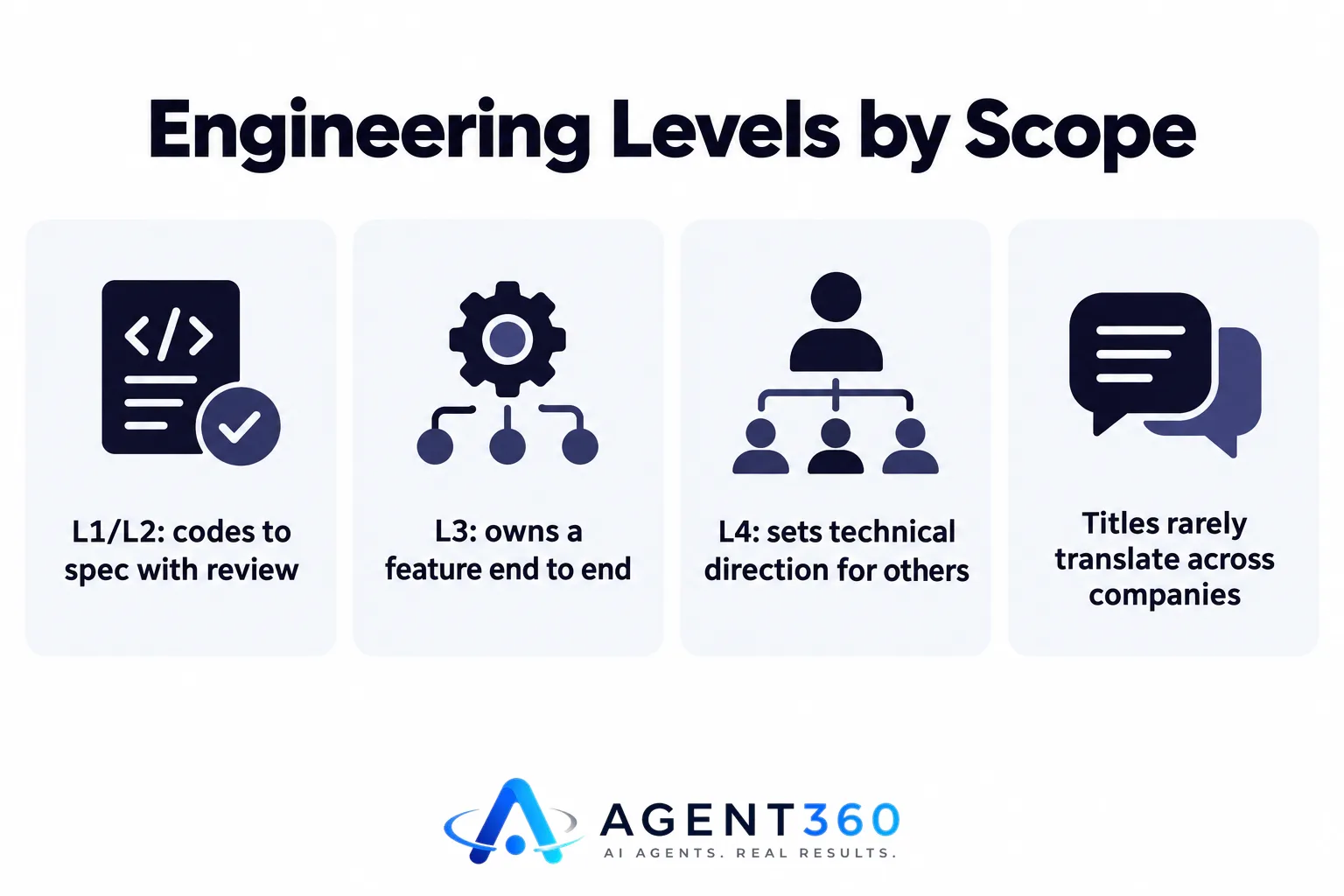
Large companies each run their own version of this ladder, with different names at each rung, so a title from one company rarely translates cleanly to another. Write your job post around scope — “owns this system,” “ships with review,” “sets direction across two teams” — and you'll attract people who actually match. Not people who just match a title.
What is the 70/30 rule in hiring?
This phrase gets used two different ways, and neither has a fixed, agreed-upon definition — be skeptical of anyone who states it as a settled rule. Some people mean a time split: roughly 70 percent of hiring effort should go to finding and qualifying candidates, 30 percent to the interview loop itself. Others mean a decision weight: 70 percent skill signal, 30 percent fit.
For engineering roles specifically, the time-split reading is the more useful one, because the common failure mode runs opposite to what the rule implies: teams spend most of their effort narrowing a weak pipeline through more interview rounds, instead of building a stronger pipeline to begin with. If your loop has grown past four rounds and candidates are still falling through, the fix is usually earlier in the funnel, not later.
What is the 40/20/40 rule in software engineering?
Same caveat applies: this isn't a documented, standardized framework, and it gets applied to different things — sometimes a time split within a single technical interview, sometimes a structure for the whole loop. The version worth adopting for a loop is simple and defensible on its own terms: roughly 40 percent of your evaluation time on a technical screen that mirrors real work (a code review, a small design problem, a bug to find), 20 percent on a conversation about how the candidate collaborates and communicates tradeoffs, and 40 percent on a deeper technical round — system design for senior candidates, a larger coding exercise for earlier-career ones.
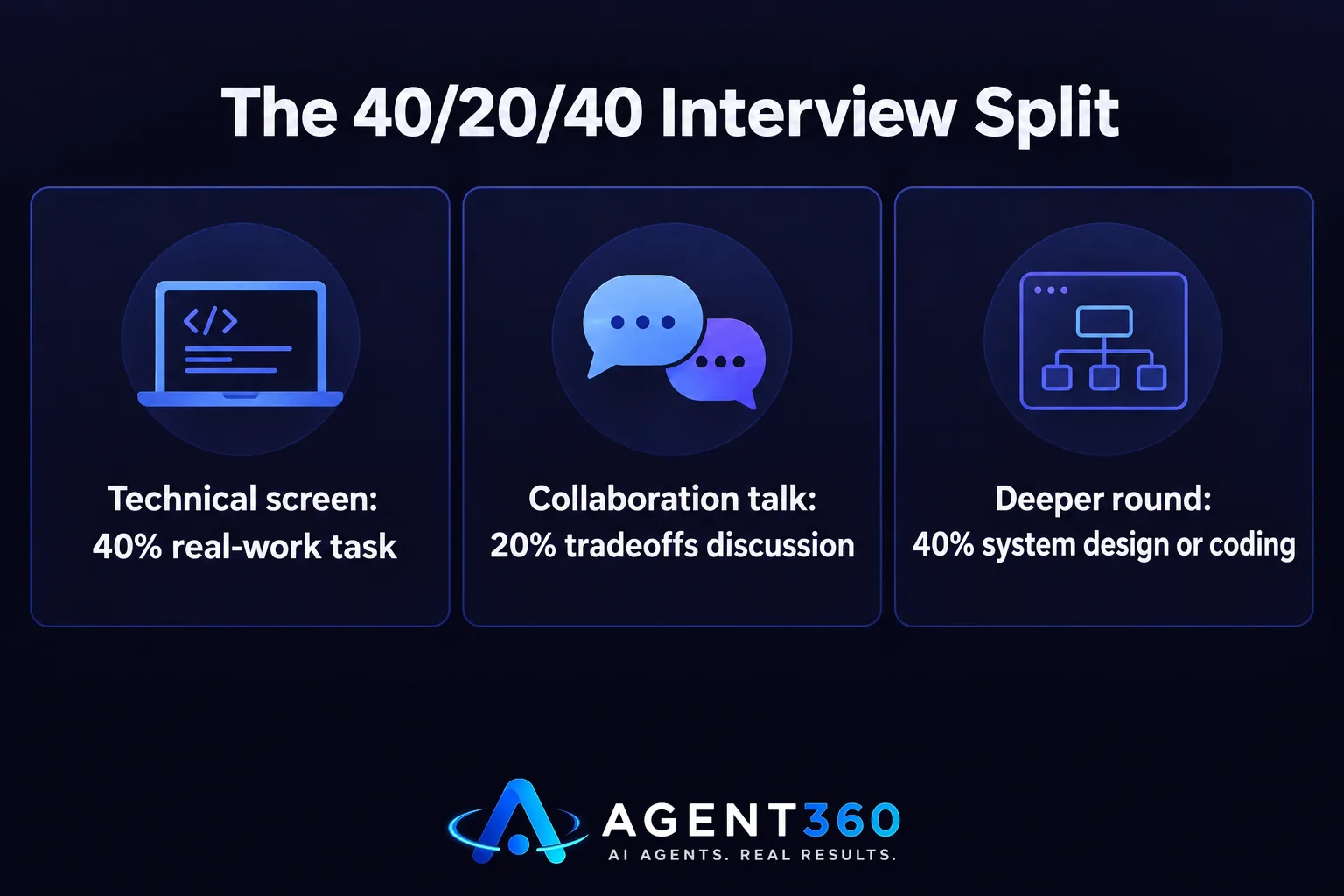
The exact split matters less than the principle behind it: most of the loop should test things the candidate will actually do in the role, not abstract puzzles.
What is the salary of a 2 year software engineer?
There's no honest single number here — it moves too much by location, stack, company stage and whether equity is part of the offer to be worth quoting as if it were fixed. What's worth doing instead of chasing a number: benchmark by level and scope, not years in seat. A two-year engineer who has owned a production system commands a different offer than one who has only shipped under close review.
Compare current postings and comp-sharing data for the specific level and location you're hiring into, rather than anchoring on “two years.” And decide up front how much of the offer is cash versus equity, so you're not negotiating that split candidate by candidate.
Don't wait for a resume pile — the engineers worth hiring are rarely applying
If you're trying to hire someone to build your company's software from scratch, posting a job and waiting is the slowest option available, because the engineers capable of owning that kind of build are usually employed, not browsing job boards. Sourcing has to go find them: search by title, stack and seniority rather than hoping the right title lands in your applicant tracker. This is exactly the problem a job description solves when it's written specifically enough to turn into search filters — engineering searches in particular tend to live in long boolean strings that most hiring teams never finish writing, let alone run well.
Screen for the work, not the credential
A resume tells you what a candidate claims to have built. It doesn't tell you whether they can reason through a bug, explain a tradeoff, or write code someone else can maintain. Put a real-work exercise in front of every candidate before you schedule a full loop — a short code review, a design sketch, a take-home capped at a couple of hours — and you'll cut a surprising number of strong-looking resumes before they cost you an afternoon of interviewer time.

A first-round phone screen is useful for confirming logistics, availability and the basics of the role, but it's not a substitute for that exercise; an AI phone screen, done well, clears that first round without pulling a human engineer off their own work to do it.
If you are not technical, borrow judgment before you borrow code
Founders hiring their first engineer without a technical background face a specific risk: they can't personally evaluate the work sample that's supposed to screen out weak candidates. The fix isn't to skip the exercise — it's to bring in someone who can read it, even for one hour, before an offer goes out. A fractional CTO, an advisor, or a freelance senior engineer reviewing a single take-home is a cheap insurance policy against a hire that looks good on paper and can't actually ship.
A faster way to build the shortlist
HiringAgent turns a job description into search filters for title, stack, seniority and years, then scores every candidate it finds from 0 to 100 against that description, so the shortlist arrives ranked instead of alphabetical. Candidates who apply get the same score from a parsed resume, and everyone — sourced or applied — lands in one pipeline with an AI phone screen for first-round scheduling. Plans start at $197 a month with unlimited users and no contract, detailed on the pricing page.
Questions worth answering before you write the offer
How long should a software engineering interview loop take? Long enough to see real work and no longer — most loops that drag past four rounds are compensating for a weak first screen, not adding real signal. A technical exercise, one collaboration-focused conversation, and one deeper technical round covers most roles.
Should I hire for a stack or for the ability to learn a stack? For a role with an urgent, specific build, hire for the stack you're using today. For a role that will grow with the company, weight the exercise toward how someone reasons through an unfamiliar problem, since the stack will change under them within a year or two regardless.
Do I need a recruiter to hire a software engineer well? No — the parts that benefit from a specialist are sourcing and the technical read on a work sample. A founder or hiring manager can run the rest of the loop directly if the exercise and the scoring are structured ahead of time.
More articles
- How to Hire Sales Reps Without Guessing on Resumes
- A Talent Sourcing Strategy That Doesn't Start at Zero
- Sourcing Tools for Recruiters: What Each Layer Actually Does
- Is It Legal to Use AI in Hiring? Here's What Applies
- Hiring With AI: What It Can and Can't Decide
- First-Round Interview Questions That Predict Fit, Not Charm
- How to Write a Job Description That Attracts Candidates
- What a Job Description Generator Should Actually Write
