Are All Tracking Systems the Same? Not Even Close
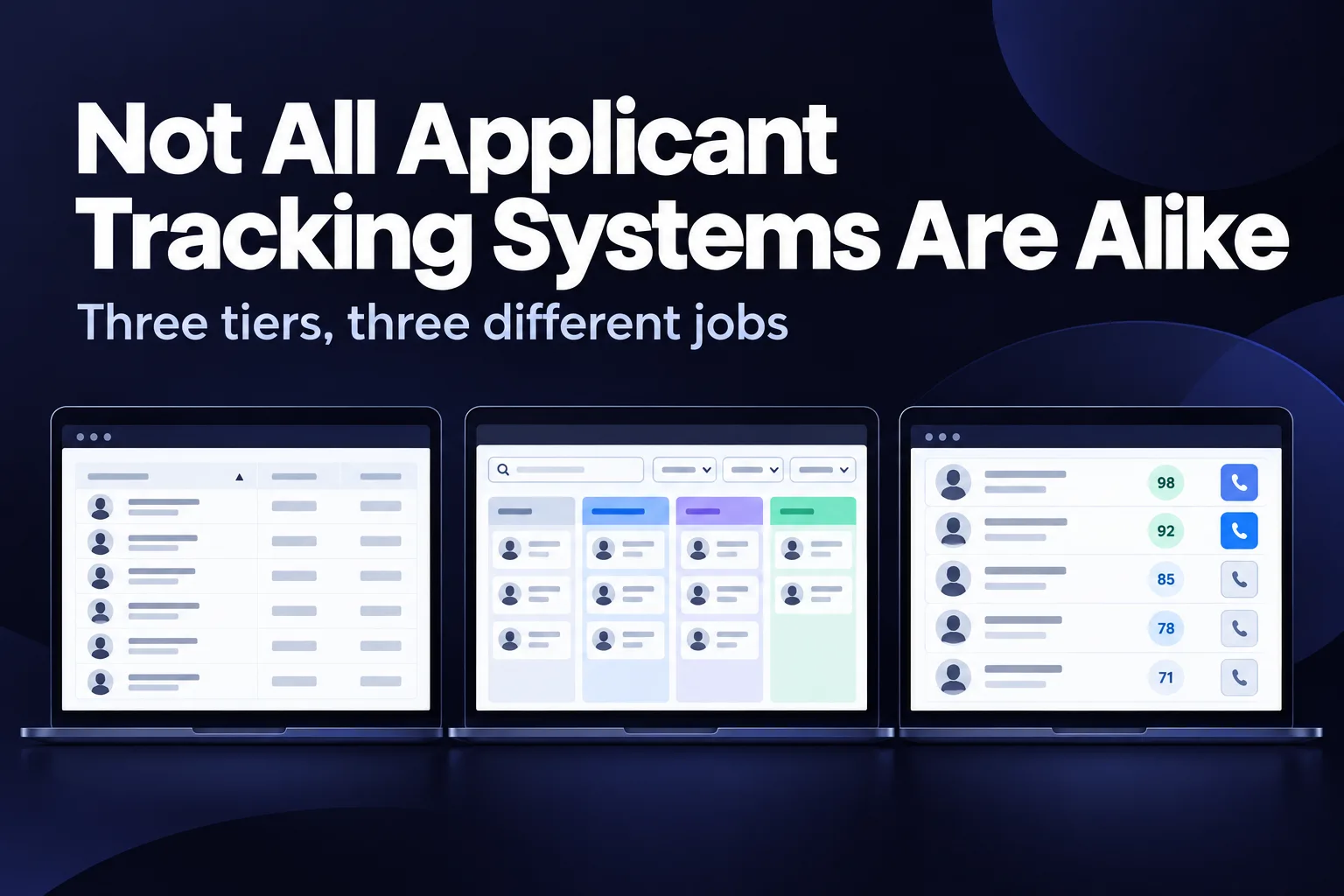
Are all tracking systems the same? No. The name “applicant tracking system” covers three functionally different products, and most of the confusion in a buying decision comes from comparing a feature list on one tier against a feature list on another without realizing they solve different problems. A system that stores applicants and a system that finds, scores and screens them both call themselves an ATS. They are not interchangeable. Pick the wrong one and it costs you a quarter of hiring before anyone notices why.
Here's the split that actually matters, and what to check before you sign anything.
Three things separate tracking systems: where candidates come from, whether they're scored, and how far the record goes
Every ATS on the market answers these three questions differently, and the answers determine what your team does by hand versus what the system does for them.
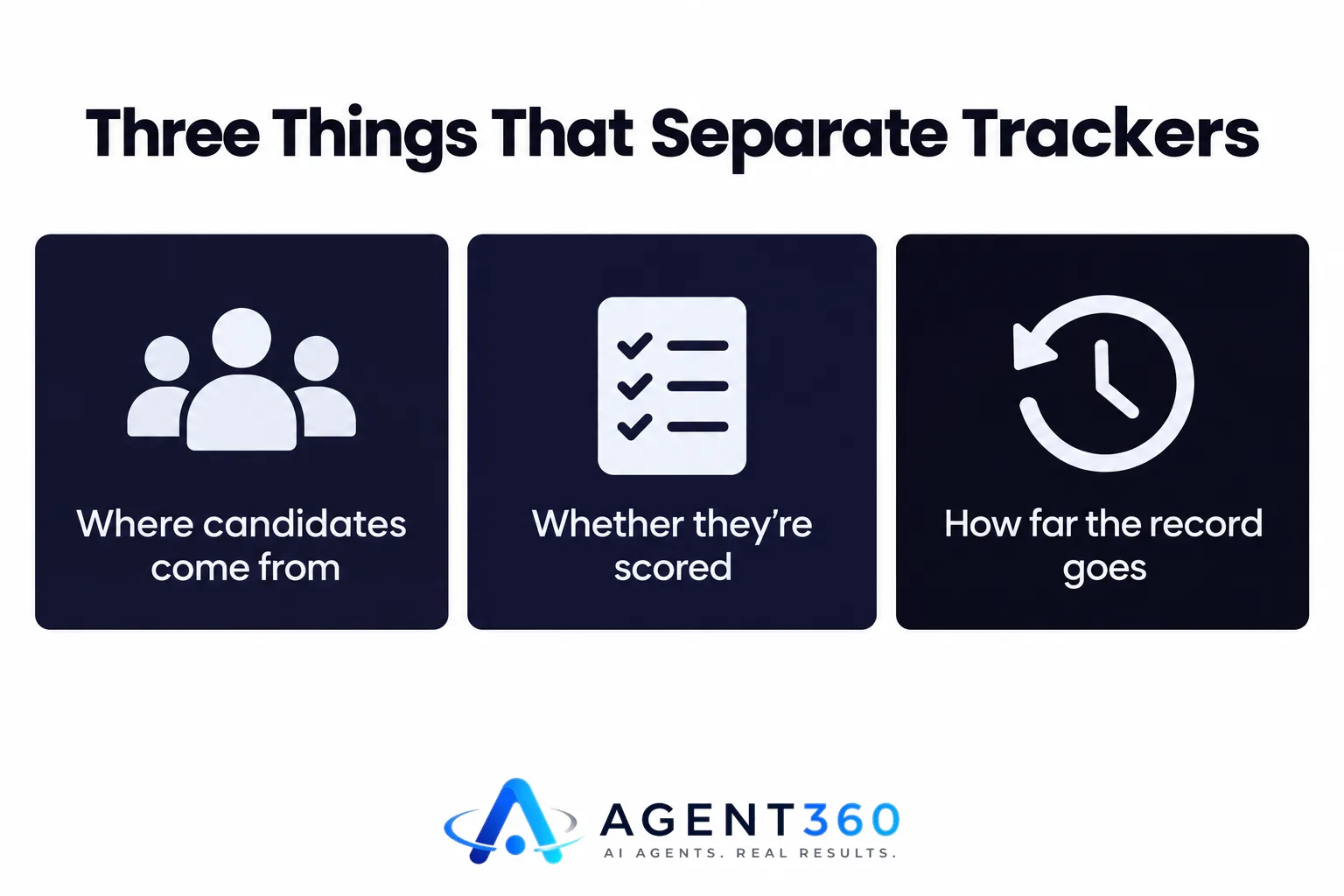
- Where candidates come from. Some systems only hold people who find your careers page and apply. Others actively search a candidate database using filters built from your job description, so the pipeline has people in it before a single application arrives.
- Whether candidates are ranked, not just listed. A storage-only system gives you a list sorted by application date. A scored system ranks every person — sourced or applied — against the role, with a number you can sort by and a reason attached to it, the way AI match scoring works.
- How far the record goes. Some systems end at “interview scheduled.” Others track every stage through offer accepted or rejected, and report on where candidates drop out, which matters more once you're running five roles at once instead of one.
Any two products can answer “yes” to “do you track applicants” and still be built for opposite workflows. That's the actual answer to whether tracking systems are the same: they share a name. Almost everything else, they disagree on.
What's the best tracking software?
There isn't one. There's the one that matches how candidates actually reach you. If every opening gets forty inbound applicants from a careers page and a job board, a storage-and-pipeline tool is enough — you're triaging volume, not hunting for it. If roles are specialized enough that inbound applications are thin — a senior engineer, a niche ops hire, a sales rep with a specific vertical — a tracker that only logs who showed up leaves you waiting on a trickle. In that case the software that matters is the one that goes out and builds the list itself, scores it, and hands you a shortlist before you've posted anywhere. That's the difference covered in more detail when comparing a sourcing-enabled ATS against a traditional one.
The practical test: open the trial, paste a real job description, and see what the system does with it in the first five minutes. If the answer is “nothing until someone applies,” you've found a storage tool. If it hands back a ranked list of people who aren't yet in your pipeline, you've found something else.
What are the different types of trackers?
Applicant tracking software generally falls into three tiers, and the pricing usually tracks the tier:
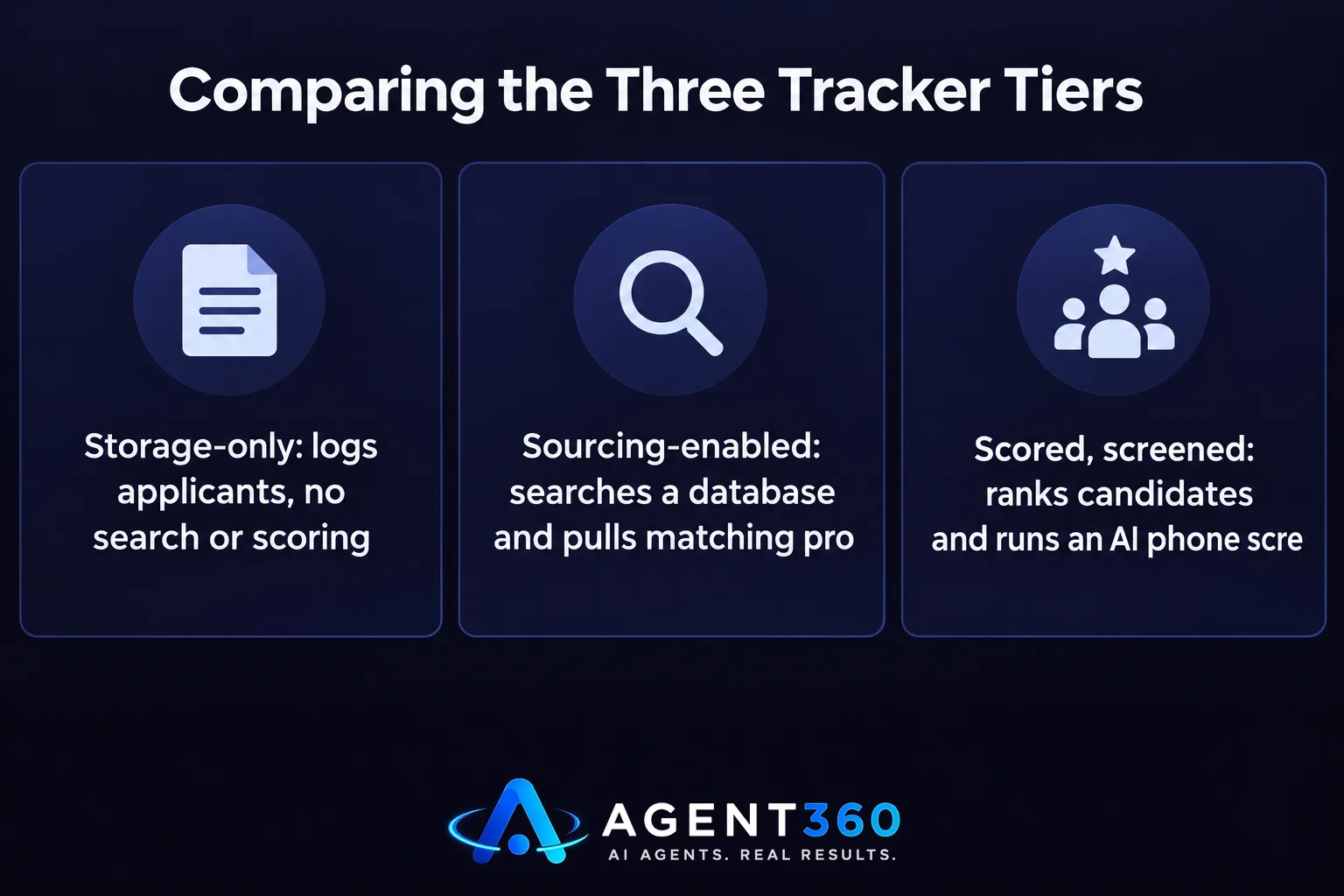
- Storage-only trackers. These log applicants, let you move them between stages you define, and send rejection emails. They do not search for candidates or score anyone. Cheapest tier, and fine if your hiring problem is organizing inbound volume, not finding people.
- Sourcing-enabled trackers. These add a search layer on top of storage — the system reads a job description, turns it into filters, and pulls matching profiles from a database, the way a modern ATS is usually defined against the traditional kind. Candidates land in the same pipeline whether they applied or were found.
- Scored, screened trackers. The top tier adds ranking — a number against every candidate, sourced or applied — and a first-round step, often an AI phone screen, before a human ever picks up the phone. Built for teams running several open roles who need to know, at a glance, who's worth a call.
None of these tiers is universally better. A company running one or two roles a year with steady inbound applicants doesn't need sourcing or scoring. A team running ten roles with thin inbound flow is paying a real cost — in weeks, not dollars — for a tool that only stores.
Where this gets decided before you buy, not after
We built HiringAgent as a sourcing-enabled, scored tracker rather than a storage layer, because the teams who complain about their ATS are almost always complaining about a mismatch between tier and need, not about the software itself. It sources candidates from a pasted job description, scores every one from 0 to 100 against the role, runs the first-round phone screen, and tracks everyone from applicant to hired — three plans starting at $197 a month, unlimited users, no contract, detailed on the pricing page. If your current system only stores applicants, name that gap plainly before you renew it.

How many types of trackers are there?
Three functional tiers in practical terms: storage-only, sourcing-enabled, and scored-with-screening. Vendors stack more marketing language on top — “AI-powered,” “intelligent,” “next-gen” — but those three tiers describe what the software actually does. Compare the tier, not the adjective on the landing page.
Common questions
Do all applicant tracking systems score candidates the same way? No. Some don't score at all — they just list applicants by date. Among the ones that do score, the inputs differ: some rank only resumes submitted through an apply page, others score sourced candidates too, with sub-scores for skills, experience and location rather than a single blended number.
Is a storage-only tracker ever the right choice? Yes, specifically when inbound application volume is already high relative to open roles and the bottleneck is organizing people, not finding them. Paying for sourcing you don't need adds cost without solving anything.
Does a sourcing-enabled tracker replace a recruiter's judgment? No. It replaces the mechanical parts — building the search, ranking candidates, running a first-round call. Who moves forward, and who gets hired, stays a person's call. Hold that line no matter which tier of tracker you buy.
More articles
- Gen AI Direct Sourcing: What It Actually Automates
- Recruiting Agency Software: Judge It by Time to Shortlist
- ATS Tracking Price: What the Number on the Page Means
- ATS Tracking Cost: What You Actually Pay For
- A Confidential Job Search for Employers, Done Right
- How to Hire Software Engineers: A Level-First Playbook
- How to Hire Sales Reps Without Guessing on Resumes
- A Talent Sourcing Strategy That Doesn't Start at Zero
