How Long Does Outbound Take to Work? A Realistic Timeline
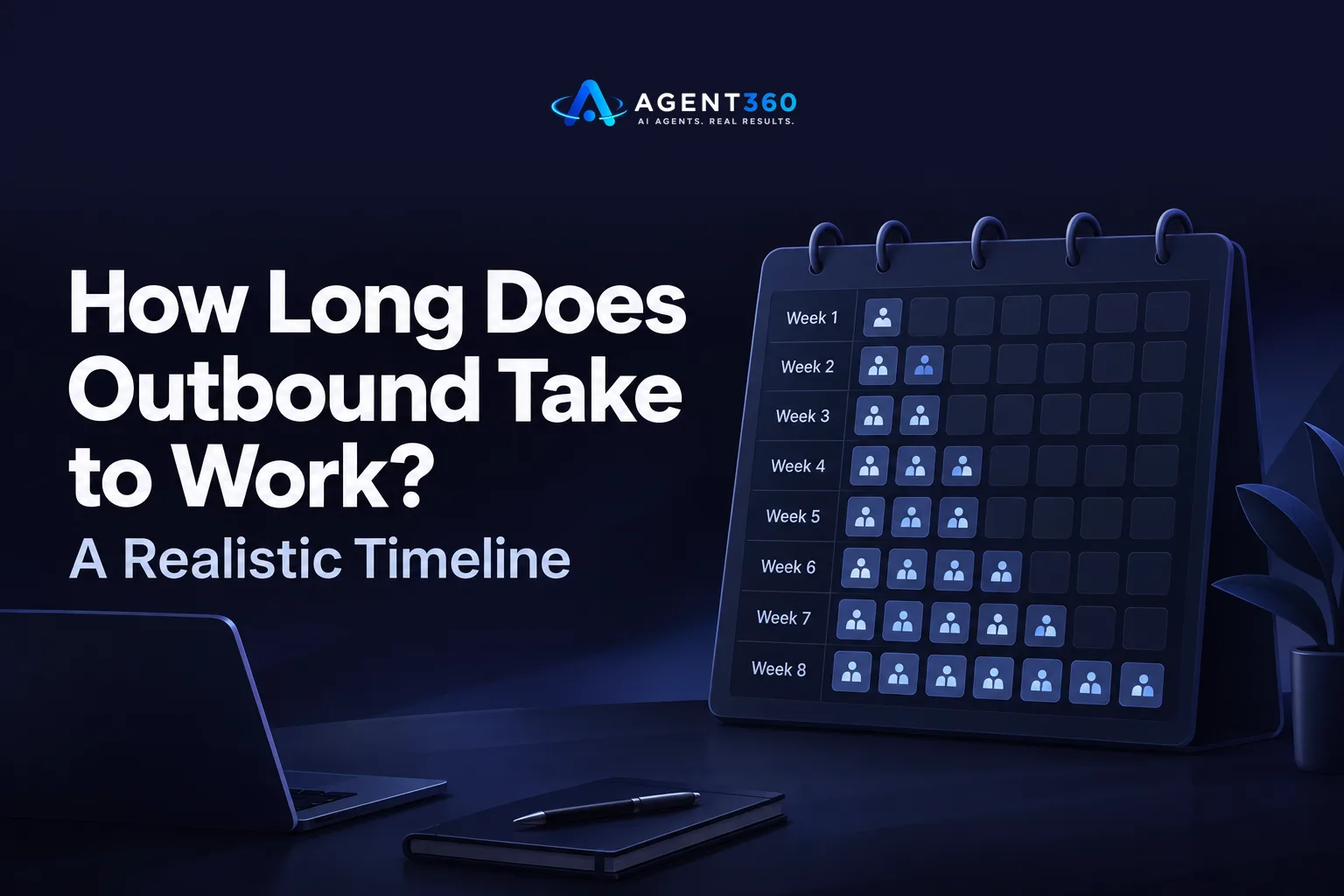
Outbound takes four to eight weeks to produce a steady flow of booked meetings, and the first two of those weeks rarely produce much at all. That gap is not a sign something is broken. It is domain warm-up, list quality settling, and messaging getting tested against real replies instead of your own guesses.
Founders running their own outbound often expect week-one results and quit in week three, right before the pipeline would have started moving. Staffing and recruiting owners selling to hiring managers hit the same wall when they treat a new campaign like a job posting that should fill overnight.
This piece breaks the timeline into stages so you know what should be happening at each point, and what to check if it is not.
Key Takeaways
- Expect two to three weeks before meaningful reply volume, longer if you are sending cold email from a brand-new domain.
- Treat the first two weeks as list and message testing, not meeting generation.
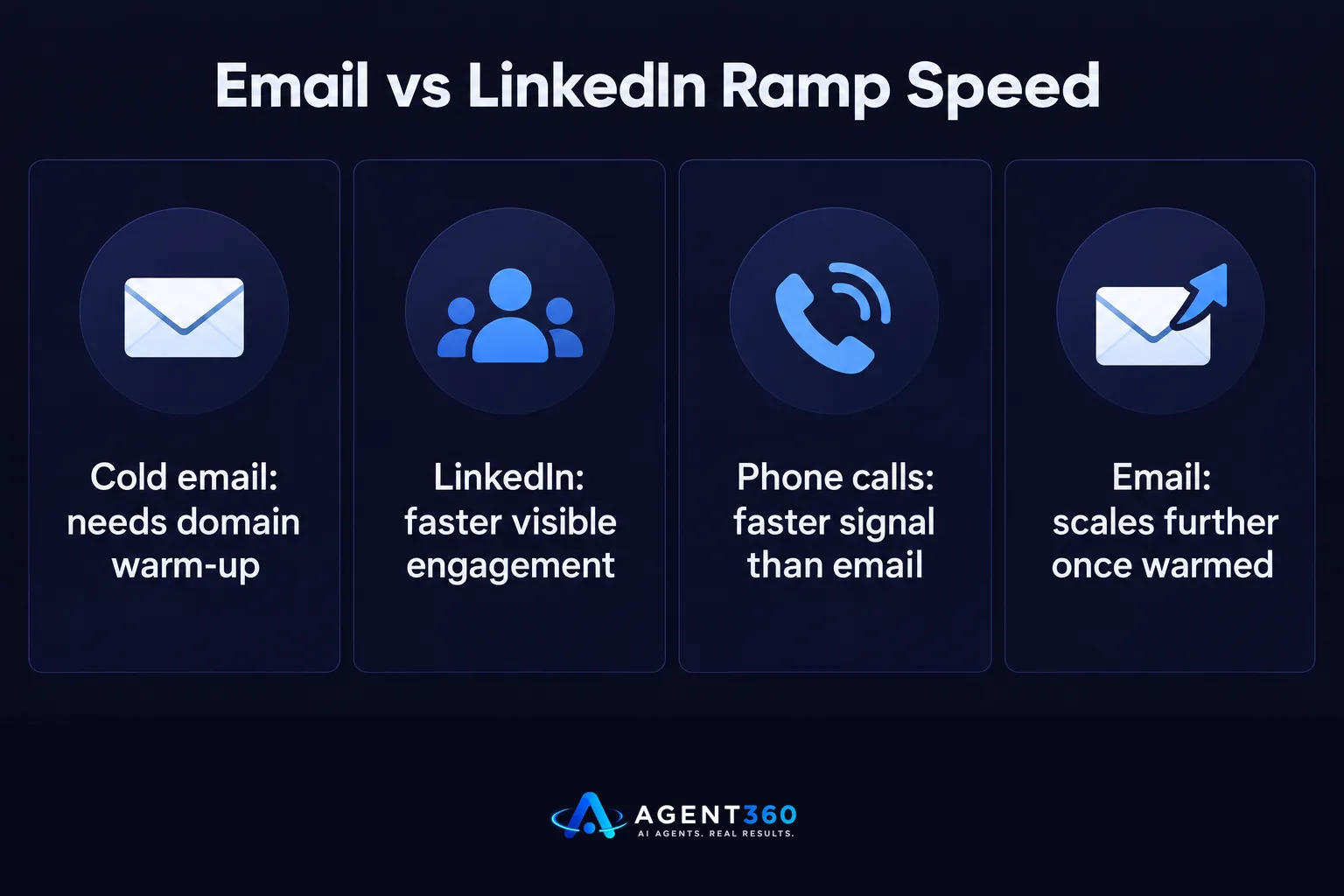
- LinkedIn outreach and phone calls can produce faster signal than email, but email usually scales further once it is warmed.
- If you are deciding whether to run this yourself or bring in help, read the SDR decision guide before committing a full quarter to either path.
- A flat week-four or week-six result with zero replies almost always traces back to list quality or a sending problem, not bad luck.
Table of Contents
How Long Does Outbound Take to Produce Booked Meetings?
Most outbound programs need four to eight weeks before booked meetings become a predictable weekly number. The first stretch is setup and calibration. New sending domains need to build reputation with inbox providers, which is a gradual process, not a switch you flip. LinkedIn accounts need to ramp connection and message volume slowly to avoid restrictions. None of that produces meetings yet, but all of it determines whether later weeks do.
What does week one actually look like?
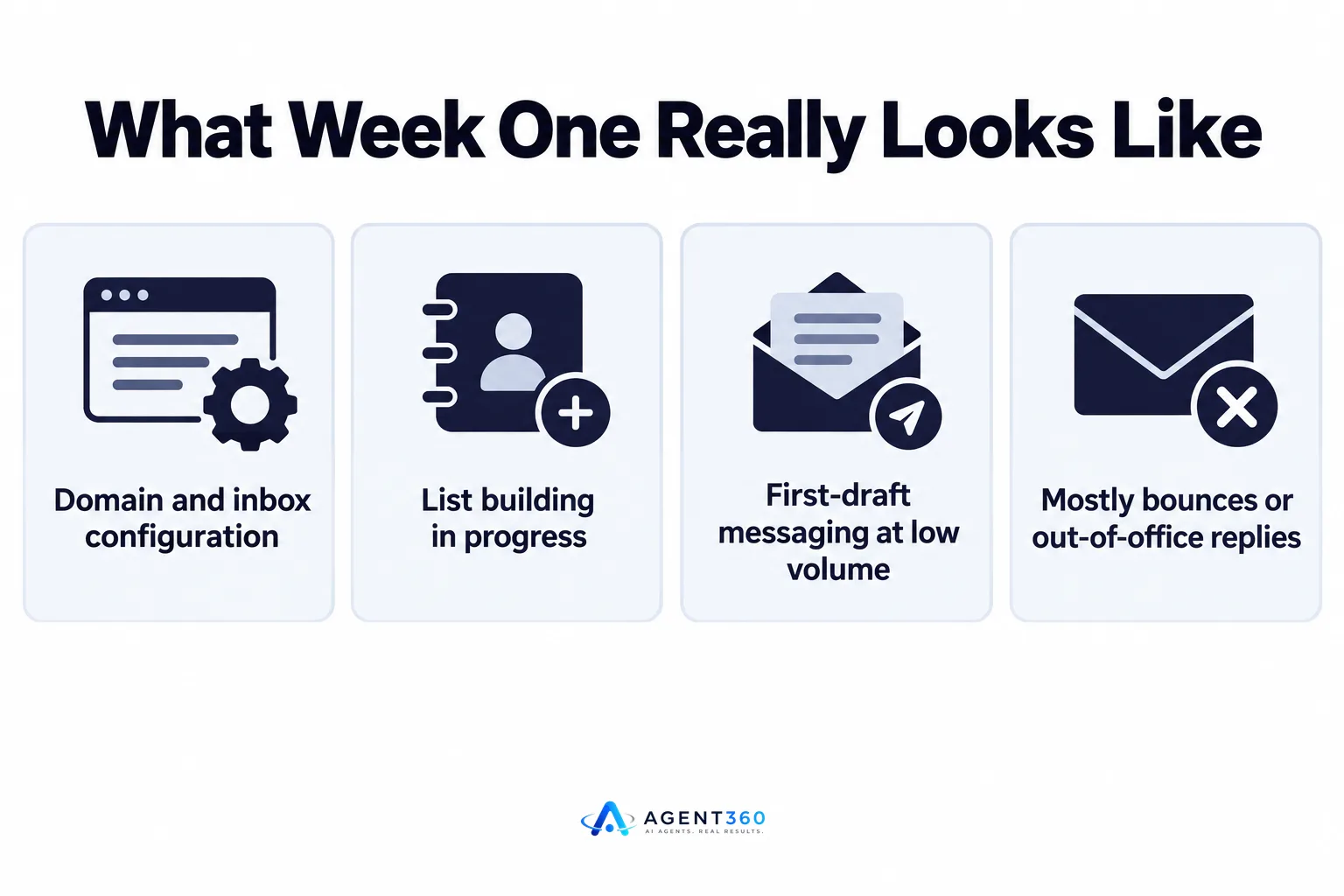
Week one is almost entirely setup: domain and inbox configuration, list building, and first-draft messaging going out at low volume. Replies in week one, if any, are usually bounces, out-of-office messages, or the occasional early responder. Treat this week as infrastructure, not pipeline.
When should the first real reply show up?
Real, on-topic replies typically start appearing in week two or three, once sending volume has increased and enough messages have gone out to produce a statistically meaningful sample. If you are still seeing nothing by the end of week three across email, LinkedIn, and phone combined, the problem is usually the list or the offer, not the timeline.
Why Does Cold Email Take Longer to Ramp Than LinkedIn or Calls?
Email has a warm-up period that LinkedIn and phone outreach do not. A brand-new sending domain has no reputation with Gmail, Outlook, or other providers, so sending at full volume immediately tends to land in spam and can damage the domain before it has a chance to prove itself. Cold email sending limits exist precisely to manage this ramp, and they are not a restriction to work around, they are the mechanism that protects deliverability over time.
Does the number of inboxes change the timeline?
It changes the volume you can reach, not how fast any single inbox warms. Running outreach from a single inbox limits how many prospects you can contact per week regardless of how long you have been sending. How many inboxes you need for cold email is really a question about target volume, and more inboxes let you scale sooner once each one is warmed, rather than skipping the warm-up itself.
What Slows Outbound Down Beyond the Normal Ramp?
Three things stall outbound past the normal four-to-eight-week window: a stale or poorly targeted list, a message that does not match what the prospect actually cares about, and inconsistent follow-up. Any one of these can flatten results even after infrastructure is fully warmed.

- Check list accuracy first. Bounces above a low single-digit percentage usually mean the list has outdated contacts or wrong role targeting, and no amount of waiting fixes that.
- Test one message variable at a time. Changing subject line, opening line, and call to action all at once makes it impossible to know what moved the reply rate.
- Confirm follow-up is actually happening. Most replies come after the second or third touch, not the first, so a single-touch campaign will always underperform regardless of how long it runs.
- Separate channels before judging results. Email, LinkedIn, and phone each have different ramp speeds, so judging the whole program by email alone in week two will understate what is working.
How do I know if it is a timeline problem or a targeting problem?
If volume is reaching the right number of prospects but replies stay near zero past week three, that is a targeting or messaging problem, not a timeline problem. If volume itself is still low because sending is ramping conservatively, that is timeline, and it will resolve on its own as the ramp completes.
Take the Next Step With a Timeline You Can Trust
Knowing the real timeline matters most when you are deciding whether to run outbound yourself or bring in a system built for it. Agent360 combines AI prospecting, multi-channel outreach across LinkedIn, email, and phone, and meeting booking directly on your calendar, so the ramp is managed across channels instead of resting on one inbox or one person's bandwidth.
For founders running their own outbound and staffing and recruiting owners selling to hiring managers, the goal is the same: a predictable flow of booked meetings without guessing at what week four should look like.
See how the ramp and the channels fit together on the how it works page.
Frequently Asked Questions
How long before cold email starts getting replies?
Most campaigns see meaningful reply volume by week two or three, after sending has ramped past the initial low-volume warm-up period. Replies before that point are usually limited to bounces or occasional early responders.
Is LinkedIn outreach faster than email?
LinkedIn outreach can produce visible engagement sooner because it does not require the same domain warm-up as email, but it also has its own daily and weekly limits that cap how fast it can scale.
Should I stop a campaign if nothing happens in two weeks?
Two weeks is usually still inside the normal setup window, so stopping that early rarely gives the campaign a fair test. A flat result past week four, across all channels combined, is a better signal to investigate list quality or messaging.
Does a bigger list speed up the timeline?
A bigger list increases volume but does not shorten the warm-up period for new domains or new LinkedIn accounts. Scaling too fast on an unproven list can also lower reply rates if targeting quality drops as the list grows.
Can one person manage outbound and still see results on this timeline?
Yes, but the time cost is in sustained follow-up and list maintenance, not just sending the first message. Tools that handle prospecting, outreach, and meeting booking in one system reduce how much of that ongoing work falls on one person.
More articles
- How Long Does Cold Email Take to Work? A Real Timeline
- Outbound Software Without Per Seat Pricing: What to Buy
- Sales Software With No Per User Pricing: What to Buy
- Can Software Replace an SDR? What It Can and Can't Do
- Outsourced SDR vs In-House SDR: How to Decide
- First Sales Hire vs Outbound Software: Which First?
- What Does an SDR Cost? The Real, Fully Loaded Number
- AI SDR vs Hiring an SDR: Which Fills Pipeline Faster?
