Outsourced SDR vs In-House SDR: How to Decide
Outsourced SDR vs in house comes down to three things: how fast you need pipeline, how much control you need over the message, and who should own the relationships once they're built. An outsourced SDR firm plugs in faster and costs less upfront. An in-house SDR takes longer to ramp but builds product knowledge and stays loyal to your pipeline alone.
Neither answer is universal. A staffing firm filling five roles a month has different needs than a B2B founder testing a new offer. This article breaks down the tradeoffs so you can match the choice to where your company actually is.
Key Takeaways
- An outsourced SDR firm usually starts faster but splits attention across multiple clients.
- An in-house SDR takes months to ramp but builds deeper product and account knowledge over time.
- Outsourced contracts often lock you into monthly minimums regardless of results.
- Before committing to either, check whether software can do the prospecting and outreach work at a fraction of the cost.
- The right choice depends on deal complexity, sales cycle length, and how much control you need over messaging.
Table of Contents
What's the real difference between an outsourced SDR and an in-house SDR?
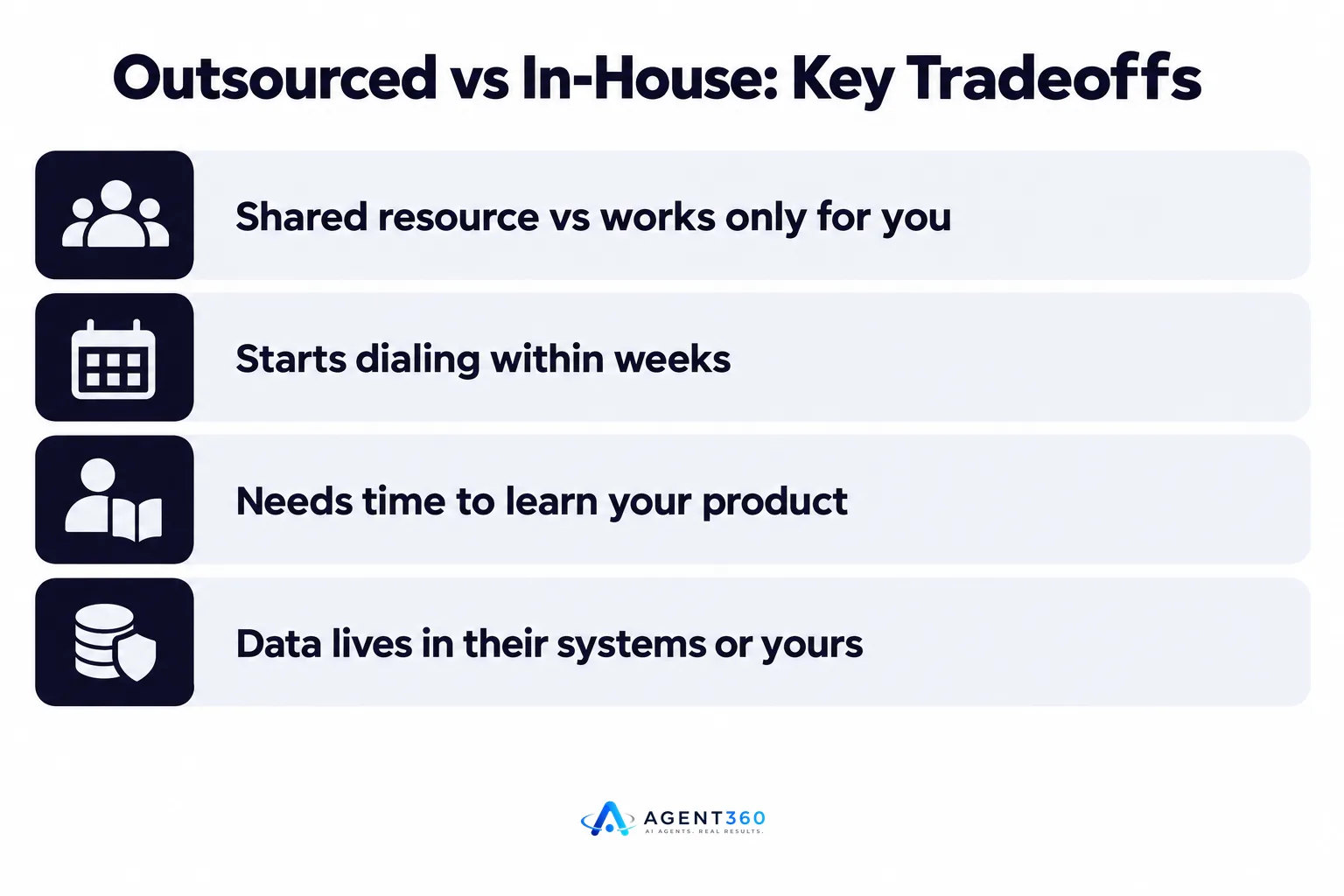
An outsourced SDR is a shared resource working for several clients at once; an in-house SDR works only for you. The outsourced model trades dedicated attention for speed and lower fixed cost. The in-house model trades a longer ramp for full control and institutional knowledge.
Who owns the data and process?
With an outsourced firm, the prospect lists, call scripts, and sequence logic often live inside their systems, not yours. If you switch providers, you can lose that history. An in-house hire builds everything inside your own CRM, so the pipeline and the learning stay with your company even if that person leaves.
How fast does each option ramp up?
An outsourced SDR team can usually start dialing and emailing within a couple of weeks because the infrastructure already exists. An in-house hire needs time to learn your product, your market, and your objection handling before conversations sound credible. That ramp is real time with no meetings booked.
Which costs less over a year?
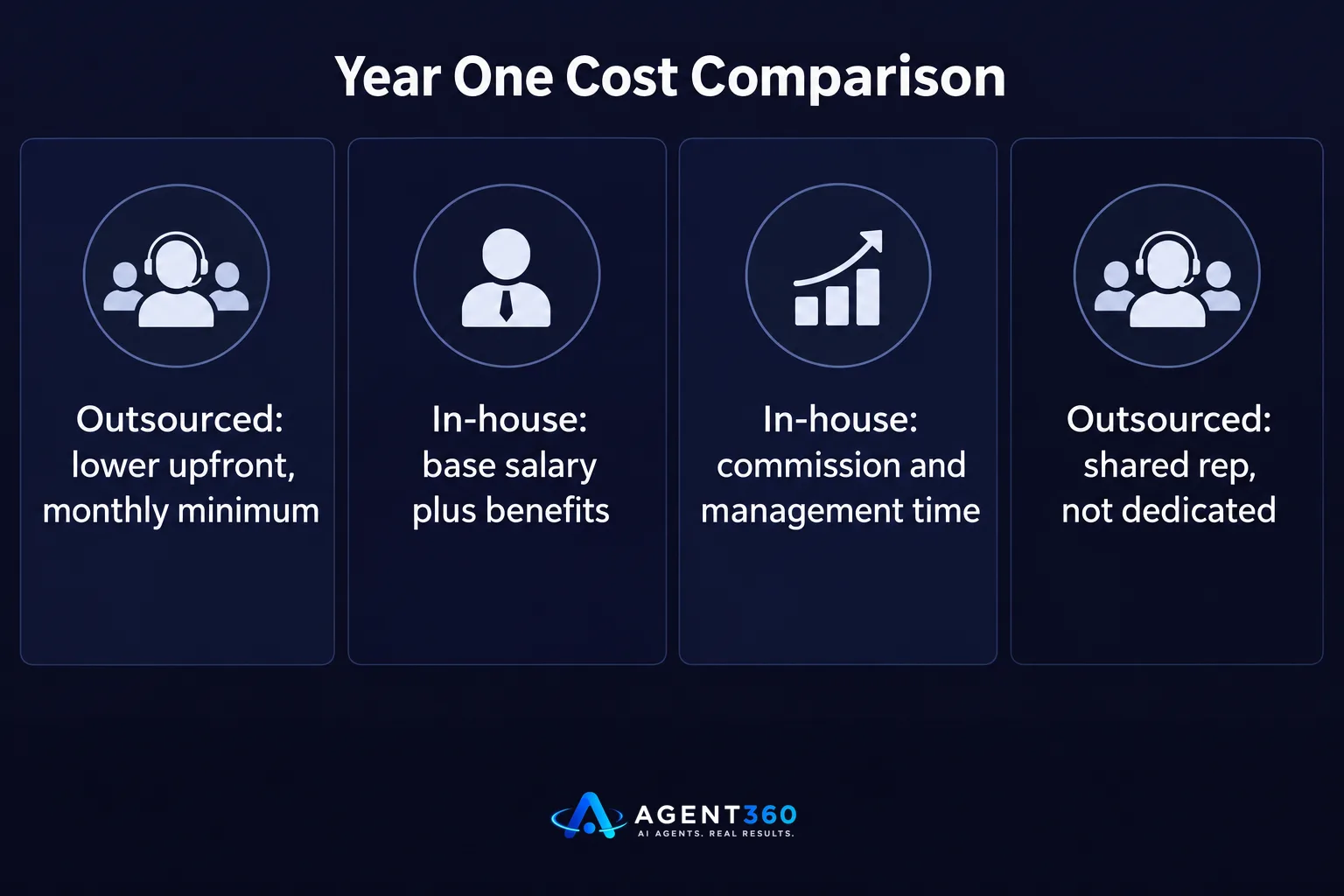
Outsourced SDR firms usually cost less upfront; in-house hires cost more but the spend buys a permanent asset. Outsourced contracts are typically billed monthly with a minimum term, and the fee covers a shared rep's time, not a dedicated one. An in-house SDR adds base salary, commission, benefits, and management time, all of which continue whether or not meetings get booked that month.
What's included in an outsourced SDR fee?
Most outsourced SDR agreements bundle prospecting, outreach, and a set number of booked meetings per month into one fee. Tooling, list quality, and reporting depth vary a lot between providers, so ask exactly what's included before signing anything longer than a quarter.
Which gives you more control over quality and messaging?
In-house gives you more control; outsourced gives you less, especially over messaging on day one. An outsourced rep is managing several accounts and following a playbook built for scale, not your specific nuance. An in-house rep answers only to you, so messaging can be corrected the same day a problem shows up.
Staffing and recruiting firm owners selling to hiring managers often feel this most acutely. The pitch has to match exactly what's open right now, and an outsourced team working from a generic script can miss that nuance.
How do I decide between the two?
- Map your sales cycle length. Short, transactional cycles favor outsourced speed; long, complex cycles favor an in-house rep who can hold context across many touches.
- Price out twelve months of each option. Include the outsourced minimum commitment and the in-house fully loaded cost, not just base salary.
- Check who keeps the pipeline if the arrangement ends. Decide whether prospect data and sequence history stay with you or with the vendor.
- Test before committing to a full year. Run a 60 to 90 day pilot with whichever option you lean toward, with a clear meetings-booked target.
- Compare both against software before you sign. Review how outbound software stacks up against an SDR hire for your specific deal size and volume.
When does it make sense to skip both and run outbound yourself?
Skip the hire entirely if you're a founder or small team that can run outbound with the right tools instead of a person. Prospecting, multi-channel outreach, and meeting booking can be handled by software built for that job, without the ramp time or the monthly minimum. The guide on whether to hire an SDR at all walks through the signals that tell you it's time for a person versus a tool.

Find the Right Fit for Your Pipeline
Agent360 handles the parts of outbound that make the outsourced-versus-in-house question less urgent in the first place. It finds ideal buyers and flags buying signals with AI prospecting, runs outreach across LinkedIn, email, and phone, and books meetings straight onto your calendar, with CRM tools to track the pipeline as it moves.
That combination of AI and human-backed execution means you're not choosing between a shared rep and a six-figure hire just to get consistent meetings on the calendar. See current pricing to compare the cost against either SDR option.
Frequently Asked Questions
Is an outsourced SDR cheaper than hiring in-house?
Usually yes in the first year, since outsourced fees avoid salary, benefits, and management overhead. Over multiple years, an in-house hire can become more cost-effective if they stay productive and retain product knowledge.
How long does it take an in-house SDR to become productive?
Ramp time varies by product complexity and sales cycle, but most new SDRs need several weeks of training before outreach volume and quality reach a steady state. Complex B2B products with longer cycles typically take longer to ramp than simple, transactional offers.
Can an outsourced SDR firm work exclusively on my accounts?
Some firms offer dedicated reps at a higher price point, but most standard outsourced SDR contracts involve shared attention across several client accounts. Ask directly about exclusivity before signing if dedicated focus matters to you.
What happens to my pipeline data if I end an outsourced SDR contract?
This depends entirely on the contract terms, and not all providers export prospect history or sequence data cleanly. Get the data ownership and export terms in writing before you start, not after you want to leave.
Is there a middle option between outsourced and in-house SDRs?
Yes, outbound software that handles prospecting, multi-channel outreach, and meeting booking without a dedicated hire or an outsourced contract. Check the pricing details to see how that cost compares to either SDR path.
More articles
- Can Software Replace an SDR? What It Can and Can't Do
- First Sales Hire vs Outbound Software: Which First?
- What Does an SDR Cost? The Real, Fully Loaded Number
- AI SDR vs Hiring an SDR: Which Fills Pipeline Faster?
- Hire an SDR or Use Software? How to Decide
- Should I Hire an SDR? A Founder's Decision Guide
- Sales Software for Founders: What to Buy First
- B2B Outbound for Small Companies: A Practical Playbook
