Can Software Replace an SDR? What It Can and Can't Do
Software can replace most of what an SDR spends their day doing — finding prospects, sending outreach, following up, and logging activity — but it cannot replace the judgment calls an SDR makes on messy, ambiguous deals. The honest split is this: the repetitive, high-volume work is a good fit for software. The parts that require reading a prospect's tone, adjusting a pitch mid-conversation, or deciding which half-interested reply is worth a phone call still need a person, at least for now.
This matters because the decision isn't really “software or SDR.” It's which tasks you hand to software first, and which ones stay with a human — whether that's you, a hire, or a contractor.
Key Takeaways
- Software reliably handles prospecting, multi-channel sending, follow-up sequencing, and CRM logging.
- Judgment-heavy tasks — qualifying ambiguous replies, adjusting pitch on the fly, handling objections live — still need a person.
- Most B2B teams get the best result from a hybrid: software runs the volume, a person runs the conversations that matter.
- Compare the two paths directly before you commit budget: see SDR vs outbound software.
- Start by automating the task that eats the most hours with the least judgment required, then move up from there.
Table of Contents
Can Software Replace an SDR?
Software can replace the repetitive, rules-based parts of the SDR role, but not the parts that require live judgment. An SDR's week typically breaks down into list-building, outreach, follow-up, light qualification, and CRM updates. Software now handles the first four reliably at volume. What it can't do is read a reply like “maybe next quarter, we're mid-reorg” and decide in real time whether that's a soft no or a signal to call next month — that call still benefits from a person who's run enough conversations to know the difference.
What does an SDR actually spend time on?
Most of an SDR's day is research and repetition: finding the right contacts, writing and sending outreach, tracking who opened what, and following up on schedule. Industry surveys of sales teams consistently put the bulk of SDR time in prospecting and administrative follow-up, not in live conversation — which is exactly the part software is built to absorb.
What's left over once software takes the repetitive work?
What's left is qualifying ambiguous interest, adjusting a pitch based on what a prospect says, and deciding when a reply deserves a phone call versus another email. That's a smaller slice of the job than most founders assume, but it's the slice that decides whether a booked meeting turns into a real deal.
What Parts of the SDR Job Can Software Actually Do?
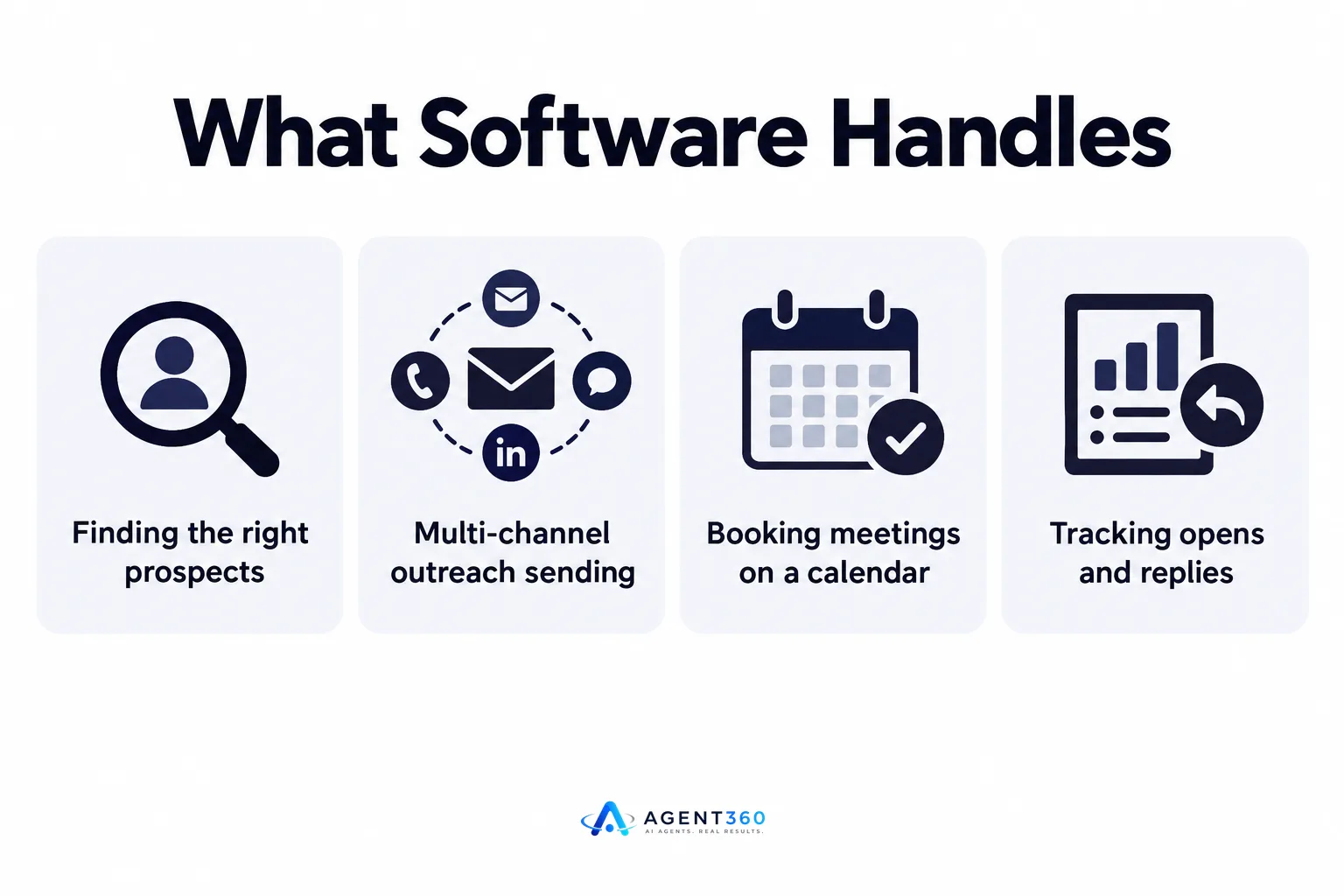
Finding buyers, sending outreach across channels, and booking meetings on a calendar are the parts software handles without a person in the loop. This is the volume work — the part that scales linearly with the number of prospects you want to reach, not with the number of good conversations you can personally hold.
Can software find the right prospects on its own?
Yes, this is where software is strongest. AI prospecting tools match your ideal customer profile against buying signals — hiring activity, funding, job changes, content engagement — and surface accounts worth contacting before a person would have found them manually. See how prospecting works for the mechanics.
Can software run outreach across email, LinkedIn, and phone without a person sending each message?
Yes, once sequences and messaging are set up, multi-channel outreach tools send, track opens and replies, and trigger the next step automatically. A person still needs to write the first draft of the messaging and review how prospects are responding — software runs the sending, not the strategy behind it. Details are on the outreach page.
What Can't Software Do That an SDR Does?
Software can't read context, adjust on the fly, or make a judgment call on an ambiguous reply the way a person can. This is the part of the job that resists full automation, and it's usually a smaller part of the week than people expect — but it's disproportionately important, because it's where a prospect decides whether to keep talking to you.

Why does ambiguous interest still need a human?
A reply like “interesting, send more info” could mean genuine interest, polite dismissal, or a request to be left alone. An SDR who's handled hundreds of these learns the patterns — tone, timing, what else is in the reply — and decides the next move. Software can flag the reply and suggest a response, but the final call on tone and timing is still better made by a person, which is why most outbound setups pair automated sending with human review of replies.
Why does live objection-handling resist automation?
A call or a reply thread where a prospect pushes back on price, timing, or fit requires adjusting the pitch in real time based on what they just said. That's a conversation skill, not a workflow — software can prompt a person with context, but it can't hold the conversation itself in a way that builds trust.
How Do You Decide What to Automate First?
Automate the highest-volume, lowest-judgment task first, then move up the list as you see what still needs a person. Trying to automate everything at once, or nothing at all, both waste time — the better path is sequential.
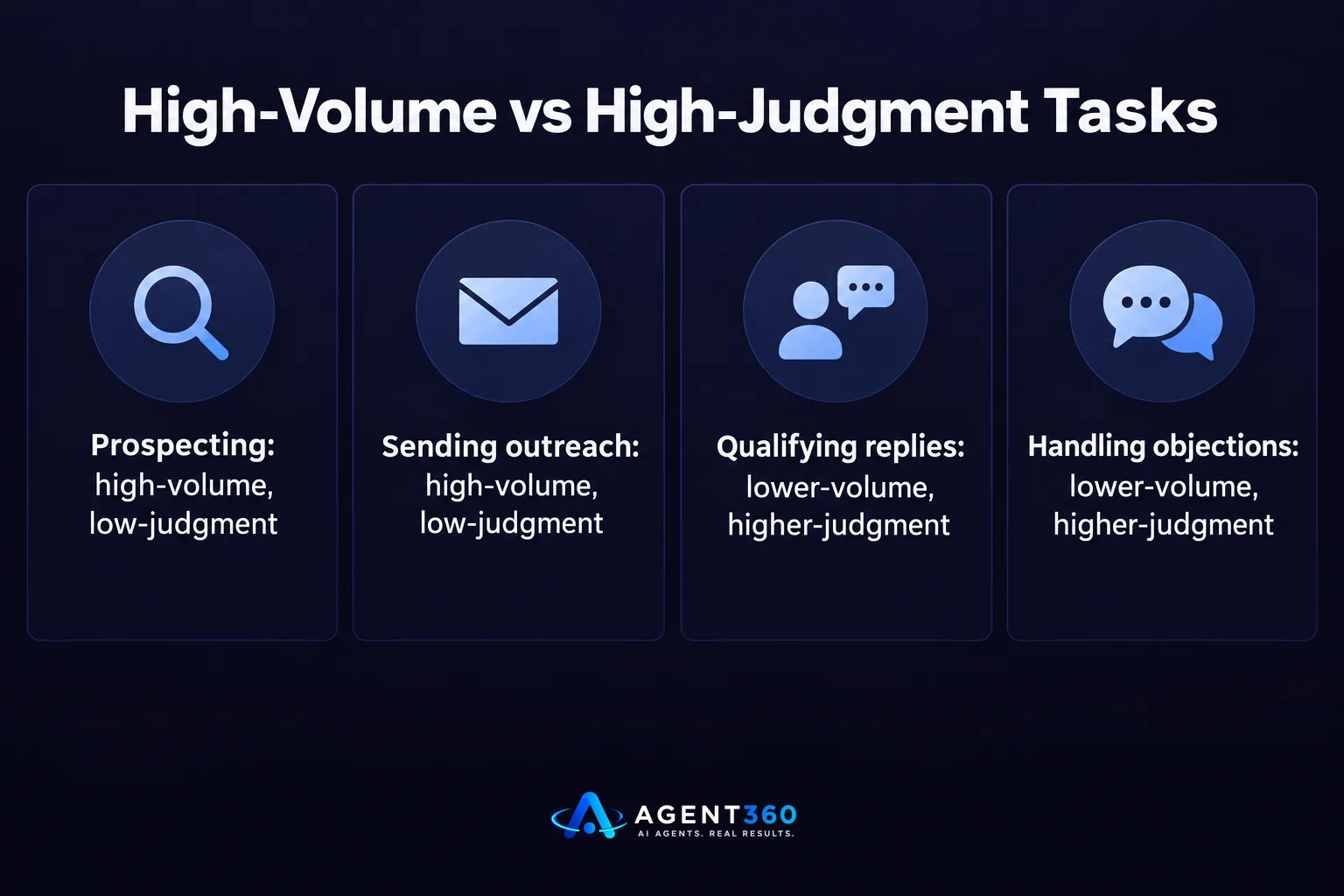
- List your SDR tasks by volume and judgment required. Prospecting and sending are high-volume, low-judgment. Qualifying replies and handling objections are lower-volume, higher-judgment.
- Hand off the high-volume, low-judgment tasks first. Let software run prospecting and multi-channel outreach so a person isn't spending hours on list-building and manual sends.
- Keep a person reviewing replies before they're treated as qualified. This catches the ambiguous cases software would otherwise misclassify.
- Track where meetings fall through after booking. If meetings are booked but don't show up or don't convert, that's usually a signal the qualification step needs more human judgment, not less software.
- Reassess quarterly. As messaging and lists mature, more of the judgment work can move to clearer rules — but check this against actual reply quality, not just volume.
Decide Your Next Step on Outbound
If you're weighing whether to automate outbound or hire for it, the clearest next move is to look at what each task in the SDR role actually requires — then match it to the right tool or person, not the other way around. Agent360 handles AI prospecting, multi-channel outreach across LinkedIn, email and phone, meeting booking, and CRM tracking, built for founders and sales teams who want the volume work off their plate without losing the judgment calls that close deals.
If you want to see how this splits in practice for your situation, book a demo.
Frequently Asked Questions
Can software completely replace an SDR?
No. Software can run prospecting, multi-channel outreach, follow-up, and meeting booking reliably. It struggles with ambiguous replies and live objection-handling, which usually still benefit from a person reviewing or jumping in.
What tasks should I automate first?
Start with the highest-volume, lowest-judgment tasks: finding prospects and sending outreach. These scale directly with list size and don't require reading tone or context, which makes them the clearest fit for software.
Is a hybrid of software and a person better than either alone?
For most B2B teams, yes. Software handles volume so a founder or rep isn't spending hours on manual sends, while a person reviews replies and handles conversations that need judgment.
How do I know if software is handling qualification well?
Track whether booked meetings actually show up and move forward. If meetings are being booked but falling through at a high rate, that's a sign the qualification step needs more human review before a meeting goes on the calendar.
Does this mean I never need to hire an SDR?
Not necessarily — it means the decision should be based on which tasks you still need a person for, not on replacing a role wholesale. Compare the two approaches directly on the SDR vs outbound software page before deciding.
More articles
- Sales Software With No Per User Pricing: What to Buy
- Outsourced SDR vs In-House SDR: How to Decide
- First Sales Hire vs Outbound Software: Which First?
- What Does an SDR Cost? The Real, Fully Loaded Number
- AI SDR vs Hiring an SDR: Which Fills Pipeline Faster?
- Hire an SDR or Use Software? How to Decide
- Should I Hire an SDR? A Founder's Decision Guide
- Sales Software for Founders: What to Buy First
