What Does an SDR Cost? The Real, Fully Loaded Number
What does an SDR cost? More than the salary you post in the job ad. A sales development rep's base pay is only the starting line — commission or bonus, payroll taxes, benefits, a tools stack, management time, and months of ramp-up all stack on top before that person books a single qualified meeting.
Founders and sales leaders who price out an SDR by salary alone almost always underestimate the real number. The gap between “what we budgeted” and “what we actually spent” is where most first SDR hires go wrong.
This breaks down every cost component, shows how to calculate the fully loaded number for your own hire, and lays out what to compare it against before you sign an offer letter.
Key Takeaways
- Base salary is typically less than half of an SDR's true cost once commission, taxes, and benefits are added.
- Tools, management time, and a multi-month ramp period are real costs that rarely show up in the hiring budget.
- Turnover resets the clock — SDR roles have high attrition, and every departure means paying ramp costs again.
- Before signing an offer, compare the fully loaded number against what outbound software costs for the same pipeline goal.
- If you are still deciding between a hire and a tool, work through the decision factors before committing budget either way.
Table of Contents
What does an SDR actually cost beyond salary?
An SDR's true cost is base salary plus commission, payroll taxes, benefits, and the overhead needed to make that person productive. The posted salary is the number everyone anchors on, but it is one line in a longer list.
What goes into the fully loaded number?
Base salary is first. Commission or bonus tied to meetings booked or deals sourced is second, and it is designed to scale with performance, so it grows as the rep gets better. Employer-side payroll taxes add a fixed percentage on top of cash compensation. Benefits — health coverage, retirement matching, paid time off — add more, and the amount varies widely by company size and location. None of these are optional extras; they are part of what it costs to employ someone, whether the role is SDR or any other.
Why does the commission structure matter for total cost?
Commission is where budgets drift. A rep who hits target costs more in commission precisely because they are performing — which is the point, but it means the “cost” of a good SDR rises with their success. Budgeting only for base salary and ignoring commission upside is one of the most common planning mistakes founders make when pricing out this hire.
What hidden costs add to an SDR's price tag?
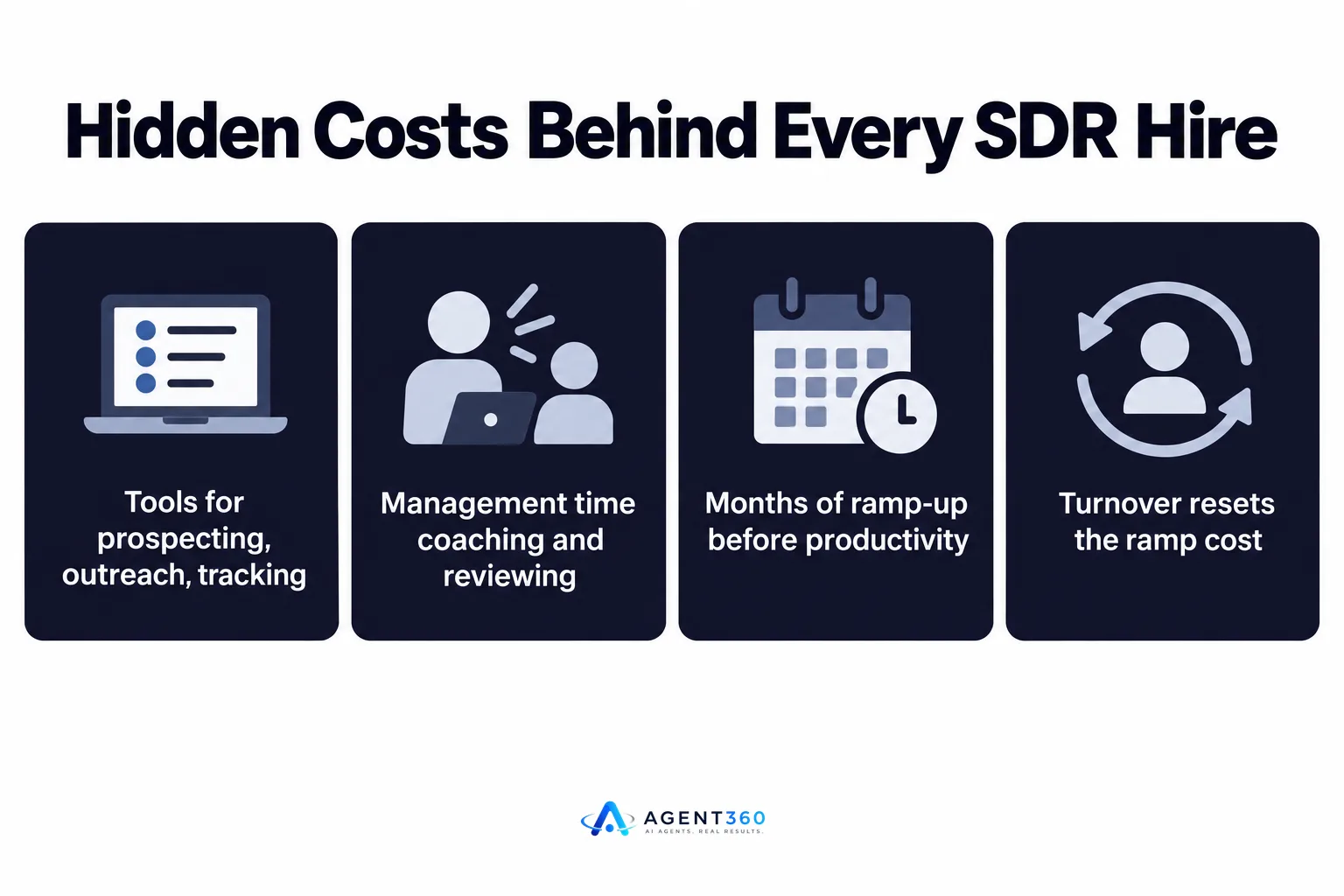
The hidden costs are tools, management time, ramp-up, and turnover — and together they often exceed the salary line. These are the costs that do not show up in a job posting but show up on every invoice and every calendar.
What tools does an SDR need to actually work?
A working SDR needs a way to find prospects, a way to reach them across email, LinkedIn, and phone, and a place to track replies and pipeline. Each of those is typically a separate paid tool or seat license, and most are priced per user — so the tool cost scales with every SDR added, not just the first one. This is the detail that catches companies off guard when they try to hire a second or third rep.
How much management time does an SDR require?
Someone has to write the messaging, review call recordings, coach on objections, and manage pipeline reviews. That is a sales leader's or founder's time, and it is real cost even when it is not a line item — hours spent managing an SDR are hours not spent closing, building, or running the rest of the business.
What does ramp time cost?
New SDRs typically need weeks to months before they are fully productive — learning the product, the market, the messaging, and the tools. During that period, the company is paying full salary and benefits for partial output. If the rep leaves within the first year, which happens often in SDR roles, that ramp cost is paid again for the replacement.
How do you calculate the full cost of an SDR?
Add every recurring cost — compensation, benefits, tools, and management time — then divide by expected productive months to see the real cost per meeting booked. Doing this before hiring, rather than after, changes a lot of hiring decisions.
- List total compensation. Base salary plus expected commission or bonus at on-target performance, not best case.
- Add payroll taxes and benefits. These are fixed obligations tied to employing anyone, not specific to the SDR role, but they still belong in the total.
- Add the tools stack. Prospecting, outreach, and CRM tools the rep needs to do the job, priced per seat where that applies.
- Estimate management hours and their value. Multiply hours per week spent coaching and reviewing by what that time is worth elsewhere in the business.
- Subtract ramp-up months from productive months. If ramp takes several months, the first-year cost is being spread over fewer productive months than the salary alone suggests.
- Divide total annual cost by expected meetings booked. This gives a cost-per-meeting figure that can be compared directly against other ways of filling pipeline.
Is there a cheaper way to get the same outbound results?
Outbound software can deliver the same core functions — prospecting, outreach, meeting booking — without adding a salaried headcount or the costs that come with it. It does not replace every judgment call a skilled SDR makes, but for the mechanical parts of outbound, it removes several of the cost lines above entirely.
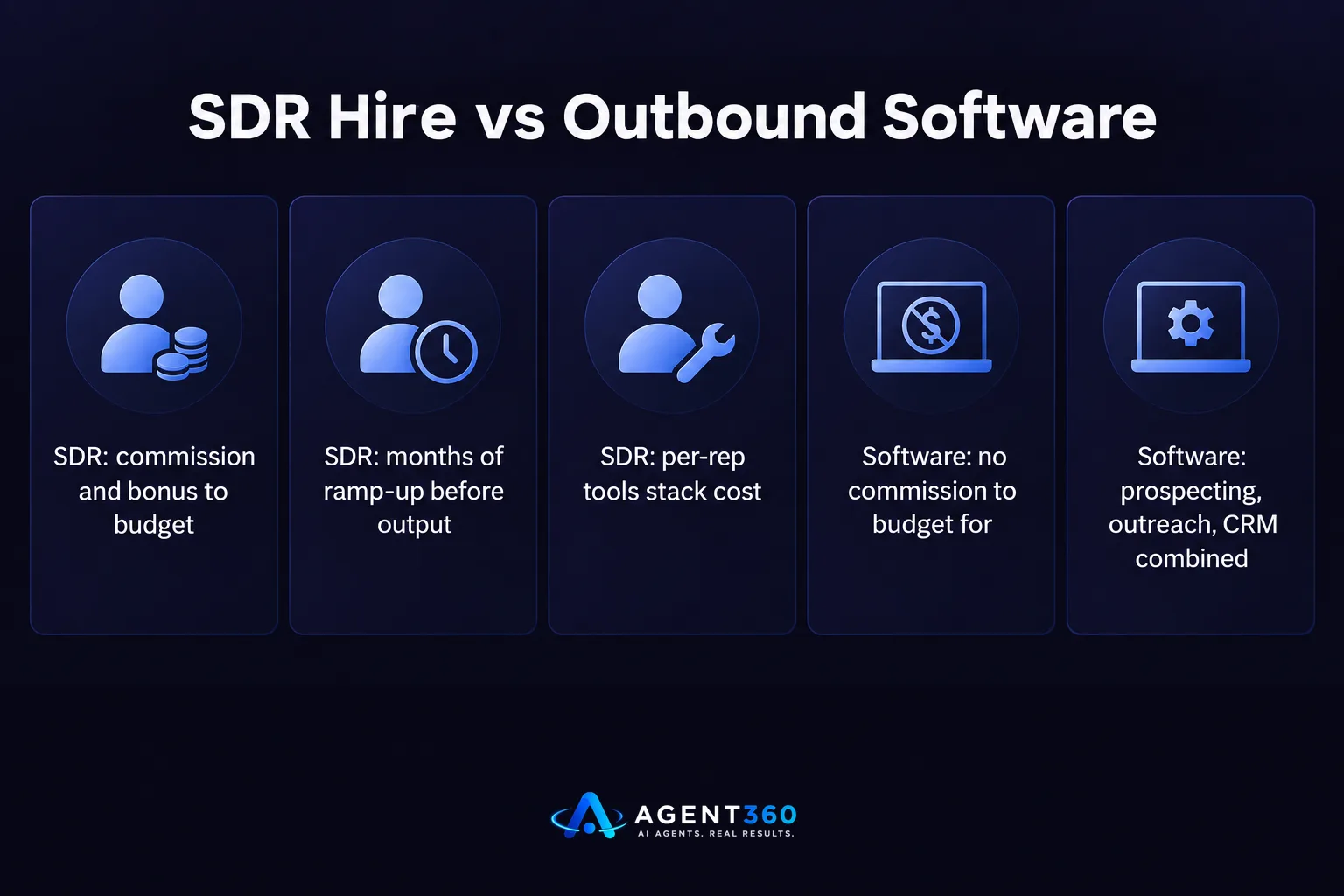
No commission to budget for. No ramp-up salary paid before output starts. No per-rep tools stack, since the prospecting, outreach, and CRM functions are already combined. For a founder running outbound personally, or a sales team that wants pipeline without expanding headcount, this is worth pricing against the fully loaded SDR number before deciding.
Take the Next Step Without Adding Headcount
Agent360 combines AI prospecting, multi-channel outreach across LinkedIn, email, and phone, meeting booking, and CRM tools in one system — built for founders running their own outbound and for sales teams that need pipeline without hiring another SDR. It finds the buyers worth contacting, reaches them on the channels they actually use, and books meetings straight onto the calendar, with the AI handling volume and a human-backed process keeping the messaging sharp.

Before deciding between a hire and a tool, it helps to see the actual pricing side by side with the cost breakdown above.
Compare the numbers on the pricing page before making the call.
Frequently Asked Questions
What does an SDR cost in total, not just salary?
The total cost includes base salary, commission or bonus, employer payroll taxes, benefits, a tools stack for prospecting and outreach, and the management time needed to coach and oversee the role. All of these add to the number before a single meeting gets booked.
Why is commission part of the cost, not just a bonus?
Commission is designed to rise as performance rises, so a highly productive SDR costs more in commission precisely because they are succeeding. Budgeting only for base pay understates the cost of a rep who is actually hitting targets.
How long does it take for an SDR to become fully productive?
Most SDRs need a ramp period of weeks to months before they reach full productivity, learning the product, market, and tools. During that time, the company pays full compensation for partial output.
Does SDR turnover affect the real cost?
Yes. SDR roles often see higher turnover than other sales positions, and every departure means paying ramp-up costs again for a replacement, on top of any recruiting cost to fill the seat.
Is outbound software cheaper than hiring an SDR?
Software removes several cost lines entirely — no commission, no ramp-up salary, no per-rep tools stack — but it does not replace every judgment call a skilled rep makes. Comparing the fully loaded SDR cost against software pricing is the clearest way to decide which fits a given budget and goal.
Should a founder hire an SDR or run outbound themselves first?
Many founders start by running outbound themselves with software support before adding a salaried hire, since it avoids ramp cost and commission risk while they validate messaging and market fit. The right call depends on deal size, sales cycle, and how much founder time outbound can absorb.
More articles
- Outsourced SDR vs In-House SDR: How to Decide
- First Sales Hire vs Outbound Software: Which First?
- AI SDR vs Hiring an SDR: Which Fills Pipeline Faster?
- Hire an SDR or Use Software? How to Decide
- Should I Hire an SDR? A Founder's Decision Guide
- Sales Software for Founders: What to Buy First
- B2B Outbound for Small Companies: A Practical Playbook
- How to Book Sales Meetings Without Hiring an SDR
