Should I Hire an SDR? A Founder's Decision Guide
Should I hire an SDR? Hire one only if you already have a repeatable outbound process, a steady flow of leads to hand them, and the budget to carry a three-to-six-month ramp before they book a meeting on their own. If you don't have those three things yet, a new SDR will spend months building the process you still need, not filling your pipeline.
Most founders ask this question at the exact moment outbound starts to feel like a full-time job they didn't sign up for. That feeling is real, but it doesn't automatically mean the answer is a hire.
This guide walks through the actual cost of an SDR, what the role requires to succeed, and the questions to answer before you commit to either a hire or a piece of software.
Key Takeaways
- An SDR needs a proven outbound process to execute, not to invent one from scratch.
- Base salary is the smallest part of the cost; ramp time, management, and tool stack add up fast.
- Outbound software can fill the same calendar without a hiring decision, a desk, or a notice period, as laid out in this comparison of SDRs and outbound software.
- Staffing and recruiting firms weighing the same build-or-buy question for client-facing roles can check the hiring page for how that decision plays out on the agency side.
- Decide based on what's missing: a process, a person, or hours in the day.
Table of Contents
Should you hire an SDR right now?
Hire an SDR only when the process already works without you having to invent it for them. An SDR is built to execute a known playbook at volume, not to figure out your ideal customer profile, your messaging, or your objection handling from zero. If none of that exists yet, the hire inherits a job that's really two jobs: building the system and running it.
What happens if you hire too early?
You end up training the SDR on live prospects, burning through your list while they learn what works. Ramp typically runs three to six months before a new SDR hits full productivity, and if the targeting or messaging is still being figured out during that window, the ramp resets every time you change direction.
What signals mean you're ready?
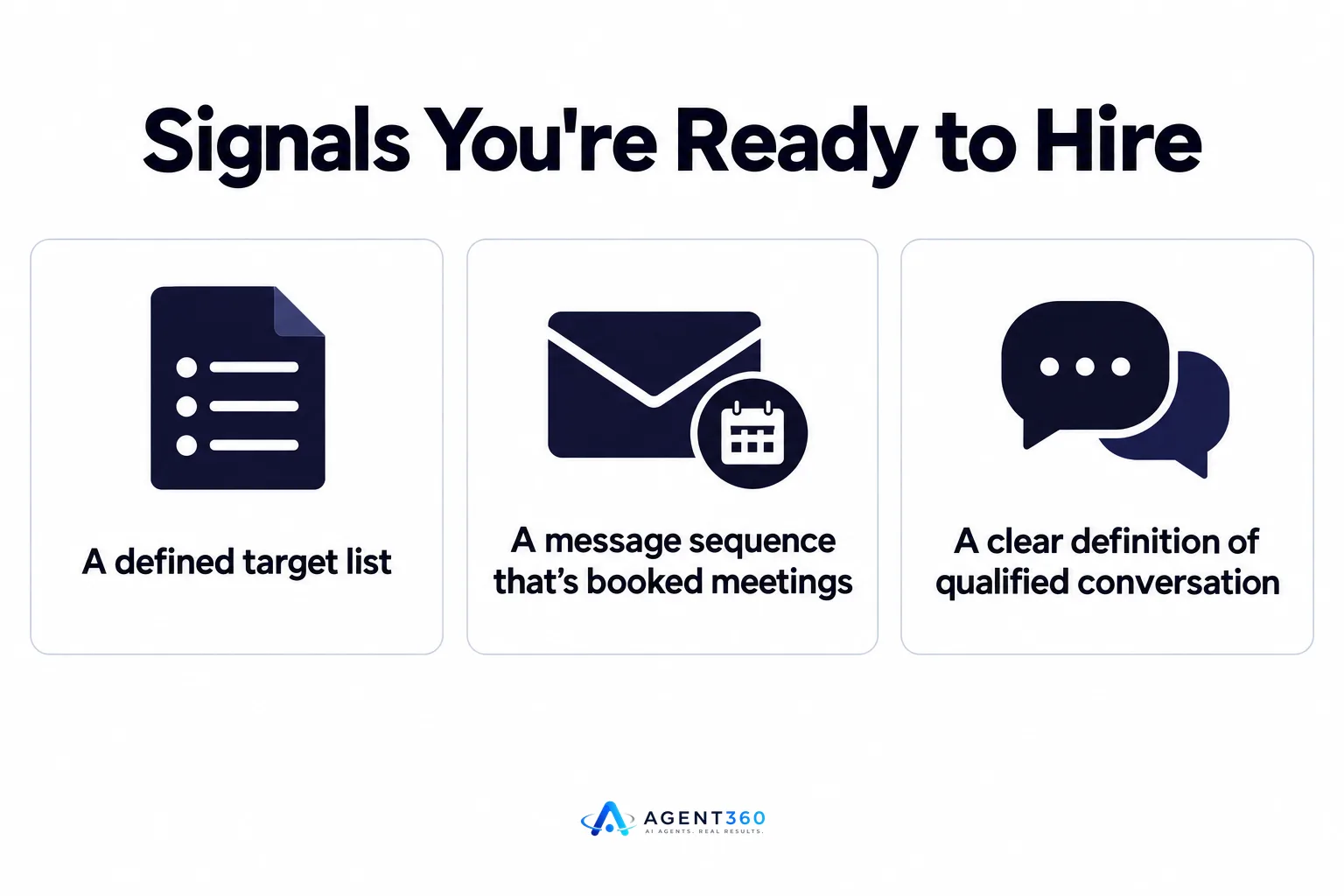
You can hand over a defined target list, a message sequence that's already booked meetings, and a clear definition of what counts as a qualified conversation. If you can write that down in a page, an SDR has something real to execute against.
What does an SDR actually cost?
The salary is the starting number, not the total. On top of base pay, there's commission or bonus structure, a seat in a dialer and email tool, LinkedIn Sales Navigator, a CRM license, management time from whoever is coaching them, and the ramp months where output is low but the paycheck isn't. None of that shows up in the job posting.
Does part-time or fractional help change the math?
It lowers the fixed cost but doesn't remove the ramp problem. A fractional SDR still needs the same process and the same months to get calibrated to your market, just spread across fewer hours a week, which can mean it takes longer in calendar time to see results. Full pricing detail for an alternative approach is on the cost FAQ.
What can outbound software do instead of an SDR?
It can run prospecting, outreach, and meeting booking without adding a person to manage. Tools built for this cover finding the right accounts, detecting buying signals, sending across LinkedIn, email, and phone, and putting booked meetings straight onto a calendar. The work an SDR would do by hand gets handled by the software, with a human checking quality and handling replies.

Is software a full replacement for a person?
It replaces the manual sending and list-building work, not judgment calls on a live call or a nuanced reply. Most setups pair the software with a founder or a rep who takes the booked meetings and closes them, which keeps a human in the loop where it matters.
How do you decide between hiring and software?
Match the solution to what's actually missing: a process, a person, or hours in the day. Run through the same sequence before committing to either path.
- Write down the process. List your ideal customer profile, the signals that mean someone's ready to buy, and the message sequence that's worked so far.
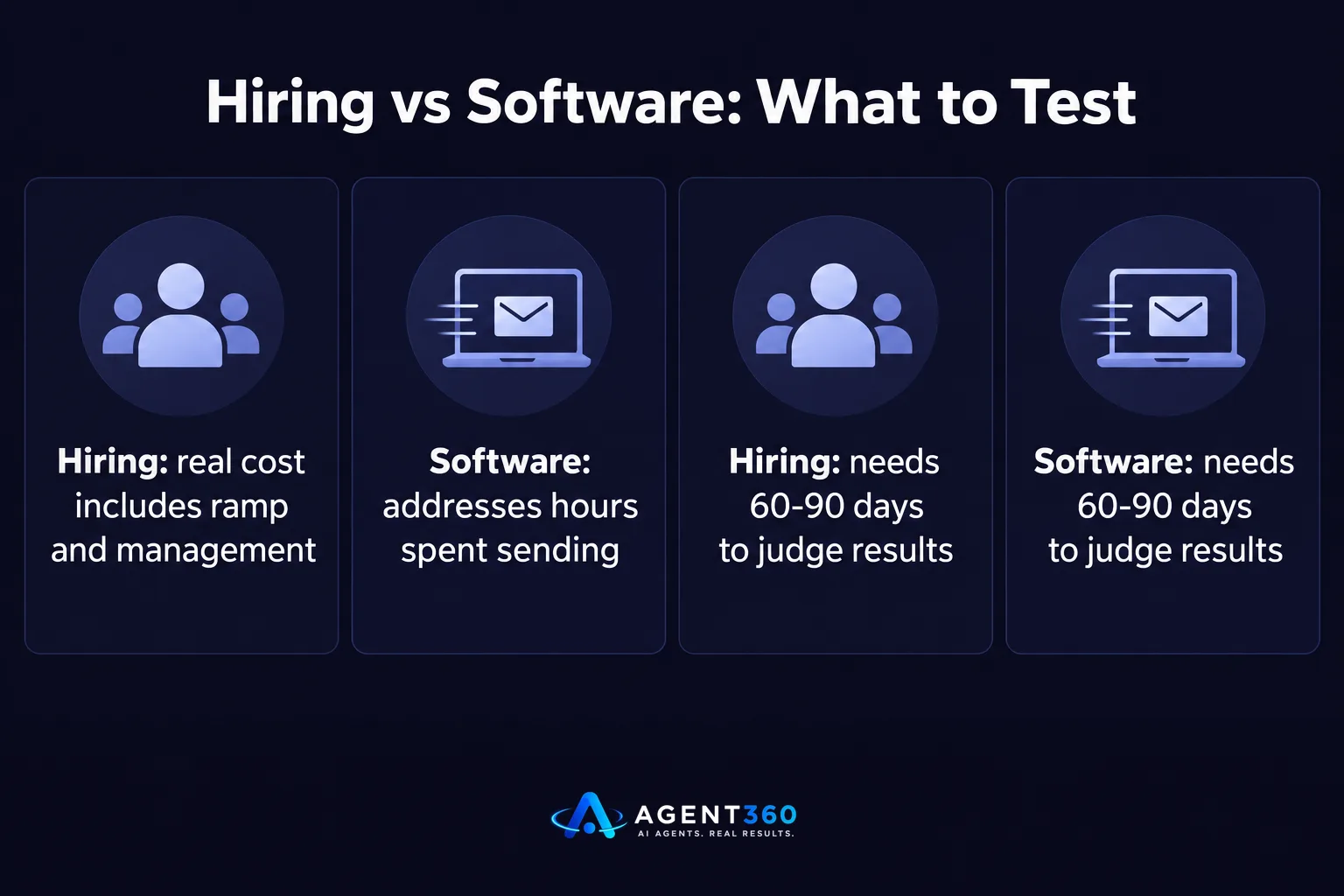
- Count the real cost of a hire. Add salary, tools, ramp time, and management hours together before comparing it to any other option.
- Test volume before headcount. See whether the bottleneck is actually hours spent sending and following up, which software addresses directly.
- Set a decision deadline. Give whichever option you pick 60 to 90 days before judging results, since both a new hire and a new tool need time to show a pattern.
Take the Next Step on Your Outbound
If the answer to “should I hire an SDR” is “not yet,” the gap doesn't close itself. Agent360 finds ideal buyers, detects buying signals, and runs outreach across LinkedIn, email, and phone, then books meetings straight onto your calendar with CRM tools to track the pipeline behind them. It's built for founders running their own outbound and for sales teams that need the calendar filled without adding another seat to manage.
No ramp months, no notice period, no desk to find. See how the pieces fit together on the outreach page.
Frequently Asked Questions
Should I hire an SDR before I have a repeatable sales process?
No. An SDR executes a known playbook; without one, they spend their ramp period building the process instead of booking meetings, which stretches time-to-results well past the usual three-to-six-month window.
How long does it take a new SDR to become productive?
Most new SDRs need three to six months to ramp to full output, depending on how defined the target list and messaging already are when they start.
Is outbound software cheaper than hiring an SDR?
It removes the fixed costs of salary, benefits, and ramp-period pay, replacing them with a software cost that doesn't carry a notice period or a hiring process of its own.
Can software and an SDR work together?
Yes. Many teams use software to handle volume sending and signal detection, then have a person take the booked meetings and manage the close, which keeps judgment calls with a human.
What's the biggest risk of hiring an SDR too soon?
Burning through your best prospect list while the hire is still learning what messaging and targeting actually work, which means the first real attempt at the market happens on your most valuable leads.
More articles
- Sales Software for Founders: What to Buy First
- B2B Outbound for Small Companies: A Practical Playbook
- How to Book Sales Meetings Without Hiring an SDR
- Cold Email for Founders: A Practical Way to Start
- Outbound Sales for Founders: How to Book Meetings Yourself
- Cold Email Sending Limits: What They Actually Are
- How Many Inboxes Do You Need for Cold Email?
- How Many Emails Per Inbox Per Day Is Safe to Send?
