How Long Does Cold Email Take to Work? A Real Timeline
Cold email typically takes three to six weeks before it produces a steady stream of replies and booked meetings, not three to six days. Most of that time is not about your copy. It is domain warm-up, deliverability ramp, and mailbox providers learning that your sending behavior is safe to trust.
Founders running outbound themselves often judge a campaign after the first week and conclude it does not work. That judgment usually comes too early. The mechanics of email sending mean the first two weeks are infrastructure-building, not performance-testing.
This piece breaks down the real timeline, what causes it to stretch longer, and how to tell cold email is working before a single meeting lands on your calendar.
Key Takeaways
- Budget three to six weeks before judging cold email performance, with the first two weeks mostly warm-up.
- New domains and inboxes need a gradual volume ramp; skipping it increases spam placement, as covered in Cold Email Sending Limits: What They Actually Are.
- Track reply rate and positive-reply ratio weekly, not opens, since open tracking is unreliable on modern email clients.
- If six full weeks pass with zero replies, the problem is deliverability or targeting, not patience.
- Spreading volume across more inboxes shortens the ramp; see How Many Inboxes Do You Need for Cold Email? for the mechanics.
Table of Contents
How Long Does Cold Email Actually Take to Work?
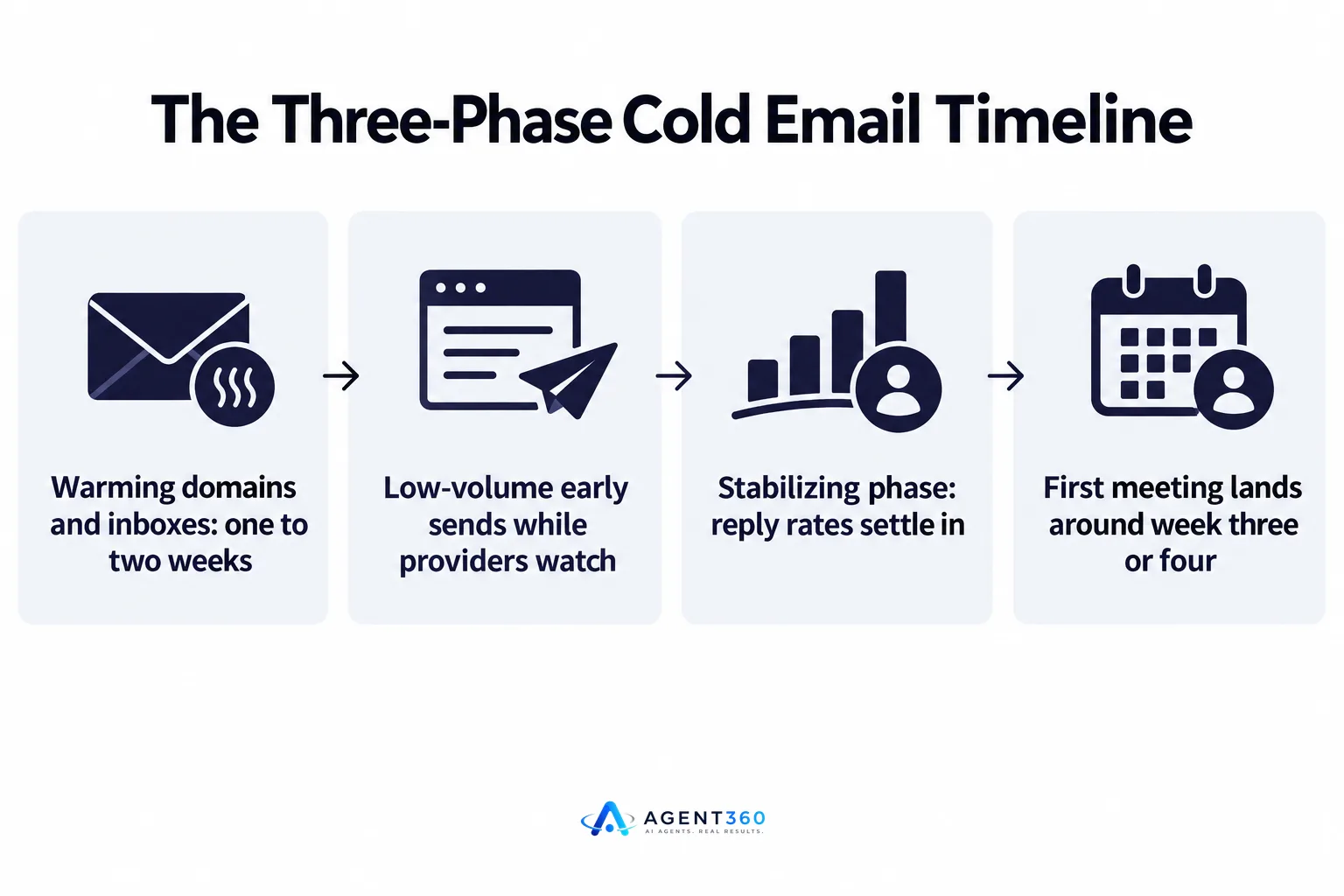
Cold email generally needs three to six weeks before reply volume becomes predictable. That window breaks into three rough phases: warming new domains and inboxes for one to two weeks, running early sends at low volume for another one to two weeks while providers watch your sending pattern, and then a stabilizing phase where reply rates settle into a repeatable range.
What does week one actually look like?
Week one is mostly warm-up traffic, not outreach. New or recently reactivated domains send a small volume of low-risk email to build sending history before any prospect ever sees a message. Skipping this step is the single fastest way to land in spam before the campaign starts.
When should you expect the first meeting booked?
Most founders running their own outbound see the first reply within the first two weeks of live sending, but that first reply is not a reliable signal. A first meeting booked usually lands closer to week three or four, once enough sequences have completed and enough prospects have seen a follow-up, not just the first email.
Why Does Cold Email Take Weeks Instead of Days?
The timeline is set by mailbox providers, not by how good the email is. Gmail, Outlook, and other providers score sending domains based on volume history, complaint rates, and engagement patterns. A domain with no history gets treated cautiously regardless of message quality, and that caution only eases as consistent, low-complaint sending accumulates.
What is domain warm-up and why can't you skip it?
Domain warm-up is the gradual increase in daily sending volume that signals real, trusted use rather than a sudden burst from a brand-new address. Jumping straight to full volume on day one is one of the fastest ways to trigger spam filters, which then slows everything that follows because recovery from a damaged sending reputation takes longer than warming up correctly the first time.
How does sending volume affect timing?
Higher daily volume per inbox does not speed up the timeline; it usually slows it, because providers flag sudden spikes. Spreading volume across multiple warmed inboxes, as described in How Many Emails Per Inbox Per Day Is Safe to Send?, keeps each inbox under safe thresholds and gets you to stable sending sooner than overloading one account.
What Slows the Timeline Down Beyond Normal?
Rushed warm-up, single-inbox sending, and skipped follow-ups are the most common causes of a stalled campaign. Each one either damages deliverability directly or reduces the number of touches a prospect actually sees.
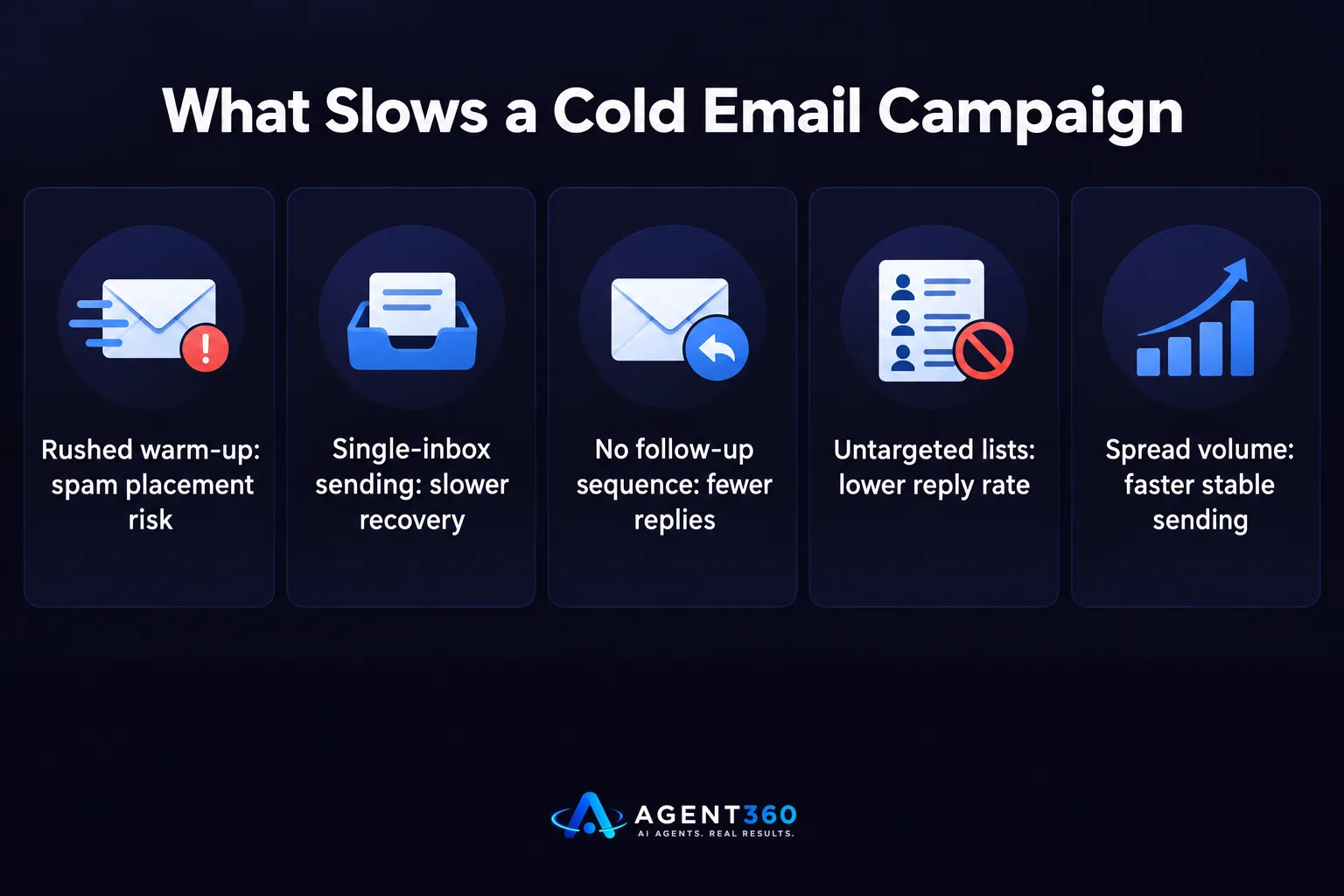
- Skipping or shortening warm-up. Sending at full volume from a new domain in week one almost guarantees spam folder placement that takes weeks to reverse.
- Running everything through one inbox. A single address trying to carry full volume hits provider limits faster and recovers slower than volume spread across several inboxes.
- No follow-up sequence. Most replies come from the second, third, or fourth message in a sequence, not the first; a one-and-done send understates what the channel can do.
- Untargeted lists. Low reply rates are often a targeting problem dressed up as a timing problem; broad, unfiltered lists need more volume to produce the same number of replies as a tightly matched list.
How Do You Know Cold Email Is Working Before Meetings Land?
Reply rate and the ratio of positive to negative replies are the earliest reliable signals, well before meetings appear on the calendar. Open rates are not a dependable early signal anymore, since privacy features on major email clients inflate or obscure true open data.
Watch reply rate week over week. A flat or rising reply rate through weeks two to four means the infrastructure is working and the message is landing; a flat zero past week four points to a deliverability or list problem that needs fixing, not more patience. Tracking reply volume against total messages sent, broken down by week, shows whether the campaign is on the normal curve or stalled. Guidance on safe weekly volume by list size is in cold email volume planning.
Take the Next Step With a Steady Cold Email Pipeline
Running warm-up, volume ramp, and follow-up sequencing by hand is exactly where founder-led outbound tends to stall. Agent360 handles AI prospecting to find the right buyers, multi-channel outreach across email, LinkedIn, and phone, and books meetings directly on your calendar, backed by CRM tools to track every reply in one place.

That combination removes the guesswork of when a campaign has actually hit its stride, because the signals that matter are tracked automatically instead of estimated from a spreadsheet.
See how the full outreach engine works on the outreach product page.
Frequently Asked Questions
How long until cold email produces its first reply?
Most campaigns see a first reply within the first one to two weeks of live sending, though this early reply is not yet a reliable signal of overall performance.
How long until cold email books a meeting?
A first booked meeting typically appears around week three or four, after enough prospects have received a full sequence rather than just an opening message.
Why do cold email results take longer than paid ads?
Paid ads buy immediate placement; cold email depends on domain and inbox reputation that builds gradually with mailbox providers, which takes time regardless of budget.
Can I skip warm-up to get results faster?
Skipping warm-up usually backfires, since sudden volume from a new domain triggers spam filters and can take longer to recover from than a proper warm-up period would have taken in the first place.
What should I check if six weeks pass with no replies?
Check deliverability first by sending test emails to see if they land in spam, then review list targeting, since a mismatched audience produces low replies no matter how long the campaign runs.
Does adding more inboxes speed up results?
Spreading volume across more warmed inboxes keeps each one under safe sending limits and can shorten the path to stable results compared to overloading a single inbox.
More articles
- How Long Does Outbound Take to Work? A Realistic Timeline
- Outbound Software Without Per Seat Pricing: What to Buy
- Sales Software With No Per User Pricing: What to Buy
- Can Software Replace an SDR? What It Can and Can't Do
- Outsourced SDR vs In-House SDR: How to Decide
- First Sales Hire vs Outbound Software: Which First?
- What Does an SDR Cost? The Real, Fully Loaded Number
- AI SDR vs Hiring an SDR: Which Fills Pipeline Faster?
