Local Teaser Pack: What It Is and How to Get Into It
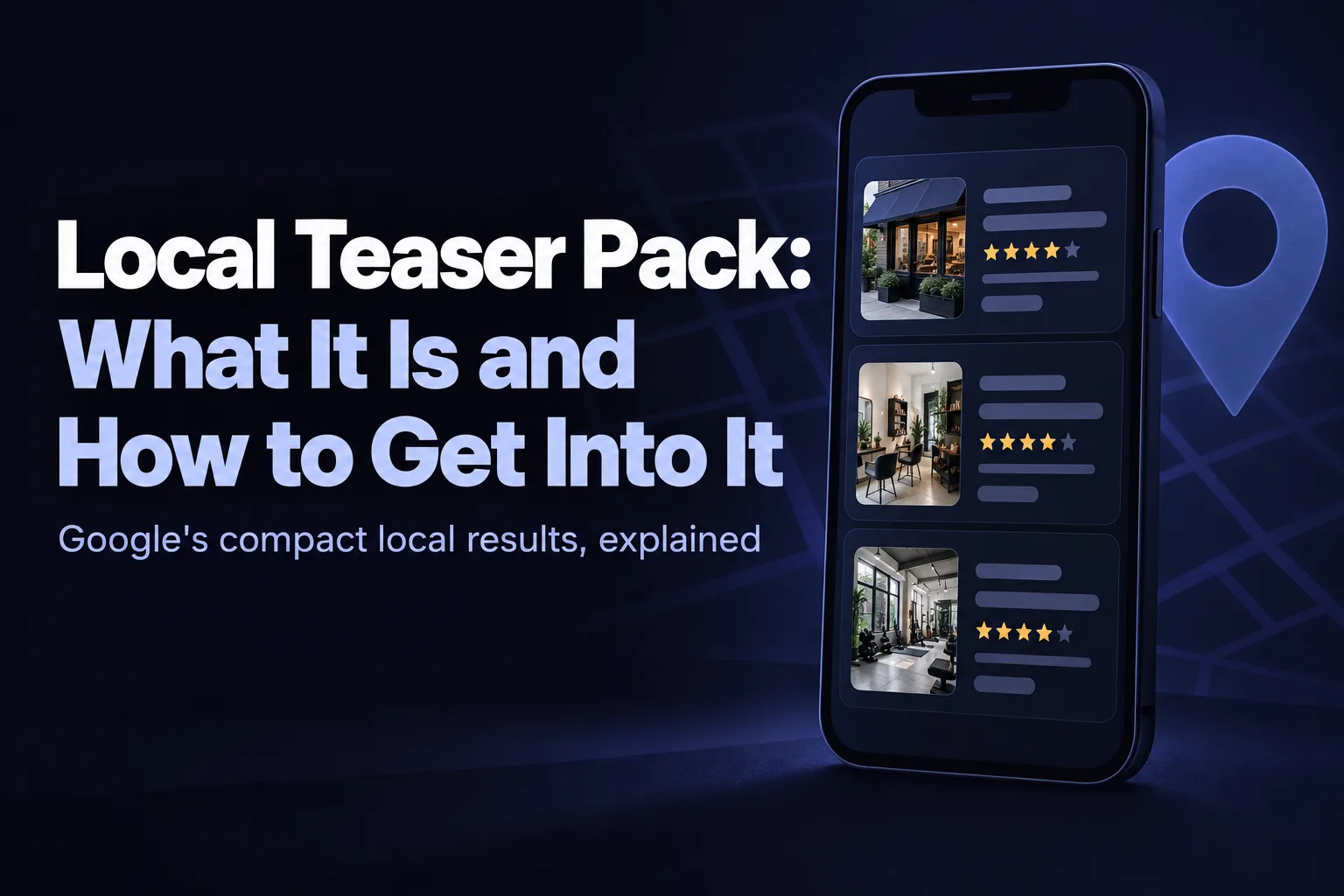
The local teaser pack is Google's local results with the map stripped out: a few business listings showing names, ratings and categories, plus a link to expand into the full list. Local SEO people call it the compact local pack. You get in the same way you get into the full map pack. Build a complete, accurate Google Business Profile, earn a strong review record, and run a website that clearly matches the search. The difference is how little room you get to make an impression once you're there.
What is Google Local Pack?
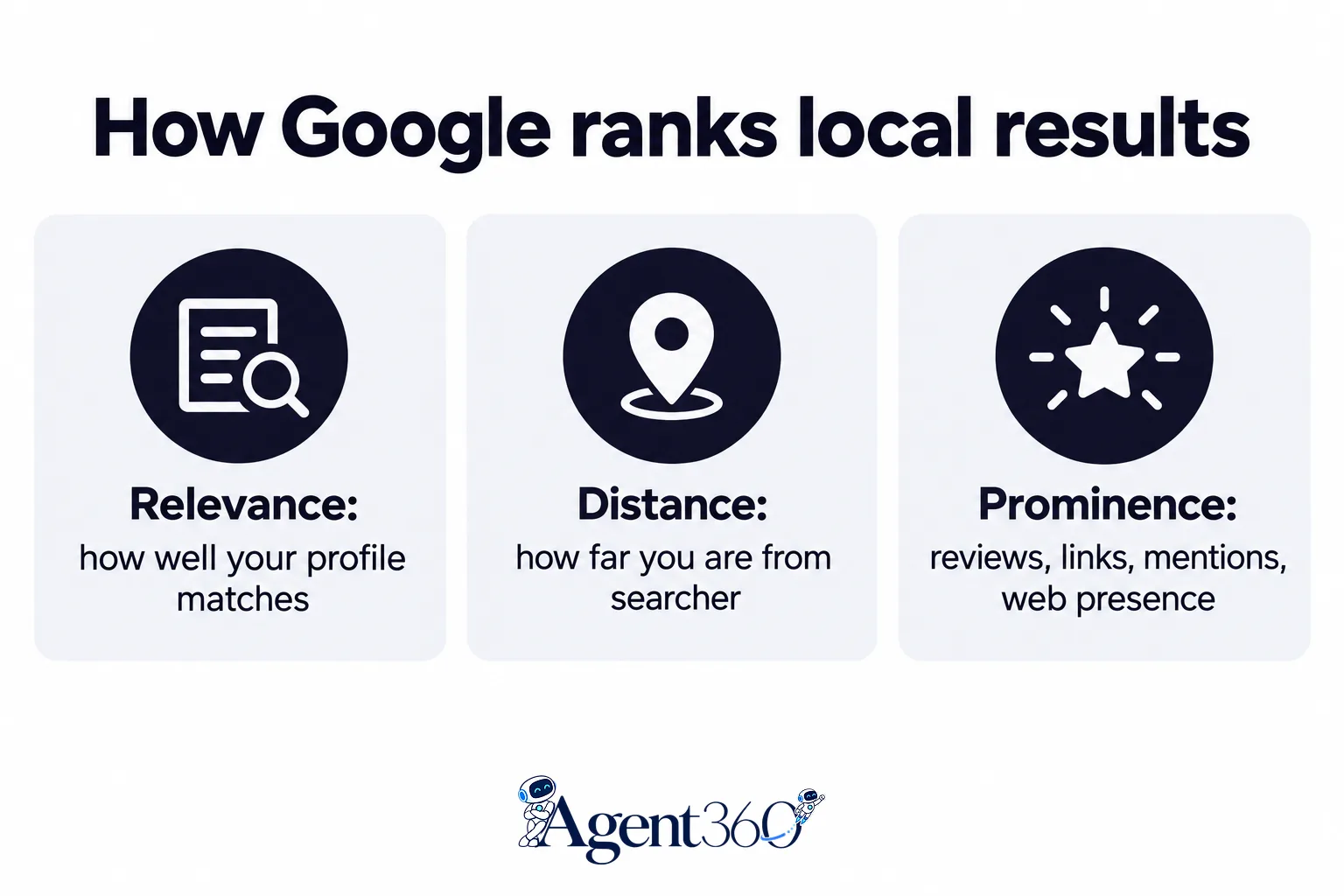
The local pack is the block of nearby businesses Google puts above or between the regular results when it decides a search has local intent. Google says local results are ranked on three things: relevance, distance and prominence. Relevance is how well your profile matches the search. Distance is how far you are from the searcher, or from the location named in the query. Prominence is how well known you are, drawn from reviews, links, mentions and your wider web presence.
The teaser version drops the map and shows a short list. Google picks the layout by query and category, and it can change without notice. Why does that matter? With no map to study, the searcher decides from the card alone. Your business name, star rating, review count, category and primary photo carry the whole pitch.
Is the local map pack dead?
No, but it is unstable, and that is a different problem. Layouts get tested. Packs shrink, grow or vanish for certain queries, and AI summaries now sit above some local results. One screenshot from one person's phone proves almost nothing, because local results differ by searcher location, device and query wording.
So don't react to a rumour. Run your own check:
- Pick ten searches a real customer would type, such as the service plus your town, and the service plus “near me”.
- Run each one in a private window, from your shop or office and from two other spots in your service area.
- Record which layout appears (full pack, teaser pack, no pack), who is listed, and whether you are in it.
- Repeat monthly. A pattern across thirty checks beats an alarming post.
If a query stops showing a pack at all, your organic page for that search becomes the only local door you have. That is the argument against putting everything into the profile.
Does local SEO still work?
Yes, with two caveats. First, a lot of the value never shows up as a click. Calls, direction requests and messages from your profile don't appear as visits in Search Console, so judging local SEO by website traffic alone makes it look weaker than it is. Count the calls and direction requests too.

Second, the work is more split than it used to be. The pack, the regular results and AI answers each reward slightly different things, though one set of strong, specific pages helps all three. Our guide to winning the map, the list and the answer shows how those fit together. And if you want to know how fast it pays back, the honest SEO timeline gives the realistic answer: weeks for profile fixes, longer for pages and prominence.
How do I get into the map pack?
Work in this order. The early items are cheap, and the later ones are slow.
- Fix the primary category first. It is the strongest relevance signal you control. Choose the category that matches the service you most want to be found for, not the broadest one. Add secondary categories only for services you really offer.
- Make name, address and phone identical everywhere. Your profile, website and main directories should agree character for character. Use your real business name. A name stuffed with keywords risks a suspension.
- Build the card. The teaser pack is so compact that the photo, rating and review count do the persuading. Upload real photos of your work and premises. Reply to reviews, including the bad ones, in plain language.
- Ask for reviews at the moment of satisfaction. A steady trickle that names the actual service beats a burst, and reviews that mention the service and area give Google relevance evidence.
- Give every service and every town its own page. One page for “services” can't match twelve different searches. Each page should have the service, the area, real details about how you work, prices or price logic where you can, and a clear way to call.
- Link the profile to the matching page, not always the home page.
Distance is the one factor you can't fix. If a competitor is physically closer to the searcher, you won't out-optimise geography on every search. So aim to win the searches where you are close and the ones with a town name in them, and stop measuring yourself against a single central rank. For the full checklist, see the local SEO checklist that moves the map pack.
How much does a local SEO cost?
There is no honest single number, because the price depends on who does the work. The job has three parts, and you can price each one:
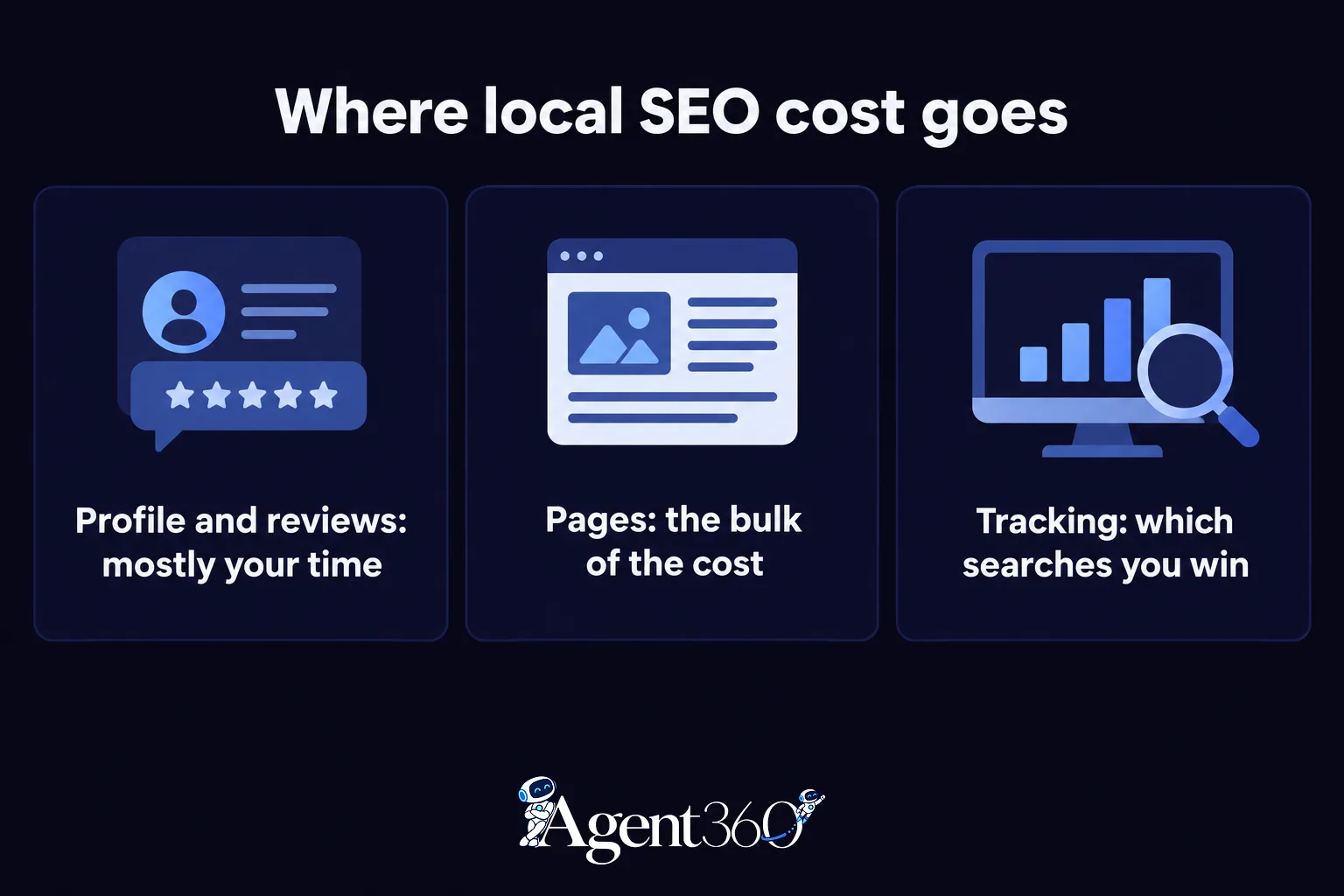
- Profile and reviews: mostly your time. A few hours to set up properly, then minutes each week.
- Pages: the bulk of the cost. A service-and-town page for every search you want to win means many pages, and that is where an agency's hours or a freelancer's per-article rate add up.
- Tracking: knowing which searches you win, who beat you, and whether it is working.
Ask any provider what, specifically, gets produced each month. “Optimisation” is not an answer. And be wary of anyone who guarantees a pack position, because no one controls Google's results.
Where SearchAgent fits, if you want the pages done for you
If page-writing and tracking is the part you'll never get to, SearchAgent for local businesses checks who wins your local searches today and publishes the pages that put you in them. It reads your Search Console nightly and writes articles every morning to a blog hosted on your domain. Each article is a draft for you to approve unless you switch on auto-publish. It does not manage your Google Business Profile or build links, so the profile and reviews stay with you. Plans start at $297 a month with no contract; see pricing.
Questions people still ask
What is the difference between the local teaser pack and the map pack?
The teaser pack is a compact listing of a few businesses shown without the map, with a link to expand to more. The full map pack shows the map alongside the listings. The ranking factors are the same: relevance, distance and prominence. Only the presentation differs, so the teaser pack puts more weight on your rating, review count and photo.
Can I choose which layout Google shows for my business?
No. Google picks the layout by query, category and location, and it tests changes. All you control is how strong your listing is in whichever layout appears. Check your own searches regularly to see which one your customers get.
Do I need a website to appear in the local pack?
You can appear with a profile alone. But a website with a page for each service and town gives Google more relevance evidence, and it gives you a way into the regular results when no pack appears. To see which local searches already find you, learn how to read Google Search Console.
More articles
- AI Visibility Monitoring: What a Good Score Really Is
- Reject AI Blog Drafts Fast: A Six-Check Review Queue
- Get Found on Google AI: Three Surfaces, Three Fixes
- AI Overviews Optimization Starts With Pages You Already Have
- Set Posts Per Week From Your Gap List, Not a Calendar
- GEO Tools: Buy the Fix, Not Another Dashboard
- SEO Reporting for Small Business: One Page, Five Numbers
- AI Overview Search Visibility: Check It, Then Fix It
