The Local SEO Checklist That Actually Moves the Map Pack
Do the items on a local SEO checklist out of order and you'll spend months fixing the wrong thing first. Start with your Google Business Profile — it carries more weight in the map pack than anything on your site. Then your citations, because inconsistent data is the single most common reason a business that deserves to rank doesn't. Reviews, pages, links: all of it compounds on top of those two.
Here's the order, with the thresholds and failure modes that actually matter.
Fix your Google Business Profile before you write a single page
Most local SEO advice treats the Business Profile like a one-time setup task. It isn't. Google re-evaluates it continuously, and a profile that hasn't been touched in 90 days reads as abandoned, even if the business behind it is thriving.
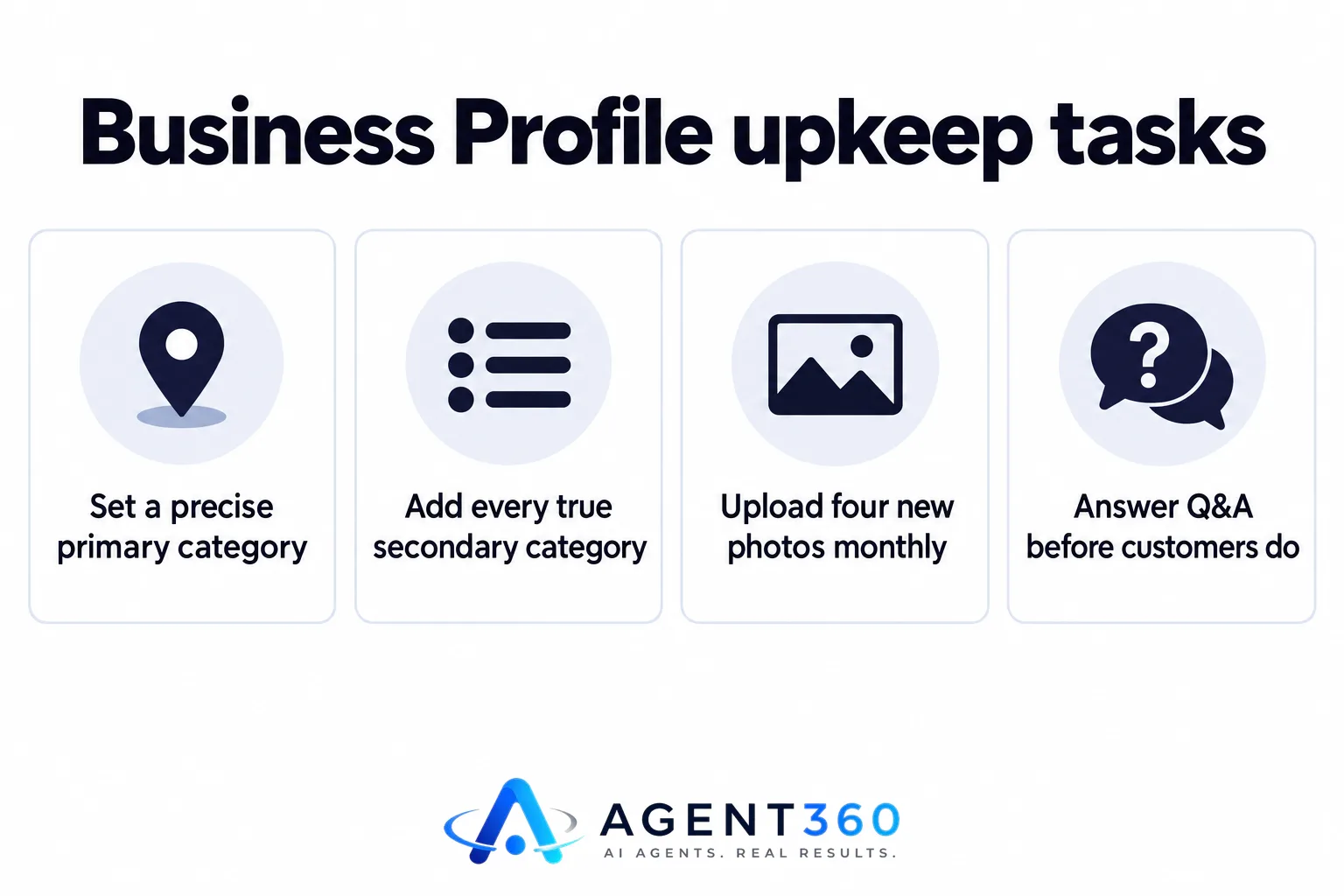
- Set a primary category that matches exactly how customers describe you, not the closest match in the dropdown. “Plumber” and “Emergency Plumber” rank for different searches.
- Add every secondary category that is genuinely true. Each one opens a different set of searches.
- Upload at least four new photos a month. Profiles with recent photos get more map clicks than ones with the same six photos from 2021.
- Answer every question in the Q&A section yourself, pre-emptively, before a customer posts a wrong answer that sticks.
- Keep hours accurate through holidays. A profile that says “open” when the door is locked generates the kind of complaint that drags down your rating.
Match your name, address and phone number exactly, down to the punctuation
Google cross-references your Business Profile against every directory, data aggregator and old listing it can find. “St.” versus “Street”, a missing suite number, a phone number you changed two office moves ago — each mismatch is a small signal that the listing might not be trustworthy. Enough of them, and Google trusts your whole profile less.
Pull your current listing on your top five directories, your own website footer, and your Business Profile, and put them side by side. Fix every discrepancy, including the ones that feel trivial. This single pass fixes more ranking problems than most businesses expect — because it's the one thing almost nobody checks.
Build one page per service per neighborhood, not one page that tries to cover all of them
A single “Services” page that lists twelve things you do will rarely outrank a competitor's dedicated page for any one of those twelve. Local search rewards specificity: a page about water heater installation in your town beats a paragraph about water heaters buried inside a general plumbing page.

Write a dedicated page for each service you actually want to rank for, in each area you actually serve — not every zip code in the county, just the ones with real demand. If you already have overlapping pages competing for the same search, that's worth fixing before you add more; see when your pages compete for how to spot it.
Earn reviews on a steady drip, not a burst
A business with two reviews that suddenly gets forty in a week looks manufactured, and review platforms are built to notice exactly that pattern. A business that earns three to five new reviews a month, every month, looks like a business people actually visit.
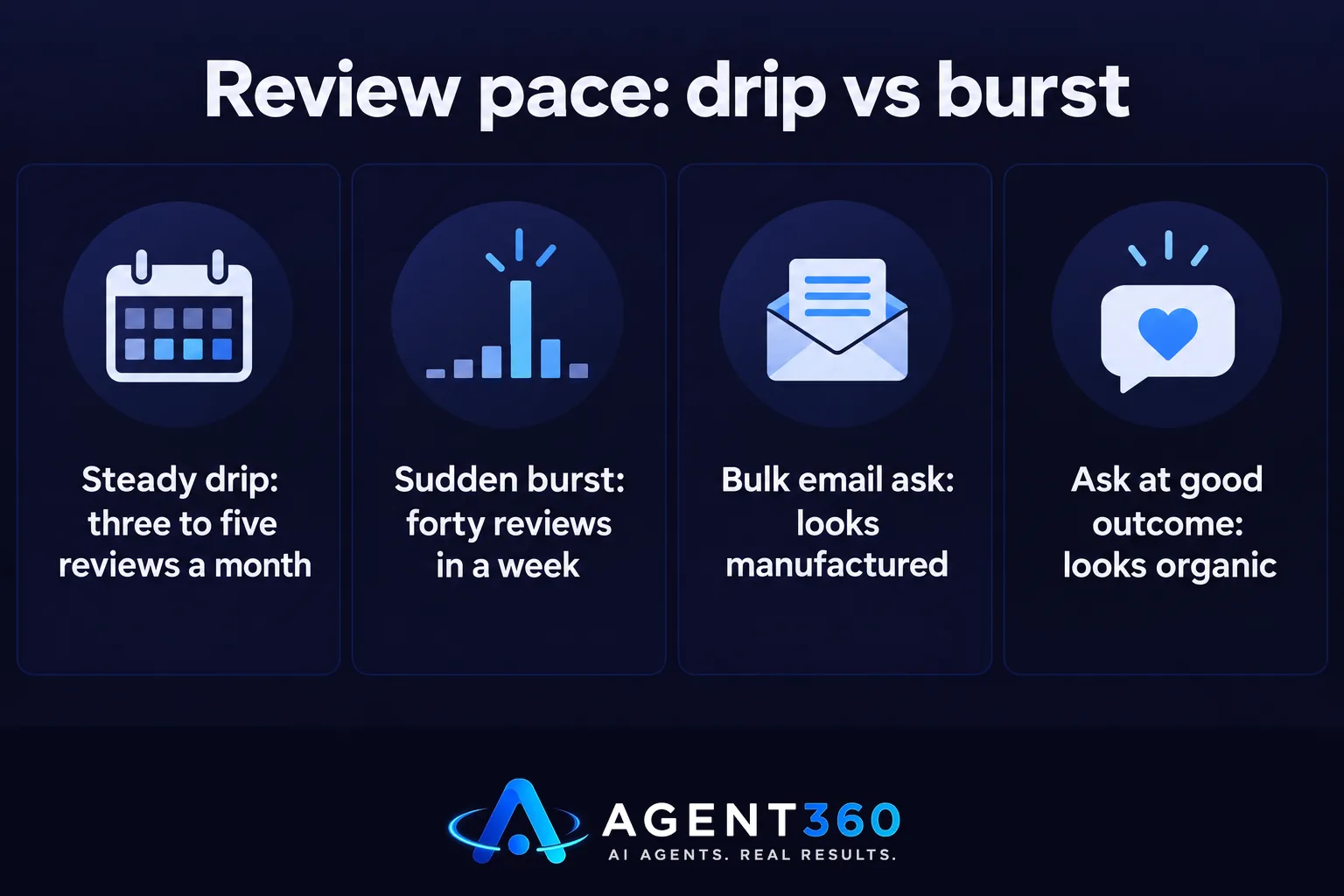
Ask at the moment of a good outcome — right after the job is done, the order delivered, the appointment finished — not in a bulk email sent to your whole customer list at once. Respond to every review, good or bad, within a few days. The response is itself a signal. A thoughtful reply to a one-star review often does more for trust than another five-star one.
Put the direct answer in the first two sentences, because that is what gets quoted
Local search used to mean ranking in ten blue links. Now a share of “near me” and “best ___ in [city]” searches surface an AI-written summary before any list appears, and increasingly buyers ask ChatGPT the same question directly. Both pull from pages that answer the question immediately, not pages that build up to it with three paragraphs of history and mission statement.
Open every local page with a direct answer to the question in its title — what you do, where, and for whom — before you add anything else. That's the difference between being the page quoted in an AI Overview and being the page nobody reads past the first line. For the mechanics of why this matters, see what is AEO.
Check your citations and your competitors every quarter, not once
Local SEO isn't a project with an end date. The business that held the top three map pack spots last quarter may have added two new locations, a dozen fresh reviews, or a page you haven't seen. Set a recurring quarterly check: re-pull your citations for drift, re-check who holds the top spots for your core terms, and re-scan your own site for anything that broke.
If that sounds like more than a quarterly reminder can sustain, this is the part that's hard to do by hand and easy to automate. SearchAgent's local businesses plan checks who holds your map pack and top-ten spots every week, scores your site's technical health, and turns the gaps it finds into pages — a workflow built for exactly this kind of recurring upkeep, starting at $297 a month.
Questions
How long does local SEO take to show results? Citation and profile fixes can shift map pack visibility within a few weeks, because they correct existing trust signals. New pages built for service-plus-location searches typically take two to four months to climb, because they're competing on fresh content rather than fixing an existing flaw.
Do I need a website for local SEO or is Google Business Profile enough? A well-run Business Profile can win map pack visibility on its own, but it can't carry service-specific or comparison searches, and it's the one channel you don't fully control. A site with dedicated service and location pages catches the searches the profile can't, and gives you something to improve beyond Google's interface.
How many reviews do I need to rank in the map pack? There's no published threshold, and anyone citing an exact number is guessing. What correlates with ranking is a steady pace of recent reviews relative to your direct competitors, not a lifetime total — a business with 40 reviews added steadily over two years usually beats one with 200 reviews that stopped coming in a year ago.
More articles
- B2B SEO Strategy: How to Compete When Buyers Ask AI First
- How to Get Backlinks Without Outreach Emails
- SEO Content Plan Template: The 9 Columns That Matter
- Competitor Keyword Gap Analysis: Find What You're Missing
- Google Search Console for Beginners: Where to Start
- Keyword Cannibalization Fix: Merge, Redirect, or Split
- Content Refresh SEO: What Actually Moves Rankings
- How Many Blog Posts a Week Does SEO Actually Need?
