Who Should You Use for Done-For-You Auto Shop Marketing?

For done-for-you auto shop marketing, pick one provider that runs your website, Google visibility, reviews, ads and lead follow-up together, and shows you its work every month. Skip anyone who sells a single slice and leaves the rest to you.
Your shop needs calls and booked bays. A partner earns their fee only if the work ends in a ringing phone and a full schedule. Here is how to judge that before you sign.
Key Takeaways
- Pick a partner that covers website, Google presence, ads and follow-up, not just one of them.
- Ask what gets published, who approves it, and what you receive each month.
- Keep your shop-management software for repair orders; marketing needs its own lead tracking and follow-up.
- Read our look at done-for-you marketing for mechanics for a deeper checklist.
- Avoid anything that promises rankings or call volumes in advance.
Table of Contents
How do you promote your auto repair shop?
You promote a shop by making it easy to find on Google, easy to trust, and easy to book. Everything else supports those three jobs.
Picture a driver with a warning light. They search on a phone, compare a few shops, and call one. The shop that shows up, looks credible and picks up wins the job.
What should come first?
Start with your Google Business Profile and a website that loads fast and shows services, hours and a clear call button. Our guide to Google Business Profile optimization covers the profile, and the local pack guide explains how map results work.
Do ads and social posts matter?
They help once the basics work. Paid ads can bring calls while organic visibility builds, and regular posts keep the shop looking active. Neither will rescue a weak website or a phone nobody answers.
Who should you use for done-for-you auto shop marketing?
Use a provider that owns the whole path from search to booked job, with a named team and clear reporting. Five separate vendors means five invoices and nobody accountable for the result.
Done for you should mean they build, publish and run the work. If you still write every post and chase every lead, you bought software, not service.
Agency, freelancer or platform?
A freelancer is cheap but usually covers one skill. A traditional agency may cover more, though it often bills per service. A done-for-you platform with a human team bundles the pieces on one plan. Judge each on scope, approvals and reporting. Ignore the pitch.
What should you ask before you sign?
Work through these in order.
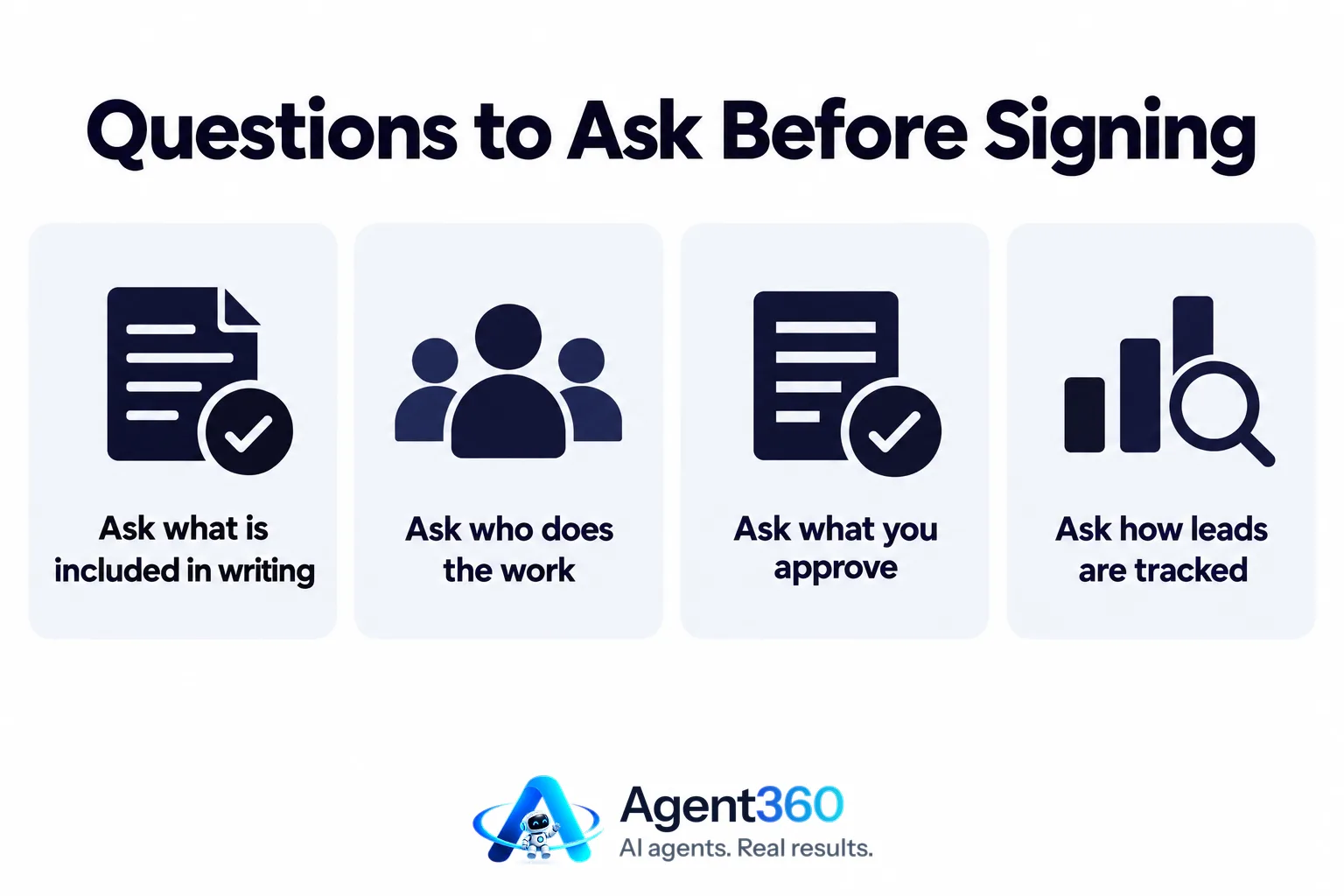
- Ask what is included. Get a written list covering website, search, ads, content, lead capture and follow-up.
- Ask who does the work. You want a named team, with AI doing the repetitive tasks and people checking the output.
- Ask what you approve. Nothing should publish under your shop name without your say.
- Ask how leads are tracked. Every call and form should land somewhere you can see it.
- Ask how you leave. Check the contract term, and whether you keep your site, domain and accounts.
- Ask about timing honestly. Search results take time, and our piece on how long SEO takes explains why. Walk away from guarantees.
What software do auto repair shops use?
Shops run on shop-management software for the work and a separate marketing stack for getting customers. They solve different problems.
What does shop-management software cover?
It typically handles estimates, repair orders, inspections, parts and invoicing. It keeps the bay running. It was not built to rank your website, and it won't chase a lead who called once and never booked.
What does the marketing side need?
A website, a visible Google profile, a place where leads are logged, and automatic follow-up. A missed call is a lost job, and missed call text back is one simple way to catch it. A done-for-you partner should set all this up so you aren't stitching tools together.
What are the 3 C's in automotive repair, and why do they matter for marketing?
The 3 C's are concern, cause and correction, the structure a repair order uses to record what the customer reported, what the technician found and what was done.

It's a repair-order habit, not a marketing term. It still works as a model for your content. Drivers search by concern: a grinding noise, a check-engine light, a car that pulls left. Service pages and posts that start from the concern, explain the likely cause and describe the fix read the way customers think. Ask any provider whether they write from real customer concerns or from generic filler.
Take the Next Step With Your Shop's Marketing
Before you hire anyone, list what you have today: website, Google profile, ads, lead tracking, follow-up. The gaps are what the provider has to fill.
Agent360 offers done-for-you growth for local service businesses on one monthly plan, from $297/mo. Our team builds and runs your website (WebAgent), SEO and AI search so you rank on Google and get named in answers from ChatGPT, Claude and Google AI Overviews (SearchAgent), and on-brand posts you approve (BrandAgent). We also run your ads and set up funnels, a CRM and automatic follow-up. Read what done for you includes and our broader take on what done-for-you marketing means.
We pair AI speed with a human team, so the work moves fast and gets checked. See the plan and what it costs on our pricing page.
Frequently Asked Questions
How do I promote my auto repair shop?
Make the shop easy to find, trust and book. That means a complete Google Business Profile, a clear website, reviews, and quick follow-up on every call or form. Ads and social posts add reach once those basics work.
What are the 3 C's in automotive repair?
Concern, cause and correction. They describe what the customer reported, what the technician found and what fixed it. Use the same order on service pages so they match how drivers search.
What software do auto repair shops use?
Most use shop-management software for estimates, repair orders and invoices. Marketing needs separate tools for your website, lead tracking and follow-up. A done-for-you provider can run that second set for you.
Is done-for-you marketing better than hiring in-house?
For many small shops, yes, because one monthly plan covers skills you would otherwise hire separately. In-house gives you more control but adds payroll and management time. Choose based on how much of the work you want to run yourself.
Can anyone guarantee Google rankings for my shop?
No. Search results depend on competition, your market and how Google judges your site. Treat a rankings or call-volume guarantee as a warning sign, and ask for a clear scope and monthly reporting instead.
What should a monthly report show?
It should show what was built or published, how many calls and form leads came in, and where they came from. If a report lists only impressions and clicks, you cannot tell whether bays are filling.
More articles
- Clay vs LeadSwift: Which Fits Your Outbound Job?
- Local SEO Checklist: What to Fix First, in Order
- Agent360 vs Belkins: a fair, side-by-side comparison
- Best done-for-you marketing package for local service businesses?
- How to Get Your Business Mentioned in Google AI Answers
- What's a White Label GEO Agency and Who Offers It?
- The Best Marketing Strategy for an Auto Repair Shop
- What Contract Terms Are Typical for Outsourced SDR Agencies?
