How to Get Your Business Mentioned in Google AI Answers
Make your pages indexable, describe what you do in plain, specific sentences, and get that same description repeated on sources other than your own site. That's how you get your business mentioned in Google AI answers. There is no switch to flip and no paid slot to buy. Google's own guidance on AI features in Search says the same foundations that help you rank in normal Search apply here.
That matters if you sell B2B or fill roles for a living. A hiring manager or a buyer can now ask an AI tool who to talk to before they ever open a search results page. If you're not named, you're not on the shortlist.
Below: what Google and ChatGPT can actually read, the steps worth doing first, and the claims to ignore.
Key Takeaways
- Make sure every page you want cited is indexed and can show a snippet in Google Search, because Google's documentation ties AI features to that eligibility.
- State what you do, who you do it for and where, in one plain sentence near the top of your key pages.
- Do not block search crawlers in robots.txt by accident, including OpenAI's search crawler if you want ChatGPT to find you.
- Build the same description of your business on third-party pages, not only on your own site.
- Use a practical guide to Google's AI Overviews as a checklist, and ignore anyone who guarantees placement.
Table of Contents
How do you get mentioned in Google's AI search results?
Be indexed, be eligible to show in Search, and be the clearest answer to the question on the page. Google's Search Central documentation on AI features says a page needs to be indexed and eligible to appear in Search with a snippet before it can be a supporting link in AI Overviews or AI Mode. After that, it points back to ordinary good practice. Helpful content, clear structure, a technically sound site.
Do you need special markup or a special file?
No. Google's documentation says there are no extra requirements or special optimizations for appearing in its AI features beyond the existing Search fundamentals. If someone tries to sell you a secret tag or file, walk away. Spend the time on clear writing and a crawlable site instead.
Can you accidentally keep yourself out?
Yes. A noindex tag, a robots.txt rule that blocks Googlebot, or a page that only loads its text after a login will stop that page being used. Check your key service pages in Google Search Console first. If a page isn't indexed, fix that before anything else.
How do you get AI to mention your business?
Make your business easy to name: say what you are, who you serve and where, then say it the same way everywhere. AI tools build answers from sources they can read. If your site, your LinkedIn page, your directory listings and your articles each describe you differently, a system has no clear thing to repeat.

What should a page say so it can be quoted?
Put a direct answer near the top. A staffing firm might say which roles it fills, for which industries, in which regions. A B2B founder might say what the product does and who buys it. Short sentences with a subject, a verb and a specific noun are easier to lift than a paragraph of positioning. Then answer the questions your buyers actually ask, under headings written as those questions.
Does it matter what others say about you?
It helps. Systems that answer open questions tend to lean on sources beyond a company's own pages. Industry directories, partner pages, podcast notes, guest articles and review profiles that describe you accurately all give the same message a second and third home. We can't give you a number for how much each one counts, and nobody outside the AI providers can.
How do you get your brand mentioned by ChatGPT?
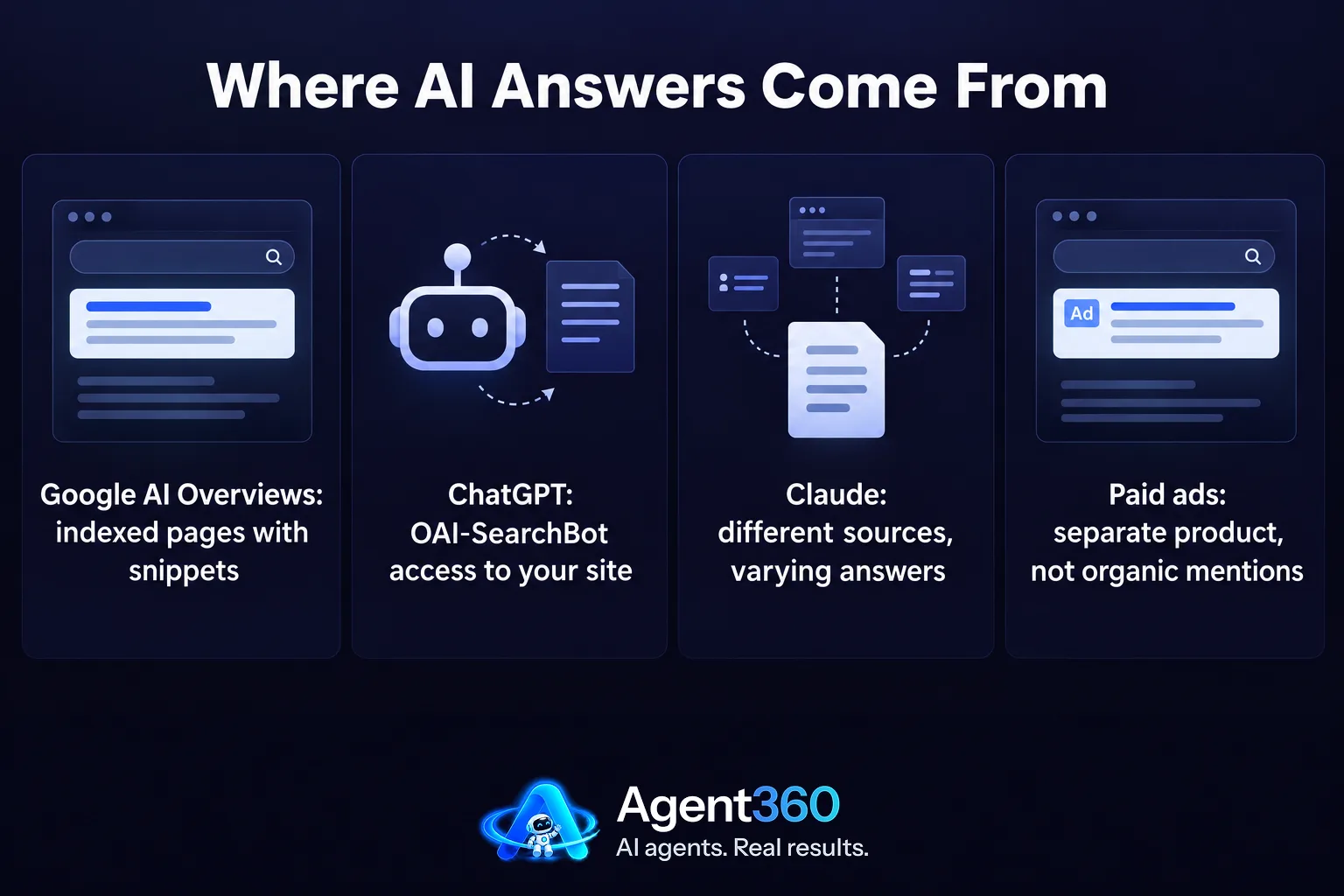
Let its search crawler read your site, and give it clear, quotable pages to read. OpenAI's crawler documentation describes a separate bot, OAI-SearchBot, used for surfacing sites in ChatGPT's search features, and says sites that opt out of it may not appear in those answers. Check your robots.txt. Then check any security or CDN setting that blocks bots by default.
Can you pay to be named?
Not in the way people mean. Paid ads are a separate product with their own labels. Organic mentions in AI answers aren't for sale, and nobody can promise one. Treat any guarantee with suspicion, including the idea that you'll be named for a given prompt by a given date.
Will every AI tool give the same answer?
No. Google AI Overviews, ChatGPT and Claude use different sources and behave differently, and answers can change from one day to the next. So don't chase one specific prompt. Aim to be easy to find and easy to describe. Our post on appearing in AI search results across platforms goes deeper on the differences.
How do you get mentioned in AI answers? Start here
Work through these steps in order, because the early ones decide whether the later ones count.
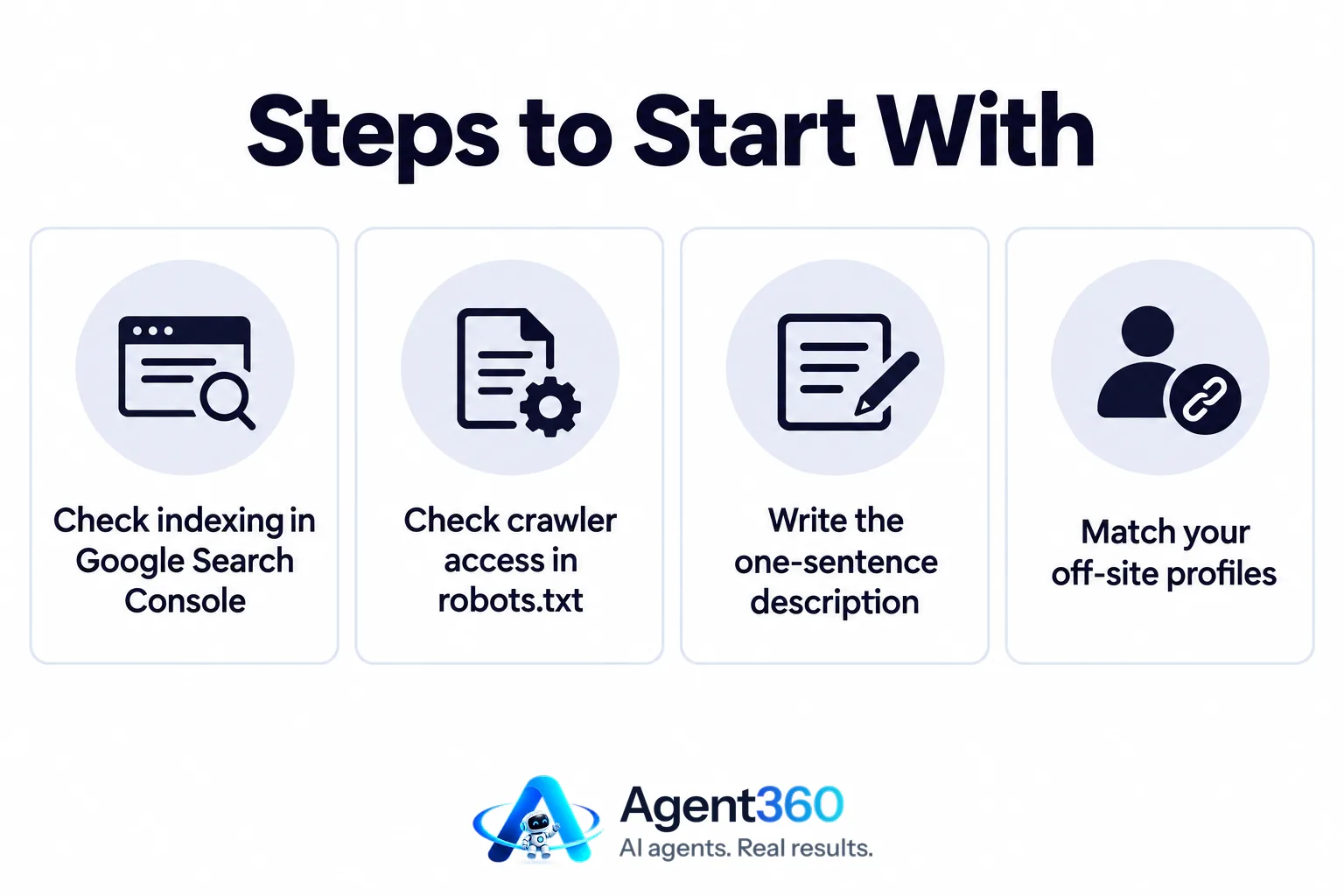
- Check indexing. Use Google Search Console to confirm your service, industry and about pages are indexed and not blocked.
- Check crawler access. Read your robots.txt and bot-protection settings. Make sure you aren't shutting out the search crawlers you want.
- Write the one-sentence description. Say what you do, who for and where. Put it at the top of your home page and each key service page.
- Answer buyer questions directly. Add pages with the question as the heading and the answer in the first sentence. For a staffing firm, that might be how you source a hard-to-fill role or how you charge.
- Find the gaps competitors fill. Look at which topics other firms cover that you don't. A keyword gap analysis shows you where to start.
- Match your off-site profiles. Update your LinkedIn page, directory listings and partner pages to use the same description.
- Recheck on a schedule. Ask the AI tools your buyers use the questions your buyers ask. Note whether you appear and which sources they cite, then adjust.
How long until you see a mention?
No one can say for your site. Indexing, content and outside mentions all take time, and AI answers shift. Think of it as the same slow build as SEO, not a one-week fix.
Take the Next Step With Your AI Visibility
Most of this work is plain and repetitive. Fix indexing, write clear pages, keep your descriptions consistent, publish steadily. The hard part is doing it every week while you're running a business or filling roles.
That's what we do at Agent360. Our SearchAgent works on SEO and AI search together: it ranks you on Google, gets you named in AI answers across ChatGPT, Claude and Google AI Overviews, and writes and publishes articles for you. Our team runs it with you as part of our all-in-one growth plan, which starts from $297/mo. We can't promise a mention, and we won't say we can. We can promise the basics get done properly.
Want to see what that would look like for your firm? Book a demo with our team.
Frequently Asked Questions
How to get mentioned in Google's AI search results?
Make sure your pages are indexed and eligible to show in Google Search with a snippet, since Google's documentation ties AI features to that. Then write clear, specific pages that answer buyer questions directly. Google says there is no special markup required for its AI features.
How to get AI to mention your business?
Describe your business in one plain sentence covering what you do, who you serve and where. Repeat that description on your site, your LinkedIn page and third-party listings. Consistent, easy-to-quote sources give AI tools something clear to repeat.
How to get mentioned in AI answers?
Start with indexing and crawler access, then publish pages that answer real buyer questions in their first sentence. Add accurate mentions on sources outside your own site. Recheck by asking the AI tools your buyers use, and adjust based on what they cite.
How to get your brand mentioned by ChatGPT?
Allow OpenAI's search crawler, OAI-SearchBot, in your robots.txt and any bot-protection settings, as OpenAI's documentation describes. Then give it clear, quotable pages to read. No one can guarantee a mention for a specific prompt.
Can I pay to be mentioned in an AI answer?
Not for organic answers. Paid ads are a separate format and are labeled as ads. Be careful with any provider who promises guaranteed placement in AI answers.
Is this different from SEO?
It overlaps heavily. Google says the same fundamentals apply to its AI features as to Search. The extra work is keeping your descriptions consistent across the web and checking that AI crawlers can actually read your site.
More articles
- Clay vs LeadSwift: Which Fits Your Outbound Job?
- Local SEO Checklist: What to Fix First, in Order
- Agent360 vs Belkins: a fair, side-by-side comparison
- Best done-for-you marketing package for local service businesses?
- Who Should You Use for Done-For-You Auto Shop Marketing?
- What's a White Label GEO Agency and Who Offers It?
- The Best Marketing Strategy for an Auto Repair Shop
- What Contract Terms Are Typical for Outsourced SDR Agencies?
