Google Business Profile Optimization: A Practical Guide
Google Business Profile optimization starts with one plain task: fill out every field Google gives you — category, services, hours, photos, attributes, posts — and keep it current. Do that, and your listing shows up when someone nearby searches for what you sell. It's a local search lever, separate from your website's SEO, though the two lean on each other.
For a staffing agency with a physical office, or a founder whose buyers search by city or region, the profile often beats the website to the punch. A prospect sees the map, the reviews, and the call button before they ever click through.
This guide covers what actually moves a profile's visibility, how to check where your site stands today, and where Google Business Profile fits inside the bigger SEO picture.
Key Takeaways
- A complete, accurate profile — correct category, hours, services, and recent photos — is the baseline Google expects before it ranks you well locally.
- Reviews and how you respond to them are a visible trust signal to both Google and the person reading the listing.
- Google Business Profile ranking is separate from website SEO rankings; treat them as two different jobs that reinforce each other.
- Local visibility fills the inbound side of pipeline; staffing agencies building out lead generation usually need an outbound motion running alongside it.
Table of Contents
How Does Google Optimization Work?
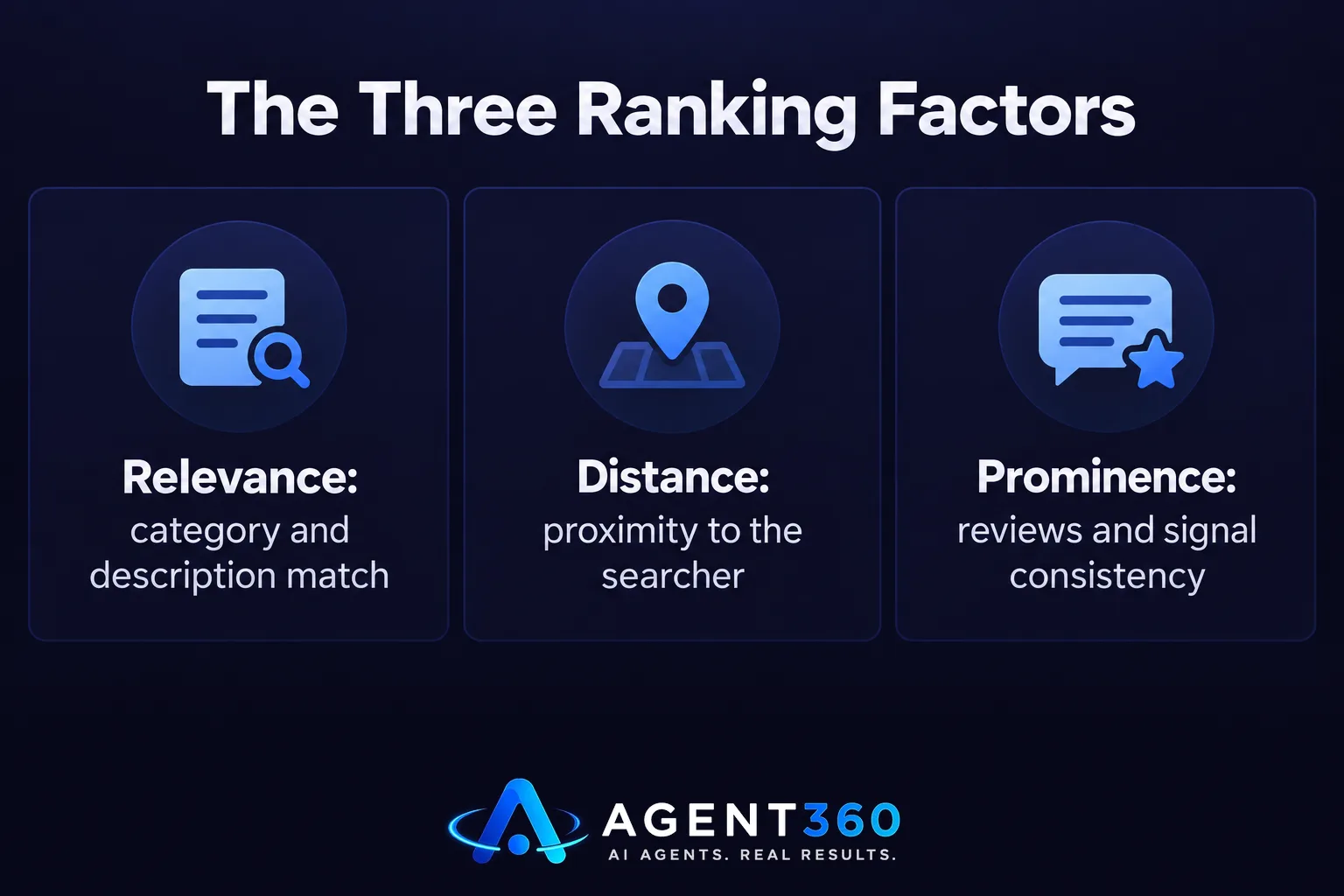
Google ranks a Business Profile on three things: relevance, distance, and prominence. Relevance is how well your category and description match what someone typed. Distance is how close your listed address sits to the searcher, or to the area they searched. Prominence is reputation — review volume, what those reviews say, and whether your website and citations agree with your profile.
Does Google Business Profile Affect SEO Rankings?
It affects local results and the map pack, not your general rankings on Google Search. A strong profile and a strong website tend to move together — they draw on some of the same signals, like consistent business details, backlinks, and user engagement — but two separate systems do the ranking.
How Do I Check My Website Ranking on Google?
Open an incognito window, search your target term, and note where you land — or use a ranking tool that tracks it over time. A manual search gives you one result, from one location, at one moment. That's a spot check, not a trend line.
What's a More Reliable Way to Track Ranking Over Time?
Google Search Console, free and tied to your verified website, shows the actual queries your pages appear for, your average position on each, and how clicks and impressions shift week to week. It's a more honest picture than one spot-check search, because it reflects what real people typed — not just the phrase you happened to try.
What Are the Top SEO Ranking Factors for the Google Business Profile?
Category accuracy, completeness, proximity, reviews, and consistency across your listings carry the most weight. Google's Business Profile help center names these as the core signals, though it won't say how each is weighted.
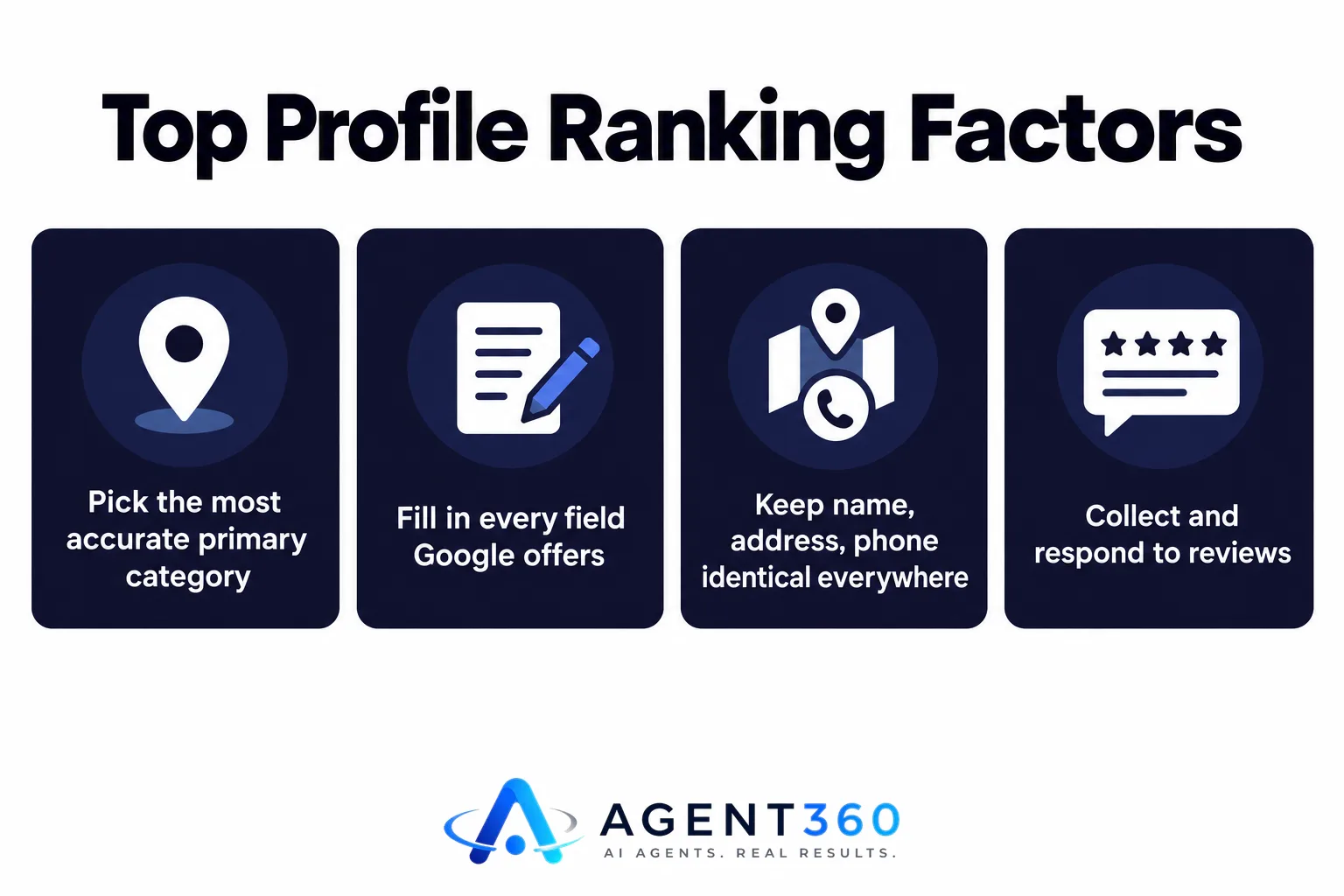
- Pick the most accurate primary category. This is one of the strongest relevance signals Google uses to decide which searches your listing should appear for.
- Fill in every field Google offers. Services, products, hours, attributes, and a written description all add relevance signals a bare-bones listing lacks.
- Keep your name, address, and phone number identical everywhere. Mismatched details across your website, directories, and the profile itself weaken the prominence signal.
- Collect and respond to reviews. Volume, recency, and your replies all factor into how Google and the reader judge the business.
- Post updates and add current photos. An inactive profile with old photos signals a business that may not be reliably open or active.
What Is Google Search Engine Optimization (SEO)?
SEO is shaping a website and the signals around it so Google can understand it and rank it for the searches that matter. It covers technical factors (how the site is built and crawled), content (what the pages say and how well they answer the search), and off-site factors (links and mentions elsewhere).
How Is SEO Different From Google Business Profile Optimization?
SEO is about your website's pages ranking in standard search results. Business Profile optimization is about your listing ranking in local results and the map pack. A business can nail one and flub the other — the signals overlap but aren't the same, and both deserve deliberate attention rather than guesswork.
Make Local Visibility Part of a Full Pipeline, Not the Whole Plan
A well-optimized Google Business Profile brings in people already searching for what you do. It won't reach the buyer who hasn't started looking yet, or the hiring manager a staffing firm wants in front of before a role even opens. That gap is where outbound does the work inbound can't — which is why founders running their own outbound usually pair the two instead of picking one.

Agent360 runs that outbound side. AI prospecting finds the right buyers and flags when they're showing buying signals, multi-channel outreach across LinkedIn, email, and phone moves them toward a meeting on your calendar, and CRM tools track the pipeline as it moves. The platform starts at $99/mo, unlimited seats, no per-user fees, with one triple-verified lead included for every email sent. Or hand it off: the VIP done-for-you option runs the whole motion with a dedicated GTM engineer and strategist, for $2,000/mo plus $250 per booked meeting.
Check the pricing page and pick based on where your pipeline actually stands, not where you wish it stood.
Frequently Asked Questions
Do I need a website to have a Google Business Profile?
No. You can create and verify a profile without a website, though adding one gives Google more content to match against searches, which usually strengthens the listing.
How long does it take for changes to a profile to show up in search?
Google doesn't publish a fixed timeline, and it varies by change and by business. Minor edits like hours can show within hours to days; something bigger, like a new category or address, can take longer while Google re-checks the listing.
Can a business with multiple locations have a profile for each?
Yes. Each physical location serving customers in person typically gets its own profile, all managed under one account, and each one ranks on its own in its own local area.
Does responding to reviews actually help ranking?
Google has said engagement — including how you respond to reviews — is one signal it weighs alongside review volume and content. It also shapes whether the reader trusts the listing enough to pick up the phone.
Is paying for ads the same as Google Business Profile optimization?
No. Profile optimization is free, and it affects organic placement in local results and the map pack. Local Services Ads or Search ads are a separate, paid placement sitting alongside the organic results — not a substitute for a complete profile.
Should a founder running outbound bother with local SEO at all?
It depends on whether buyers search by location for what you sell. If they do, even a one-person outbound operation gains from catching that inbound demand alongside the meetings outbound books directly.
More articles
- How Many Connection Requests Can You Send on LinkedIn?
- Agent360 vs Expandi: A Fair, Side-by-Side Comparison
- Apollo vs Smartlead: Built-In Data Versus Your Own Lists
- MSP Sales Leads & Appointments: A Practical Playbook
- AI Competitor Gap Analysis Agent: What It Actually Does
- Skylead vs Dripify: Which LinkedIn Tool Fits Your Team?
- Cold Email for Recruiters: What Actually Works
- MSP Lead Generation Services: What to Look For
