What Is the Google Local Pack and How Do You Rank in It?
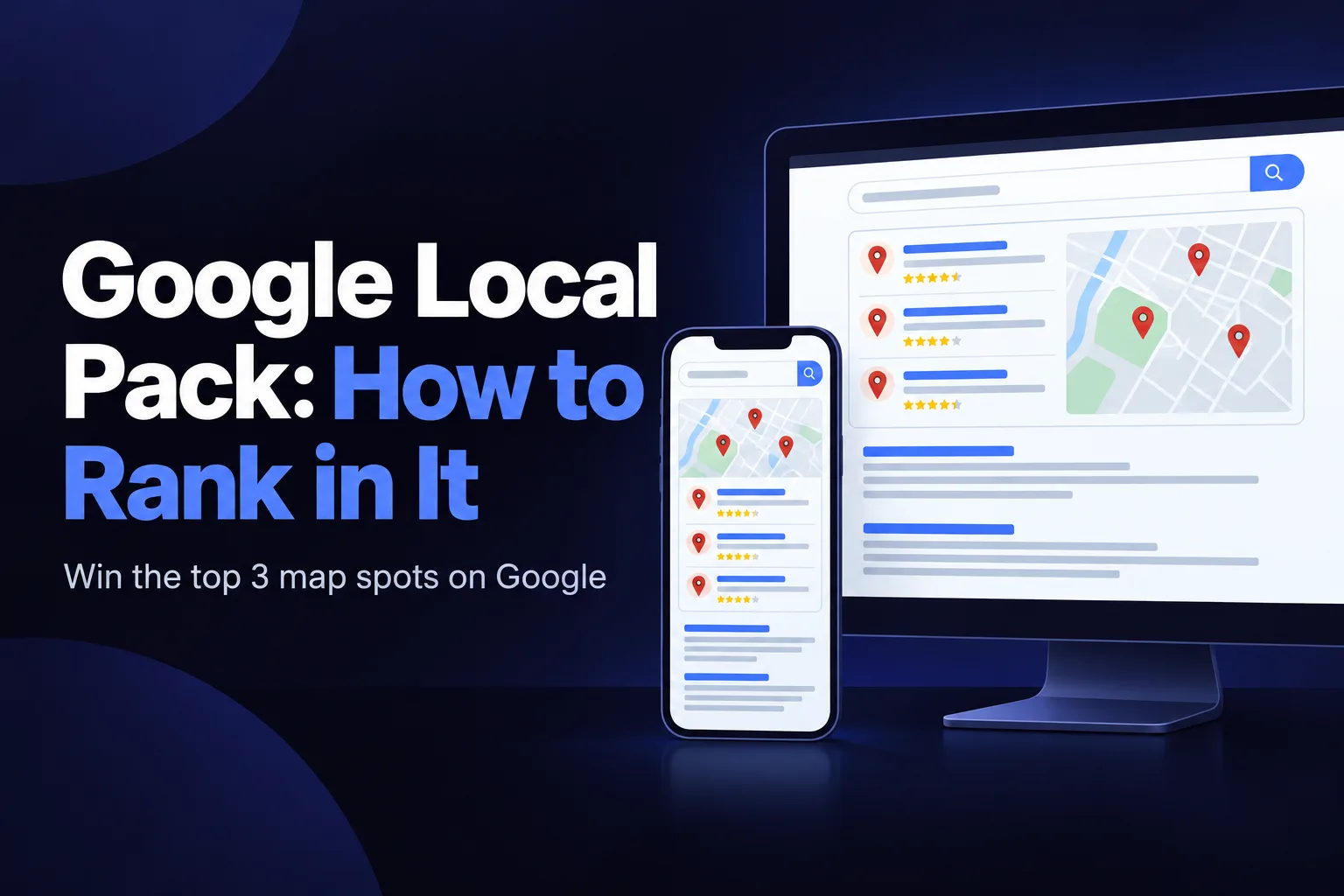
The local pack is that box of three business listings with a map Google shows above the regular search results whenever someone types in a service near them. Run a home services, trades, clinic, or professional services business, and this box is usually the first thing a customer sees, long before they scroll down to any website link.
Land in that box and calls come straight from the search page, often without the searcher ever clicking through to a website. Miss it, and your competitor gets the click, the call, and the job, even if your site is the better one.
Here's what actually controls who gets into the local pack, why businesses fall out of it, and the steps that move you toward one of those three spots.
Key Takeaways
- The local pack ranks on proximity, relevance, and prominence, not on how new or flashy your website looks.
- A complete, active Google Business Profile matters more to local pack ranking than most website changes.
- Reviews, categories, and consistent business information across the web all feed into prominence signals.
- Local pack rankings can shift by search location, so one ranking check rarely tells the full story; see Google Business Profile Optimization: A Practical Guide for the setup steps.
- Businesses that pair local pack work with ongoing content and link activity tend to hold position longer than those that set it up once and stop.
Table of Contents
What Is the Local Pack?
The local pack is the set of three business listings with a map that Google displays for searches with local intent. It sits above the standard organic results on searches like “plumber near me” or “family dentist [city],” and each listing shows the business name, star rating, hours, and a call or directions button right on the results page.
How Is the Local Pack Different From Organic Search Results?
Organic results are the standard blue links, ranked by Google's core web algorithm. The local pack runs on a separate system tied to Google Business Profile data, map position, and local signals. That's why a business with a modest website can still beat a much bigger site for that box.
Does Every Search Show a Local Pack?
No. Google only shows it when it detects local intent, either because the search includes a location or the searcher's device suggests they want something nearby. Broad, informational searches usually skip the local pack entirely.
How Does Google Decide Who Gets Into the Local Pack?
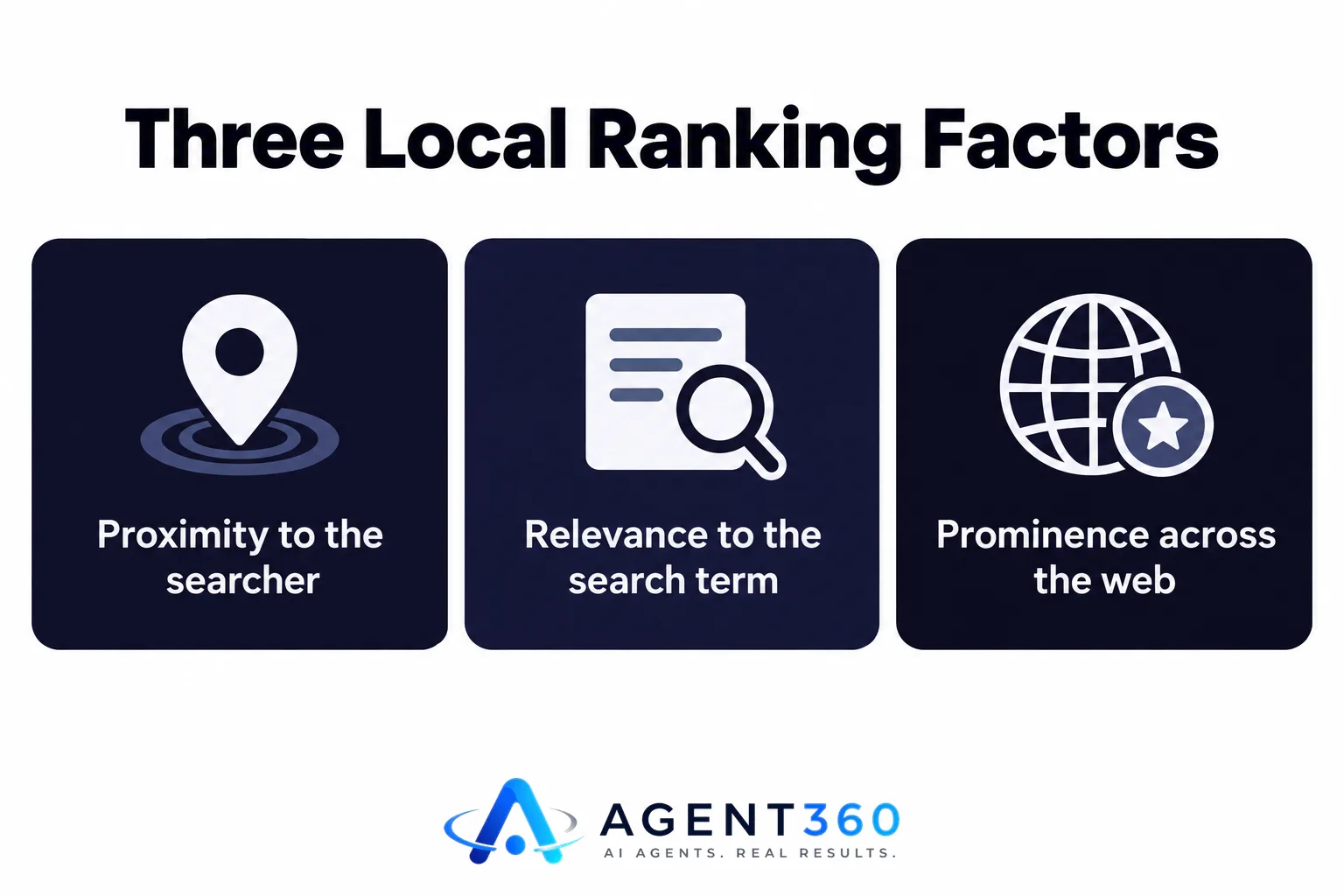
Google ranks local pack listings on three factors: proximity, relevance, and prominence. These come straight from Google's own guidance on local ranking, and they apply to every business type that shows up in the pack.
What Is Proximity in Local Ranking?
Proximity is how close the searcher is to your business address the moment they search. You can't change where someone is standing. You can make sure your listed address and service areas are accurate, since an outdated address can push you out of range for nearby searches.
What Is Prominence and Why Does It Matter Most?
Prominence is how well-known and well-reviewed your business is, both on Google and across the wider web. Review count, review recency, star rating, and mentions of your business elsewhere all feed prominence. It's usually the factor local businesses have the most room to actually influence.
What Factors Influence Local Pack Rankings the Most?
Google Business Profile completeness, review activity, and category accuracy carry the most weight for local pack ranking. Website content still matters, but it supports the profile rather than replacing it.
Does My Website Content Affect Local Pack Rankings?
Yes, indirectly. Google checks the information on your website, address, phone number, services, against your Google Business Profile, and mismatches can weaken your ranking. A website that clearly states your service areas and categories backs up what your profile already claims.
Do Reviews Really Change Local Pack Position?
Review signals are one of the most visible inputs Google uses for prominence. Businesses with a steady flow of recent, detailed reviews tend to hold stronger positions than ones with a handful of old ones. A single batch of reviews followed by months of silence looks a lot less convincing to Google than a steady trickle over time.
How Can I Improve My Local Pack Ranking?
Start with your Google Business Profile, then build outward to reviews, citations, and content. This order tends to produce visible movement first.
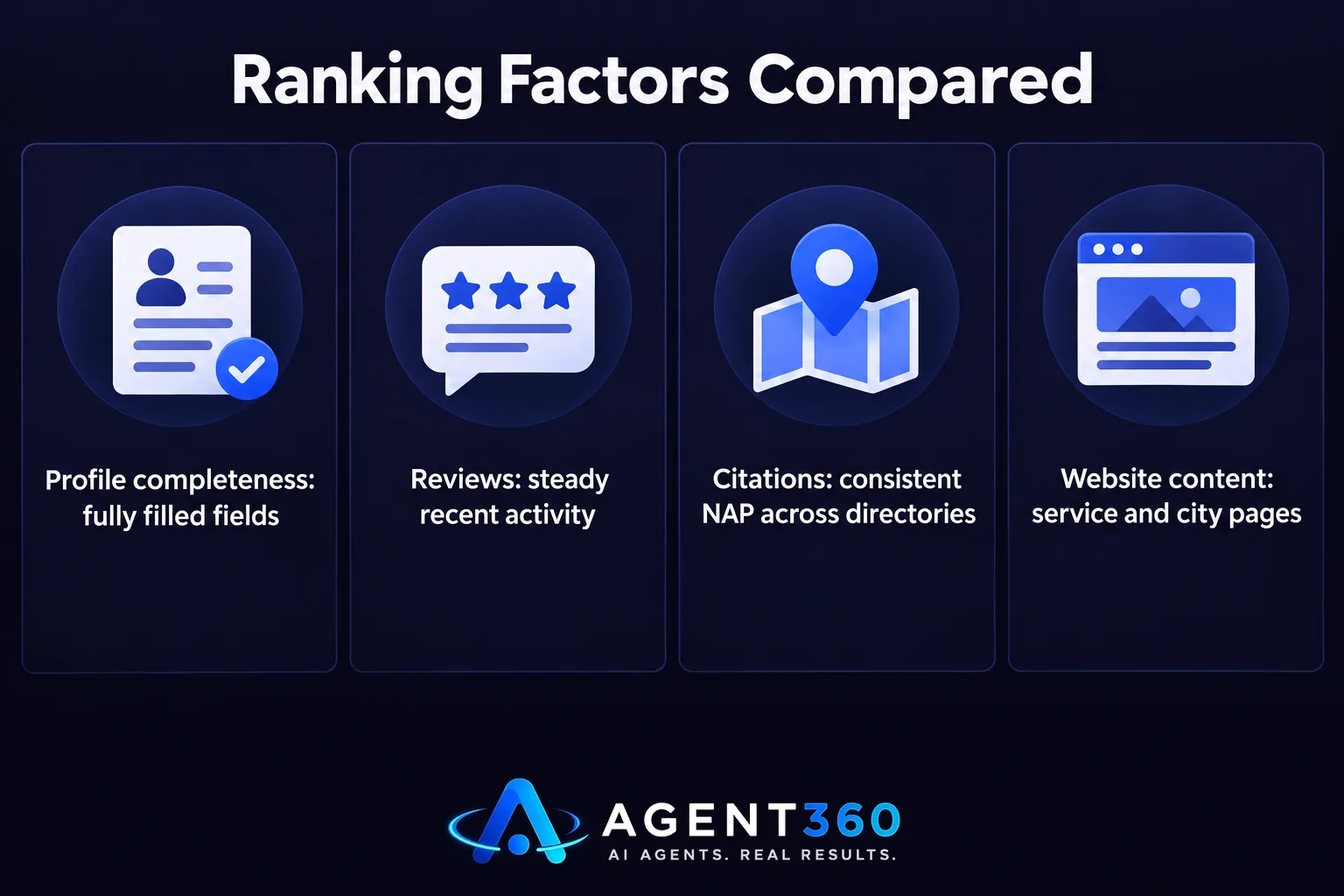
- Claim and fully complete your Google Business Profile. Fill in every field, categories, services, attributes, hours, since incomplete profiles rank behind complete ones for the same search terms.
- Match your business name, address, and phone number everywhere online. Inconsistent listings across directories send mixed prominence signals to Google.
- Ask every satisfied customer for a review, consistently. A steady pace of new reviews beats a one-time push.
- Add photos and respond to every review. Active profiles signal to Google that the business is operating and engaged.
- Publish content tied to your services and city. Pages built around what you do and where you do it reinforce the relevance signal the local pack checks for.
How Long Does It Take to See Local Pack Movement?
Profile changes can show up in rankings within days. Prominence built through reviews and citations tends to compound over weeks and months rather than appear overnight. The timeline guide at How Long Does SEO Take to Show Results? breaks this down in more detail.
Why Did My Business Drop Out of the Local Pack?
A drop usually traces back to a profile change, a review slowdown, or a competitor's recent improvement, not a mystery penalty. Check these in order and the cause usually turns up fast.

Did a Competitor Just Update Their Profile?
Local pack rankings are relative. A competitor adding photos, picking up reviews, or correcting their category can push your listing down without anything on your end changing at all.
Did My Business Information Change Recently?
A moved address, a new phone number, or a temporary closure marked on your profile can all shift your position. Checking your profile for recent edits, including ones made by Google's own automated suggestions, is a fast way to catch this.
Take the Next Step With Your Local Pack Visibility
Getting into the local pack takes a Google Business Profile that's complete and active, reviews that keep coming in, and website content that backs up what the profile claims. Doing all three consistently, on top of running the rest of a business, is where most owners run out of time.
Agent360's SearchAgent handles the SEO and AI search side of this: it works to rank your business on Google and get it named in AI answers like ChatGPT, Claude, and Google AI Overviews, and it writes and publishes the articles that back up your local relevance. It runs alongside WebAgent and the rest of the all-in-one plan, so the website, the content, and the follow-up system work from the same account instead of five separate vendors.
See how the plans are structured on the pricing page.
Frequently Asked Questions
What is the local pack in SEO?
The local pack is the box of three business listings with a map that Google shows for searches with local intent, sitting above the standard organic results. It displays each business's name, rating, hours, and quick action buttons for calls or directions.
How many businesses show in the local pack?
Google typically shows three businesses in the local pack, sometimes with a link to a fuller map-based list below it. Those three spots are the most visible real estate for local search intent.
Can I pay to get into the local pack?
Paid local ads can appear near the local pack in some searches, but the organic local pack itself is not a paid placement; it ranks based on proximity, relevance, and prominence signals rather than ad spend.
Why is my business not showing in the local pack at all?
Common causes include an unclaimed or unverified Google Business Profile, an incorrect business category, or a missing service area setup. Verifying the profile and confirming the category matches your main service is the first thing to check.
Does the local pack look the same for every searcher?
No. Local pack results vary by the searcher's exact location, so a business ranking well for one address nearby may not appear for a search from across town. Checking rank from a single location rarely reflects the full picture.
More articles
- Clay vs LeadSwift: Which Fits Your Outbound Job?
- Local SEO Checklist: What to Fix First, in Order
- Agent360 vs Belkins: a fair, side-by-side comparison
- Best done-for-you marketing package for local service businesses?
- How to Get Your Business Mentioned in Google AI Answers
- Who Should You Use for Done-For-You Auto Shop Marketing?
- What's a White Label GEO Agency and Who Offers It?
- The Best Marketing Strategy for an Auto Repair Shop
