What Contract Terms Are Typical for Outsourced SDR Agencies?
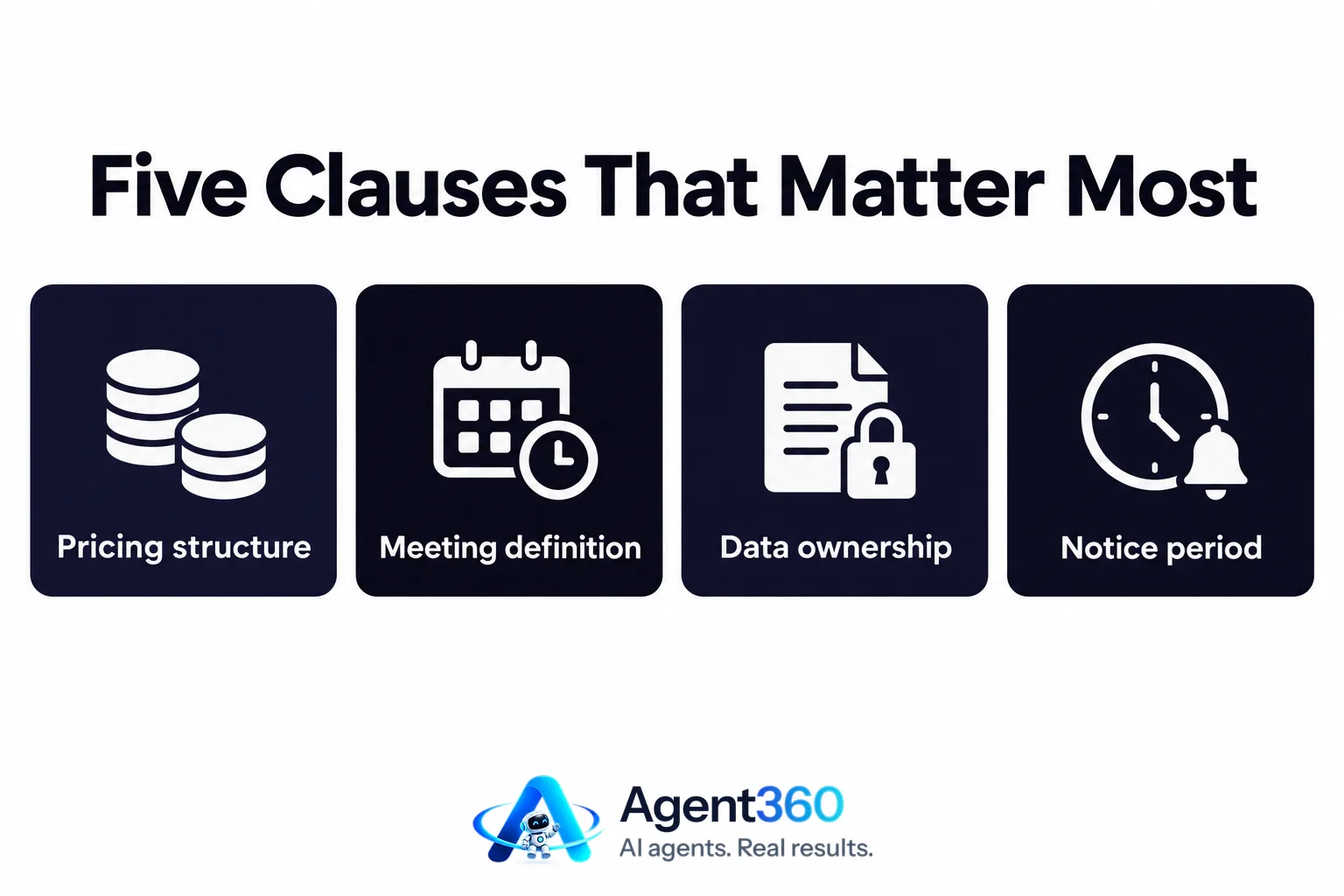
Five clauses show up in almost every outsourced SDR contract: the pricing structure (retainer, per-meeting, or hybrid), a minimum commitment period, a written definition of a qualified meeting, who owns the lead data and messaging once you part ways, and a notice period for cancellation. Everything else in the document just backs one of those five up.
Founders and staffing firm owners tend to zero in on price first and skim past the clauses that actually bite later — data ownership, meeting definitions, exclusivity. Those are the ones that decide whether you can walk away cleanly if the engagement underperforms.
Below is what each term actually means, so you can read a proposed contract and know what you're signing before the ink dries.
Key Takeaways
- Pricing structure, meeting definition, data ownership, exclusivity and notice period are the five clauses that matter most in an outsourced SDR contract.
- Ask for a written definition of a qualified meeting before you sign, not after the first invoice.
- Confirm in writing that your lead lists, email domains and CRM data stay with you if you cancel, as covered in more detail in our guide on what to check before you sign an SDR outsourcing contract.
- A shorter initial term with a renewal option usually protects you better than a long term with a low monthly rate.
- Compare pricing models side by side before committing, since retainer and pay-per-meeting contracts carry different risks.
Table of Contents
What Contract Terms Are Typical for Outsourced SDR Agencies?
Most outsourced SDR contracts are built around five clauses: pricing, term length, meeting definition, data ownership and exclusivity. Everything in the contract exists to make one of those five terms enforceable. A short contract that names all five clearly is usually safer than a long contract that glosses over any of them.
What Are Some Common Contract Terms?
Common terms include a monthly retainer or per-meeting fee, a minimum number of months before you can cancel, a written definition of a qualified meeting (title, company size, buying stage), ownership of lead lists and reply data, and a notice period — usually 30 to 60 days. Some agreements add a non-solicitation clause so you can't poach the agency's reps directly, or a performance clause guaranteeing a minimum number of meetings a month, with a credit or refund if they miss it.
What Is an Outsourced Contract?
An outsourced contract is a written agreement where an outside company performs a business function on your behalf, under terms that specify scope, price and ownership of the work product. For SDR outsourcing, the work product is pipeline — booked meetings, replies, and the messaging and lists that produced them. The contract should say plainly whether that belongs to you or the agency once the relationship ends; unclear ownership is the most common dispute in this kind of agreement.
What Are the Main Types of Outsourced SDR Pricing Models?
Outsourced SDR agreements generally fall into four pricing models: flat retainer, pay-per-meeting, hybrid retainer plus per-meeting, and platform access with no management fee. Each one shifts the risk between you and the agency in a different way.
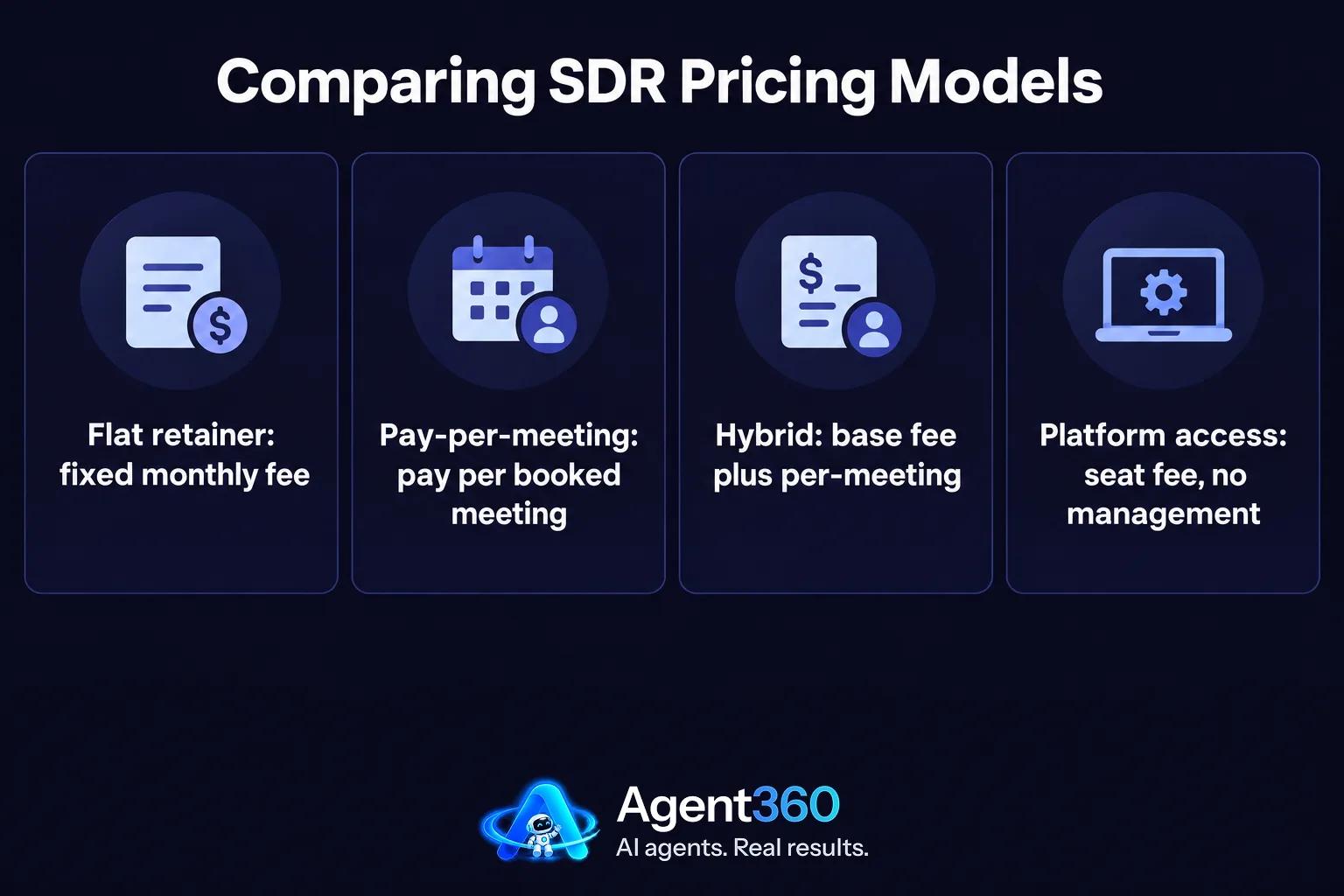
- Flat retainer. You pay a fixed monthly fee regardless of output. Lower predictability of results, but easier budgeting.
- Pay-per-meeting. You pay only for booked meetings that meet an agreed definition. Lower upfront risk, but the meeting definition clause becomes critical.
- Hybrid retainer plus per-meeting. A base fee covers strategy and setup, with a per-meeting fee layered on top. This spreads risk between both parties.
- Platform access. You pay a monthly seat fee for software, leads and a sequencer, and your own team runs outbound rather than handing it to an agency. This removes the meeting-definition dispute entirely because you control execution.
Comparing these models against each other tells you more than comparing two agencies on price alone — the model changes what you're actually paying for. If you haven't settled on a model yet, a side-by-side look at outsourced SDR services versus outbound software is a decent place to start.
What Should You Check Before You Sign?
Walk through the contract in a fixed order so you don't miss a clause that matters. These are the points most likely to cause a dispute down the line.

- Confirm the meeting definition in writing. Get the exact title, company size and qualifying criteria spelled out, not left to verbal agreement.
- Check who owns the data after cancellation. Lead lists, reply history and sending domains should transfer to you, not stay with the agency.
- Read the notice period. Look for 30 to 60 days rather than a clause that locks you in without an exit path.
- Ask about exclusivity. Some agencies won't work with a direct competitor during your engagement; confirm whether that applies and for how long after you leave.
- Look for a performance floor. A minimum meeting count with a credit or refund if missed gives you recourse if output drops.
Take the Next Step on Your Outbound Contract
Reading a contract clause by clause is the easiest way to avoid a bad outsourcing decision. It also helps to know what the alternative looks like before you sign anything. Agent360's VIP Done-For-You Outbound runs end to end with a dedicated GTM engineer and strategist for $2,000 a month plus $250 per booked meeting — a structure worth holding up against any retainer proposal on your desk. Prefer to keep it in-house? The Agent360 Platform starts at $99 a month with leads included, an email and LinkedIn sequencer, a parallel dialer, and unlimited seats, so there's no per-user fee to negotiate later.
Either way, these same clauses apply, whether you hand outbound to an agency or run it yourself with software. Check the pricing page against whatever contract is sitting in your inbox right now.
Frequently Asked Questions
What are some common contract terms?
Pricing structure, minimum term length, a written meeting definition, data and lead-list ownership, and a cancellation notice period — those five show up in nearly every outsourced SDR contract. Exclusivity and a performance floor come up less often, but it's worth asking for them anyway.
What is an outsourced contract?
It's a written agreement where an outside company performs a function for you, with terms covering scope, price, and who owns the resulting work. In SDR outsourcing, that work is the pipeline, messaging, and lead data the engagement produces.
Is a pay-per-meeting contract safer than a retainer?
It shifts more risk onto the agency, since you're paying for meetings that meet an agreed definition rather than for time spent. That's exactly why the written meeting definition becomes the most important clause in that kind of contract.
Should I sign a long-term outsourced SDR contract?
A shorter initial term with a renewal option usually protects you better than a long term at a lower rate, because it leaves you an exit if output doesn't match expectations. More on this in our piece on whether outsourced SDR firms require long-term contracts.
Who owns the leads once the contract ends?
That should be spelled out explicitly in the contract. Without it, disputes over lead lists and reply data are common — so get ownership transfer confirmed in writing before you sign, not after the relationship ends.
Can contract terms be negotiated before signing?
Most agencies will adjust term length, notice period, and performance floors if you ask before signing rather than after. Our guide on whether SDR agencies offer flexible or custom engagement terms covers what's typically up for negotiation.
More articles
- Clay vs LeadSwift: Which Fits Your Outbound Job?
- Local SEO Checklist: What to Fix First, in Order
- Agent360 vs Belkins: a fair, side-by-side comparison
- Best done-for-you marketing package for local service businesses?
- How to Get Your Business Mentioned in Google AI Answers
- Who Should You Use for Done-For-You Auto Shop Marketing?
- What's a White Label GEO Agency and Who Offers It?
- The Best Marketing Strategy for an Auto Repair Shop
