MSP Lead Generation Services: What to Look For
MSP lead generation services find and engage IT directors, operations leaders, and business owners who need managed IT, security, or cloud support, then hand your sales team a booked meeting instead of a cold list. Most run outbound on your behalf across email, LinkedIn, and phone, using signals like funding news, headcount growth, or expiring contracts to time the outreach. The real differences show up in how they define a qualified meeting, how they price the work, and whether you own the pipeline data when the contract ends.
MSPs sell a recurring, technical service to buyers who are already fielding pitches from other providers. A lead generation partner that doesn't understand that buying cycle will fill your calendar with meetings that go nowhere.
Key Takeaways
- Ask how a provider defines a “qualified meeting” before you ask about price.
- Compare flat-fee, per-meeting, and hybrid pricing models against your average contract value.
- Check whether the service uses buying signals or just a static contact list, as detailed on the prospecting page.
- Decide early whether you want a done-for-you team or software you run yourself, since the outsourced vs in-house tradeoffs differ for each.
- Confirm you keep the contact data and reply history if you cancel the contract.
Table of Contents
What Do MSP Lead Generation Services Actually Do?
They identify IT and operations decision-makers at companies that match your ideal client profile, then run outreach to book a meeting on your calendar. The work typically covers three parts: building a list of target accounts, writing and sending the outreach across email, LinkedIn, or phone, and qualifying replies before they land on your calendar. Some providers also track signals like a prospect hiring an IT manager, posting about a security incident, or renewing a lease, since those moments often line up with budget conversations.
Who are the right contacts to target at an MSP's prospect accounts?
For most MSPs, the buyer is an IT director, office manager, CFO, or owner at a company with 20 to 500 employees and no full internal IT department. The title varies by industry, so a service worth paying for should ask about your current client base before building a list, not after.
How Much Do MSP Lead Generation Services Cost?
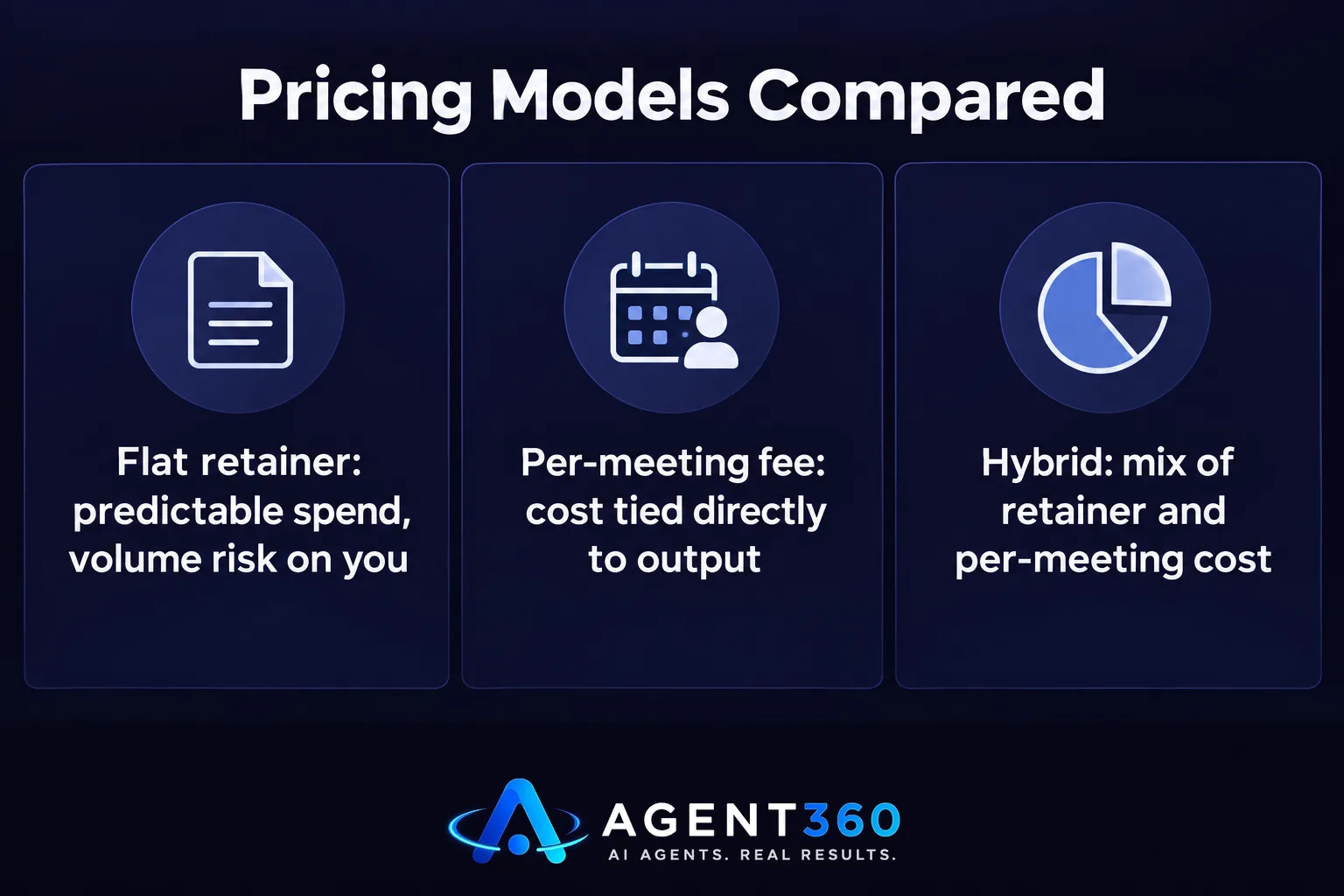
Pricing usually falls into a flat monthly retainer, a per-meeting fee, or a hybrid of the two, and the right model depends on your deal size. A flat retainer gives you predictable spend but puts the volume risk on you. A per-meeting fee ties cost directly to output, which matters more when your average MSP contract is worth tens of thousands of dollars a year and one extra signed deal covers months of fees.
What should a per-meeting fee actually include?
Ask whether the fee covers only the booking, or also the research, sequencing, and follow-up that got the prospect to say yes. A low headline fee that excludes list-building or replies-handling often costs more once you add those pieces back in.
What Should You Check Before You Sign a Contract?
Verify how meetings are qualified, which channels the service actually uses, and who owns the data when you leave. These three checks catch most of the problems MSP owners run into after signing.
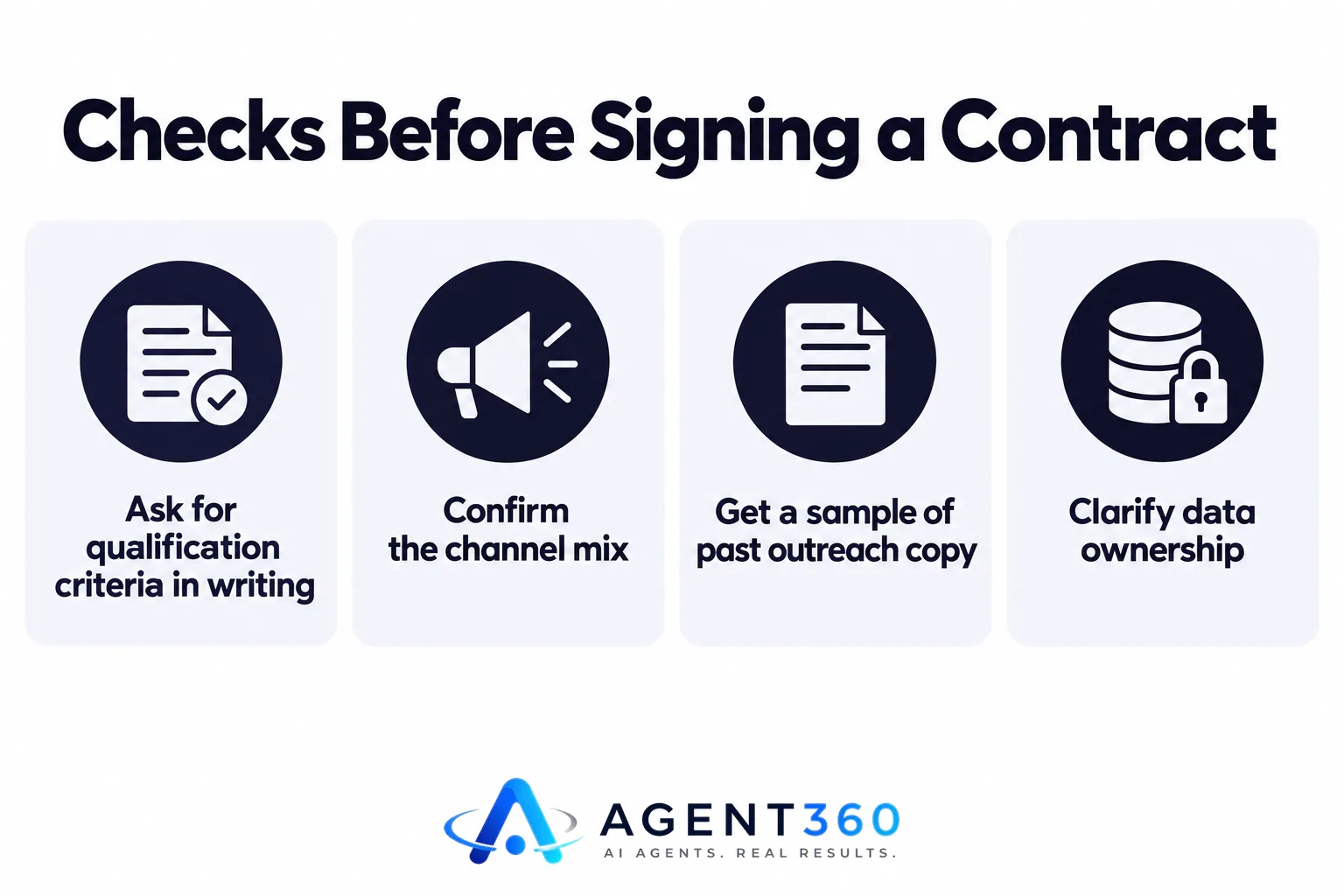
- Ask for the qualification criteria in writing. A meeting with a company that matches your ideal client profile and has budget authority is different from any reply that includes a calendar link.
- Confirm the channel mix. Email-only outreach reaches fewer decision-makers than a combination of email, LinkedIn, and phone, so ask which channels run and in what order.
- Get a sample of past outreach copy. Generic, templated messages get ignored by IT buyers who receive dozens of similar pitches each week.
- Clarify data ownership. You want the contact list, reply history, and meeting notes to stay with you if you switch providers.
- Check the ramp timeline. List-building and outreach sequencing take time before meetings start landing, so ask what the first 30 to 60 days actually look like.
How do you verify the meetings are qualified?
Request a short call recap or summary for each booked meeting before it hits your calendar, not just a name and time. That recap should show the prospect's role, company size, and the problem they described, so your sales team can prep instead of guessing.
What channels should the service use?
Email alone misses prospects who screen unfamiliar senders, and LinkedIn alone misses buyers who rarely log in. A service that blends email, LinkedIn, and phone outreach, and compares favorably against single-channel tools, tends to reach more of your actual target list.
Should You Buy a Service or Run Outbound In-House?
It depends on whether you have the time to run sequences and handle replies yourself, or would rather hand the work to a team that does it daily. Running outbound in-house with software gives you control over messaging and cost, but it takes a real weekly time commitment. A done-for-you service removes that time cost but adds a monthly fee and less day-to-day control over tone and targeting.

Many MSP owners start with one approach and switch once they see how much time outbound actually takes relative to selling and delivering client work.
Take the Next Step With Your Outbound Plan
Agent360 covers both paths for MSPs weighing lead generation options. The Agent360 Platform, starting at $99 a month, lets you run cold outbound yourself with included leads, an email and LinkedIn sequencer, a parallel dialer, and a CRM, with unlimited seats and no per-user fees. If you'd rather hand the work off, the VIP Done-For-You Outbound plan runs your outbound end to end with a dedicated GTM engineer and strategist for $2,000 a month plus $250 per booked meeting, and you only take the meetings.
Whichever model fits your team better, start by comparing the full breakdown on the pricing page.
Frequently Asked Questions
How long does it take for MSP lead generation services to produce meetings?
Most providers need the first few weeks to build the target list, verify contacts, and warm up outreach channels before meetings start arriving consistently. Expect a ramp period rather than an immediate flow of bookings.
What's a reasonable number of meetings to expect per month?
This depends heavily on your target market size, service area, and how narrow your ideal client profile is. A provider that promises a fixed number before seeing your account list and past client data is guessing, not forecasting.
Do MSP lead generation services work for a narrow geographic market?
Yes, but the available pool of accounts is smaller, so expect fewer total meetings and a longer list-building phase compared to a nationwide target market.
Should an MSP use a lead generation agency or software?
Agencies suit owners who want outreach handled without adding staff, while software suits owners who have time to run sequences themselves and want to keep costs lower. The done-for-you agency option and self-run software solve the same problem with different tradeoffs in cost and control.
What should an MSP track to know if a lead generation service is working?
Track meetings held, not just meetings booked, along with how many of those meetings turn into proposals and signed contracts. A high booking count with a low show-up or close rate usually points to a qualification problem, not a volume problem.
More articles
- AI Dialer: What It Actually Does and What to Check First
- Unlimited Seats Sales Software: What to Buy and Why
- Cold Email and LinkedIn Sequencer: What to Look For
- Staffing Agency Lead Generation: A Practical Playbook
- AI SDR for Staffing Agencies: What to Look for Before You Buy
- Otter.ai Alternative: What Sales Teams Need Beyond Notes
- Fireflies Alternative: What Sales Teams Should Check First
- JustCall Alternative: What to Check Before You Switch
