What's the Best Done-for-You Outbound Agency for Agencies?

The best done-for-you outbound agency for agencies is the one built around how agencies actually sell: short buying windows, multiple stakeholders, and a need for new logos every month regardless of what is happening on delivery. That rules out generic lead-gen shops set up for a single buyer persona and a single long sales cycle. Staffing firms sell to hiring managers while filling roles at the same time, and marketing or recruiting agencies sell against a crowded field of near-identical competitors. A done-for-you provider needs to handle that reality, not just send email.
This article covers what “done-for-you” should actually include, how to evaluate a provider before signing, and where staffing and recruiting firms need something different from a typical B2B outbound engagement.
Key Takeaways
- Done-for-you outbound should cover prospecting, multi-channel outreach, and meeting booking, not just email sends.
- Agencies need a provider who can target multiple buyer roles at once, since staffing and recruiting sales often touch several decision-makers per account.
- Check what counts as a “meeting” before signing, since definitions vary widely between providers — see what done-for-you should include.
- Compare the fully loaded cost of an agency against hiring and running your own outbound function before committing.
- A short trial period with clear reporting beats a long contract with vague deliverables.
Table of Contents
What does “done-for-you” actually mean for an outbound agency?
Done-for-you should mean the agency finds prospects, runs outreach across channels, and hands you a booked meeting, with nothing left for your team to configure. Some providers only sell data lists or only send cold email, then call that “outbound.” For an agency owner, that gap matters because your team is already stretched across sales and delivery. A real done-for-you setup combines prospecting, outreach, and calendar booking into one flow, so a meeting shows up on your calendar rather than a list of names in a spreadsheet.
What should be included without extra setup?
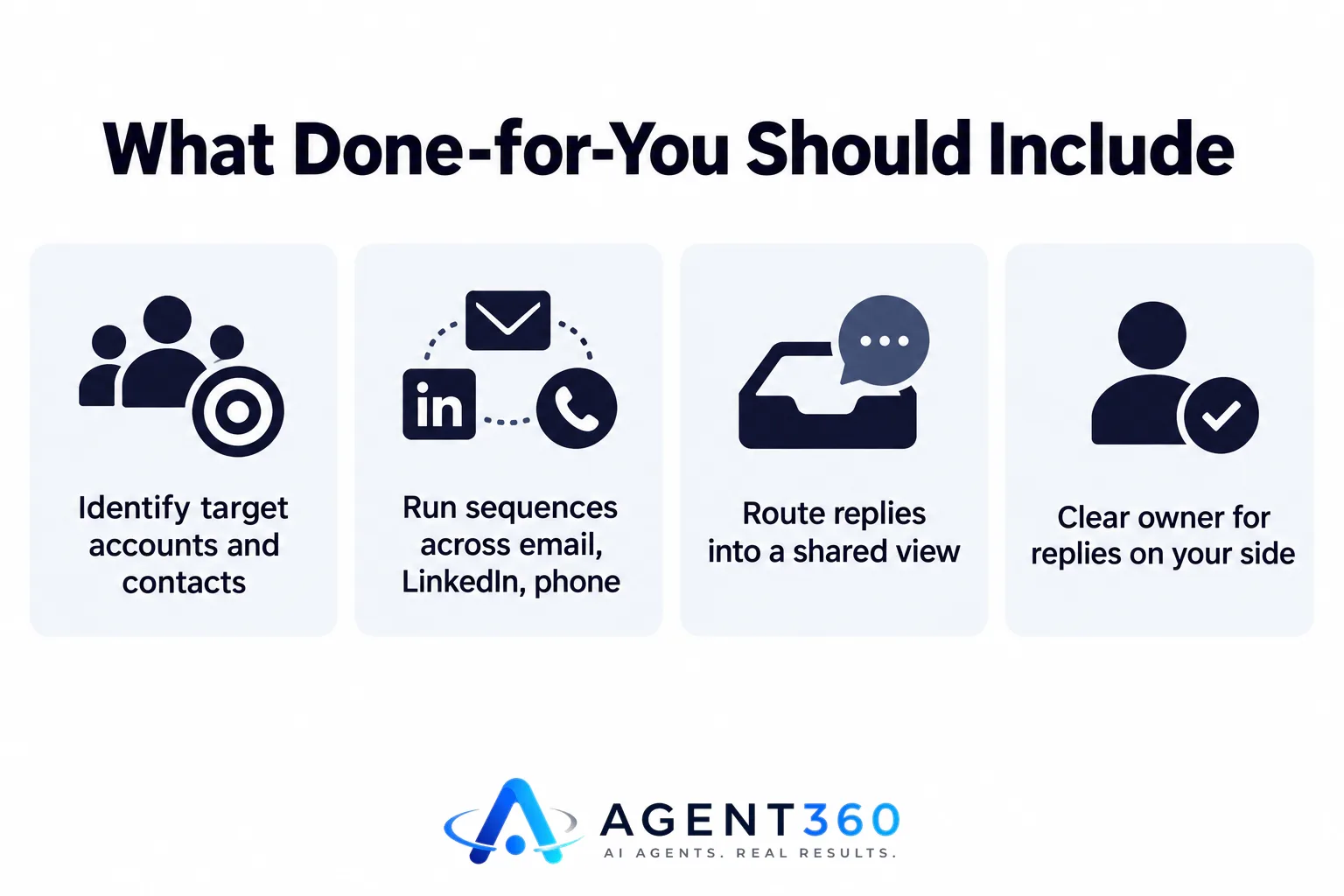
At minimum, the provider should identify target accounts and contacts, run sequences across email, LinkedIn, and phone, and route replies into a shared view your team can act on. If any of those three pieces is missing, you are buying a tool, not a done-for-you service, and your team will end up doing the missing part manually.
Who should actually own the replies?
Replies need a clear owner on your side, even in a done-for-you model, because only someone from your agency can speak to specific roles, rates, or client fit with authority. The provider's job is to get a qualified prospect to say yes to a meeting. Your job is to close it.
What should an agency check before signing a contract?
Check how the provider defines a “qualified meeting,” what channels they actually use, and whether the contract locks you into a term you cannot easily exit. Agencies run on thinner margins than product companies in many cases, so a bad outbound contract is harder to absorb. Ask these questions directly during the sales process, before anything is signed.
- Get the meeting definition in writing. Some agencies count any accepted calendar invite, even ones that no-show, while others only count meetings that actually happen. Ask which one applies to your contract.
- Confirm which channels are active, not just available. A provider might list email, LinkedIn, and phone on their site but only run email by default. Ask what runs from day one versus what costs extra.
- Ask how targeting works for multiple buyer roles. If you sell to both a hiring manager and a department head, confirm the provider can run separate messaging to each, not one generic sequence sent to both.
- Request a sample of past messaging. Review actual email and LinkedIn copy sent for a similar client, not a case study summary, to judge tone and specificity.
- Clarify the exit terms. Find out the minimum commitment and what happens to your sending domains and LinkedIn accounts if you leave.
How does done-for-you outbound differ for staffing and recruiting firms?
Staffing and recruiting outbound usually needs faster cycles and tighter role-based targeting than typical B2B sales outbound, because you are often selling into a hiring need with a short shelf life. A hiring manager with an open requisition this month may not need you again for a year. That changes what “good” outbound looks like.

Why does timing matter more here than in typical B2B sales?
A generic outbound provider optimizes for steady, evergreen messaging sent on a fixed schedule. Staffing outreach works better when it can react to signals like new job postings, leadership changes, or funding news that suggest an open requisition exists right now. Ask any provider you are evaluating whether their prospecting includes that kind of signal detection, or whether it is a static list run on repeat.
Does one outreach sequence work for every hiring manager?
No. A VP of Engineering hiring for a senior backend role responds to different language than an HR director filling a volume of entry-level positions. A provider serving staffing firms well should be able to split sequences by role type and seniority, not run one message across every contact in the database.
What does a done-for-you outbound agency cost, and how is it priced?
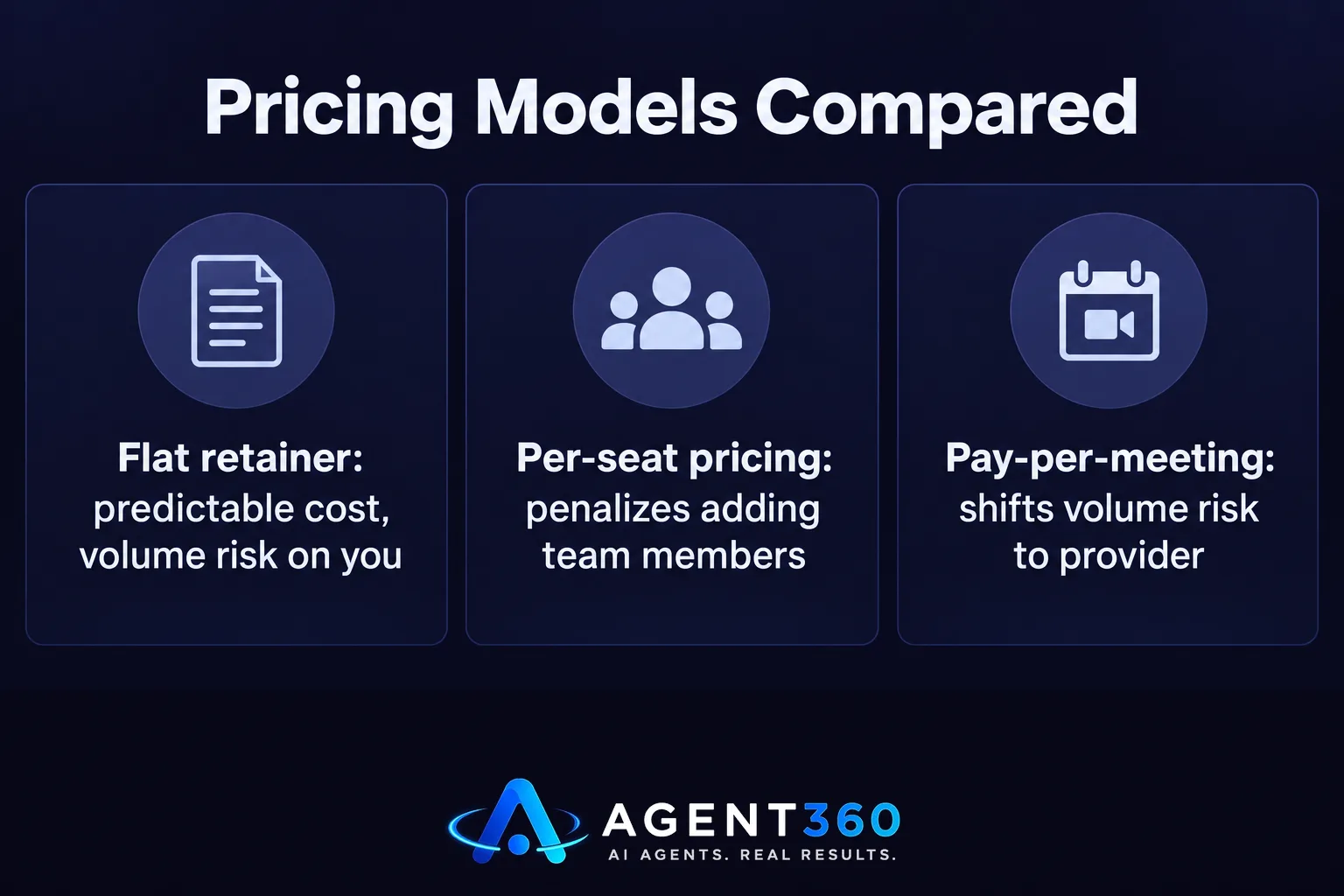
Pricing models vary from flat monthly retainers to per-seat charges to pay-per-meeting arrangements, and each shifts the risk differently between you and the provider. A flat retainer gives predictable cost but puts volume risk on you. Per-seat pricing penalizes you for adding team members to review leads. Pay-per-meeting shifts volume risk to the provider but can incentivize quantity over quality if the meeting definition is loose.
Before comparing quotes, work out what your current cost per booked meeting looks like if you ran outbound in-house, including the time of whoever currently does it. That number, compared against a provider's quote on the pricing page, tells you whether “done-for-you” is actually cheaper or just moves the work elsewhere. If you are weighing a provider against hiring someone internally instead, the trade-offs are laid out in more detail in outsourced SDR vs in-house SDR.
Take the Next Step With Done-for-You Outbound
Agent360 combines AI prospecting, multi-channel outreach across LinkedIn, email, and phone, and meeting booking directly on your calendar, with CRM tools to track everything in one place. For agency owners, that means pipeline keeps moving without pulling a recruiter or account manager off billable work to chase replies.
If you are comparing done-for-you providers against running outbound yourself or hiring for it, see how the setup works before you commit to anything. Book a demo to see how it fits your agency's sales motion.
Frequently Asked Questions
What does “done-for-you” mean in outbound sales?
It means the provider handles prospecting, outreach across channels, and meeting booking, so a qualified meeting lands on your calendar without your team building sequences or managing sends.
Is a done-for-you outbound agency worth it for a small staffing firm?
It can be, if the provider targets by role and seniority rather than running one generic message to every contact, since staffing sales depend heavily on matching message to the hiring manager's specific need.
How is a done-for-you outbound agency different from buying a contact list?
A contact list gives you names and emails you still have to message yourself. A done-for-you agency runs the outreach and books the meeting, leaving your team to handle the conversation once a prospect replies.
What should count as a qualified meeting?
At minimum, it should be a calendar booking with a real contact at a target account who has agreed to discuss your services, not just an accepted invite that later no-shows. Confirm this definition in writing before signing any contract.
Can one agency owner manage replies from a done-for-you provider alone?
Often yes, since the provider's work is finding and booking meetings, leaving the owner or a single salesperson to handle the actual conversations as they come in.
More articles
- Who Offers Pay-for-Meetings Outbound Without an SDR Team?
- What's the Safest LinkedIn Automation Tool Right Now?
- Best LinkedIn Automation Tool for B2B Lead Generation?
- Expandi vs Heyreach: Which Is Better for Cold Outreach?
- Skylead vs HeyReach: Which LinkedIn Automation Tool Wins?
- What's the Best Alternative to HeyReach for Outreach?
- Who to Use for Outsourced SDR Instead of Hiring?
- What's a Good MSP Lead Generation Agency for Appointments?
