Staffing Agency Lead Generation: A Practical Playbook
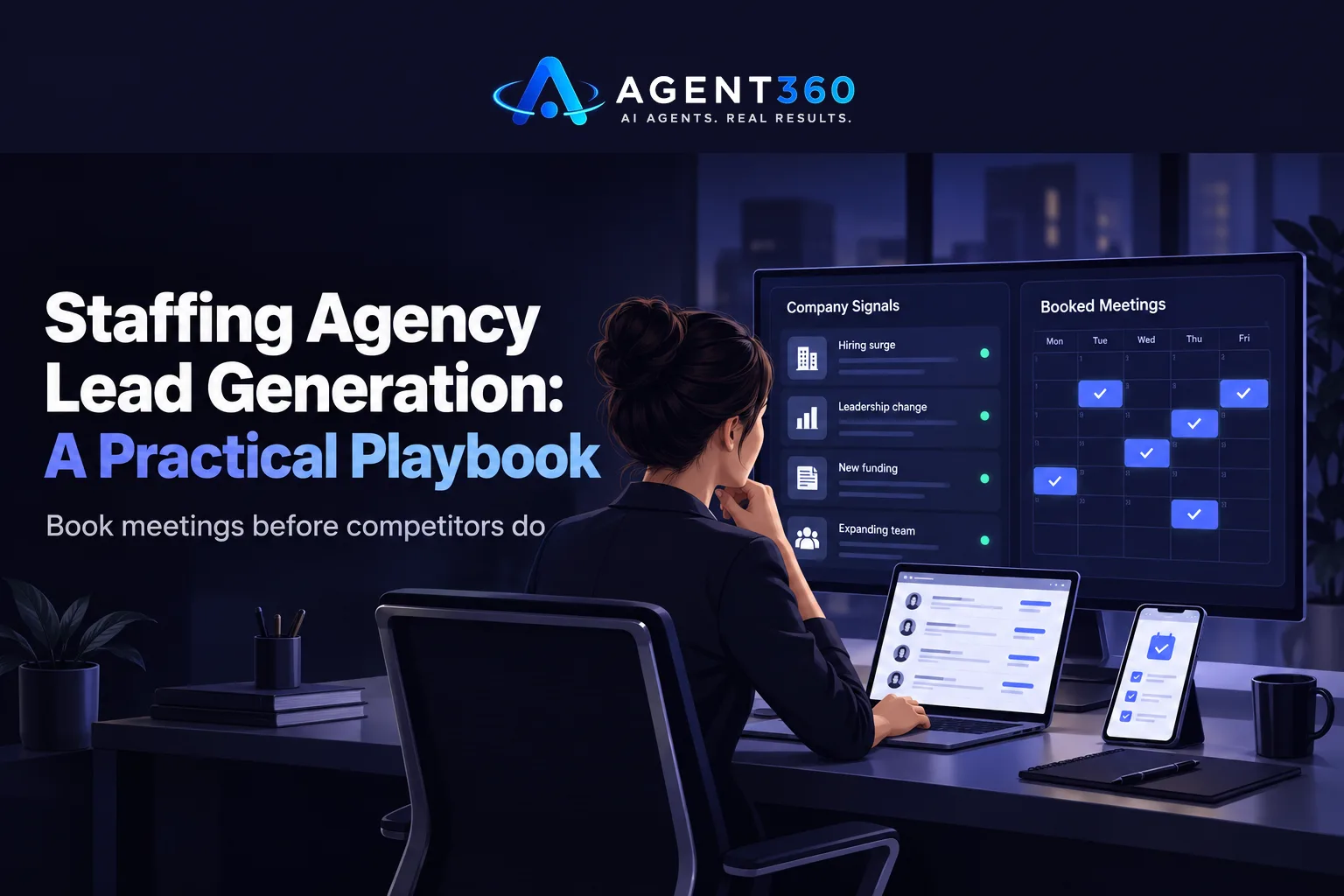
Staffing agency lead generation means finding companies that are hiring, identifying the person who owns that decision, and getting a meeting on the calendar before a competing agency does. The hard part isn't finding job openings — those are public. The hard part is reaching the hiring manager or VP of Talent with a message that lands before the role gets filled or outsourced to three other agencies.
Most staffing firms built their business on referrals and job boards. That works until growth stalls, because referrals don't scale and job boards put you in a bidding war with every other recruiter chasing the same posting.
This guide covers where client leads actually come from, which channels book meetings, and how to run outbound without pulling recruiters off billable work.
Key Takeaways
- Target companies showing active hiring signals, not just job board listings everyone else can see.
- Reach hiring managers through a combination of email, LinkedIn, and phone — single-channel outreach gets ignored.
- Separate business development from recruiting work so neither one slows down, as covered in outsourced SDR vs in-house SDR.
- Track every lead and reply in one pipeline view so follow-up doesn't depend on memory.
- Measure cost per client meeting, not cost per lead, since a cheap list that never books a call isn't actually cheap.
Table of Contents
What does lead generation mean for a staffing agency?
It means identifying companies likely to need contract or permanent hires soon, then reaching the right decision-maker before they commit to another vendor. A lead isn't a job posting. It's a company with a hiring need and a named person who can say yes to a vendor relationship — usually a hiring manager, VP of Talent, or Head of People.
Why don't job boards count as lead generation?
Job boards show you demand after it's already public, which means every other agency sees the same posting at the same time. By the time you reach out, the hiring manager may already have three recruiters in their inbox. Lead generation is about finding the signal earlier — funding rounds, leadership changes, expansion announcements — and reaching out before the role is formally posted.
How do staffing agencies find new client leads?
They combine buying signals with a defined ideal client profile, then build a list of named contacts at companies matching both. A buying signal is anything that suggests a company is about to hire: a new office opening, a product launch, a recent raise, or executive turnover in a department that typically grows headcount after a leadership change.
Where do the best contact lists come from?
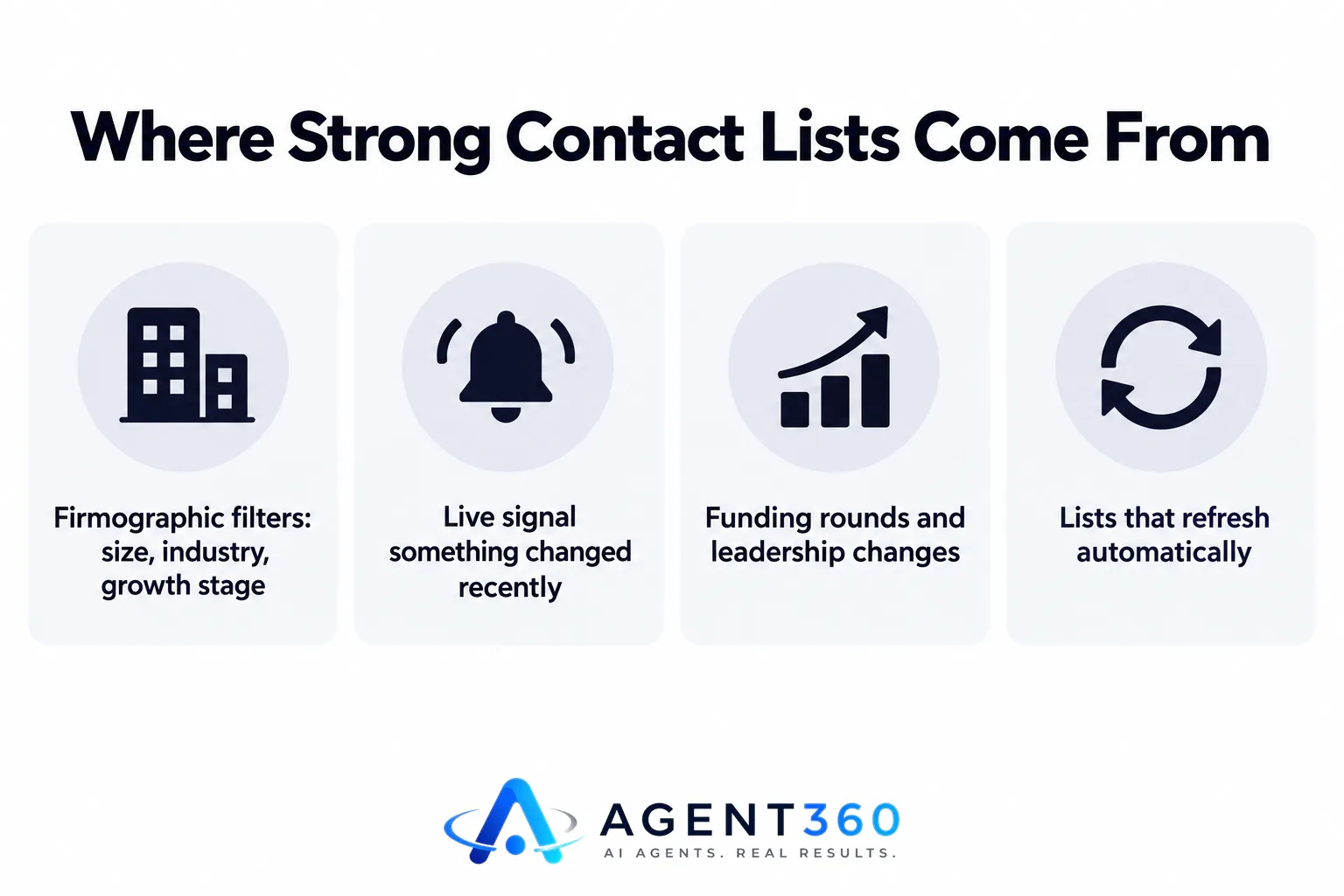
The strongest lists combine firmographic filters — company size, industry, growth stage — with a live signal that something changed recently. A static list bought once and reused for a year goes stale fast; titles change, companies get acquired, and hiring freezes come and go. Lists that refresh automatically and flag new signals, like the kind described in buying signals tooling, save the manual research time that recruiters would otherwise spend scrolling LinkedIn.
What outreach channels work best for reaching hiring managers?
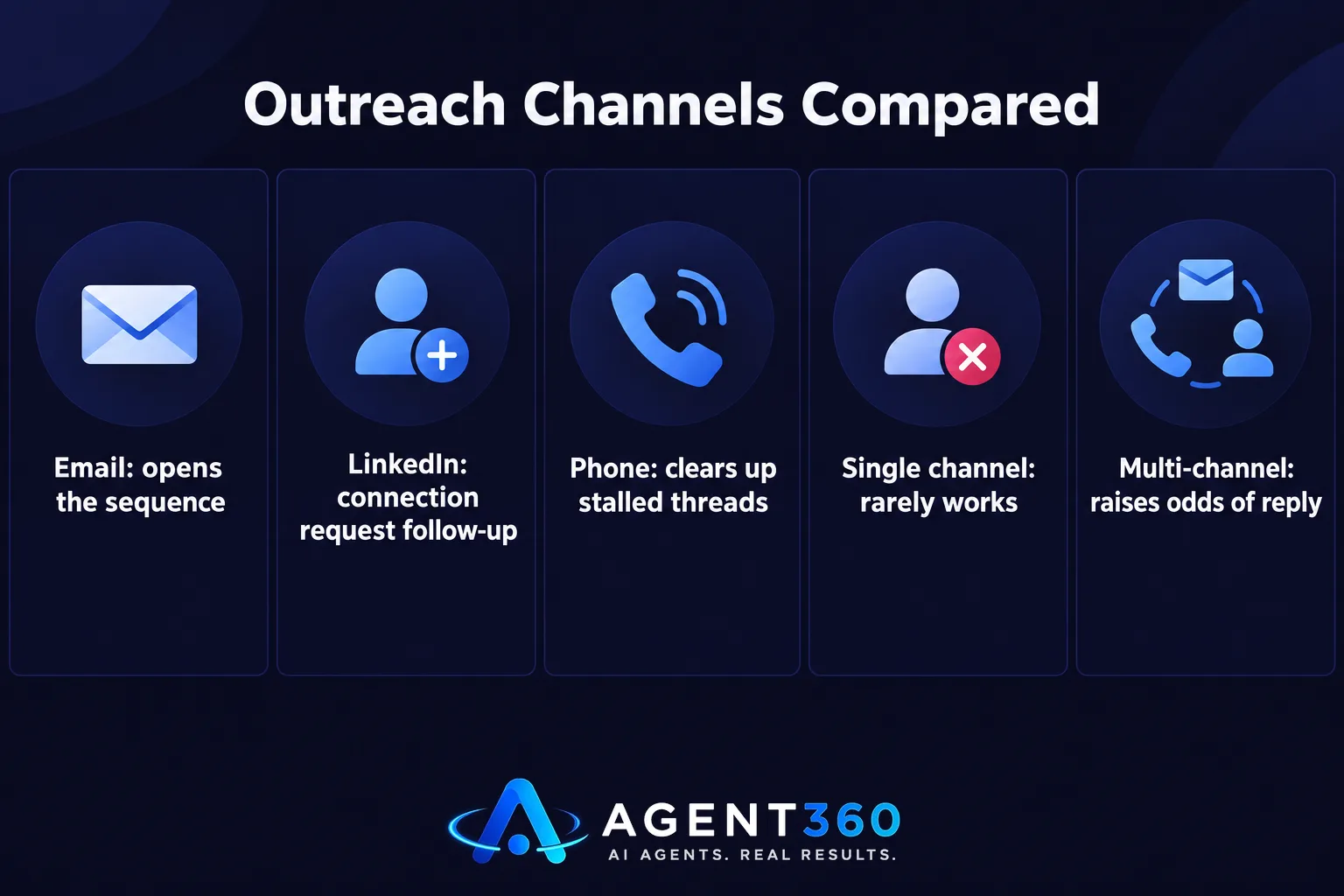
No single channel is reliable on its own — email, LinkedIn, and phone each catch hiring managers at different moments, and using all three raises the odds of a reply. A hiring manager who ignores a cold email might accept a LinkedIn connection request, and a phone call can clear up outstanding details after an email thread stalls.
How many touches does it take to book a meeting?
There's no fixed number that applies to every industry or title, because response patterns vary by how busy the role is and how many other agencies are already contacting them. What's consistent is that a single touch rarely works. A short sequence across channels — an opening email, a LinkedIn message a few days later, a follow-up call — gives a hiring manager more than one chance to notice and respond.
How do you generate leads without hiring more recruiters?
You separate business development from recruiting delivery, so the people filling roles aren't also the ones prospecting for new clients. Most staffing firms stall because their best recruiters are too busy filling open reqs to also chase new business, and asking them to do both usually means neither gets done well.

- Define the ideal client profile. Pick the industries, company sizes, and roles your agency fills fastest and most profitably, and target those first.
- Build a signal-based list. Pull contacts from companies showing recent hiring activity rather than a generic database of every HR title in your region.
- Run multi-channel outreach on a schedule. Sequence email, LinkedIn, and calls so follow-up happens automatically instead of depending on someone remembering to send it.
- Route replies into one pipeline. Every interested reply should land in a shared view so a meeting gets booked before the lead goes cold.
- Review what's converting. Check which industries and titles are actually booking meetings, then narrow the list toward what's working.
Take the Next Step With Your Outbound
Running this playbook by hand works for a while, until the volume of lists, follow-ups, and replies outgrows what one person can track in a spreadsheet. Agent360 gives staffing and recruiting firms the tools to find hiring signals, reach decision-makers across LinkedIn, email, and phone, and book meetings directly on the calendar — without pulling a recruiter off billable work to do it.
The Agent360 platform starts at $99/month with unlimited seats and no per-user fees, and includes one triple-verified lead for every email sent. For firms that want someone else running the sequences entirely, the VIP Done-For-You option pairs a dedicated GTM engineer and strategist with your team for $2,000/month plus $250 per booked meeting, so recruiters only show up once a meeting is already on the calendar.
See how the platform fits a staffing firm's workflow on the how it works page.
Frequently Asked Questions
What's the fastest way for a staffing agency to get new client leads?
Combine a defined ideal client profile with hiring signals, then reach the named decision-maker across more than one channel. Speed comes from reaching companies before the role is publicly posted, not from contacting more companies overall.
Do staffing agencies need a dedicated business development person?
Not necessarily, but someone or something needs to own outbound separately from recruiting delivery. Agencies that ask recruiters to prospect between placements usually see both tasks suffer.
Is cold email effective for staffing and recruiting agencies?
Cold email works when it's paired with a relevant signal and followed up across other channels. A single email with no follow-up to a cold list rarely produces meetings on its own.
How is lead generation different from candidate sourcing?
Lead generation finds companies that need to hire and books meetings with the people who make vendor decisions. Candidate sourcing finds people to fill the roles once a client relationship already exists. They use different lists, different messaging, and often different tools.
Should a staffing agency buy a contact list or build one from signals?
A static purchased list goes stale as titles and companies change, while a signal-based list stays relevant because it refreshes around recent hiring activity. Agencies trying to decide between data providers and full outreach platforms can compare the tradeoffs on the compare page.
More articles
- Cold Email and LinkedIn Sequencer: What to Look For
- AI SDR for Staffing Agencies: What to Look for Before You Buy
- Otter.ai Alternative: What Sales Teams Need Beyond Notes
- Fireflies Alternative: What Sales Teams Should Check First
- JustCall Alternative: What to Check Before You Switch
- Dialpad Alternative: What to Look for in a Sales Dialer
- The Best Aircall Alternative for Outbound Sales Teams
- Gong Alternative: What to Check Before You Switch Tools
