What to Expect When Outsourcing Your SDR Function
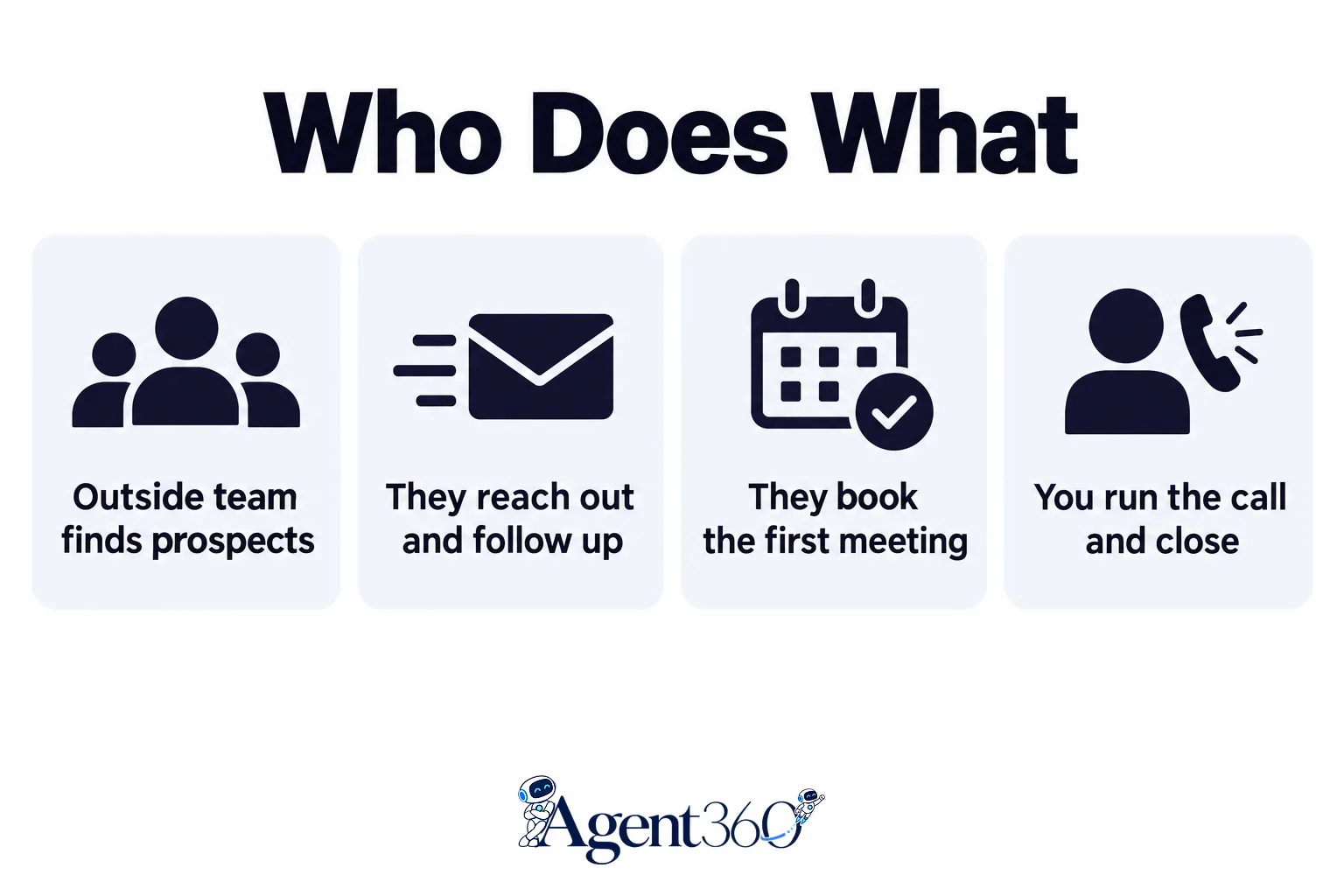
Outsourcing your SDR function means an outside team finds your prospects, reaches out, follows up and books the first meeting. You take the meeting and run the sales conversation. They take the daily grind of finding people and chasing a reply.
That is the tidy version. In practice it is a shared job. The outsourced team needs your offer, your buyer list and quick answers from you. Give them those and you get meetings without managing a rep. Hold them back and you pay for activity that goes nowhere.
Below: what the service is, when it makes sense, how fees are usually structured, and what to have ready before you sign.
Key Takeaways
- Outsourcing the SDR function moves prospecting, outreach and meeting booking to an outside team, while you keep the sales calls and the close.
- Outsource when you need meetings now and cannot yet justify managing, training and replacing a rep.
- Prefer pay structures tied to booked meetings, and define in writing what counts as a qualified one.
- Read the contract for term length, ownership of lists and accounts, and exit terms before you read the pitch; our pre-signing checklist walks through them.
- Prepare your offer, ideal buyer and reply process first, because the outsourced team can only be as sharp as what you give them.
Table of Contents
What is SDR outsourcing?
SDR outsourcing means paying an outside team to do the work of a sales development rep: find prospects, contact them, and book meetings for your closers. The team runs the top of your pipeline, so you do not have to hire, train and manage that role yourself.
What does an outsourced SDR team actually do?
They build or source prospect lists, write and send email and LinkedIn outreach, make calls, handle first replies and put the meeting on your calendar. The good ones also report on what is working, so the messaging gets better over time.
What do you still own?
The offer, the pricing, the sales call and the close. Also the speed of your follow-up. A booked meeting that sits for a week is a wasted meeting. If you run a staffing or recruiting firm, you also decide which hiring managers are worth chasing, because your recruiters are busy filling roles and cannot do business development on the side.
When should a company outsource a function?
Outsource a function when it needs to run now, the work is repeatable, and building it in-house would pull your attention from the work only you can do. Outbound prospecting fits that description for most founder-led companies.
Should I hire an SDR or outsource it?
Hire when you already have a proven offer, a clear script and the time to coach someone every week. Outsource when you lack that management capacity, or when you want meetings before you commit to a salaried headcount. A hire is a fixed cost that starts before results do. An outsourced team can be easier to start and stop, which is exactly why contract terms matter so much. See how the two options compare in SDR vs outbound software.
Is SDR the hardest sales job?
It is one of the hardest to keep staffed. The work is repetitive, most outreach gets no reply, and the person doing it is often early in their career and already eyeing the next step. So the seat is hard to fill and hard to hold. That is a reason to weigh outsourcing, not a rule that you must. A founder who is good at starting conversations may do the job fine for a while.
What is a good SDR pay structure?
A good SDR pay structure ties a meaningful part of the cost to booked, qualified meetings rather than to hours or emails sent. In-house reps usually get a base plus variable pay. Outsourced providers usually charge a monthly fee plus a per-meeting charge, or a flat retainer.
How do outsourced SDR fees usually work?
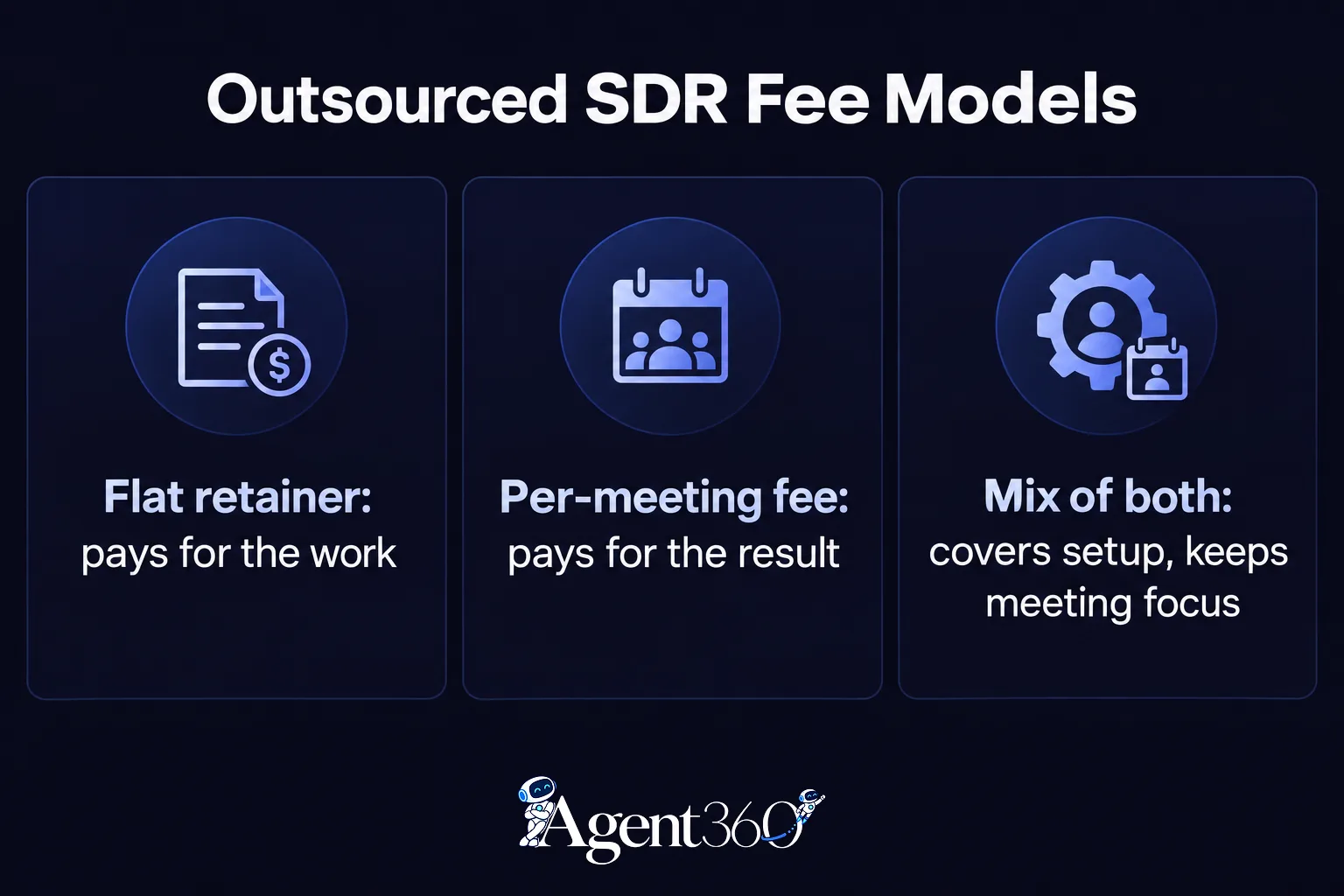
Expect one of three models: a flat monthly retainer, a per-meeting fee, or a mix of both. A retainer pays for the work. A per-meeting fee pays for the result. The mix covers the provider's setup cost while keeping them focused on meetings. Whichever you pick, ask what the retainer includes. Tools, data and sending infrastructure are sometimes billed separately.
What should the contract say?
Four things at minimum. What counts as a qualified meeting. How long you are committed. Who owns the lists and sending accounts when you leave. How you can end the deal. Our guide on typical outsourced SDR contract terms goes through each one.
How do you get ready to outsource your SDR function?
Get ready by settling your offer, your buyer and your follow-up before anyone sends a message. Results usually trace back to these inputs. For a sense of how long outbound takes to build momentum, read our outbound timeline.

- Name your ideal buyer. Write down the job titles, company types and triggers that make someone worth contacting.
- Write the offer in plain words. One sentence on the problem you fix and one on who you fix it for.
- Define a qualified meeting. Agree on the criteria in writing so both sides count the same thing.
- Assign who takes the meetings. Pick a person and a response time before outreach starts.
- Set a review rhythm. Meet weekly to look at replies, objections and which messages are working.
- Check the exit. Confirm you keep your lists, data and domains if you leave.
Take the Next Step With Your Outbound
If you want outbound running without hiring a rep, we offer two routes at Agent360. The first is the Agent360 Platform, from $99/mo. You run cold outbound in-house, with leads included, an email and LinkedIn sequencer, a parallel dialer, a CRM and unlimited seats. Every email sent comes with one triple-verified lead included.
The second is VIP Done-For-You Outbound, at $2,000/mo plus $250 per booked meeting. We run your outbound end to end with a dedicated GTM engineer and strategist, and you take the meetings. The AI does the bulk of the work and our people steer it.
Not sure which fits? Book a demo and we will go through your offer, your buyers and your capacity together.
Frequently Asked Questions
What is SDR outsourcing?
SDR outsourcing is paying an outside team to prospect, send outreach and book first meetings for you. They do the work a sales development rep would do. You take the meetings and handle the close.
What is a good SDR pay structure?
A good structure ties a meaningful share of the cost to booked, qualified meetings. For in-house reps that is usually base plus variable pay. For outsourced teams it is usually a monthly fee, a per-meeting charge, or both. Agree in writing on what counts as a qualified meeting.
Is SDR the hardest sales job?
It is a tough one. The work is repetitive, most outreach gets no reply, and the role is hard to keep filled. That is a reason to compare hiring against outsourcing, not proof that outsourcing is the right call.
When should a company outsource a function?
Outsource when the work is repeatable, you need it running soon, and building it in-house would take time away from what only you can do. Outbound prospecting often fits for founders and staffing firm owners who cannot manage a rep.
Should I hire an SDR or outsource it?
Hire if you have a proven offer and the time to coach someone weekly. Outsource if you want meetings sooner and lack the capacity to manage a hire. Check contract length and exit terms before committing to either route.
What do I still need to do after outsourcing?
You still own the offer, the sales call and your response speed. Give the team a clear buyer profile and answer meeting requests fast. Then look at results every week, so the messaging keeps getting sharper.
More articles
- Social Media Scheduler for Small Business: How to Pick
- White Label Geofencing: What to Check Before You Resell
- MSP Telemarketing: How to Book Meetings by Phone
- First Round Interview Questions and How to Answer Them
- How to Optimize Your Google Business Profile for Local SEO
- Map Pack SEO: What Moves You Into the Top Three
- Clay vs LeadSwift: Which Fits Your Outbound Job?
- Local SEO Checklist: What to Fix First, in Order
