SDR Outsourcing: What to Check Before You Sign a Contract
SDR outsourcing means handing your cold outreach to an outside team instead of hiring SDRs yourself. You hand over the prospecting, the emails, the calls, the LinkedIn messages. The agency hands you back a calendar full of meetings. Pipeline without payroll — that's the pitch.
The reality is messier. Quality swings wildly between agencies. Contracts lock you in before you've had a chance to see if the work is any good. And a “meeting booked” can mean five different things depending on who's counting. Before you sign anything, you need a way to separate a strong outsourced SDR partner from a weak one.
Here's what to check, what to ask, and what the alternative looks like if outsourcing turns out to be the wrong fit for your stage.
Key Takeaways
- Define what counts as a qualified meeting in writing before you sign, not after the first disappointing one shows up on your calendar.
- Ask for the exact channels, messaging approach and lead sourcing method an agency uses, not just their results claims.
- Compare outsourced SDRs against running outbound yourself with the right software before you commit a monthly retainer.
- Start with a short contract term or a pay-per-meeting structure so you can exit quickly if the work underdelivers.
- If your team already has domain expertise, consider a hybrid model where software handles volume and your team handles the conversations that matter.
Table of Contents
What Is SDR Outsourcing?
SDR outsourcing is hiring an external team or agency to prospect, message and book meetings with potential buyers on your behalf. Instead of recruiting, training and managing sales development reps internally, you pay a vendor a monthly fee, a per-meeting fee, or both. They run the outreach motion using their own staff, tools and process.
Is Outsourced SDR the Same as a Lead Gen Agency?
Not quite. A lead gen agency typically hands you a list of contacts or inbound leads and leaves the outreach to you. An outsourced SDR provider goes further: they write the messaging, run the sequences, handle replies and objections, and only pass you a meeting once a prospect has agreed to talk. The distinction matters, because it changes what you're actually paying for.
How Do I Know If an Outsourced SDR Agency Is Any Good?
You know an agency is good by checking their process, not their promises. Anyone can claim they book meetings. Few will walk you through exactly how they find prospects, what they say to them, and how they define a qualified meeting before you sign.
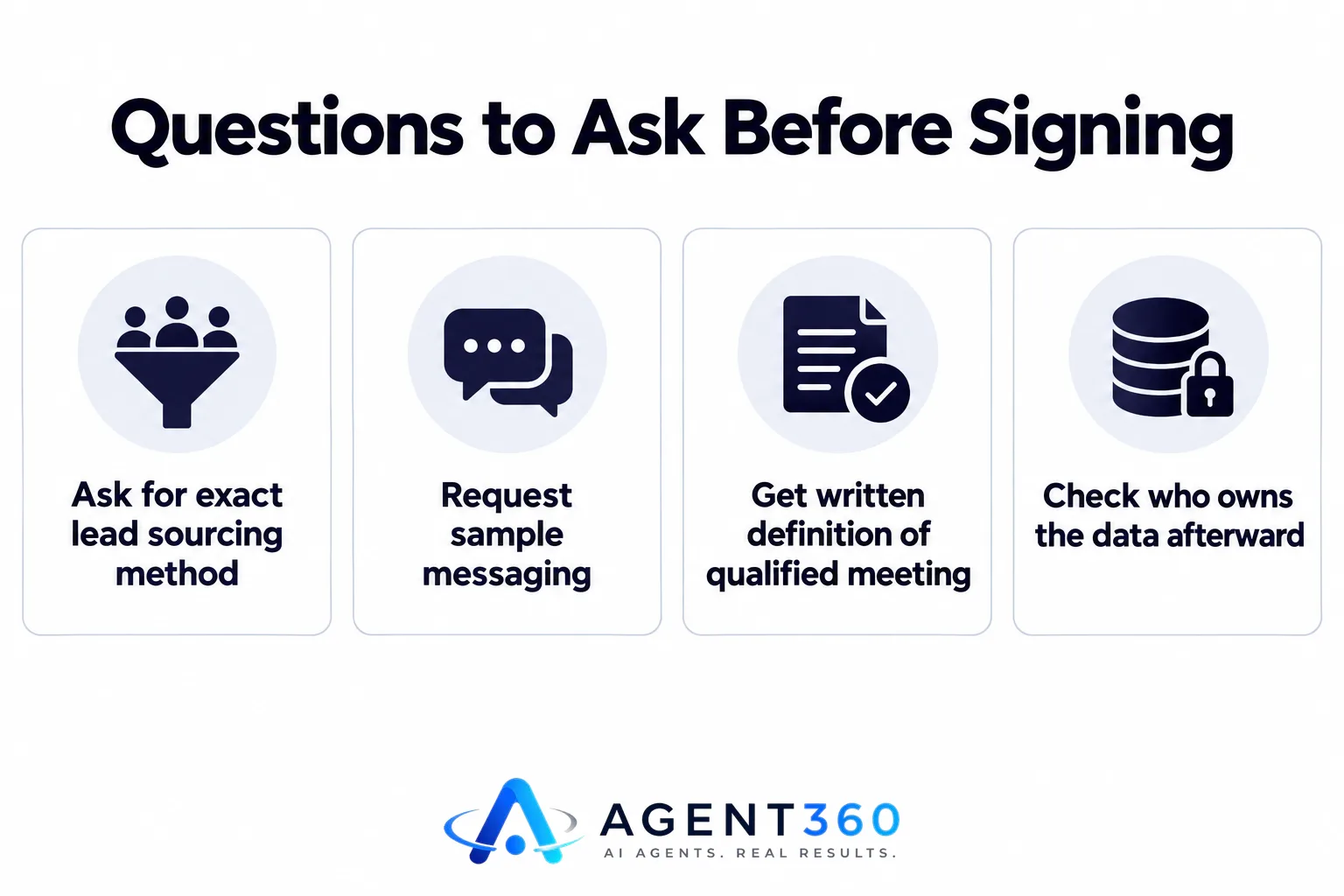
- Ask for their exact lead sourcing method. Find out whether they use a data provider, scrape public sources, or rely on a list you supply, since this directly affects accuracy and deliverability.
- Request sample messaging. Read the actual emails or LinkedIn messages they plan to send under your brand before approving the campaign.
- Get a written definition of a qualified meeting. Specify title, company size, budget authority and intent, so a meeting with the wrong person doesn't count toward your total.
- Check who owns the data afterward. Confirm whether leads, reply history and account records transfer to you if you leave, or stay locked inside the agency's tools.
- Ask about channel mix. Find out if they run email only, LinkedIn only, or both, and whether that mix fits where your buyers actually respond.
What Questions Should I Ask Before Signing?
Ask how many meetings they've booked for a company at your size and industry in the last quarter. Ask who writes the messaging. Ask how fast they replace a rep if one underperforms, and what happens to your pipeline data if you cancel. Vague answers to any of these are a warning sign.
What Should I Expect to Pay for Outsourced SDR Services?
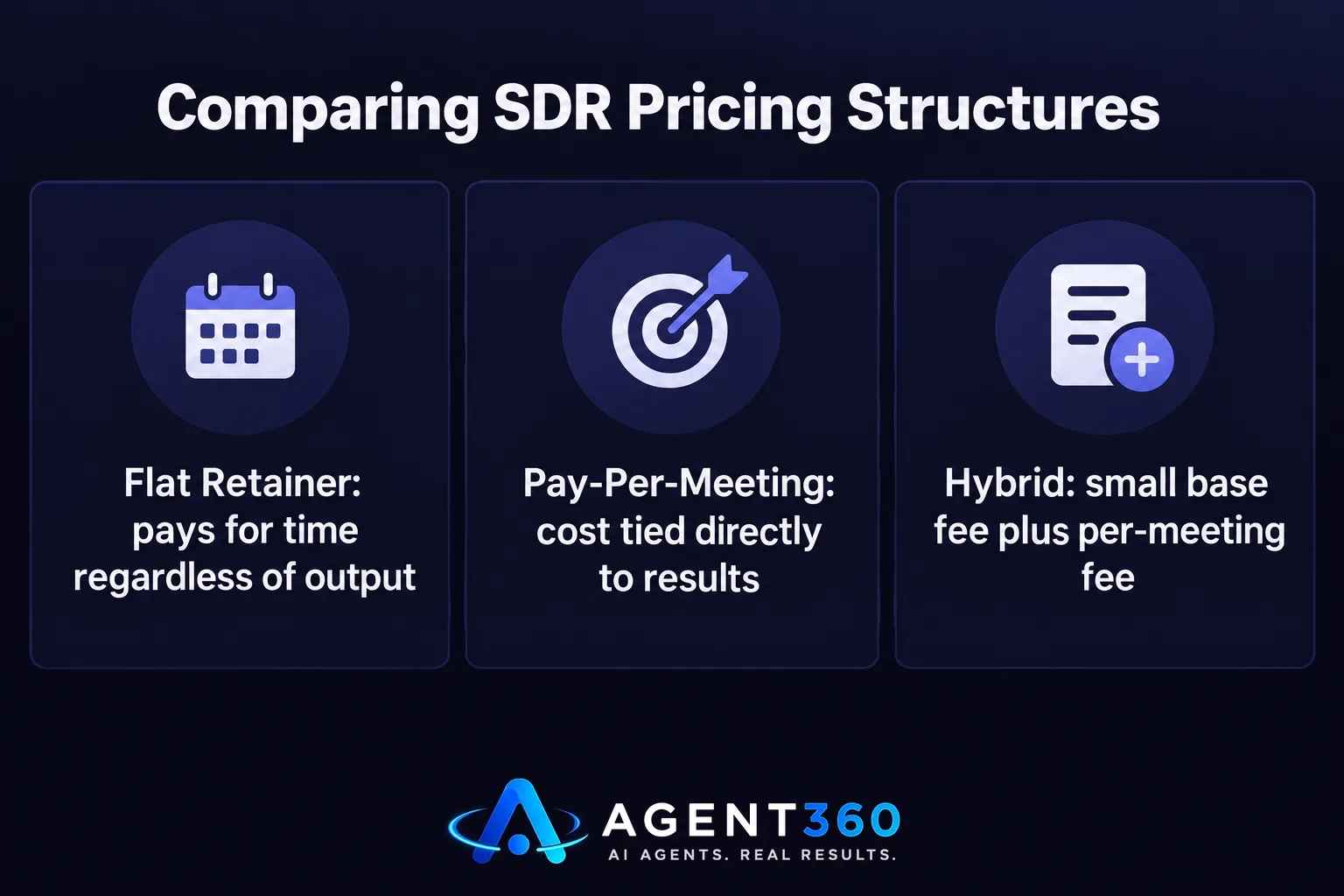
Pricing usually falls into three structures: flat monthly retainer, pay-per-meeting, or a hybrid of both. A flat retainer pays for the agency's time regardless of output. Pay-per-meeting ties cost directly to results. A hybrid model charges a smaller base fee plus a fee for each qualified meeting booked.
Is Pay-Per-Meeting Better Than a Flat Retainer?
Pay-per-meeting aligns cost with results, which cuts your risk if volume runs low in a given month. A flat retainer can make sense if you want dedicated strategy work alongside execution, not just meetings. Review how a pay-for-meetings structure actually works before you choose between the two — the fine print on what counts toward payment matters more than the headline price.
Should I Outsource SDRs or Run Outbound Myself?
Outsourcing makes sense when you need meetings now and don't have time to build a process, while running it yourself makes sense when you want control over messaging and lower long-term cost. Hiring an agency removes the hiring and training burden. But you also lose direct control over how your brand is represented in every message sent.

What Does a Hybrid Approach Look Like?
A hybrid approach uses software to handle sourcing, sequencing and follow-up, while your own team or a founder writes the messaging and takes the calls. This keeps the voice authentic and the cost lower than a full agency retainer, though someone internally still has to own the process day to day. Compare the tradeoffs of outsourced SDRs against outbound software before deciding which fits your stage and team size.
Take the Next Step With Your Outbound Plan
If outsourcing feels like too much commitment before you've tested the market, running outbound yourself with the right tools is a reasonable middle step. The Agent360 Platform gives founders and staffing agency owners leads, an email and LinkedIn sequencer, a parallel dialer and a CRM in one plan, with unlimited seats and no per-user fees, starting from $99/mo.
Prefer to hand the whole motion to someone else? VIP Done-For-You Outbound pairs a dedicated GTM engineer and strategist with your account for $2,000/mo plus $250 per booked meeting, so most of what you pay is tied to meetings actually landing on your calendar. Either way, the questions in this guide still apply: ask for the process, the definition of a qualified meeting, and who owns the data when the contract ends.
See how the platform fits your situation — book a demo.
Frequently Asked Questions
How much does SDR outsourcing typically cost?
Costs vary by structure: flat retainers, pay-per-meeting fees, or a hybrid of both. Compare the full fee structure, including what counts as a qualified meeting, before judging any price as high or low.
How long before an outsourced SDR team books my first meeting?
Timelines depend on list quality, messaging approval speed and the channels used. Review a realistic outbound timeline so you know what to expect before results start showing up.
Can I outsource SDRs for a staffing or recruiting agency?
Yes. Staffing and recruiting firms often outsource client-facing outreach while keeping recruiters focused on filling roles. Review options built for this model at solutions for agencies.
What happens to my leads if I cancel an SDR outsourcing contract?
This depends entirely on the agency's terms. Confirm in writing, before signing, whether contact lists, reply history and CRM records transfer to you or remain with the vendor.
Is SDR outsourcing better than hiring an in-house SDR?
Outsourcing avoids recruiting and ramp-up time but gives you less control over daily messaging. In-house hiring costs more upfront but builds a process you own long-term. Founders weighing both paths can review options built for founder-led sales before deciding.
More articles
- Real Estate Agent Marketing: What Actually Books Showings
- AI Sourcing: What It Actually Does for Recruiters
- Marketing for Mechanics: What Actually Books Jobs
- Content Repurposing: Turn One Asset Into Outbound Fuel
- ATS Tracking Cost: What You'll Actually Pay in 2025
- AI Content Calendar: What It Is and How to Build One
- Automotive Repair Marketing: Winning B2B Fleet Accounts
- Content Automation SEO: What It Can Actually Do
