Outbound Sales for Founders: How to Book Meetings Yourself

Outbound sales for founders means doing the prospecting, messaging, and meeting-booking yourself before you can justify hiring a salesperson. It's the default for most early-stage B2B companies, because revenue has to come from somewhere before there's budget for a dedicated seller. Done right, it's a few hours a week, not a full job change.
The hard part isn't sending messages. It's doing the right mix of prospecting, follow-up, and booking consistently enough that meetings show up on the calendar every week, not just the week you happen to have time.
Key Takeaways
- Founder-led outbound works best as a narrow, repeatable weekly process, not a one-time push.
- Most of the time goes to finding the right prospects and following up, not writing the first message.
- A short list of ideal accounts beats a long list of loosely-matched ones.
- Check what outbound software costs before per-seat pricing adds up against hiring.
- Hire an SDR once outbound is producing meetings consistently and you can't keep up the volume alone.
Table of Contents
What does outbound sales for founders actually look like?
It's a weekly loop of finding prospects, reaching out across one or two channels, and following up on replies. There's no sales floor, no quota board, and usually no CRM beyond a spreadsheet at first. The founder is doing the work an SDR would normally do, squeezed between product and everything else.

How is founder-led outbound different from SDR-led outbound?
An SDR has outbound as their only job and usually works a list someone else built. A founder is building the list, writing the message, and running the follow-up themselves, with less time for any one step. The upside is that a founder knows the product and the buyer better than a hired SDR would on day one.
What's the minimum outbound needs to produce meetings?
A defined list of target accounts, a message that names a real problem the buyer has, and a follow-up sequence that doesn't stop after one touch. Most outbound that fails skips the follow-up step — one email, no reply, no second attempt.
How much time does founder-led outbound take each week?
Plan for three to six hours a week if the process is tight. That covers building or refreshing the prospect list, sending the first round of outreach, and replying to anyone who responds. The time grows fast if the list isn't targeted, because a loose list means more messages sent for fewer replies.
What eats the most time in founder-led outbound?
Finding the right people to contact, not writing to them. Manually searching for companies that match a target profile and then finding the right contact at each one takes longer than drafting a message. This is the part most founders either skip (and send to the wrong people) or outsource first.
What are the first steps to set up outbound as a founder?
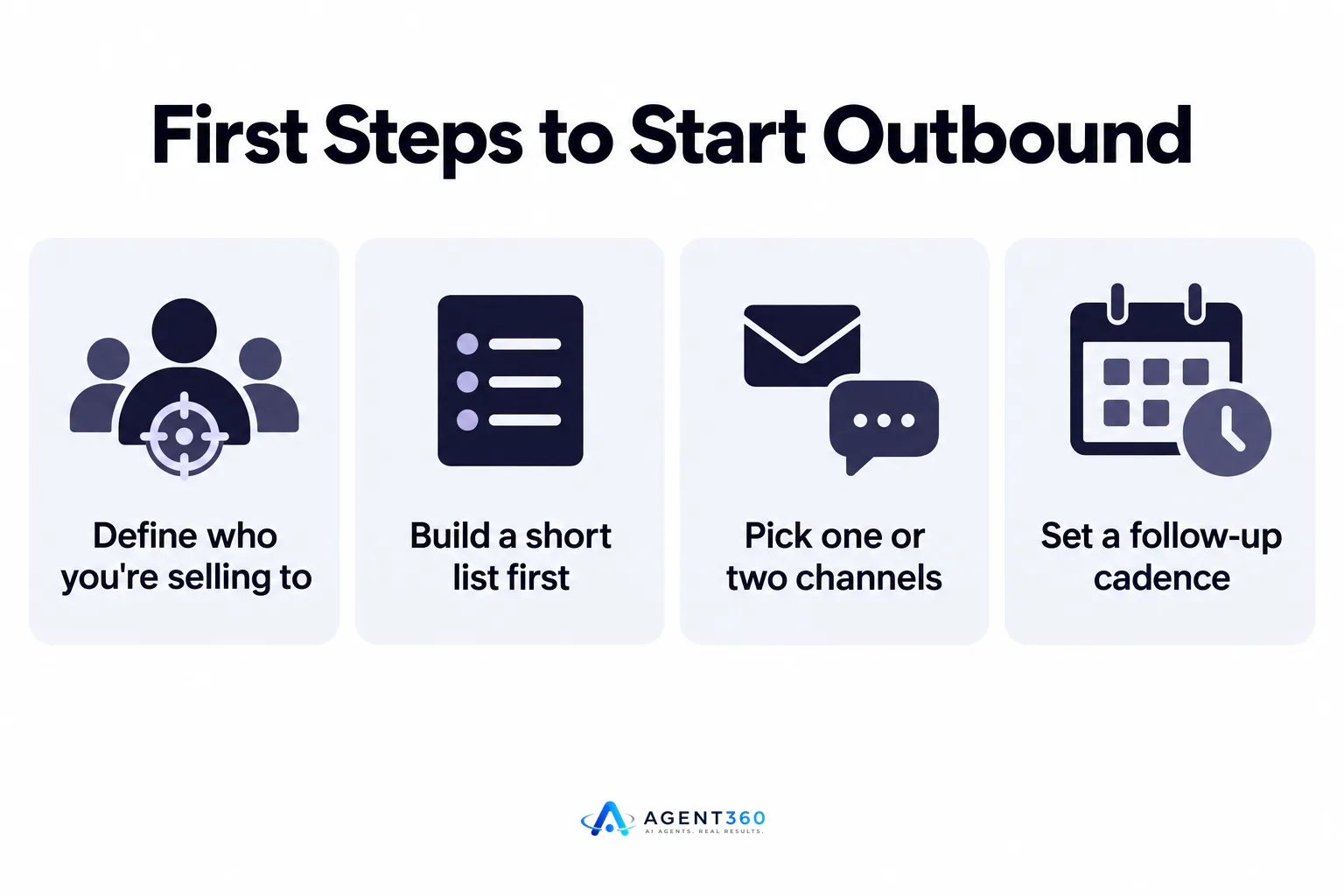
- Define who you're selling to. Write down the company size, industry, and role you're targeting — specific enough that you could name five real companies that fit.
- Build a short list first. Twenty to fifty well-matched accounts beats five hundred loosely matched ones for a first pass.
- Pick one or two channels. Email and LinkedIn cover most B2B buyers; phone calls add a channel once the first two are running.
- Write one message, not five. A single message that names a specific problem outperforms a generic pitch sent five different ways.
- Set a follow-up cadence. Decide in advance how many touches you'll send before moving on, and stick to it.
- Track replies somewhere. A spreadsheet works at first; the point is knowing who replied and what they said, not the tool.
Should a founder hire an SDR before or after running outbound solo?
Run it yourself first, long enough to know what a good week looks like. Hiring an SDR before you know your own numbers means you can't tell if a slow start is the hire or the process. Once outbound is booking meetings consistently and you can't keep pace with the volume, that's the signal to add help — a hire, software, or both.
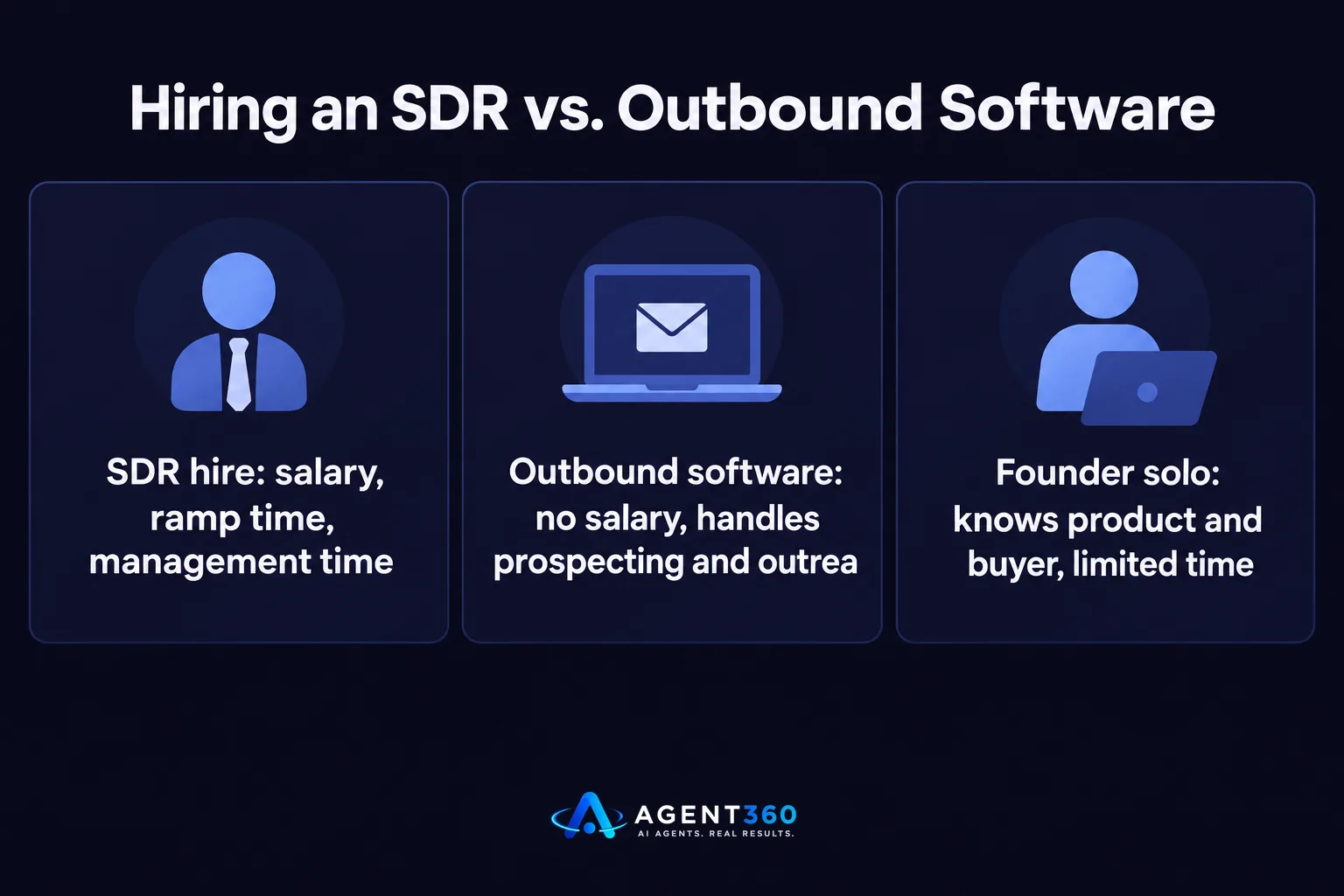
What should a founder compare before hiring an SDR?
The fully loaded cost of a hire — salary, ramp time, management time — against the cost of outbound software that handles prospecting and outreach without a salary attached. This comparison of hiring an SDR versus using outbound software lays out what each path actually involves before committing to one.
Ready to Book Meetings Without Hiring an SDR?
Founders running their own outbound don't need another dashboard to babysit — they need meetings on the calendar with less manual work. Agent360 combines AI prospecting with multi-channel outreach across LinkedIn, email, and phone, and books meetings directly on your calendar, so the founder isn't the one sending every message or chasing every reply.
The AI finds buyers and surfaces buying signals; a human-backed process keeps the outreach from sounding automated. CRM tools come built in, so there's somewhere to track the pipeline from the first reply onward.
See how it works before deciding whether to keep running outbound solo or add this layer.
Frequently Asked Questions
How many hours a week should a founder spend on outbound sales?
Three to six hours a week is realistic for a tight process covering list-building, outreach, and follow-up. It grows if the target list isn't well-defined, because untargeted outreach takes more volume to produce the same number of replies.
What's the fastest way for a founder to start outbound?
Define a narrow target account list, pick one or two channels, and write a single message that names a specific problem the buyer has. Start with twenty to fifty accounts rather than a long, loosely matched list.
Is email or LinkedIn better for founder-led outbound?
Both work, and most B2B outbound uses them together rather than choosing one. Email is easier to scale and track; LinkedIn adds a channel where buyers are already paying attention, particularly for warmer or higher-touch outreach.
When should a founder stop doing outbound themselves?
When the process is producing meetings consistently and the founder's time becomes the bottleneck, not the message or the list. That's usually the point to bring in a hire, software, or both, rather than before.
Can outbound software replace an SDR for a small company?
It can handle the prospecting, outreach, and meeting-booking tasks an SDR would otherwise do manually, without a salary attached. Whether that's enough depends on how much judgment a given sales motion needs on live calls and negotiations, which software alone doesn't replace.
More articles
- Cold Email for Founders: A Practical Way to Start
- Cold Email Sending Limits: What They Actually Are
- How Many Inboxes Do You Need for Cold Email?
- How Many Emails Per Inbox Per Day Is Safe to Send?
- LinkedIn Weekly Invitation Limit: What It Really Is
- How Many LinkedIn Messages Can You Send Per Day?
- LinkedIn Connection Request Limit: What It Is and How to Stay Safe
- The Best Cold Email Tool Depends on Your Outbound Stack
