B2B Outbound for Small Companies: A Practical Playbook
B2B outbound for small companies works best when it runs on fewer channels, tighter targeting, and consistent follow-up — not a bigger team. Most small B2B companies don't have the headcount for a dedicated SDR, so outbound has to fit around a founder or a two-person sales team and still produce a steady flow of meetings.
The companies that get outbound working are usually the ones that narrow their target list first, then build a simple sequence across one or two channels, rather than trying to cover every channel at once from day one.
Key Takeaways
- Run b2b outbound for small companies on one or two channels before adding more.
- Keep the target list narrow — one job title, one or two industries — to raise reply rates.
- Track every prospect somewhere simple so warm replies don't go cold; see why fewer pipeline stages work better.
- Reply to interested prospects within a day or two to protect meeting rates.
- Expect early replies in two to three weeks, with meetings building over six to eight weeks.
Table of Contents
What does b2b outbound actually require for a small company?
It requires a defined target list, one or two outreach channels, and a process for following up on replies — not a full sales department. A founder or a single hire can handle prospecting, messaging, and booking, as long as the process stays simple enough to repeat every week without burning hours on admin.
Do you need a CRM from day one?
Yes, even a simple one. Without somewhere to track who's been contacted and when the last follow-up happened, small teams lose track of warm replies and let leads go cold. A lightweight pipeline with a handful of stages is enough — more stages usually just mean more clicking and less tracking.
Which channels matter most for a small company?
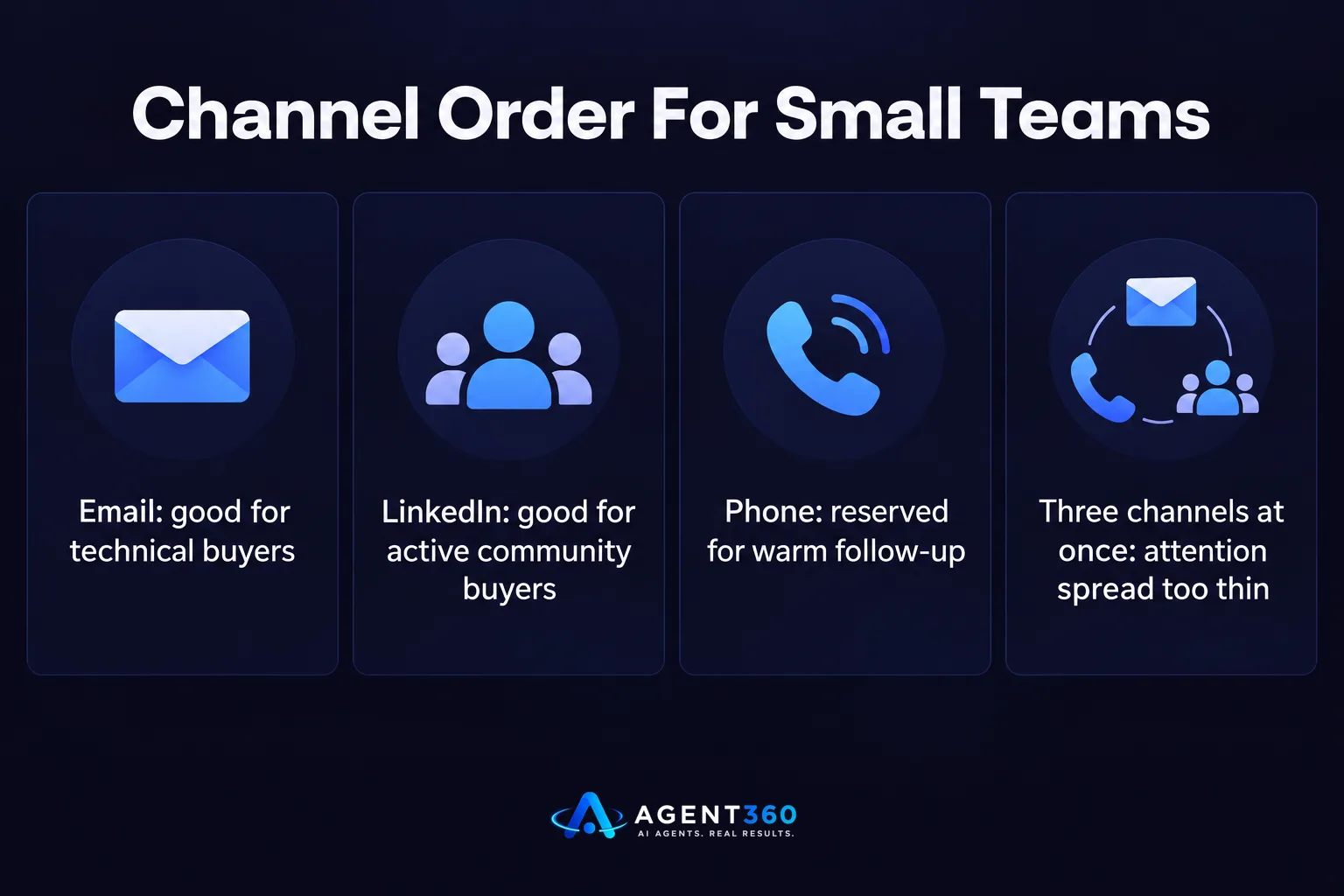
Email and LinkedIn cover most small B2B outbound, with phone calls reserved for warm follow-up rather than cold dials. Running three or four channels at once usually means none of them gets the attention it needs to actually work.
How many channels should a small team run?
Start with one channel and add a second only once the first is producing replies. Small teams that try email, LinkedIn, and calling at the same time from week one tend to spread their attention too thin to notice what's actually working and what isn't.
Should email or LinkedIn come first?
Either works, but the choice should match where the buyer is already active. A technical buyer who rarely checks LinkedIn is better reached by email; a buyer active in industry groups or discussions may respond faster to a LinkedIn message first.
How do you build a simple outbound process?
Build it around four repeatable steps: define the list, write one sequence, send consistently, and follow up on replies fast. Once it's set up, the whole process should take a few hours a week to run, not a few hours a day.
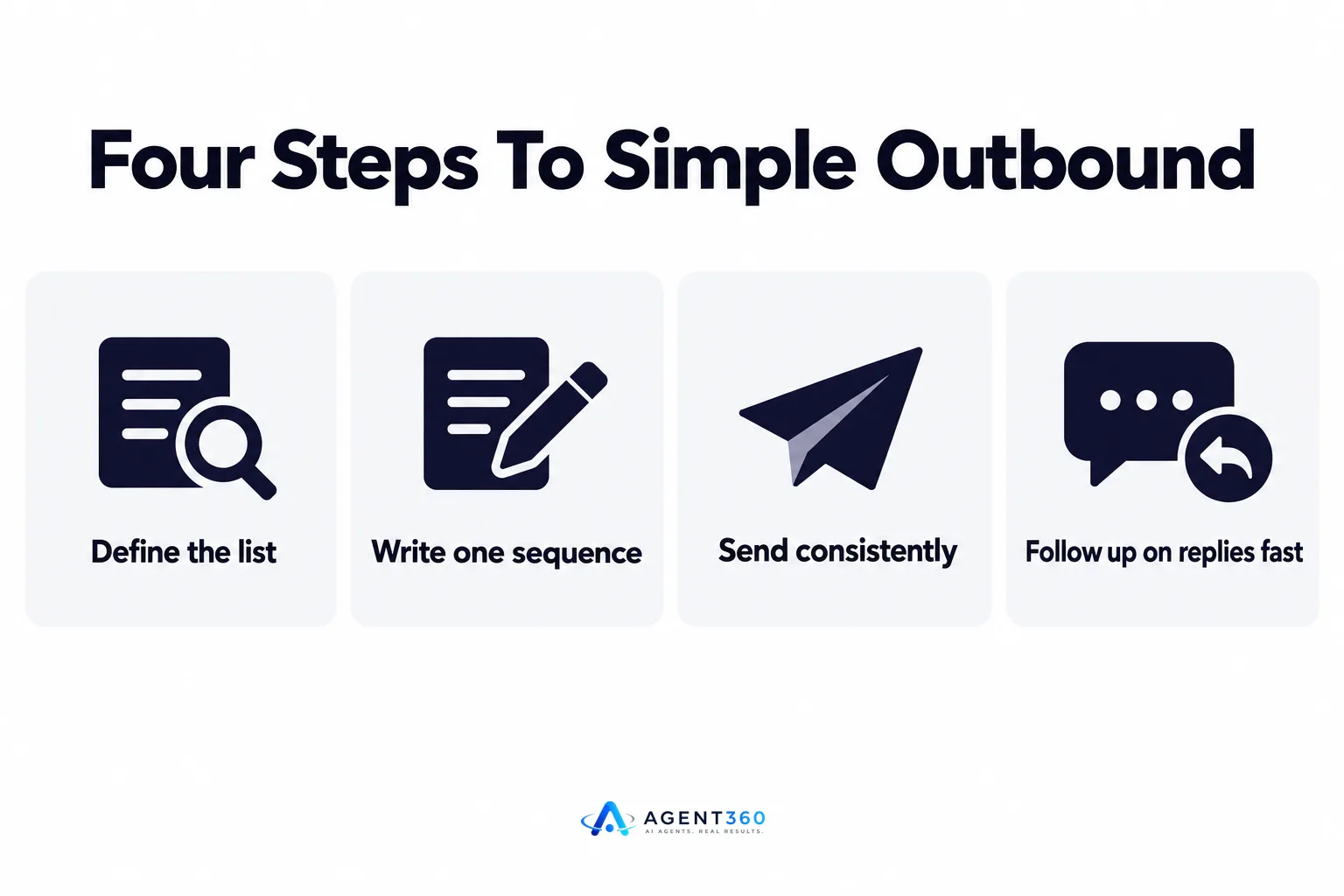
- Define a narrow target list. Pick one job title and one or two industries rather than a broad market; a tighter list gets more replies per message sent.
- Write a short sequence. Three to five touches across email or LinkedIn, each one shorter than the last, works better than one long pitch.
- Send on a fixed schedule. A small, consistent volume sent every week outperforms a large batch sent once a month and then forgotten.
- Reply fast. Prospects who reply and wait days for a response often go cold; see the 48-hour reply rule for how reply speed affects meeting rates.
How long does outbound take to produce meetings for a small company?
Most small companies see early replies within the first two to three weeks, with a steadier flow of meetings building over six to eight weeks. The timeline depends on list size, message quality, and how consistently the sequence runs week over week.

What slows outbound down for small teams?
Inconsistent sending is the most common slowdown. A sequence that runs for two weeks, pauses for a month, then restarts rarely builds the momentum needed for prospects to recognize the name and respond.
Ready to Run Outbound Without Hiring an SDR?
Agent360 handles the parts of outbound that eat a founder's week: finding the right prospects, running outreach across LinkedIn, email, and phone, and booking meetings directly on your calendar. Our AI Prospecting finds buyers who match your target market and flags buying signals, so building the list isn't a task you have to fit in yourself.
The CRM tools built into the same workflow keep your pipeline visible without a separate tool, and because outreach runs across channels, you're not stuck picking just one and hoping it's the right one.
See how to book a demo to find out what running outbound without an SDR could look like for your team.
Frequently Asked Questions
Can one founder run b2b outbound alone?
Yes. A founder can run outbound by keeping the target list narrow, the sequence short, and the channels limited to one or two, checking replies daily rather than building a full sales operation.
What's the biggest mistake small companies make with outbound?
Trying to cover too many channels and too broad a target list at once. Spreading attention across email, LinkedIn, and cold calling from the first week makes it hard to tell which channel is actually working.
Do small companies need an SDR to do outbound well?
No. Many small B2B companies run outbound themselves or use software to handle prospecting and outreach instead of hiring an SDR; see a comparison of SDR hiring versus outbound software for the tradeoffs.
How many prospects should a small company contact per week?
Enough to sustain a consistent sequence without overwhelming follow-up capacity — often a few dozen new contacts a week is manageable for one person running outbound alongside other work.
Is cold email or cold calling better for a small b2b company?
Neither is universally better; it depends on the buyer and the industry. Email scales more easily for one person, while calling tends to work better once a prospect has already shown interest.
More articles
- Should I Hire an SDR? A Founder's Decision Guide
- Sales Software for Founders: What to Buy First
- How to Book Sales Meetings Without Hiring an SDR
- Cold Email for Founders: A Practical Way to Start
- Outbound Sales for Founders: How to Book Meetings Yourself
- Cold Email Sending Limits: What They Actually Are
- How Many Inboxes Do You Need for Cold Email?
- How Many Emails Per Inbox Per Day Is Safe to Send?
