Sales Software for Founders: What to Buy First
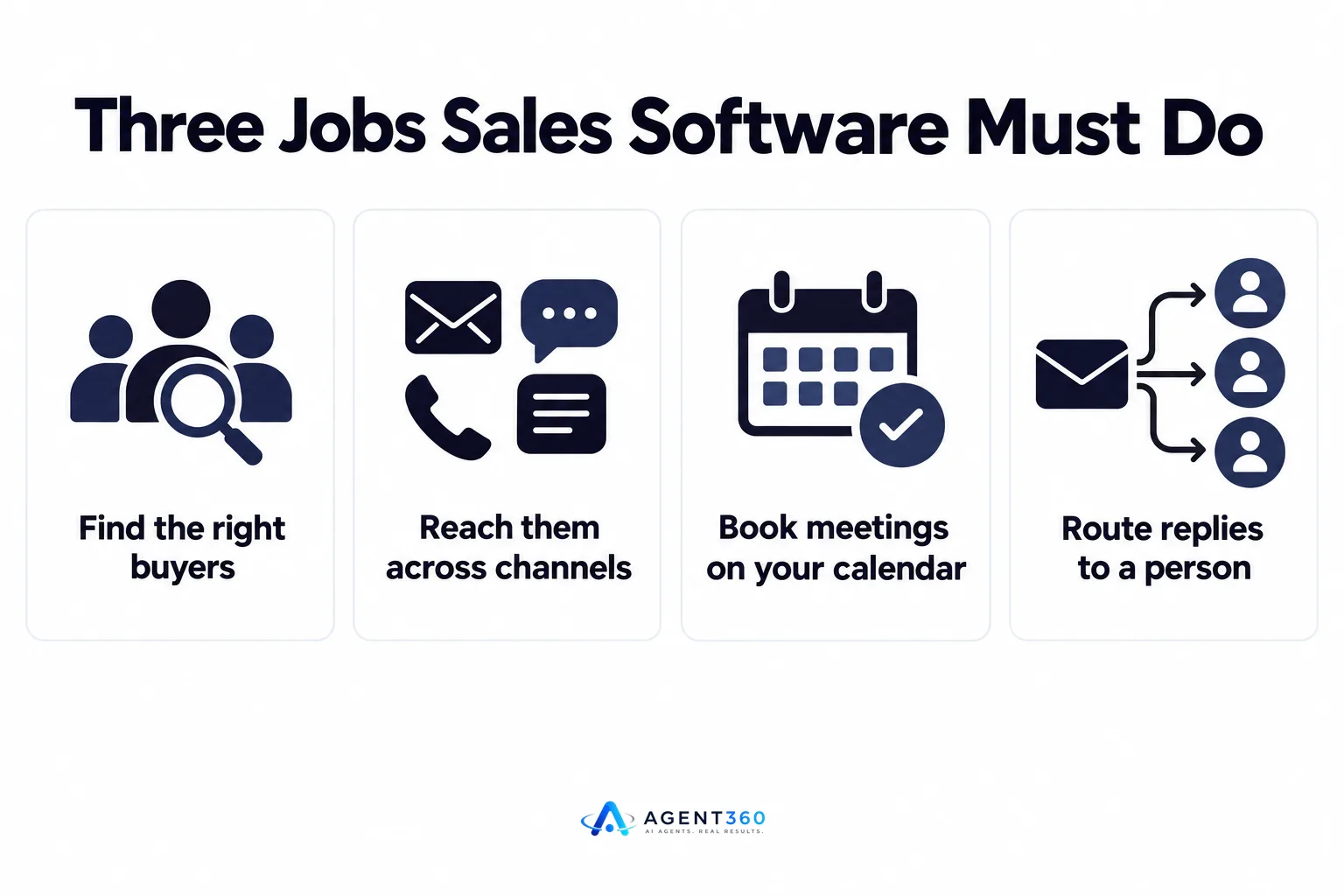
Sales software for founders should do three jobs: find the right buyers, reach them across channels, and book meetings on your calendar, without you needing to hire a sales team to make it work. Most founders running their own outbound do not need a dozen point tools stitched together. They need one system that covers prospecting, outreach, and booking, so the hours spent selling turn into meetings instead of admin.
The hard part is not finding software. It is finding software built for someone who is both the founder and the seller, with no SDR team behind them to clean up gaps between tools.
This article covers what that software needs to do, how to evaluate it, and what it should cost compared to a first sales hire.
Key Takeaways
- Founder-led sales software should combine prospecting, multi-channel outreach, and meeting booking in one system, not three separate subscriptions.
- Compare the real cost of software against the real cost of a first sales hire before deciding, since salary, ramp time, and management overhead all count.
- Avoid per-seat pricing if you expect to add a cofounder or first hire to outbound later, since costs can double without warning.
- Check how the tool handles replies before you buy, since a tool that only sends messages leaves the hardest part of selling to you.
- Compare options directly at sdr vs outbound software before committing to either path.
Table of Contents
What should sales software for founders actually do?
It should find buyers, reach them on more than one channel, and book the meeting, all inside one workflow. A founder running outbound alone does not have time to manage five tabs: one for lead lists, one for email sending, one for LinkedIn, one for call logs, and one for tracking who said yes. Software built for this job should narrow the list to real prospects, trigger outreach across email, LinkedIn, and phone, and hand the founder a booked meeting, not a list of “maybe interested” replies to sort through.
Does it replace a full sales team?
No. It replaces the manual research, list-building, and sequencing work that an SDR would otherwise do by hand. The founder (or whoever owns outbound) still has the sales conversations. The software's job is to make sure those conversations are with people worth talking to, and that they land on the calendar without a dozen back-and-forth emails.
What happens when a prospect replies?
This is where many founder-led stacks break down. A tool that only sends messages stops being useful the moment someone replies “interested, let's talk.” Check whether the software routes replies to a person, flags them for follow-up, or lets them sit in an inbox. The gap between a reply and a booked meeting is where deals get lost.
How do founders choose the right sales software?
Start from the buyer profile, then test channels, pricing, and reply handling before committing. Founders rarely have budget or time to try three tools in parallel. A short, structured evaluation catches the expensive mistakes early.
- Define the buyer first. Write down the job titles, company size, and signals (hiring, funding, tech changes) that mark a real prospect before looking at any tool.
- Check which channels it actually uses. Email-only tools miss prospects who never open cold email; confirm the software covers email, LinkedIn, and phone together.
- Ask how pricing scales. Per-seat pricing punishes growth; find out what happens to the bill when a cofounder or first hire joins outbound.
- Test the reply workflow. Send a test message and see what happens after a reply comes in, before paying for a year upfront.
- Confirm it has basic CRM tracking. A pipeline view that shows where each prospect sits saves a founder from rebuilding that view in a spreadsheet.
What does it cost compared to hiring an SDR?
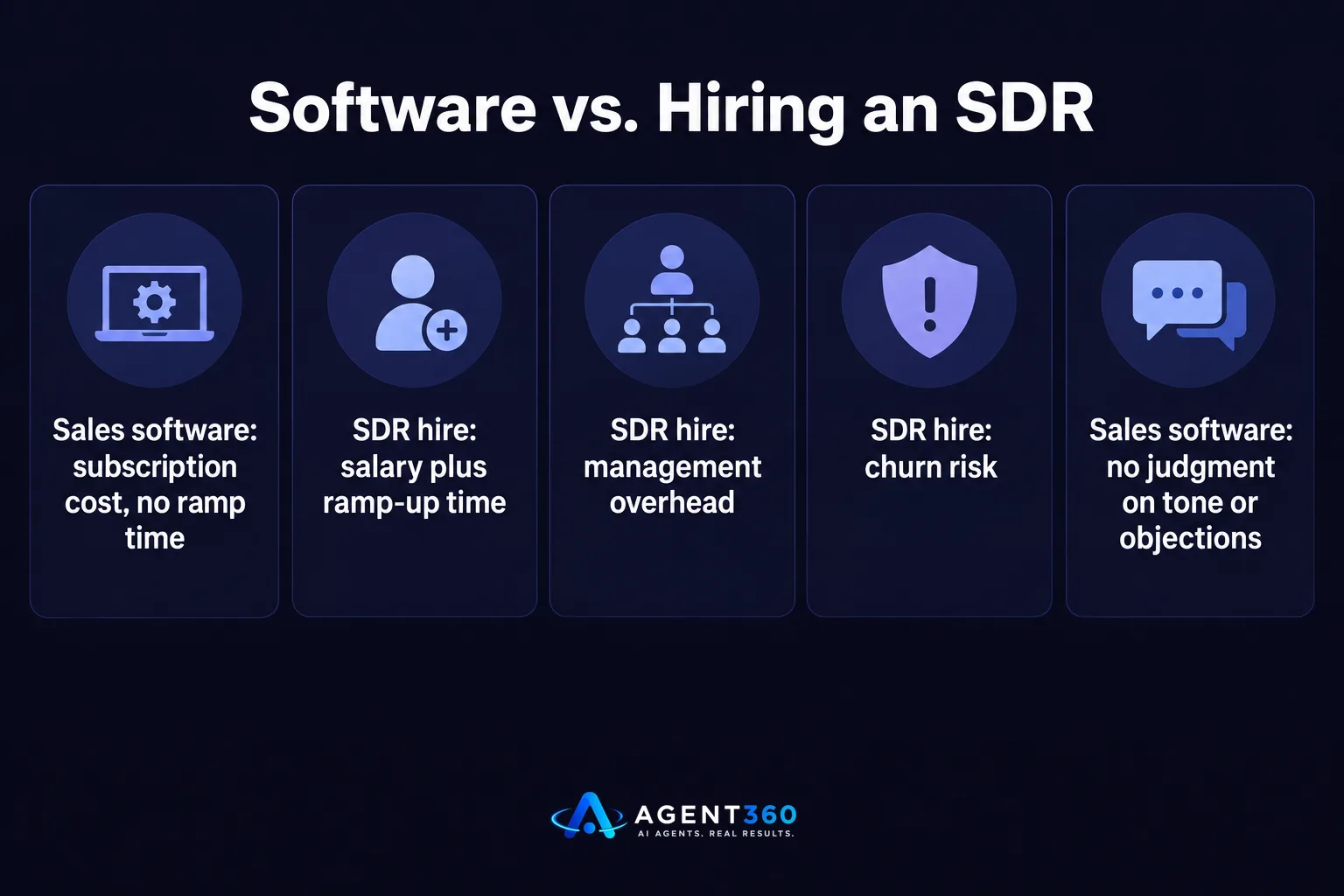
Software usually costs a fraction of a first sales hire's salary, but the comparison needs the full picture, not just the subscription price. An SDR hire brings salary, ramp-up time (often a quarter or more before they book consistent meetings), management time from the founder, and the risk of churn. Sales software has none of that ramp, but it also has no judgment calls on tone, timing, or objection handling beyond what it is built to do.
Is it an either-or decision?
Not always. Some founders use software to fill pipeline while they do the selling themselves, then bring on a hire once meeting volume justifies it. The side-by-side breakdown at sdr vs outbound software lays out where each option tends to fit.
What should founders avoid when buying sales software?
Avoid tools priced per seat, tools that only cover one channel, and tools with no clear path from reply to booked meeting. Each of these looks fine on a sales call and becomes a problem three months in.

Why does per-seat pricing matter this early?
A founder buying software alone today may add a cofounder, a first hire, or a contractor to outbound within a year. Per-seat pricing turns that growth into a cost increase instead of a sign of progress. It is worth checking this before signing, not after the team doubles.
Take the Next Step With Your Outbound
Agent360 combines AI prospecting, multi-channel outreach across LinkedIn, email, and phone, meeting booking, and basic CRM tools in one system, built for sales teams and for founders running outbound themselves. It finds buyers, detects buying signals, and gets meetings onto the calendar without requiring a founder to hire an SDR first.
The prospecting side finds the people worth reaching, so time goes into conversations instead of list research.
Pricing details are on the pricing FAQ, and the fastest way to see how it fits a founder-led pipeline is to book a demo.
Frequently Asked Questions
Do founders need an SDR before buying sales software?
No. Sales software is built for founders running outbound without an SDR, covering the prospecting and outreach work an SDR would otherwise do by hand.
What channels should founder-led sales software cover?
At minimum, email and LinkedIn, since most B2B buyers use both; phone adds a channel for prospects who do not respond to either.
How long before sales software for founders shows results?
This depends on list size, channel mix, and how warm the audience is; there is no fixed timeline that applies to every founder or market.
Can one founder run outbound without hiring anyone?
Many founders do, using software to handle prospecting and sequencing while they handle the sales conversations themselves.
What should a founder check before signing a contract?
Pricing structure (per seat or not), channel coverage, and how replies get handled, since these three determine whether the tool still fits after three months of use.
More articles
- Should I Hire an SDR? A Founder's Decision Guide
- B2B Outbound for Small Companies: A Practical Playbook
- How to Book Sales Meetings Without Hiring an SDR
- Cold Email for Founders: A Practical Way to Start
- Outbound Sales for Founders: How to Book Meetings Yourself
- Cold Email Sending Limits: What They Actually Are
- How Many Inboxes Do You Need for Cold Email?
- How Many Emails Per Inbox Per Day Is Safe to Send?
