How to Book Sales Meetings Without Hiring an SDR
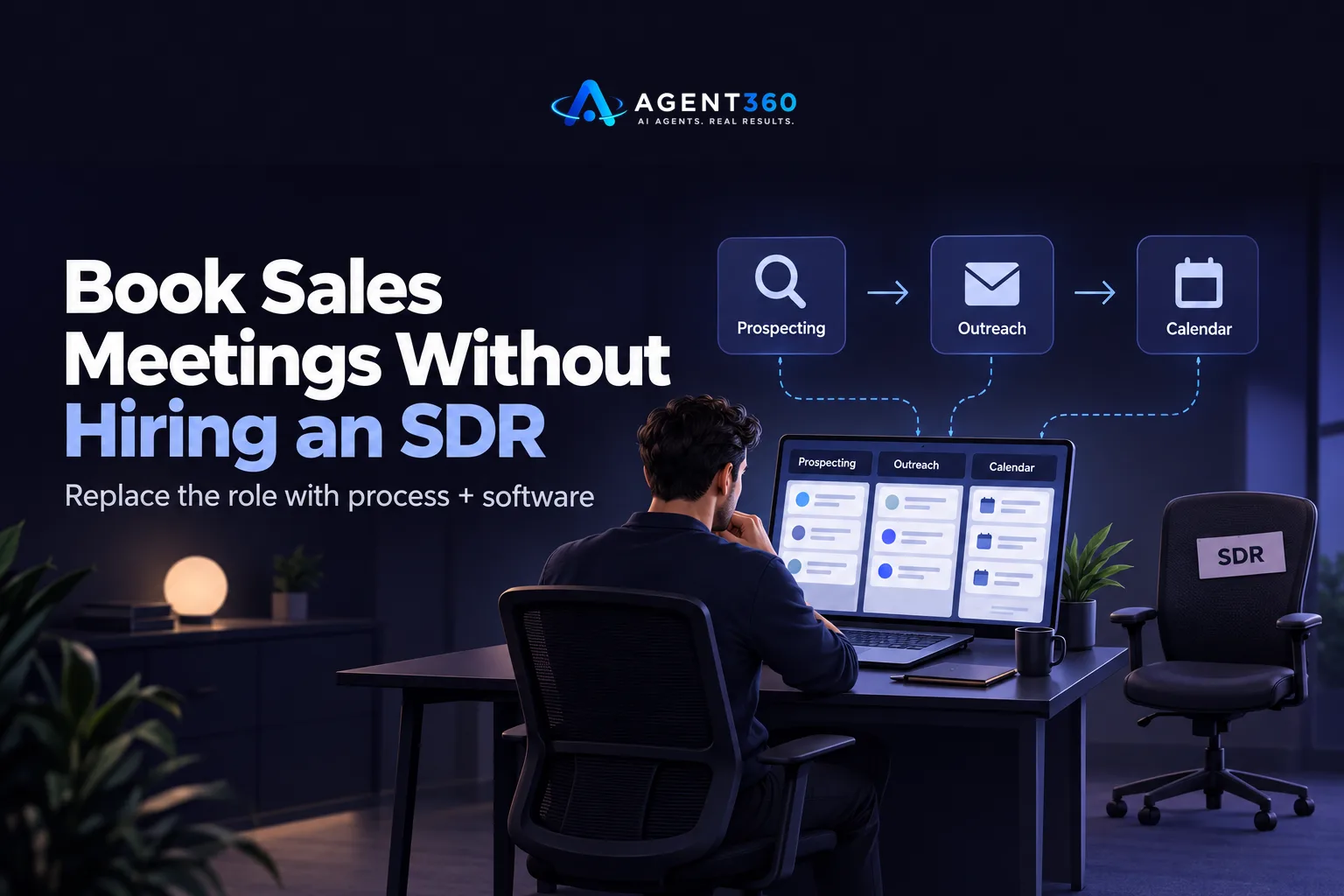
You can book sales meetings without an SDR by running a repeatable outbound process yourself and using software to cover the volume an SDR would normally handle. Founders do this every day: they define a target list, send multi-channel outreach, and let a tool manage replies and calendar booking. The gap an SDR fills is time and consistency, not something only a human hire can provide.
The real question isn't whether it's possible. It's whether you can build a process tight enough to replace a full-time hire's output without burning your own week on manual follow-up.
Key Takeaways
- An SDR's core job is volume and consistency, both of which software can take over once you've defined your target buyer.
- Founders who book meetings without an SDR still need three things: a prospect list, outreach across channels, and a system that catches replies fast.
- Compare the real cost of a first SDR hire against outbound software before you commit to either, as explained in this breakdown of SDR vs outbound software.
- A 15-20 minute daily reply check keeps your pipeline moving without needing someone dedicated to it full-time.
- Hire an SDR once your outbound volume outgrows what one founder can manage, not before.
Table of Contents
What Does an SDR Actually Do That You'd Need to Replace?
An SDR finds prospects, reaches out across channels, and books the meeting before handing it to a closer. Strip away the job title and it's three repeatable tasks: build a list of people who match your buyer profile, contact them consistently until they respond, and get a meeting on the calendar. None of these require a dedicated employee — they require a process that runs every day whether or not you remember to do it.
What parts of the job can't be automated?
Judgment calls still need a person: deciding which replies are worth a phone call, tailoring a message to a specific objection, and closing the meeting once it's booked. These are small, high-value moments, not the bulk of the work.
What parts can run without a person doing them manually?
Finding matching companies, sending the first and follow-up messages, and logging who said what — this is volume work. It's exactly what AI prospecting and multi-channel outreach tools are built to carry, which is why AI prospecting and multi-channel outreach exist as separate categories from a human SDR's judgment calls.
How Do You Book Meetings Without an SDR, Step by Step?
You replace the SDR's weekly routine with a five-step loop you run or automate every day. The order matters: skipping the targeting step is the most common reason founder-led outbound stalls out.
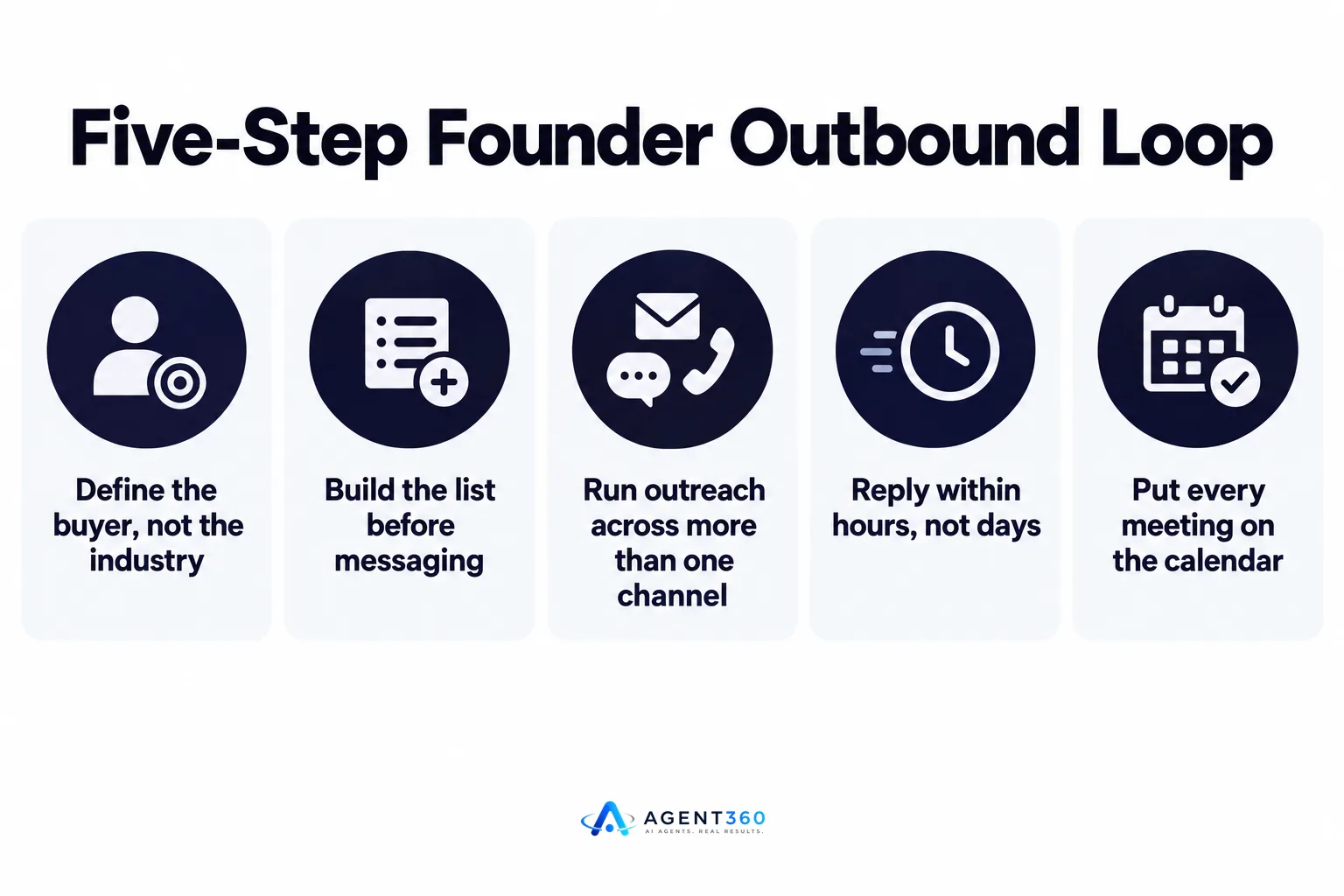
- Define the buyer, not the industry. Pick a job title, company size, and a signal that someone is ready to buy now, not just someday.
- Build the list before you write a single message. A list of 50 well-matched prospects beats 500 loosely matched ones.
- Run outreach across more than one channel. Email alone gets ignored; LinkedIn and a phone call add two more chances to get a reply.
- Reply within hours, not days. Interest fades fast once someone has moved on to the next task in their inbox.
- Put every meeting straight onto your calendar. A booking link removes the back-and-forth that kills momentum.
What Tools Do You Need to Run Outbound Without an SDR?
You need four pieces working together: prospecting, outreach, meeting booking, and a place to track it all. An SDR juggles these manually. Without one, you need software that connects them so nothing falls through between steps.
Does it matter if these tools are separate or connected?
Separate tools mean you're the one copying data between a prospecting list, an email sender, and a spreadsheet — which is close to a part-time job on its own. Tools built to pass a prospect from detection to outreach to a booked meeting without manual handoffs save the hours an SDR would otherwise spend on admin.
When Does It Make Sense to Hire an SDR Instead?
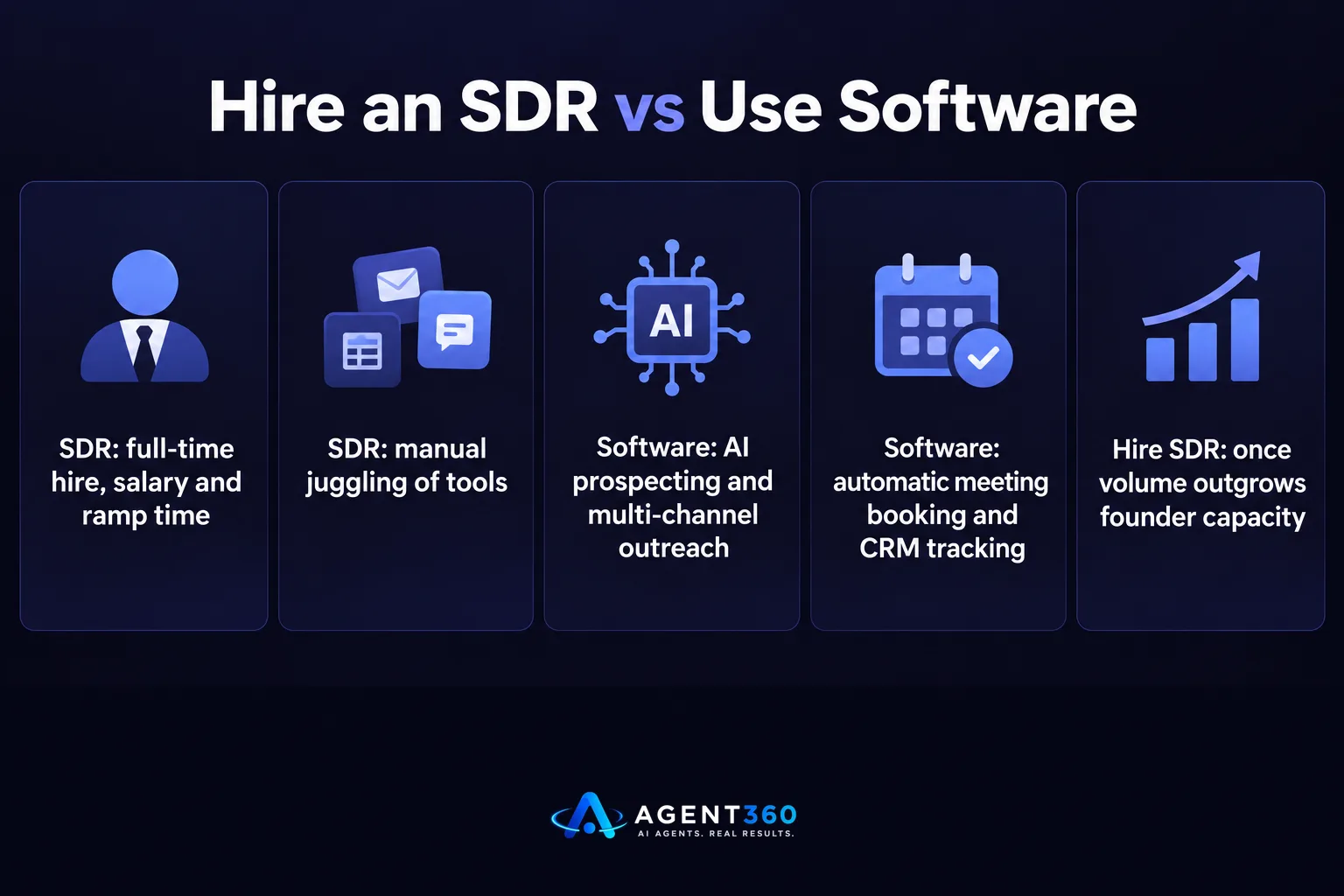
Hire once outbound volume outgrows what you can personally review and respond to each day. If replies are piling up faster than you can triage them, or if you're spending more hours on outbound than on the rest of the business, that's the signal — not a fixed revenue number or team size. Review the actual cost and tradeoffs on both sides with this comparison of SDR hiring versus outbound software before deciding.
Take the Next Step Without Adding Headcount
Agent360 combines the four pieces a founder needs to book meetings without an SDR: AI prospecting to find the right buyers, multi-channel outreach across LinkedIn, email, and phone, automatic meeting booking onto your calendar, and CRM tools to keep the pipeline straight. The point isn't to replace human judgment on the calls that matter — it's to remove the manual volume work so you're only spending time where you add the most value.

If you're deciding between a first SDR hire and software that runs this loop for you, see current pricing to compare the real cost side by side.
Ready to see how it fits your outbound? Book a demo.
Frequently Asked Questions
Can one founder really book meetings without an SDR?
Yes, as long as the process covers prospecting, multi-channel outreach, fast reply handling, and direct calendar booking. The limiting factor is usually time spent on manual admin, which software can absorb.
How many meetings can a founder book alone each week?
It depends entirely on list quality, message relevance, and how many channels are used — there's no fixed number that applies across businesses. Tighter targeting and faster replies both push the number up more reliably than sending more messages.
Is outbound software cheaper than hiring an SDR?
Software avoids the salary, ramp time, and management overhead of a full-time hire, though the comparison depends on your volume needs. See how Agent360 pricing works for a concrete starting point.
What's the first thing to fix if founder-led outbound isn't booking meetings?
Check the target list first. Most stalled outbound traces back to contacting the wrong buyer, not a weak message or the wrong channel.
Do I still need a closer if I book my own meetings?
Many founders run both the outbound and the close themselves early on, then bring in a closer once meeting volume outpaces their calendar. The two roles can stay separate from the start if that fits your business better.
More articles
- Cold Email for Founders: A Practical Way to Start
- Outbound Sales for Founders: How to Book Meetings Yourself
- Cold Email Sending Limits: What They Actually Are
- How Many Inboxes Do You Need for Cold Email?
- How Many Emails Per Inbox Per Day Is Safe to Send?
- LinkedIn Weekly Invitation Limit: What It Really Is
- How Many LinkedIn Messages Can You Send Per Day?
- LinkedIn Connection Request Limit: What It Is and How to Stay Safe
