Marketing for Mechanics: What Actually Books Jobs
Marketing for mechanics comes down to one thing: getting found by someone who needs a repair today, and giving them a reason to trust you before they ever pick up the phone. That's local search visibility, reviews, referrals, and a simple follow-up habit. Paid ads can help later, but most independent shops and mobile mechanics grow first through the free and low-cost channels. Commercial accounts come after the basics are solid.
Here's what shop owners actually ask: what to do first, what the 3-3-3 rule and the three C's mean, and how to advertise without blowing the budget.
Key Takeaways
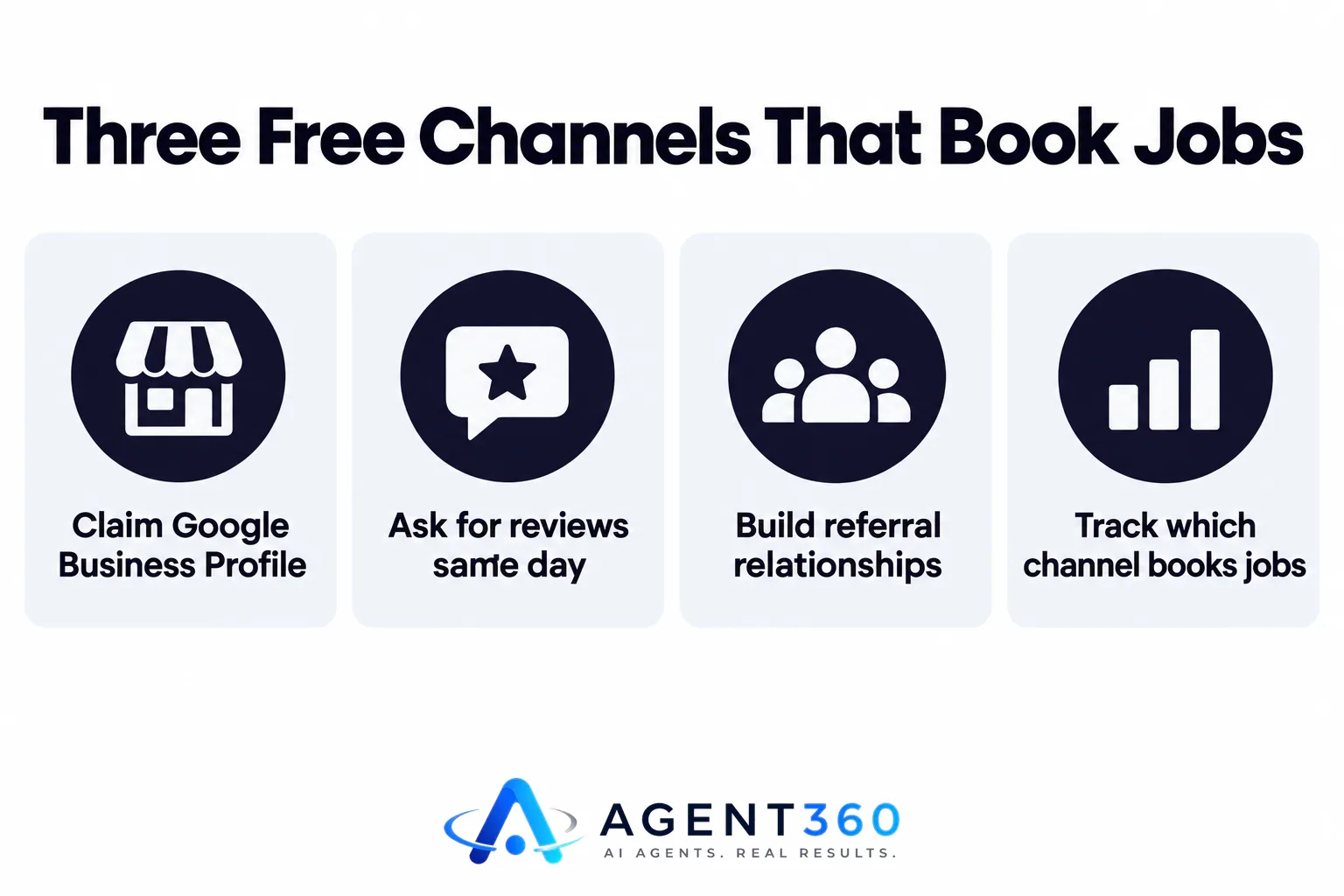
- Claim and optimize your Google Business Profile before spending on ads — see the exact steps here.
- Ask every satisfied customer for a review the same day you hand back the keys.
- Build two or three referral relationships with towing companies, used car lots, or fleet managers.
- Track which channel actually books a job, not just which one gets clicks or calls.
- Keep a written three-step diagnosis process and explain it to customers; it builds trust before you quote a price.
Table of Contents
How Do You Market a Mechanic Business?
Start with local search, reviews, and a referral loop, then layer in paid or direct outreach once those are working. A mechanic business lives or dies on being found by someone searching nearby, and on being trusted enough to book once they find you. Most of that work is free before it's paid: a complete Google Business Profile, steady reviews, and a few local relationships that send repeat work your way.
What's the right budget for a mechanic shop just starting out?
There's no single right number here. Rent, labor rates, and local competition vary too much to make a generic figure useful. Spend time before you spend money: claim your free listings, ask for reviews, build a couple of referral relationships. Once you know which channel actually brings in paying customers, put a small, fixed amount behind it and watch the result before you raise it.
How do you get new customers without spending on ads?
Referrals and reviews carry most shops that aren't ready to advertise yet. Partner with towing companies, used car dealers, and parts stores — they see customers who need a mechanic but don't have one lined up. Follow up by text or phone a few days after every job, ask how the repair's holding up, and ask for a review or referral in that same message.
What Does the 3-3-3 Rule Mean in Marketing?
One common version of the 3-3-3 rule is three content types, on three channels, three times a week. For a shop, that might be a before-and-after repair photo, a short tip video, and a customer shoutout, posted across Google Business Profile, a local Facebook group, and Instagram, roughly three times each. The exact numbers aren't the point. The point is picking a rhythm you can actually keep up, instead of posting in bursts and going quiet for two months.
What Are the Three C's in Mechanics?
In auto repair, the three C's usually refer to the diagnostic steps: Concern, Cause, and Correction. Technicians use this to document what the customer reported, what's actually wrong, and what fixes it. It's a trade term, not a marketing one — but it doubles as good marketing material. Explain this process on your website or in your estimate, and customers can see you're not guessing or padding the bill.

How does that framework help in marketing a shop?
Walk a customer through concern, cause, and correction in plain language — on an invoice, or in a quick video — and a routine repair becomes proof you're thorough. Shops that post this kind of transparent explanation online stand out fast from competitors whose whole marketing effort is a phone number and a logo.
What Is Mechanics in Marketing?
“Mechanics” in marketing means the repeatable system behind getting booked, not any single ad or post. It's the sequence: a lead comes in from search, referral, or outreach; someone follows up fast; the job gets booked; a review or referral request goes out afterward. Shops that struggle with marketing usually have all the pieces lying around — they just haven't connected them into a system.
How do mobile mechanics advertise cost-effectively?
Mobile mechanics do well with hyper-local listings, community Facebook or Nextdoor groups, and direct outreach to small businesses with vehicles — landscapers, delivery services, contractors — who need on-site maintenance. None of that takes a big ad budget. It takes consistent follow-up, because one missed callback usually means the job goes to whoever answered first.
- Claim your Google Business Profile. Fill in hours, services, and photos, and ask every happy customer for a review that week.
- Pick one referral partner. A tow company, parts store, or dealership that sees customers you don't yet reach.
- Write your three-step process down. Concern, cause, correction, in plain language customers can read on your site or invoice.
- Set a follow-up rule. Every customer gets a text or call within a week asking for feedback and a review.
- Track where jobs actually come from. Ask new customers how they found you, and put future effort behind whatever channel keeps showing up.
Take the Next Step With Commercial Accounts
Local marketing fills the bays with individual customers. Once that's running smoothly, some shops start chasing steadier commercial work — fleet maintenance contracts, warranty referrals from dealers, repeat business from local companies with vehicles. That kind of work rarely walks in off the street. It comes from direct outreach.

Agent360 runs that outreach for you. The Agent360 Platform, from $99/mo, includes leads, an email and LinkedIn sequencer, a parallel dialer, and a CRM, with unlimited seats and no per-user fees. If you'd rather hand it off entirely, the VIP Done-For-You plan runs outbound end to end with a dedicated GTM engineer and strategist, for $2,000/mo plus $250 per booked meeting — you only pay for the work, and you take the meetings yourself.
See how it fits your shop's goals by visiting pricing or booking a demo.
Frequently Asked Questions
Do I need a marketing agency to market my mechanic shop?
Not at the start. Most of the groundwork — Google Business Profile, reviews, referral relationships — can be handled by the owner or a staff member, no agency required. An agency or outreach tool earns its keep once you're trying to add commercial accounts on top of walk-in customers.
How long does it take to see results from marketing a mechanic shop?
Reviews and referrals can bring in new customers within weeks, since they lean on relationships you already have. Search visibility takes longer and depends on how much competition sits nearby, so track results monthly rather than expecting a quick jump.
Should mechanics market on social media?
It helps for visibility and trust, especially short videos showing a repair or explaining a common issue. It rarely replaces local search and referrals as the main source of booked jobs, though. Treat social posts as reinforcement, not a substitute.
What's the cheapest way to get new customers for a mobile mechanic business?
Local community groups, a complete Google Business Profile, and direct outreach to small businesses with vehicles cost nothing but time. The real limiting factor is follow-up speed, not budget — mobile mechanic customers usually book with whoever responds first.
Is it worth pursuing fleet or commercial accounts as a mechanic shop?
Commercial accounts can bring steadier, more predictable work than one-off walk-ins, but they take direct outreach rather than waiting on search or referrals to deliver them. For a closer look at that specific strategy, see our guide on winning B2B fleet accounts.
More articles
- Content Repurposing: Turn One Asset Into Outbound Fuel
- ATS Tracking Cost: What You'll Actually Pay in 2025
- AI Content Calendar: What It Is and How to Build One
- Automotive Repair Marketing: Winning B2B Fleet Accounts
- Content Automation SEO: What It Can Actually Do
- How to Show Up in AI Overviews When Prospects Google You
- How to Appear in Google's AI Overviews
- White Label GEO: What It Means and How to Buy It
