Who Offers Pay-for-Meetings Outbound Without an SDR Team?
Pay-for-meetings outbound isn't one company — it's a pricing model sold by outsourced appointment-setting agencies, lead-generation shops, and a handful of software platforms that pair automated outreach with human-reviewed booking. You pay a fee per qualified meeting instead of a retainer, a monthly salary, or a per-seat software bill.
Founders search this term for one reason: they want pipeline without hiring and managing an SDR. That's a reasonable goal, but the pricing model that sounds safest on paper often hides the same costs it was meant to avoid — just moved into the contract's fine print.
Before you sign anything, it helps to know exactly what you're buying, how “meeting” gets defined, and what the alternative looks like.
Key Takeaways
- Pay-per-meeting is a pricing structure sold by agencies and some software vendors, not a single named provider.
- The contract's definition of a “qualified meeting” matters more than the headline price per meeting.
- Software that runs prospecting, outreach, and booking together can replace the SDR headcount this model is sold to avoid — compare software against an outbound hire before you choose either.
- Ask about replacement policy for no-shows before you sign, not after the first one happens.
- A flat monthly cost is easier to forecast than a per-meeting fee that scales as volume grows.
Table of Contents
What does “pay for meetings” outbound actually mean?
It means you're billed per booked meeting instead of per hour, per seat, or per month of service. The vendor runs prospecting and outreach on your behalf, using their own list sources and sequences, and invoices you only when a prospect accepts a meeting that fits the criteria you agreed on.
How is a “meeting” defined?
This is the clause that decides whether the model actually saves you money. Some contracts count any accepted calendar invite as billable. Others only count a meeting that shows up and matches a job title, company size, or industry you specified. Read this definition before the price per meeting, because a cheap meeting that doesn't show is not cheap.
Who typically sells it?
Outsourced appointment-setting agencies and lead-generation shops are the most common sellers of this model, since they can absorb the cost of outreach across many clients and only collect once a meeting lands. A smaller number of outbound software platforms offer a similar guarantee by combining automated prospecting with a human team that qualifies replies before booking.
What are the real risks of paying only for booked meetings?
The risk sits in volume incentives, not in the pricing idea itself. A vendor paid per meeting is financially motivated to book as many as possible, not necessarily the ones most likely to close. That can mean loose qualification, generic targeting, or meetings booked with the wrong title just to hit a number.
Does this model scale predictably?
Not always. As your qualification criteria tighten — say, you only want VP-level buyers at companies over 200 employees — the per-meeting price usually rises, sometimes sharply, because those prospects are harder to reach and convert. A model that looked affordable at launch can get expensive fast once you narrow the target.
What should you check before you sign a pay-per-meeting contract?
Check the definition, the replacement policy, and who owns the data before you commit. These three items separate a workable arrangement from an expensive one.
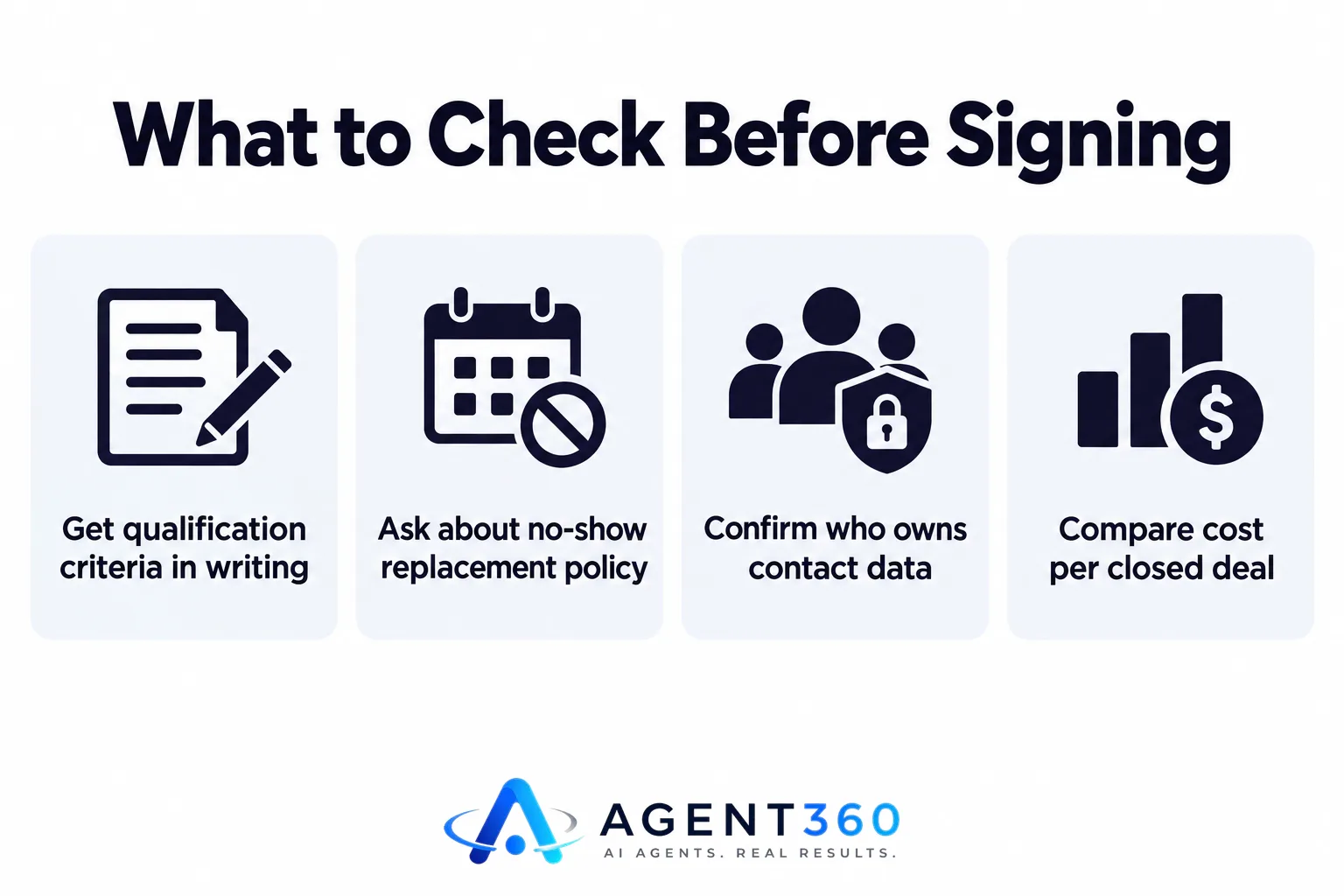
- Get the qualification criteria in writing. Title, company size, industry, and any disqualifying answers should be spelled out, not left to the vendor's judgment.
- Ask what happens when a meeting no-shows. Find out whether you get a replacement meeting or simply absorb the loss.
- Confirm who owns the contact list and reply history. If the engagement ends, you want the prospect data and conversation history to come with you, not stay with the vendor.
- Compare the effective cost per closed deal, not per meeting. A cheaper meeting that rarely converts can cost more than a pricier one that reliably turns into pipeline.
- Ask how outreach is run day to day. Multi-channel efforts across email, LinkedIn, and phone generally reach more of your target list than a single-channel sequence.
Is software a better fit than an outsourced pay-per-meeting vendor?
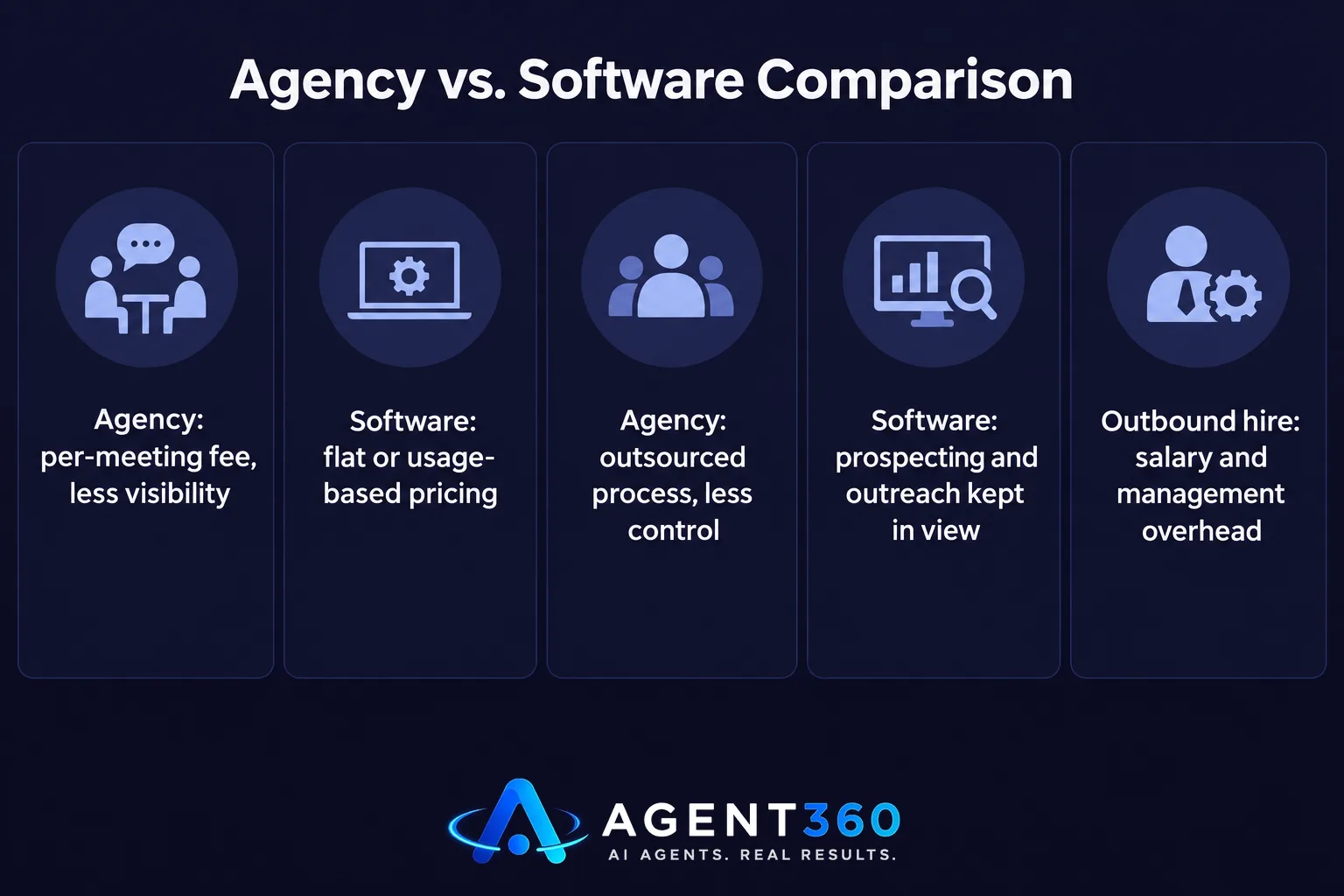
It depends on whether you want to own the process or hand it off entirely. An agency on a per-meeting fee takes the work off your plate but gives up little visibility into how prospects were found or what was said to them. Software built to run prospecting, outreach, and meeting booking together keeps that process in view and usually prices on a flat or usage basis instead of per meeting, which makes the monthly cost easier to forecast as volume grows. For a founder or small sales team weighing the two paths, it's worth reading how an outsourced SDR compares to an in-house hire before deciding which model — agency, hire, or software — fits the stage you're at.
Take the Next Step With a System You Can See Into
Agent360 runs AI prospecting to find buyers matching your target market and flag their buying signals, then handles multi-channel outreach across LinkedIn, email, and phone, and books qualified meetings directly on your calendar. CRM tools keep the pipeline visible so you can see exactly how each meeting was sourced, not just that it happened.

If you're comparing a pay-per-meeting agency against running outbound yourself with software behind you, start with the numbers: see current pricing before you commit to either path.
Book a walkthrough of how the system finds, engages, and books prospects on the demo page.
Frequently Asked Questions
Is pay-per-meeting outbound cheaper than hiring an SDR?
It can be cheaper at low volume, since you avoid salary, benefits, and management overhead. At higher volume or with tight qualification criteria, the per-meeting price often rises enough to erase that advantage, so compare total monthly cost at the volume you actually need.
What counts as a qualified meeting in these contracts?
It varies by vendor and should be defined in writing before you sign — typically a combination of job title, company size, and industry, sometimes with a requirement that the prospect actually attends the call.
Can I negotiate the qualification criteria after signing?
Most agencies will revisit criteria, but tightening them usually raises the price per meeting since harder-to-reach prospects take more outreach to convert.
What happens if a booked meeting no-shows?
Policies differ by vendor. Some offer a free replacement meeting, others do not, so get this in writing before the first no-show happens rather than after.
Is software a realistic alternative to a pay-per-meeting agency?
Yes, for founders and small teams who want visibility into prospecting and outreach rather than handing the whole process to a third party. Software that combines prospecting, outreach, and booking keeps the data and process in your hands while still aiming for a steady flow of booked meetings.
More articles
- What's the Best Done-for-You Outbound Agency for Agencies?
- What's the Safest LinkedIn Automation Tool Right Now?
- Best LinkedIn Automation Tool for B2B Lead Generation?
- Expandi vs Heyreach: Which Is Better for Cold Outreach?
- Skylead vs HeyReach: Which LinkedIn Automation Tool Wins?
- What's the Best Alternative to HeyReach for Outreach?
- Who to Use for Outsourced SDR Instead of Hiring?
- What's a Good MSP Lead Generation Agency for Appointments?
