MSP Sales Leads & Appointments: A Practical Playbook
MSP sales leads and appointments come from the same three ingredients: a defined target account list, a channel mix that actually reaches the right person, and a cadence that keeps showing up until someone says yes to a meeting. A “lead” that never turns into a conversation is just a name on a spreadsheet. Appointments are the goal. Names are not.
Most MSPs already know who they want to sell to — businesses with 20 to 200 employees, no internal IT director, or a contract with a competitor that's about to expire. The hard part is reaching enough of those businesses, often enough, to fill a calendar every week, without hiring a full sales team to do it.
This guide covers what counts as a real MSP lead, how to generate appointments on a repeatable schedule, which channels actually move IT and operations decision-makers, and how long it realistically takes before outbound starts producing booked meetings.
Key Takeaways
- Define a qualified MSP lead by title, company size, and a trigger event — not just industry.
- Combine email, LinkedIn, and phone so a prospect who ignores one channel still sees the other two.
- Book appointments on a cadence of six to nine touches over two to three weeks before moving a lead to a slower follow-up list.
- Expect the first few weeks of outbound to build pipeline, not meetings — see how long outbound typically takes to produce results.
- Track replies and booked calls in one place so you can see which message or channel is actually working.
Table of Contents
What Counts as a Qualified MSP Sales Lead?
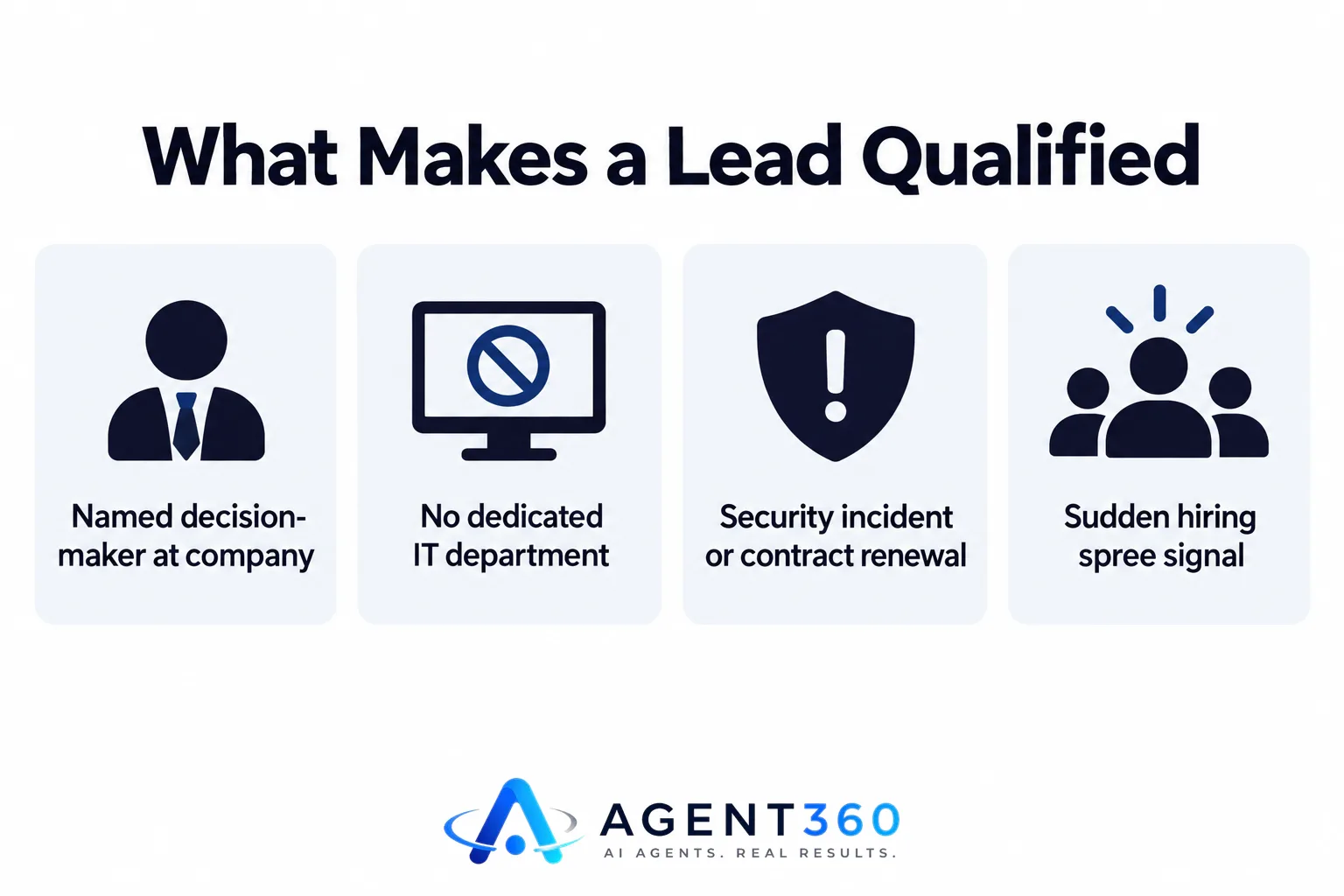
A qualified MSP lead is a specific person at a specific company who matches your ideal client profile and has a reason to need IT support now or soon. That means a named decision-maker — usually an owner, office manager, or operations lead — at a company without a dedicated IT department, plus some signal that the timing is right: a security incident, a staff departure, a contract renewal date, or a sudden hiring spree.
Is a Free Trial Signup a Lead?
MSPs rarely run free trials, so the real question is whether a website form fill or a downloaded checklist counts as a lead. Treat it as a warm signal worth a fast follow-up call — not as a booked appointment. A lead isn't an appointment until there's a conversation on the calendar with a real decision-maker.
How Do You Generate MSP Appointments Consistently?
Consistent MSP appointments come from running the same outbound process every week, not from one-off campaigns. Contact a list once and forget it, and you get a burst of activity followed by silence. The fix is a standing cadence, applied to a fresh batch of accounts every single week.
- Build the target list. Pull companies by employee count, industry, and location that fit your service area and ideal client size.
- Find the right contact. Find the owner or operations lead by name and title — not a generic info@ inbox.
- Sequence across channels. Space email, LinkedIn connection requests, and phone calls over two to three weeks so the prospect sees the message more than once.
- Ask for the meeting directly. Open with a specific time slot or a short calendar link instead of a vague “let's connect.”
- Log every reply. Track who responded, who booked, and who needs a longer follow-up cycle in one CRM so nothing falls through.
Which Channels Work Best for MSP Lead Generation?
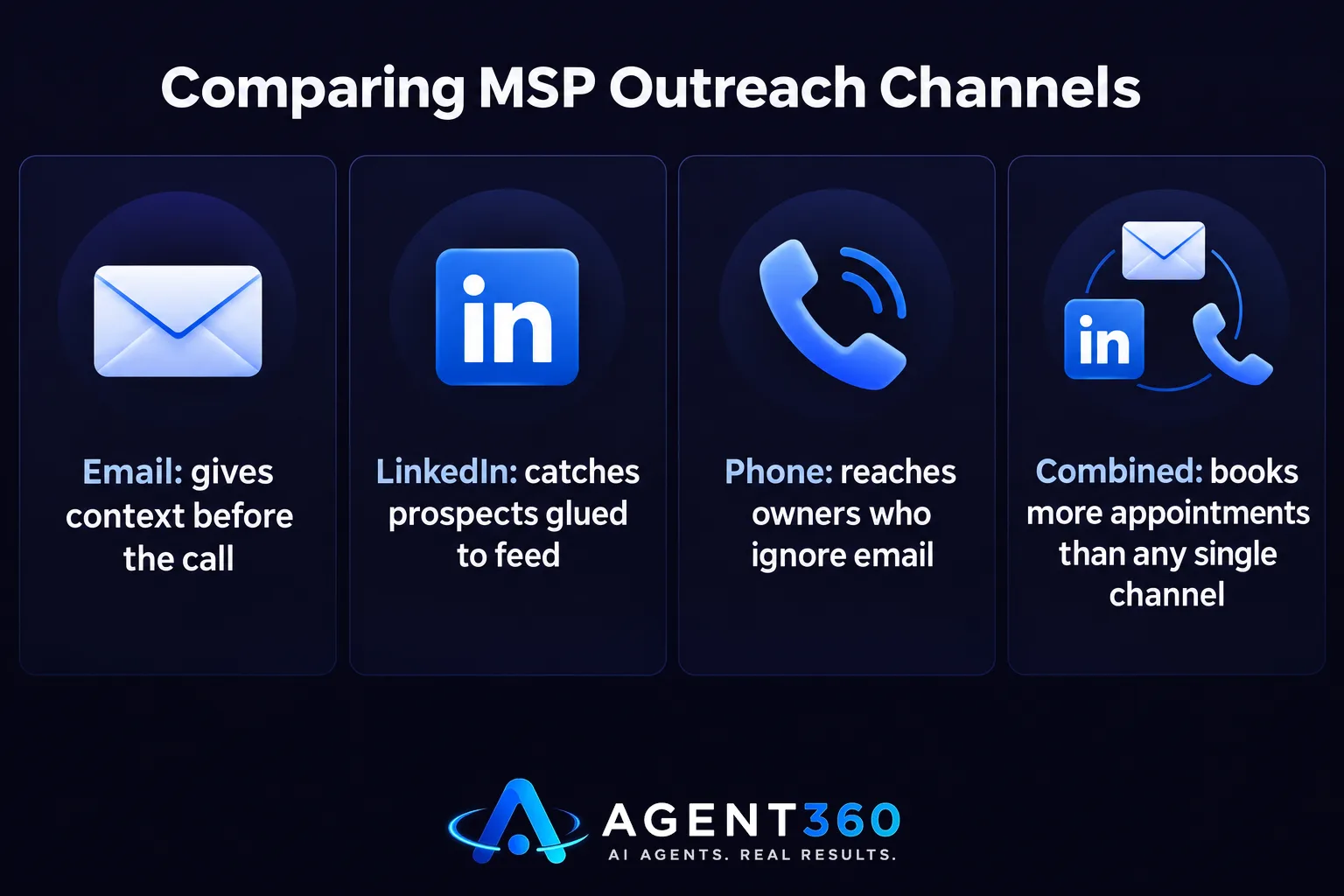
Email, LinkedIn, and phone each catch a different slice of your target list, so running all three together books more appointments than any single channel. A business owner who ignores cold email might pick up the phone. An operations manager glued to LinkedIn might respond to a connection note before ever opening an email.
Should MSPs Cold Call or Email First?
Email first, then call. The email gives the prospect context before the phone even rings, so the call opens with “following up on the note I sent” instead of a cold introduction. For a closer look at how the two channels fit together in one sequence, see this breakdown of what to look for in MSP lead generation services.
How Long Before MSP Outbound Produces Booked Meetings?
Most MSP outbound takes two to four weeks of consistent contact before it produces a steady rate of booked meetings. New email domains need time to warm up before high send volumes are safe, and a cold list usually needs two or three touches before anyone responds.

What Slows Down MSP Pipeline?
The usual culprits: a list that's too broad, a message pitching services instead of speaking to the prospect's problem, and no system for chasing replies fast. An MSP that answers a “tell me more” within a day books the meeting. One that waits three days usually loses the prospect to whoever got there first.
Take the Next Step Toward a Full MSP Calendar
Running this playbook by hand works — if someone is dedicated to building lists, writing sequences, and following up every single day. Agent360 gives MSPs two ways to do it. The Agent360 Platform, starting at $99/mo, bundles leads, an email and LinkedIn sequencer, a parallel dialer, and a CRM, with unlimited seats and no per-user fees, so the whole team can run outbound from one system.
Prefer to hand the work off? The VIP Done-For-You plan runs your outbound end to end with a dedicated GTM engineer and strategist, for $2,000/mo plus $250 per booked meeting. You take the meetings. We handle the list-building, sequencing, and follow-up.
See which option fits your team on the MSP solutions page.
Frequently Asked Questions
How much do MSP sales leads typically cost?
Cost depends on whether you build lists in-house, buy data, or pay for a done-for-you service — and done-for-you pricing is often structured per booked meeting, not per raw lead. Compare the total cost per booked appointment, not per name on a list, and you'll get the clearest picture.
Can I buy a list of MSP sales leads?
You can buy contact data, but a purchased list isn't the same thing as a qualified lead. A name and an email address only become useful once they're matched against your ideal client profile and worked through a real sequence.
How many touches does it take to book an MSP appointment?
Most B2B cadences need six to nine touches across email, LinkedIn, and phone, spread over two to three weeks. Anything fewer rarely gives a prospect enough exposure to respond.
Should MSPs use a dedicated BDR or outbound software?
Either can work. It comes down to budget and how much hands-on management you can give a new hire. Software with unlimited seats lets an existing team run outbound without adding headcount, while a dedicated BDR adds a full-time salary plus ramp time.
Do MSP appointments convert better from inbound or outbound leads?
Inbound leads usually convert faster because the prospect already has a stated need, but they are limited in volume. Outbound fills the gap, reaching companies that match your ideal client profile before they ever start searching.
More articles
- AI Competitor Gap Analysis Agent: What It Actually Does
- Skylead vs Dripify: Which LinkedIn Tool Fits Your Team?
- Cold Email for Recruiters: What Actually Works
- MSP Lead Generation Services: What to Look For
- AI Dialer: What It Actually Does and What to Check First
- Unlimited Seats Sales Software: What to Buy and Why
- Cold Email and LinkedIn Sequencer: What to Look For
- Staffing Agency Lead Generation: A Practical Playbook
