AI Phone Screening: What It Actually Does for Hiring Teams
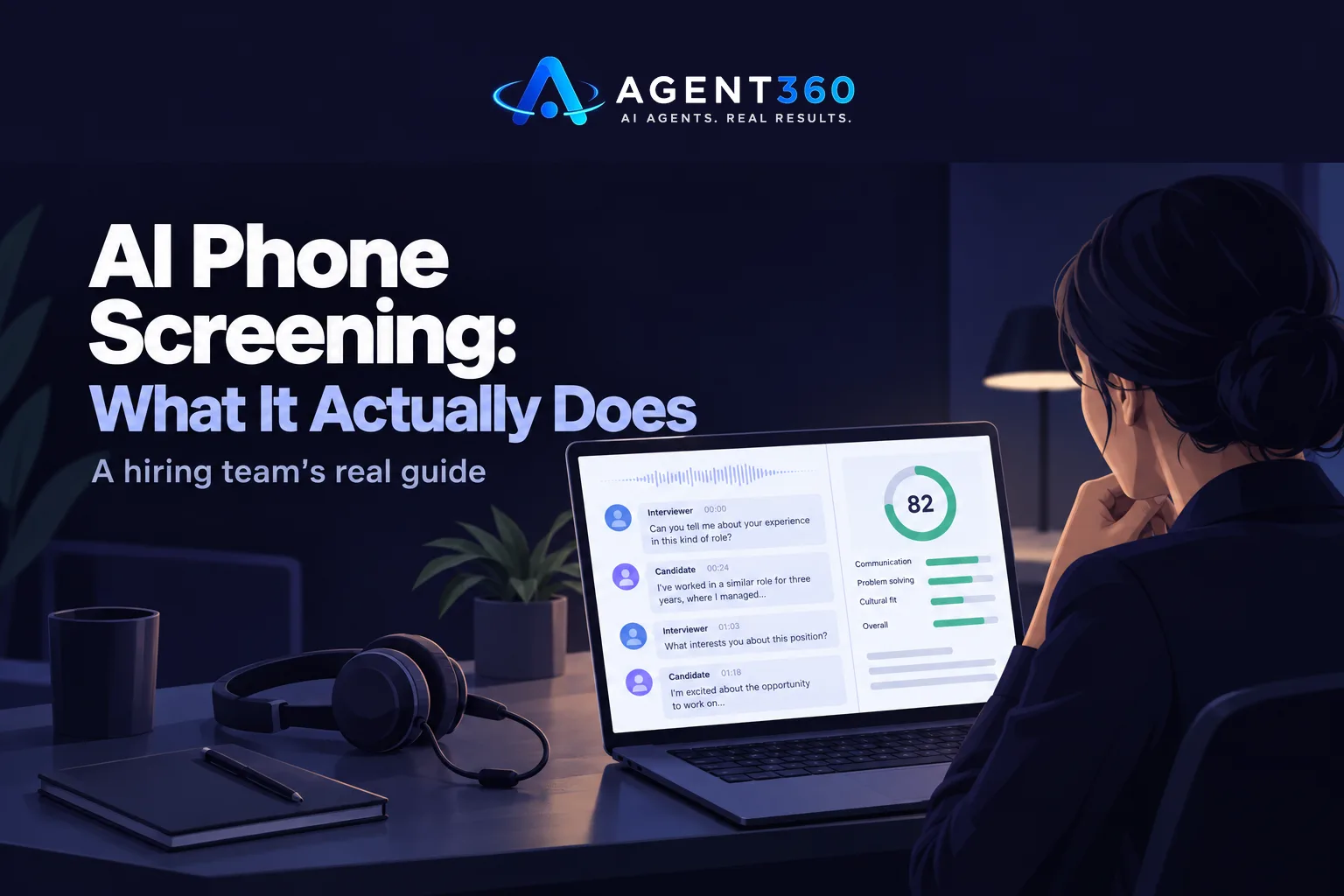
AI phone screening is an automated call that asks a candidate a set of qualifying questions and scores the answers, no recruiter on the line. It replaces the first round of screening calls that recruiters used to make one by one, day after day. The goal is simple: filter out candidates who don't meet basic requirements, so the recruiter only spends live time on people worth a real conversation.
For staffing and recruiting firms, this matters because the first phone screen is usually the most repetitive part of the job. The same five or six questions, asked over and over, for every req. AI phone screening takes that repetition off a recruiter's plate without taking the recruiter out of the hiring decision.
Below are the questions people actually type into Google about this: what it means, whether it can really do a phone interview, and how to turn it on.
Key Takeaways
- AI phone screening automates the first qualifying call, not the final hiring decision.
- It works best on structured, close-ended questions like availability, certifications, pay expectations and location.
- Recruiters still need to review recordings or transcripts before moving a candidate forward.
- Freeing up screening hours only helps a staffing firm if that time goes toward winning new client accounts, not just faster fills.
- Set up takes a written script, a defined pass/fail rule, and a review step before go-live.
Table of Contents
What does AI screening mean?
AI screening means software asks candidates a fixed set of questions and scores or flags the answers against rules a recruiter set in advance. It is not a free-form conversation. Most systems run on a script: confirm basic eligibility (work authorization, location, license or certification), confirm logistics (shift availability, pay range, start date), and ask one or two open questions that get transcribed for a human to read later.
How is this different from a chatbot?
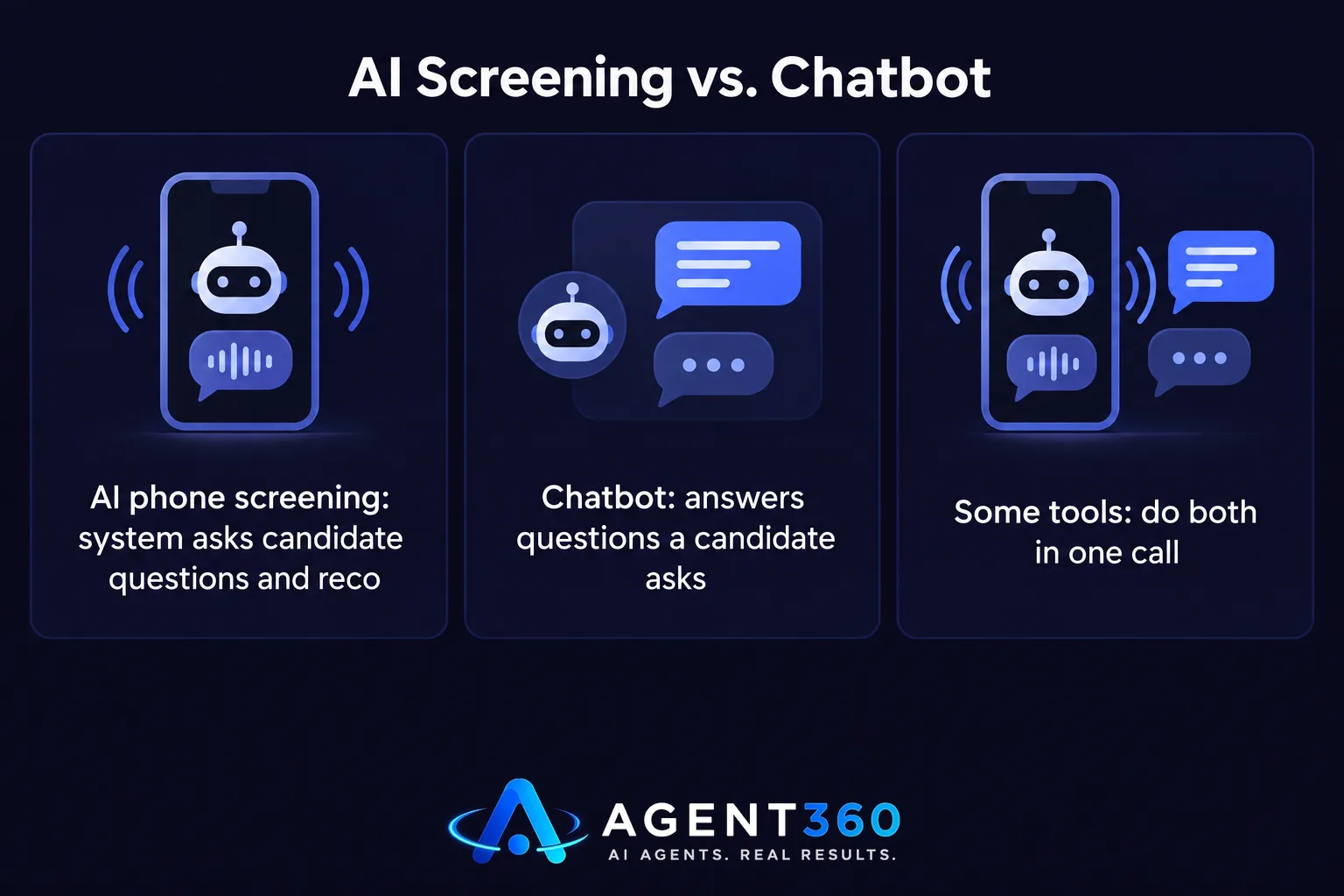
A chatbot answers questions a candidate asks. AI phone screening works the other way around: the system asks the candidate questions and records the response. Some tools do both, letting a candidate ask about the role mid-call, but the core job here is collecting structured answers, not holding a conversation.
Can AI do phone interviews?
AI can run a structured phone interview with fixed questions, but it can't judge culture fit, read tone accurately, or make a final hiring call. It handles the part of an interview that's really a checklist: years of experience, certifications, availability, salary range, willingness to relocate. It doesn't touch the part of an interview where a hiring manager decides whether someone will actually work out on a team.
What happens after an AI phone screen?
A recruiter reviews the transcript or recording, checks the answers against the role's must-haves, and decides whether to schedule a live conversation. Firms that skip this step and auto-advance candidates on score alone tend to lose good people who answered awkwardly on a recorded call but would have done fine live.
How to turn on AI phone call screening?
Turning on AI phone screening is less about flipping a switch in a tool and more about building the screen correctly before any candidate hears it.
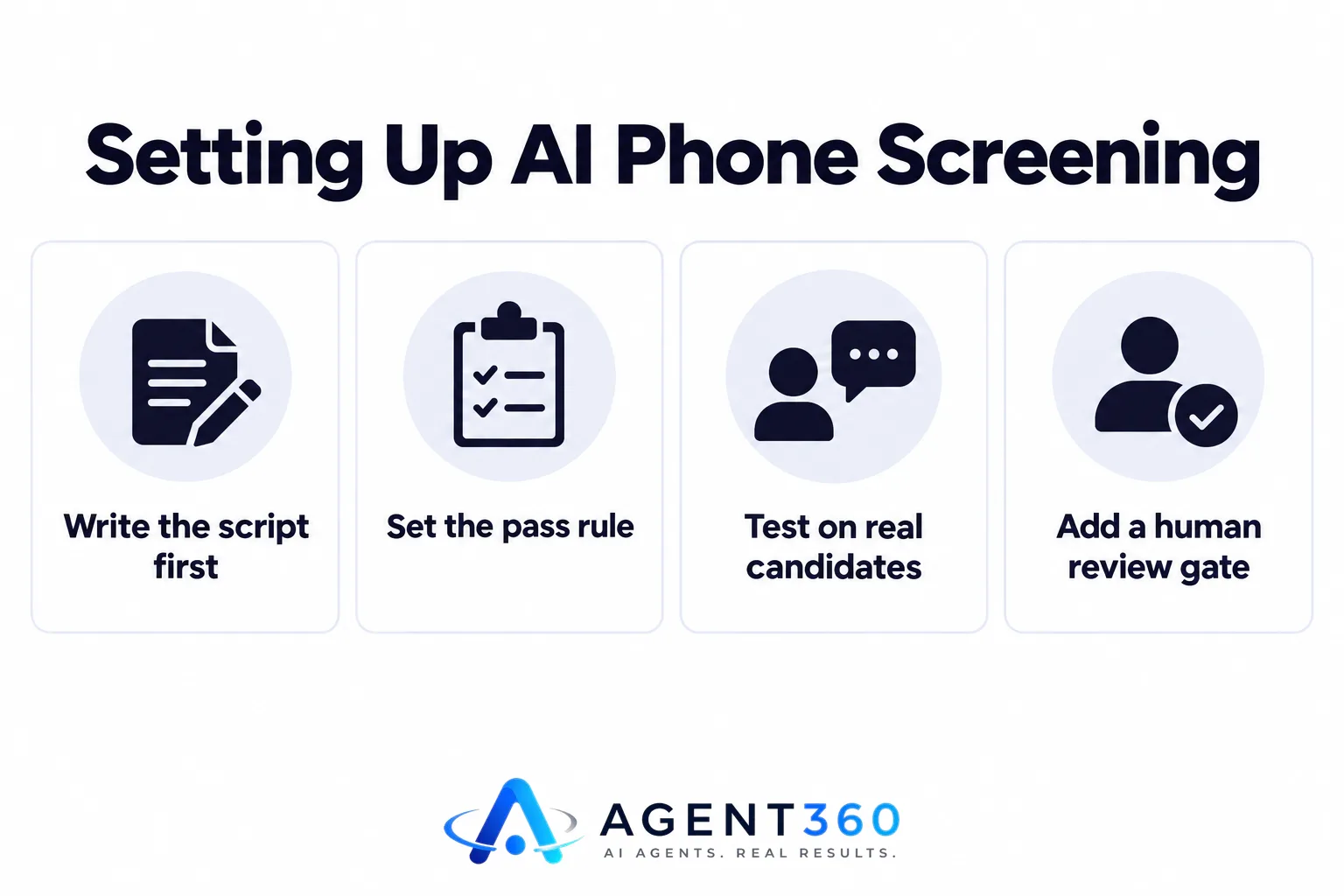
- Write the script first. List the must-have questions for the role and mark which answers are disqualifying versus just informational.
- Set the pass rule. Decide what combination of answers moves a candidate forward automatically versus what gets flagged for manual review.
- Test it on a handful of real candidates. Listen to the recordings yourself before trusting the scoring on a full req.
- Add a human review gate. No candidate should move to a live interview without a recruiter reading or hearing the screen first.
- Track where it breaks. Watch for candidates who get mis-scored because of accent, background noise, or a question worded ambiguously, and fix the script.
Where does AI phone screening fit into a staffing firm's workload?
It removes hours of repetitive calling from recruiters, and that only pays off if the time goes toward filling more roles or landing more client accounts. A recruiter who used to spend a morning on first-round calls can spend that morning sourcing candidates instead, or reaching out to hiring managers who have open reqs. The screening tool itself brings in no new business on its own.
That's the gap most staffing firms hit after automating screening: recruiters have more capacity, but the firm still needs a steady flow of client meetings to put that capacity to use. AI sourcing tools can help fill the candidate side of the funnel, but the client side still runs on outbound calls, emails and LinkedIn messages to hiring managers.
Take the Next Step on New Client Meetings
Freeing up recruiter hours with AI phone screening is only half the equation. The other half is making sure those hours turn into more roles to fill, which means more conversations with hiring managers who have open reqs.

Agent360 runs that side for staffing and recruiting firms: VIP Done-For-You Outbound puts a dedicated GTM engineer and strategist on finding and booking meetings with hiring managers, so your recruiters show up and take the meetings instead of chasing them. The outreach platform includes one triple-verified lead for every email sent and unlimited seats on every plan, so a growing team isn't paying per recruiter to use it.
See how it fits your firm's workflow on the booking page.
Frequently Asked Questions
What does AI screening mean?
AI screening means software asks a candidate a fixed set of qualifying questions over the phone and scores the answers against rules a recruiter defined in advance, such as availability, certifications, or pay expectations.
Can AI do phone interviews?
AI can run structured phone interviews built around a checklist of questions, but it can't reliably judge culture fit or make a final hiring decision, so a recruiter still needs to review the results.
How to turn on AI phone call screening?
Write the screening script and pass/fail rules first, test it on a small batch of real candidates, add a human review step before any candidate advances, and watch for scoring errors caused by accents or ambiguous questions.
Is AI phone screening accurate?
Accuracy depends on how well the script and scoring rules are written; close-ended questions like certifications or shift availability score reliably, while open-ended questions about experience or motivation still need a human to read the transcript.
Does AI phone screening replace recruiters?
No. It removes the repetitive first-round calling, but recruiters still review results, run the live interviews, and make the judgment calls that decide who gets hired.
What should a staffing firm do with the time AI screening saves?
Most firms put it toward sourcing more candidates or reaching more hiring managers, since freed-up recruiter hours only help the business if they turn into more roles filled or more client accounts won.
More articles
- Done-For-You Marketing: What It Actually Means
- Keyword Gap Analysis: Find What Competitors Rank For
- SDR Outsourcing: What to Check Before You Sign a Contract
- Real Estate Agent Marketing: What Actually Books Showings
- AI Sourcing: What It Actually Does for Recruiters
- Marketing for Mechanics: What Actually Books Jobs
- Content Repurposing: Turn One Asset Into Outbound Fuel
- ATS Tracking Cost: What You'll Actually Pay in 2025
