Whitelabel GEO: What to Check Before You Resell It
Whitelabel GEO is generative engine optimization work — getting a client named in ChatGPT, Claude and Google AI Overviews — that a provider does under your agency's name. You sell it as your own service. They do the writing, the technical fixes, the hiring you'd otherwise have to do yourself.
Agencies already selling SEO are adding this for one reason: clients are asking a new question. Not just “do we rank on Google” anymore but “does ChatGPT even mention us.” Reselling whitelabel GEO only works if the partner behind the curtain holds up, because it's your client relationship on the line, not theirs.
Here's a checklist for vetting a whitelabel GEO partner before you sign anything. Want the basics of what GEO work actually involves first? That's covered separately.
Key Takeaways
- Confirm who owns the published content and the client relationship before you sign anything.
- Ask for a sample report so you know what you'll be handing your client each month.
- Check turnaround time on content and fixes, not just the sales pitch.
- Price the service so your margin survives if the provider raises rates, and see how a done-for-you growth plan prices this work for comparison.
- Get month-to-month terms wherever possible, since GEO tactics are still changing.
Table of Contents
What Does a Whitelabel GEO Partner Actually Do?
A whitelabel GEO partner researches how AI answer engines describe your client's category, then writes and publishes content built to get cited in those answers. That usually means structured articles answering the exact questions buyers type into ChatGPT or Google's AI Overviews, schema markup, and ongoing publishing so the content doesn't go stale.

What should the deliverable look like each month?
Expect a set number of published articles or pages, a log of where the client now shows up in AI answers (when that can actually be checked), and any technical changes made to the site. If a provider can't show you a sample deliverable before you sign, that's your answer.
Is this different from regular SEO work?
It overlaps heavily with SEO, but the target shifts. Instead of only ranking a page on Google, the content gets shaped to be the clear, quotable answer an AI model would lift. A provider doing nothing but traditional SEO and calling it GEO is worth pressing on directly.
Who Should Be Reselling Whitelabel GEO?
Agencies that already manage a client's website or content calendar are best positioned to resell whitelabel GEO, because the work slots into a relationship that already exists. Marketing and SEO agencies, web design shops, and recruiting or staffing firms selling marketing services to hiring managers all fit this pattern. The client already trusts you. GEO becomes an add-on, not a cold pitch.
What if the agency has no SEO background?
Still workable, as long as the partner handles the technical side in full and hands you client-ready reporting. Your job becomes account management and selling the outcome, not doing keyword research at midnight.
What Should a Whitelabel GEO Contract Include?
The contract should spell out who owns the content, how fast fixes get made, and what happens if you want to walk. Verbal promises from a sales call won't help you when a client is unhappy six months in.
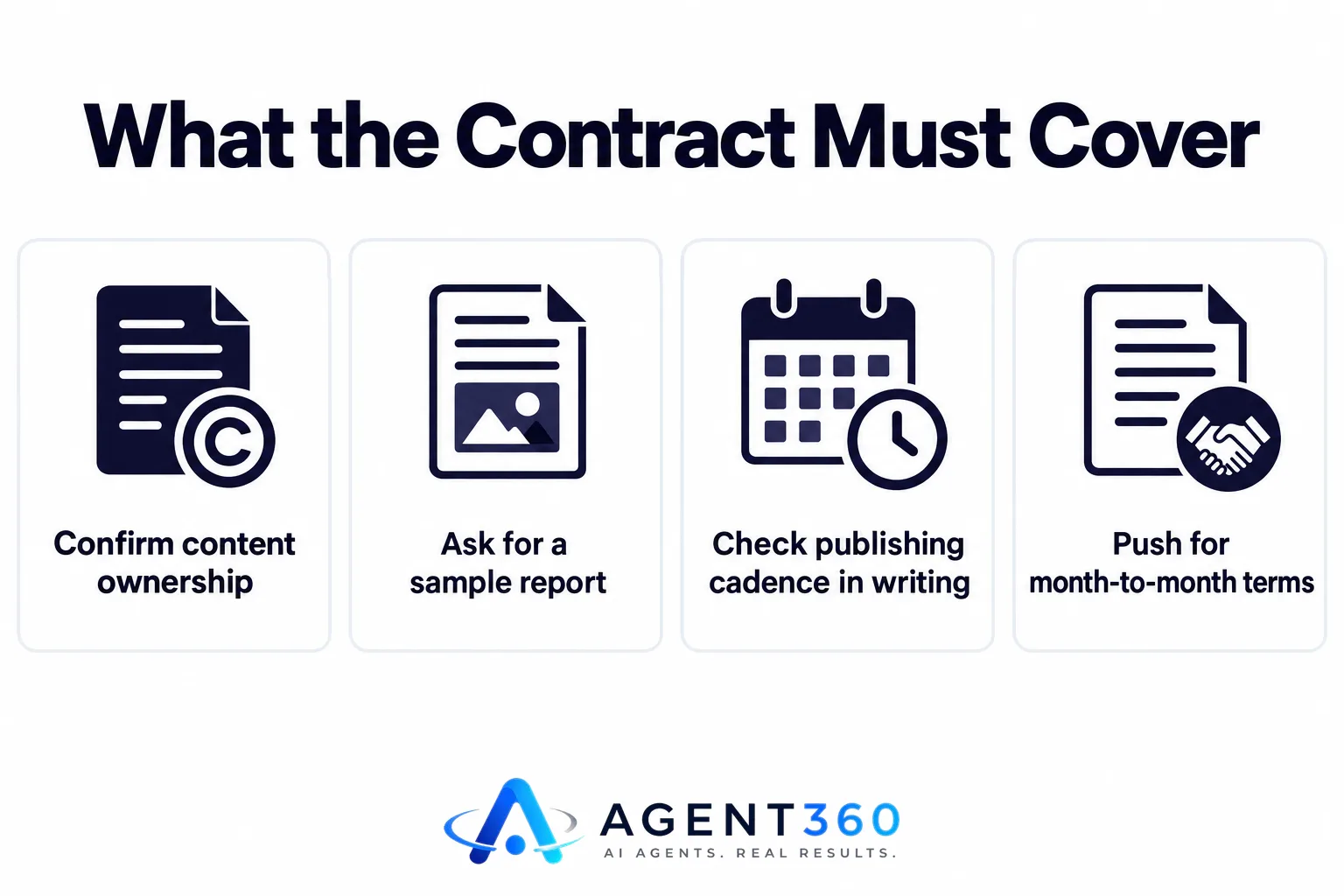
- Confirm content ownership. Get it in writing that published articles belong to your client, not the provider, in case the relationship ends.
- Ask for a sample report. Request an actual report from an existing account so you know what you're handing over, not a mockup.
- Check the publishing cadence in writing. “Regular content” means nothing. Get a number of articles or updates per month.
- Test response time before you sign. Email the sales contact a technical question and time how long the real answer takes.
- Push for month-to-month terms. GEO tactics are new enough that long lock-ins carry more risk than they would for established SEO work.
How Do You Vet a Whitelabel GEO Partner Before You Sign?
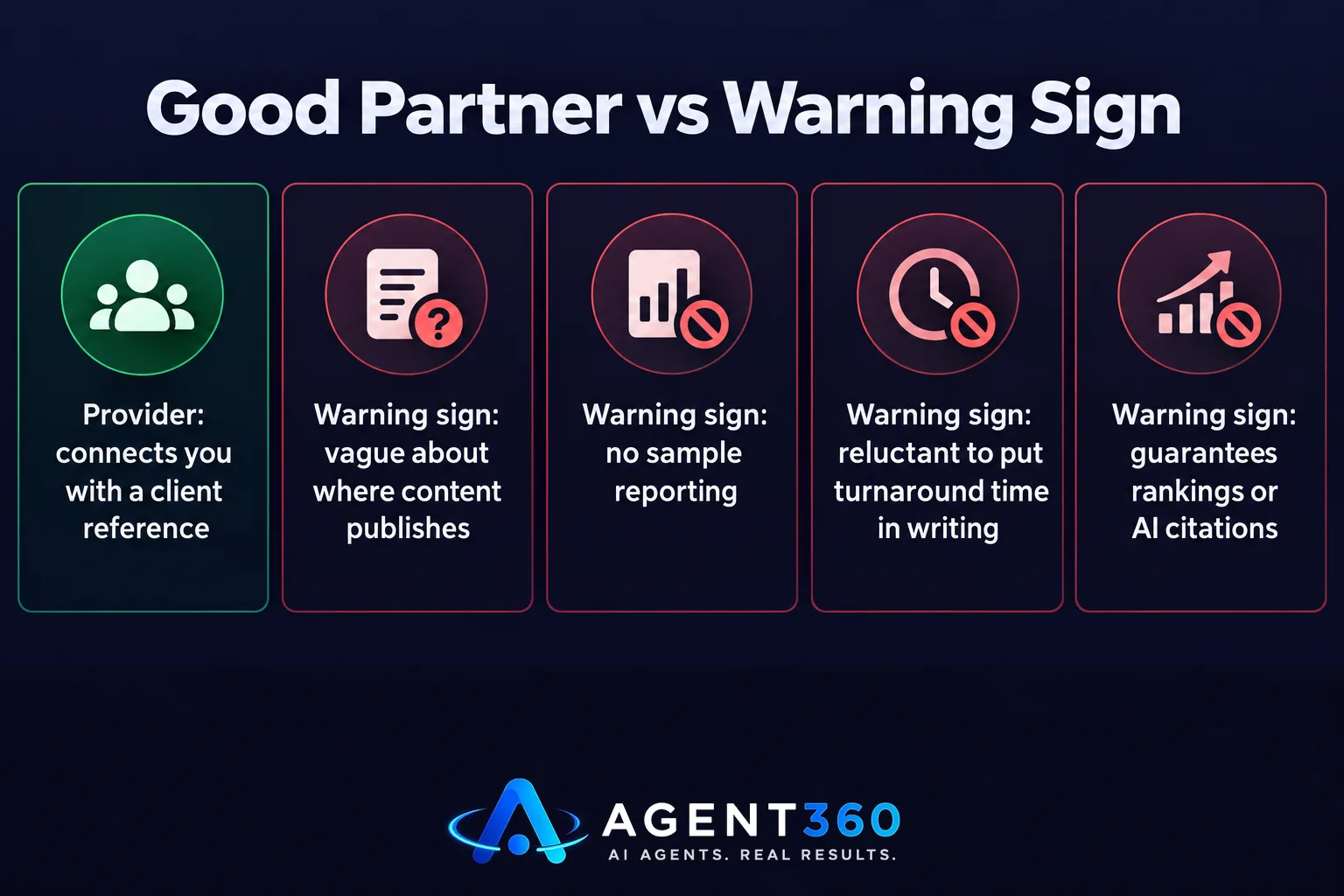
Talk to a current client reference and read a live piece of their published content before committing. A provider confident in their work will connect you with someone already using it. One that stalls on this is telling you something too.
What are warning signs to walk away from?
Vague answers about where content actually gets published, no sample reporting, and reluctance to put turnaround time in writing — all reasons to keep looking. So is a sales pitch built entirely around guaranteed rankings or guaranteed AI citations. Nobody controls what a model decides to quote.
How much should whitelabel GEO cost?
Pricing varies by volume of content and how much technical work the site needs, so get a quote against your own client list rather than trusting a published rate card. What matters more than the number is whether your margin holds if the provider raises prices later — which is why a written contract term matters as much as the dollar figure.
Take the Next Step With Your GEO Offer
If you'd rather not build and manage a reselling relationship at all, Agent360's SearchAgent handles SEO and AI search as one managed service. It writes and publishes the articles, works the technical side, and aims to get a business named in answers from ChatGPT, Claude and Google AI Overviews, alongside ranking it on Google. It sits inside the all-in-one growth plan starting at $297/mo, so an agency or local business owner gets this without adding another vendor relationship to manage.
For agencies weighing whether to resell or just refer this work out, it helps to see what a managed engagement includes before comparing it against a reseller contract. Either way, the decision comes down to the same question: who's on the hook when a client asks why they still aren't showing up in an AI answer.
See what's included in a done-for-you plan, or go straight to how agencies use this to serve their own clients.
Frequently Asked Questions
What does whitelabel GEO mean?
It means a provider does generative engine optimization work — content and technical changes aimed at getting a business cited in AI answers like ChatGPT and Google AI Overviews — and lets you sell it under your own agency's name.
Can I whitelabel GEO without any SEO staff?
Yes, as long as the provider handles research, writing, publishing and technical fixes, and gives you client-ready reporting. Your role becomes managing the client relationship rather than doing the technical work.
How is GEO reporting different from SEO reporting?
GEO reporting tracks whether a business shows up in AI-generated answers, which is harder to measure consistently than a Google ranking position. Ask any provider exactly how they check and report it before you rely on the number.
Should I sign a long-term contract for whitelabel GEO?
Month-to-month terms are safer right now. GEO tactics are still evolving, and a provider that looked strong a year ago may not be keeping pace today.
What's the biggest risk in reselling whitelabel GEO?
A provider who can't show proof of published work or client results. That leaves you exposed the moment your own client asks for evidence the spend is doing anything.
More articles
- How to Appear in AI Search Results Across Platforms
- Applicant Tracking System for Small Business: A Buyer's Guide
- MSP Appointment Setting: What It Actually Costs
- How Long Does SEO Take to Show Results?
- Do Outsourced SDR Firms Require Long-Term Contracts?
- Done For You SEO: What's Actually Included?
- How to Get in Google AI Overviews: A Practical Checklist
- Outsourced SDR vs Hiring an SDR in Australia: True Costs
