Outsourced SDR vs Hiring an SDR in Australia: True Costs
Here's the trade-off: hiring an SDR in Australia buys you control, outsourcing buys you speed. A dedicated in-house rep learns your product and your patch, but recruiting, onboarding and ramp time all happen before a single meeting lands on your calendar. Outsourcing skips that slow start — it's a flexible arrangement you can scale up or down as pipeline needs shift.
Founders running their own outbound and staffing agency owners trying to keep business development moving without pulling recruiters off desks both hit this question at the same moment. Pipeline's thin, hiring feels like the obvious move — but is it actually the fastest or cheapest one?
The honest answer depends on three things: how fast you need meetings, how much management time you can spend training someone, and whether your business can stomach a quiet first quarter while a new hire finds their feet.
Key Takeaways
- In-house SDR hiring in Australia carries fixed costs — salary, superannuation and overheads — that run whether or not meetings get booked.
- Outsourced outbound shifts much of that cost to a flexible, often performance-linked model you can start or pause with pipeline demand.
- Ramp time is the hidden cost of hiring: a new SDR needs time on your product, market and tools before output appears.
- Staffing and recruiting agencies weighing the two should check what to check before signing an SDR outsourcing contract before committing a budget line.
- The right choice usually depends on whether you need a long-term internal hire or a near-term flow of booked meetings.
Table of Contents
What Does Hiring an In-House SDR in Australia Actually Cost?
An in-house SDR costs more than the number on the offer letter, once recruitment, superannuation, management time and ramp-up get added in. Base pay is just the starting line. Roles in this category typically sit under awards such as the Clerks — Private Sector Award, which the Fair Work Commission sets minimum pay and conditions for, and employers must also make superannuation contributions under the Superannuation Guarantee (Administration) Act. Then there's recruitment advertising, interview time, a laptop and software stack, and a manager's hours spent coaching someone who isn't booking meetings yet.
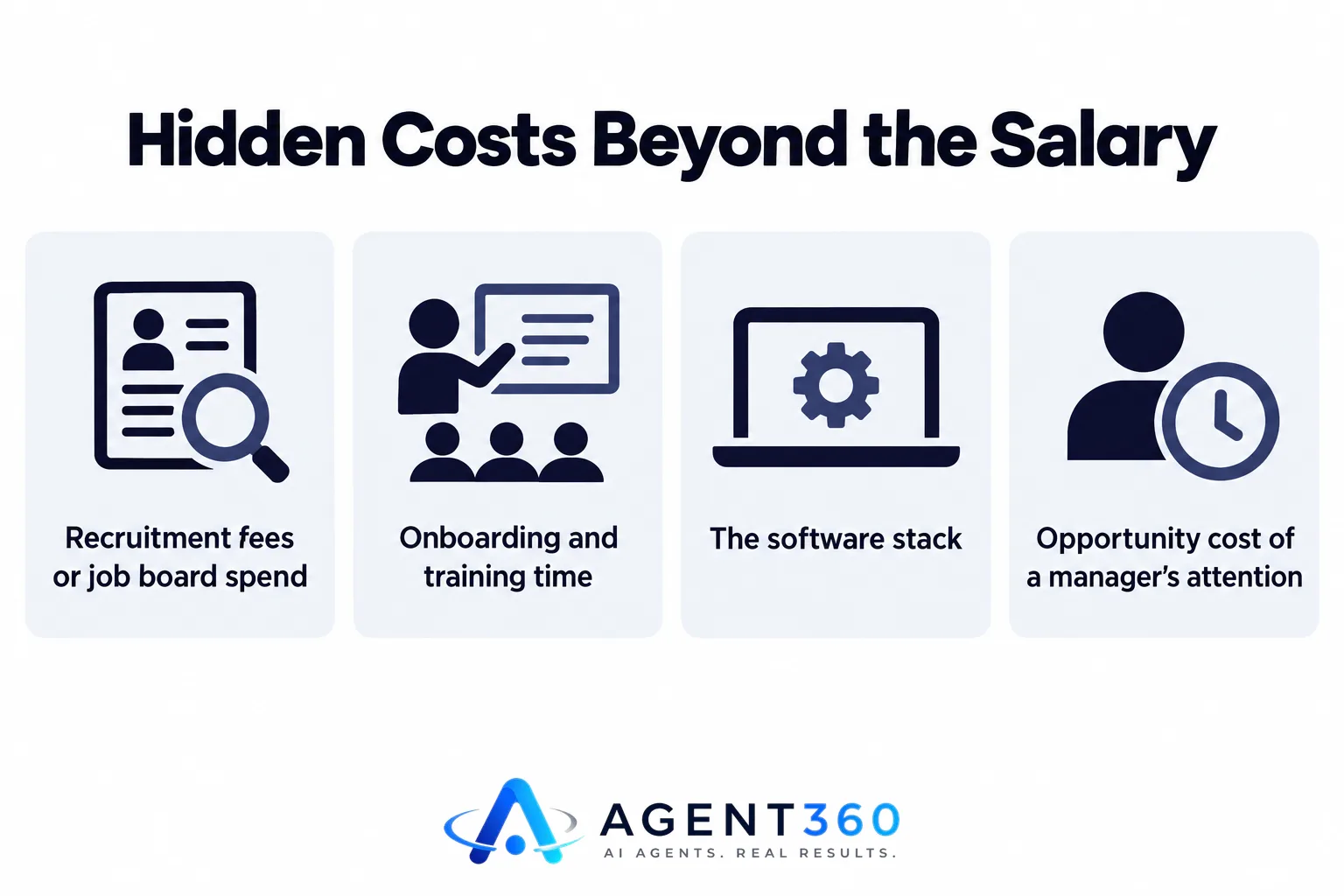
What's included in the real cost beyond salary?
Recruitment fees or job board spend. Onboarding and training time. The software stack — dialer, sequencer, CRM, data. Payroll tax in states where it applies. And the opportunity cost of a manager's attention, which never shows up on a spreadsheet but hits the budget just the same. None of this appears in a job ad, but all of it lands in the first few months.
How long before a new SDR is fully productive?
A new hire has to learn your product, your ideal customer and your tools before they can run a full day of calls and sequences with any confidence. During that stretch they're drawing a full wage while producing a fraction of the meetings an experienced rep would — and that gap is the part most hiring plans never price in.
What Do You Get With an Outsourced SDR Instead?
Outsourcing an SDR function buys you a team and a system already built, in exchange for giving up day-to-day control of the rep. Instead of hiring, training and managing one person, you're paying for a process that's already running — prospecting, sequencing, calling, booking — with someone else carrying the tooling and the ramp-up risk.
What does done-for-you outbound actually include?
A managed outbound engagement typically bundles prospecting, multi-channel sequencing across email and LinkedIn, calling, and a strategist who adjusts targeting and messaging as results come in. You get a flow of booked meetings on your calendar. Not a desk to manage.
Who handles replies and meeting booking?
In a managed setup, replies get triaged and qualified before a meeting ever lands on your calendar, so your team only shows up for conversations worth having. That's also the part of the job a new in-house hire takes longest to get right.
Which Option Fits Recruiting and Staffing Agencies Specifically?
Staffing and recruiting firms usually get more value from outsourcing business development than from hiring a dedicated BD rep, because their recruiters already sell while they fill roles. Add a full-time SDR to a staffing business and you've added another salary competing with billable recruiter headcount — for a function that sits next to placements, not at the center of them.

An outsourced arrangement lets a staffing firm keep recruiters focused on filling roles while a separate team runs outreach to hiring managers in parallel, without adding a non-billable seat to payroll.
How Do You Decide Between the Two?
The decision usually comes down to timeline, budget flexibility and how much management bandwidth you have to spend training someone new. Work through it in order, rather than defaulting to whatever feels more familiar.
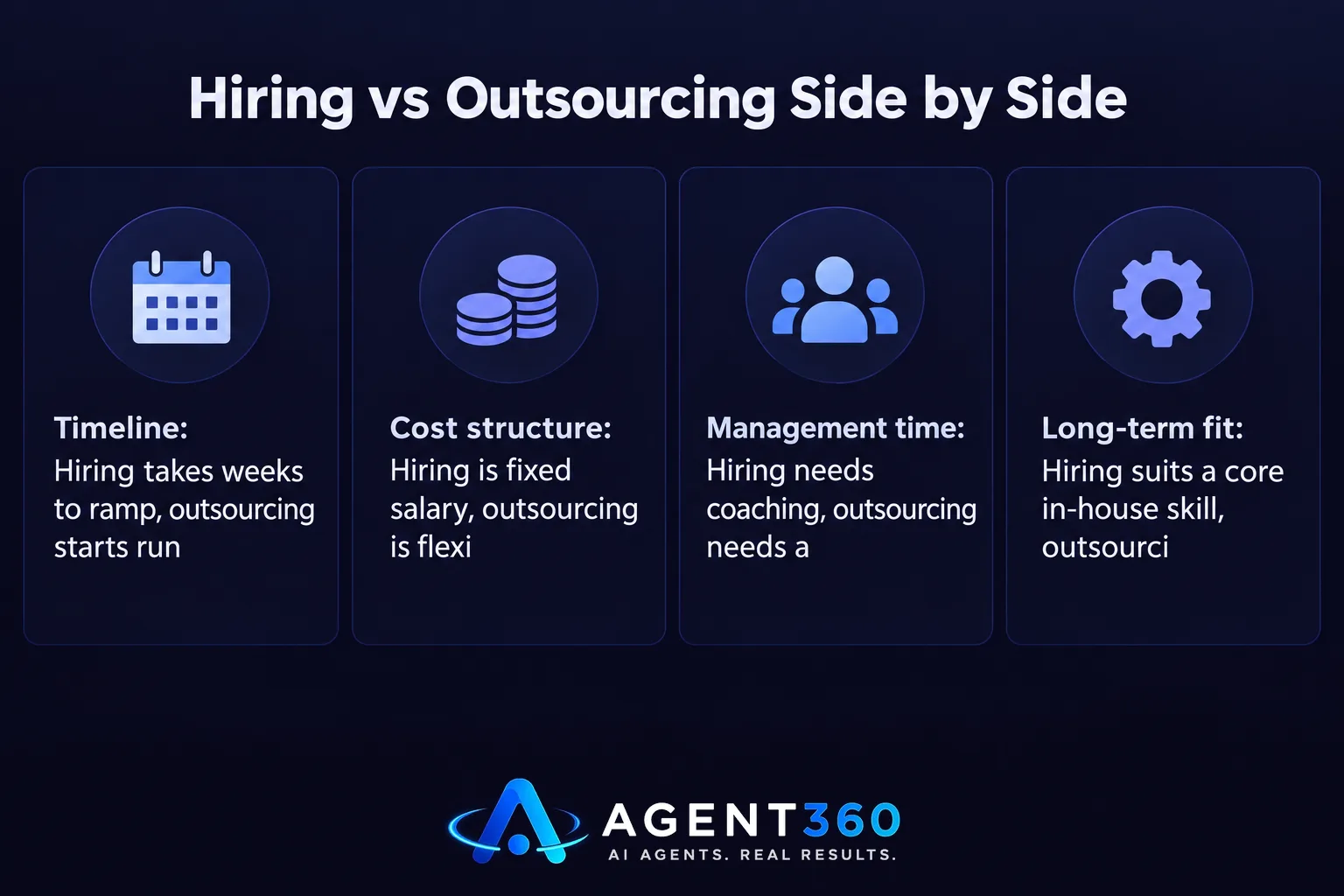
- Map your timeline. Need meetings booked within weeks? Hiring and onboarding a new SDR rarely gets there faster than an outsourced team that's already running.
- Price the full cost of a hire, not just salary. Add superannuation, tools, recruitment fees and ramp time before comparing it to a monthly outsourced fee.
- Check how much management time you can spare. A new hire needs coaching. An outsourced team needs a strategist relationship — far less of your week.
- Decide if the skill should live in-house long-term. If outbound is core to your growth model for years, building an internal team may pay off eventually, even if it costs more upfront.
- Test before you commit. A shorter outsourced engagement shows you booked-meeting volume before you lock in a hiring budget.
Take the Next Step on Your Outbound Decision
If the math above points toward outsourcing rather than hiring, Agent360 runs outbound two ways. The Agent360 Platform lets you run cold outbound in-house from $99/mo, with leads included, an email and LinkedIn sequencer, a parallel dialer and CRM, and unlimited seats on every plan — so adding people never adds per-user fees. For founders and staffing firm owners who'd rather meetings just showed up without managing the process, VIP Done-For-You Outbound puts a dedicated GTM engineer and strategist on your account for $2,000/mo plus $250 per booked meeting, and every email sent includes one triple-verified lead.
Either path skips the fixed cost and ramp time of a new hire while you find out what your pipeline can actually support.
See which model fits your stage and budget on the pricing page.
Frequently Asked Questions
Is outsourcing an SDR cheaper than hiring one in Australia?
Outsourcing usually has a lower upfront and fixed cost because you're not carrying a full salary, superannuation and tools whether or not meetings get booked. Hiring can become cost-competitive over a longer time horizon once a rep is fully ramped, but that point is often months away.
How long does it take to hire an SDR in Australia?
Recruitment timelines vary by role and market, but sourcing, interviewing and onboarding a sales development hire typically takes weeks before they start prospecting, and longer again before they're fully productive.
Can a staffing agency outsource its own business development?
Yes. Many staffing and recruiting firms separate business development from recruiting delivery, letting recruiters focus on filling roles while an outsourced team runs outreach to hiring managers in parallel.
What should I check before signing an outsourced SDR contract?
Check who owns the data and leads generated, how meetings are qualified before they reach your calendar, and what happens if volume falls short, covered in more detail in what to check before you sign an SDR outsourcing contract.
Does hiring in-house give more control than outsourcing?
Generally yes — an in-house hire works exclusively on your brand and reports directly to you, while an outsourced team splits attention across a process built for many clients. The trade-off is that control costs more in salary, management time and ramp-up risk.
Which option books meetings faster?
An outsourced team that already has prospecting, sequencing and calling running can usually start producing meetings sooner than a new hire still completing onboarding and training.
More articles
- AI Phone Screening: What It Actually Does for Hiring Teams
- Done-For-You Marketing: What It Actually Means
- Keyword Gap Analysis: Find What Competitors Rank For
- SDR Outsourcing: What to Check Before You Sign a Contract
- Real Estate Agent Marketing: What Actually Books Showings
- AI Sourcing: What It Actually Does for Recruiters
- Marketing for Mechanics: What Actually Books Jobs
- Content Repurposing: Turn One Asset Into Outbound Fuel
