Do Outsourced SDR Firms Require Long-Term Contracts?
Yes, most outsourced SDR firms ask for a minimum term, typically six to twelve months, because building pipeline takes ramp time and they want to recoup the setup cost before you can walk away. That said, contract length varies a lot by firm size and pricing model. Some agencies will do quarter-to-quarter terms if you push for it, and pay-per-result models change the math entirely.
Before you sign anything, it helps to separate two questions: how long is the stated term, and how painful is it to exit early. A twelve-month contract with a thirty-day opt-out after month three is a very different commitment than a twelve-month contract with no exit clause at all.
This matters most for founders and staffing agency owners who are testing outbound for the first time. You want enough runway for the channel to work, but not so much lock-in that a bad fit costs you a year of budget.
Key Takeaways
- Expect most outsourced SDR firms to ask for a six to twelve month minimum term.
- Ask for the exit clause in writing, not just the headline contract length.
- Pay-per-meeting pricing changes the risk profile more than the contract length does.
- Read the checklist for what to verify before you sign any SDR outsourcing agreement.
- If you want to avoid a contract entirely, running outbound in-house is a real alternative, not just a fallback.
Table of Contents
Do outsourced SDR firms require long-term contracts?
Most do, but the length and the exit terms are negotiable more often than firms let on upfront. Agencies structure long minimums because the first few weeks go to research, list building, messaging tests, and domain warmup, none of which produces meetings yet. A firm that only gets paid for three months of work after a month of setup is working at a loss, so the contract protects their ramp investment, not just their revenue.
Why do agencies push for twelve months instead of three?
Twelve-month terms let the agency average out slow months against strong ones and justify assigning a dedicated person to your account instead of spreading one rep across many clients. Shorter terms usually mean a more generic, templated approach because the agency can't justify custom setup work for a client who might leave in sixty days.
Does a longer contract mean better results?
Not automatically. It mostly means the agency has more time to make the math work in their favor. A longer term is only worth it if the firm shows you a clear performance checkpoint, not just a renewal date.
What contract lengths are typical in SDR outsourcing?
Six to twelve months is the common range, with month-to-month options existing but rare at full-service agencies. Boutique firms and specialists are more flexible than large agencies with standardized onboarding processes, because they have fewer overhead costs to recover before a client becomes profitable.
Are there month-to-month SDR outsourcing options?
Some exist, usually from smaller teams or firms built around a specific niche like staffing or SaaS. They tend to charge more per month to offset the risk of short tenure, so a shorter commitment often comes with a higher monthly rate rather than a lower one.
What should you negotiate before signing?
The contract length is one line in the agreement. These are the terms that actually determine how exposed you are if the engagement underperforms.
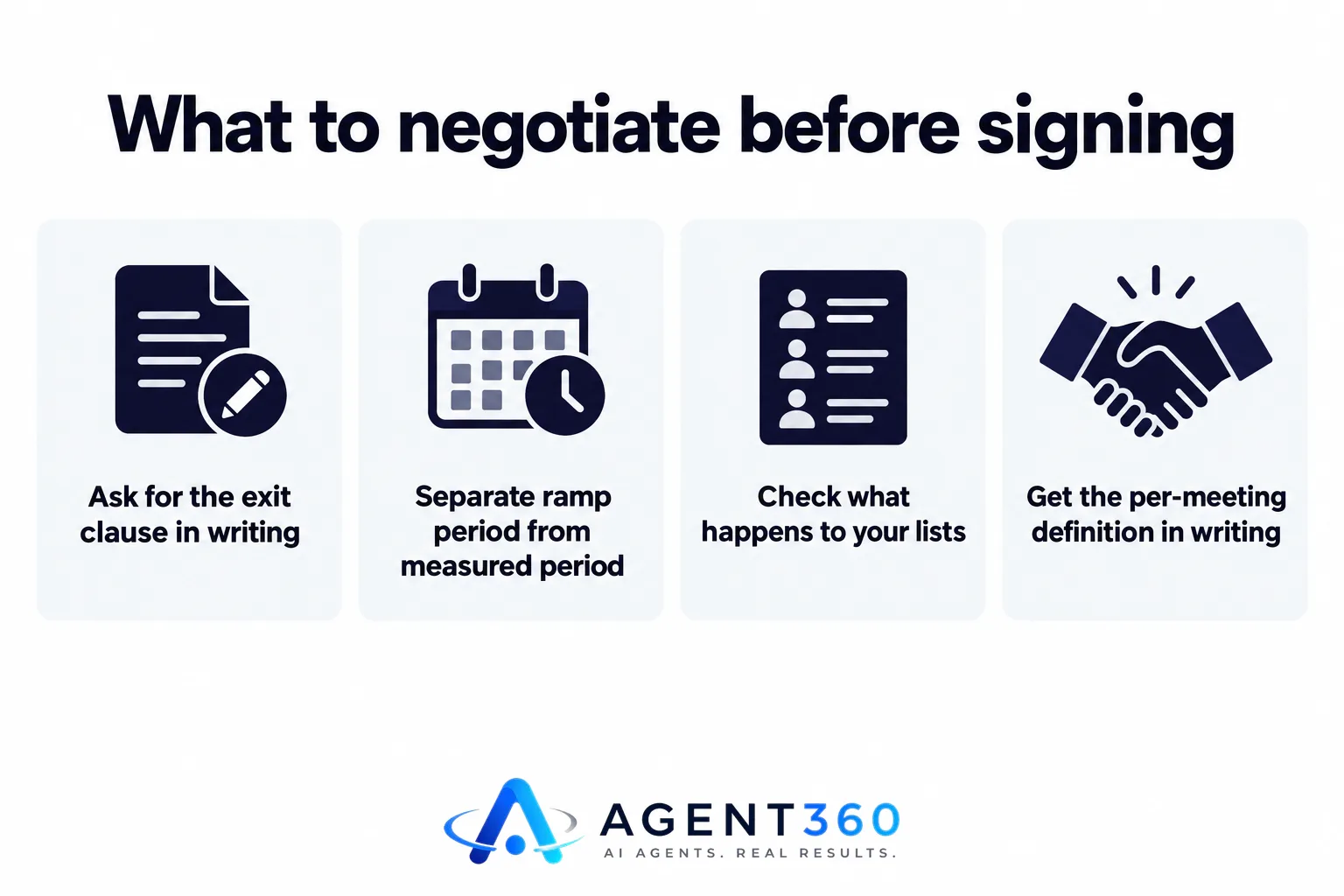
- Ask for the exit clause in writing. A thirty or sixty day opt-out after an initial ramp period gives you a real off-ramp without breaking the contract.
- Separate the ramp period from the measured period. Find out exactly when the firm expects to start producing meetings, and make sure that date is written down, not implied.
- Check what happens to your lists and sequences if you leave. Firms that build and own the outreach infrastructure can leave you starting over with a new vendor.
- Ask how pricing changes if results fall short. A firm confident in its process will usually offer some form of credit or reduced fee for a slow month.
- Get the per-meeting or per-resolution definition in writing. “Booked meeting” means different things to different firms, and vague definitions are where disputes start.
How can you tell if a short-term or month-to-month option exists?
Ask directly during the sales call, and treat any hesitation as a sign the firm doesn't want you to compare it to in-house alternatives. A firm with a genuinely strong process should be comfortable explaining why their term length exists rather than deflecting the question.
What's the alternative to signing a long contract?
Running outbound in-house removes the contract question entirely, since you're paying for a tool and your own team's time instead of locking into an agency's minimum term. It takes more hands-on management, but it also means you can stop, pause, or change direction without a contract clause telling you when you're allowed to.
Ready to Run Outbound Without a Long-Term Contract?
If the contract length is the part holding you back, it's worth comparing what a managed engagement costs against running it yourself. Agent360's VIP Done-For-You Outbound runs your outbound end to end with a dedicated GTM engineer and strategist for $2,000/mo plus $250 per booked meeting, so you're paying mostly for results, not for a year-long commitment. For teams that want full control instead, the Agent360 Platform starts at $99/mo and includes leads, an email and LinkedIn sequencer, a parallel dialer, and a CRM, with unlimited seats on every plan and no per-user fees.
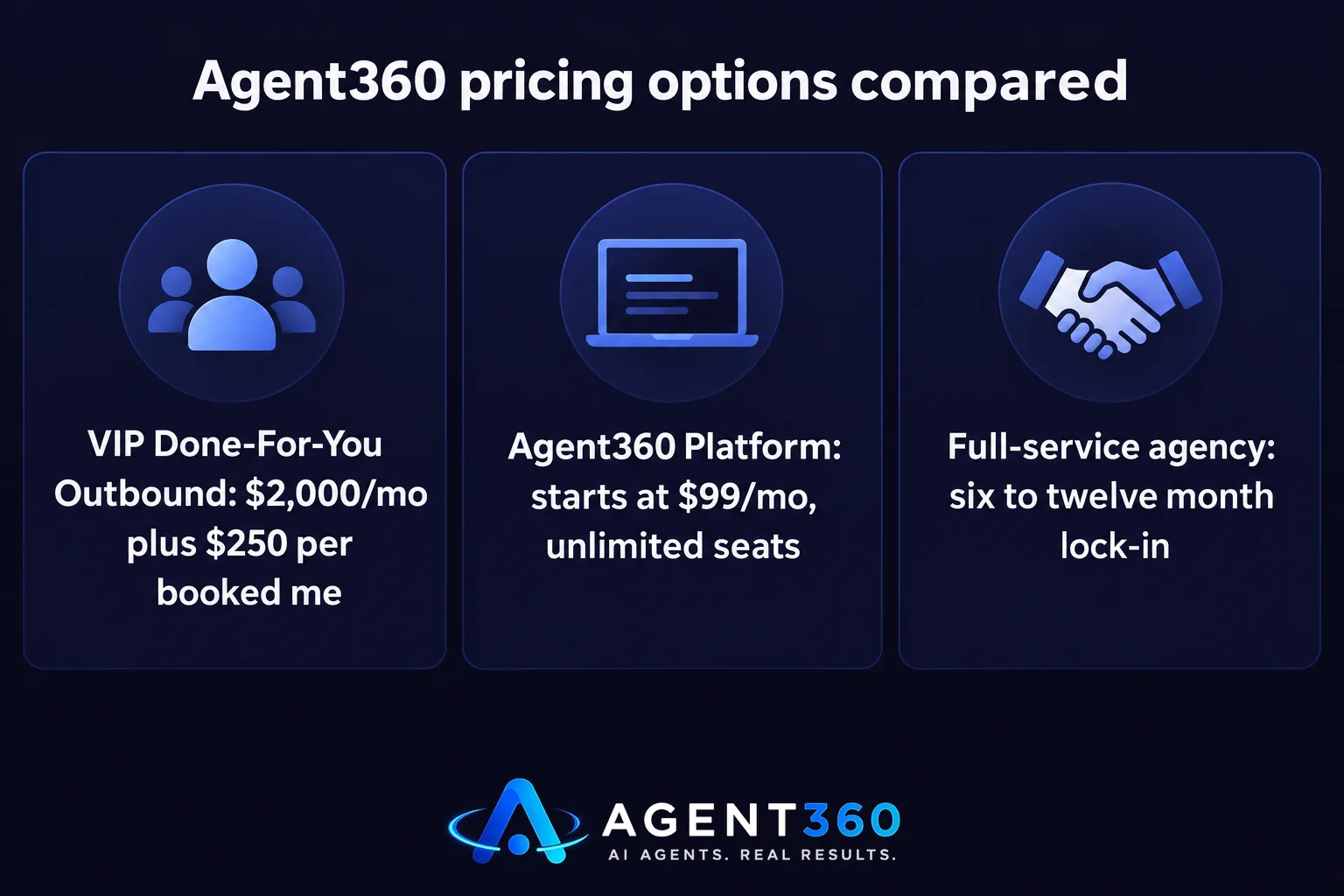
Either path skips the twelve-month lock-in that full-service agencies often require. Compare the two models on the pricing page before you sign anything with an outsourced SDR firm.
Frequently Asked Questions
Do outsourced SDR firms always require a contract?
Nearly all of them require some form of signed agreement, but the length and exit terms vary widely between firms. A written contract with no minimum term is uncommon in full-service outsourcing.

What's a reasonable minimum term for a first-time SDR engagement?
Three to six months gives a process enough time to show whether it's working without locking you into a full year before you've seen results. Anything longer should come with a documented exit option.
Can I cancel an SDR outsourcing contract early?
It depends entirely on the clause in the agreement; some contracts allow a notice period for cancellation, others require payment through the full term regardless. Read the termination section before signing, not after you want out.
Is pay-per-meeting pricing a way to avoid long contracts?
Pay-per-meeting pricing shifts risk toward results rather than time, but it doesn't automatically mean a shorter contract term. Some firms combine a long minimum term with per-meeting fees, so check both terms separately.
Is running outbound in-house cheaper than an outsourced SDR contract?
It depends on your team's capacity and how much time your own staff can give it, but in-house tools remove the contract-length question entirely since you pay month to month for software rather than a service minimum. See how outsourced SDR compares to running outbound software yourself before deciding.
More articles
- Done For You SEO: What's Actually Included?
- How to Get in Google AI Overviews: A Practical Checklist
- Outsourced SDR vs Hiring an SDR in Australia: True Costs
- AI Phone Screening: What It Actually Does for Hiring Teams
- Done-For-You Marketing: What It Actually Means
- Keyword Gap Analysis: Find What Competitors Rank For
- SDR Outsourcing: What to Check Before You Sign a Contract
- Real Estate Agent Marketing: What Actually Books Showings
