White Label GEO: What It Means and How to Buy It

White label GEO means hiring a specialist firm to do generative engine optimization work, then selling it to your own clients under your agency's name. The specialist does the work. You keep the client relationship, the invoice, and the credit.
Agencies turn to this when a client asks about showing up in AI answers from tools like ChatGPT or Google's AI Overviews, and building that skill set from scratch would eat months. Staffing firms, marketing shops, and small consultancies lean on white label deals to add a service line fast, without hiring a specialist.
The same question comes up everywhere in B2B services, not just GEO: CRM tools, outbound sales, reporting. Build it yourself, buy it outright, or resell someone else's work under your own name?
Key Takeaways
- White label GEO is work you resell under your own brand; the client never sees who actually did it.
- GEO (generative engine optimization) targets AI answer engines, while SEO targets traditional search result pages.
- There is no official ranking of the top SEO companies in the USA, so vet any firm against a short checklist instead of a list.
- Most CRMs with white-label options lock the feature to a specific plan tier, so check this before you promise a client anything.
- Agencies that add white label services still need a steady flow of new client meetings, which is where outbound built for agencies comes in.
Table of Contents
What Is White Label SEO?
White label SEO is search engine optimization work performed by one company and sold to clients by another, under the reseller's name. The agency that sells the service owns the client relationship, the pricing, and the reporting. The firm actually doing the keyword research, link building, or technical fixes stays invisible to the end client.
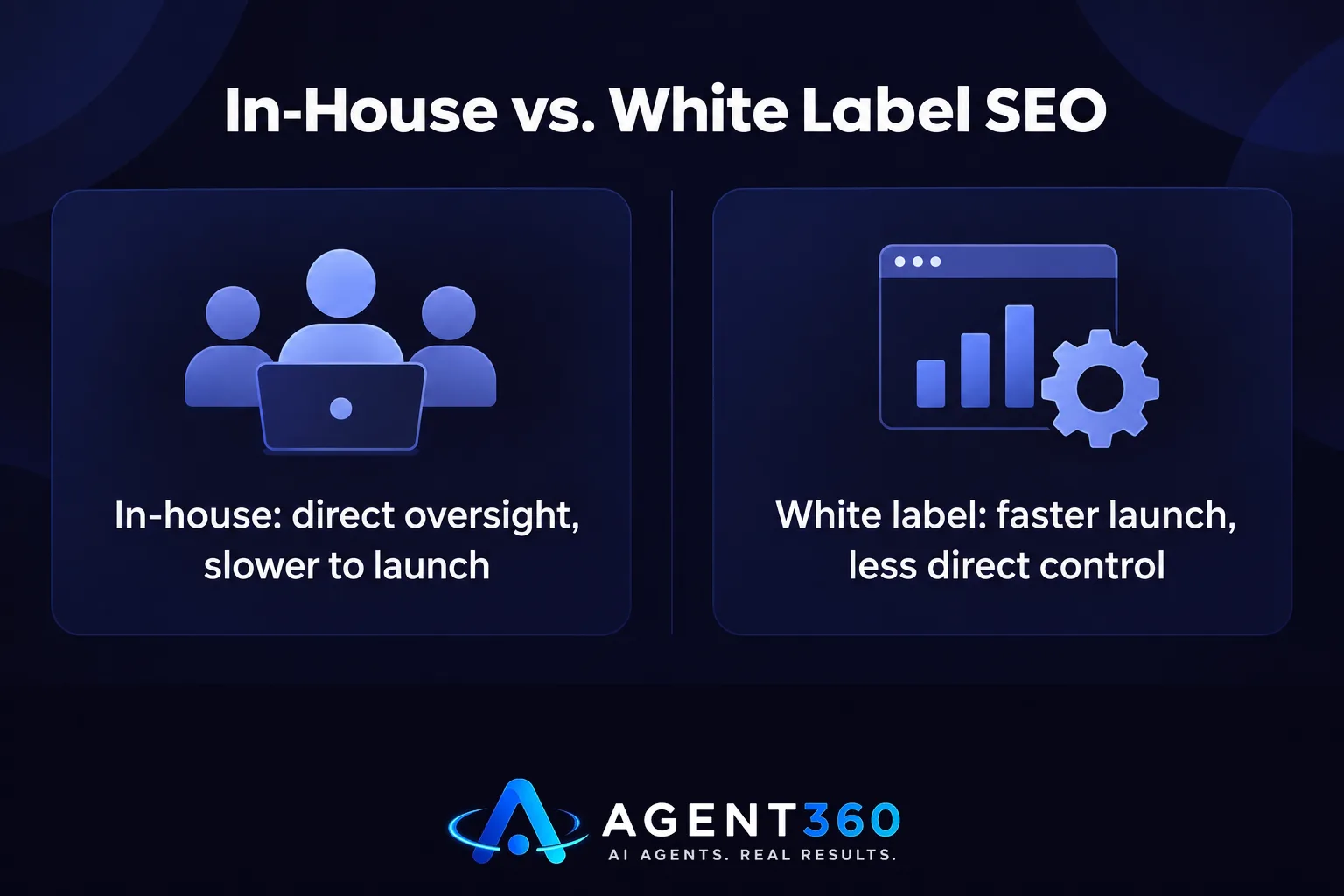
How does white label SEO differ from running SEO in-house?
In-house SEO means your own team does the research, writing, and technical work. White label SEO means a third party does that work on a wholesale basis, and you mark it up before selling it. The tradeoff comes down to control versus speed: in-house gives you direct oversight, white label lets you offer the service tomorrow instead of after you've hired specialists.
What Is the Meaning of GEO in Digital Marketing?
GEO stands for generative engine optimization, the practice of structuring content so AI tools can find it, understand it, and quote it in a generated answer. Instead of chasing a spot on a ranked list of blue links, GEO chases the single answer an AI assistant hands a user who never clicks through to a website at all.
How is GEO different from traditional SEO?
Traditional SEO aims for a high position on a results page a human scrolls through. GEO aims to be the source an AI model pulls from when it writes a direct answer, which usually means clear, self-contained statements, named sources, and headings an answer engine can quote without extra context. The two share some technical basics, site structure, page speed, but the content itself is written for a different reader: a model summarizing an answer, not a person scanning a page.
What Are the Top 10 SEO Companies in the USA?
There is no single official ranking of the top SEO companies in the USA, so treat any “top 10” list as one reviewer's opinion, not a certification. No government body or neutral industry group verifies SEO firms the way, say, a state licensing board certifies contractors. Review sites and “best of” roundups are often funded by the companies they list or by affiliate fees, which is worth knowing before you trust one blindly.
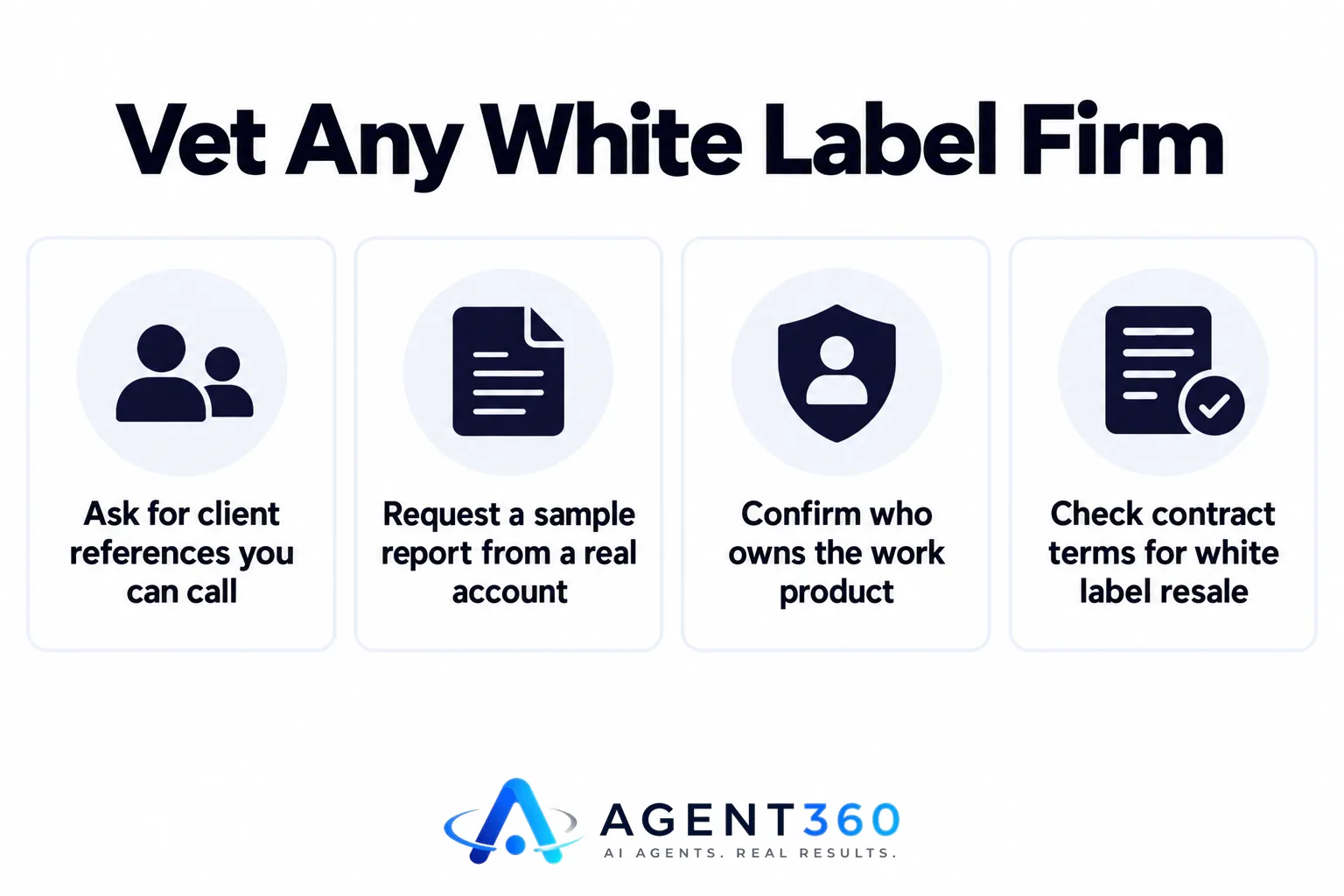
A more reliable approach: vet any firm, white label or not, against a short checklist.
- Ask for client references you can call directly. A firm confident in its work will connect you with an existing client, not just a case study.
- Request a sample report from a real account. Redacted is fine; vague marketing language is not.
- Confirm who owns the work product. If the relationship ends, you need to know whether you keep the content, backlinks, or reporting history.
- Check the contract terms for white label resale. Some providers restrict how you can brand or price their work, so read this before you sign a client.
What CRMs Can You White Label?
Most CRMs that allow white labeling restrict it to specific plans, usually agency or partner tiers built for resellers. The general pattern across the market: a platform offers a reseller tier that swaps its logo and domain for yours, while the software underneath stays the same. Confirm this directly with any provider before promising a client a fully branded experience; the feature and the eligible plan vary by vendor and change without notice.
If pipeline tracking is the real need and branding is secondary, it helps to separate the two questions: does the client need your logo on their CRM, or do they need a working system to track leads and deals? CRM tools built into an outbound platform solve the second problem without a white-label contract at all.
Take the Next Step With Your Client Pipeline
Adding white label GEO or SEO to your service list solves one problem: what you sell once a prospect is already talking to you. It does nothing for the other problem, getting a steady flow of new conversations in the first place.

Agent360 runs outbound for agencies that need new client meetings without hiring a business development team. The Agent360 Platform, starting at $99/mo, gives you unlimited seats, included leads, and an email plus LinkedIn sequencer to run outbound in-house. For agencies that would rather hand the work off, the VIP Done-For-You option runs outbound end to end for $2,000/mo plus $250 per booked meeting, with a dedicated GTM engineer and strategist, so your team just shows up to the meetings.
See how either option fits an agency model at Agent360 for agencies.
Frequently Asked Questions
What is white label SEO?
White label SEO is search engine optimization work done by one company and sold to clients by another agency under its own brand name. The client only ever interacts with the reseller, not the firm doing the actual work.
What is the meaning of GEO in digital marketing?
GEO, generative engine optimization, is the practice of structuring content so AI chat tools and answer engines can find it and quote it directly in a generated response. It's a response to users getting answers from AI assistants instead of clicking through a list of search results.
What are the top 10 SEO companies in the USA?
No official body publishes a verified ranking of SEO companies, so any top 10 list reflects one reviewer's criteria, not a certification. Vet firms directly with client references and sample reports instead of trusting a published list.
What CRMs can you white label?
Several CRM platforms offer a white-label or partner tier, but the feature is usually locked to specific paid plans and varies by vendor. Confirm branding rights directly with the provider before quoting a client on a white-labeled CRM.
Is GEO replacing SEO?
GEO and SEO currently work side by side rather than one replacing the other, since people still search traditional engines as well as ask AI assistants. Agencies offering both typically apply the same technical foundation and split the content strategy for each audience.
Can a staffing or recruiting agency offer white label GEO?
Yes, a staffing or recruiting agency can resell white label GEO work as an added service line to clients who already trust the agency for other work. The agency still needs its own pipeline of new client conversations to sell into, separate from the GEO work itself.
More articles
- Auto Repair Shop Marketing: What Actually Brings In Customers
- How Many Connection Requests Can You Send on LinkedIn?
- Google Business Profile Optimization: A Practical Guide
- Agent360 vs Expandi: A Fair, Side-by-Side Comparison
- Apollo vs Smartlead: Built-In Data Versus Your Own Lists
- MSP Sales Leads & Appointments: A Practical Playbook
- AI Competitor Gap Analysis Agent: What It Actually Does
- Skylead vs Dripify: Which LinkedIn Tool Fits Your Team?
