Auto Repair Shop Marketing: What Actually Brings In Customers
Auto repair shop marketing splits into two separate tracks, and most shops only run one of them. Track one is local visibility — showing up when someone nearby searches for a mechanic. Track two is direct outreach to businesses that need ongoing maintenance, like delivery companies, contractors, and dealerships. Both matter, and they bring in different kinds of customers.
Walk-in and search traffic fills single-visit jobs. Commercial and fleet accounts fill your schedule with recurring work. A shop that only chases local search is leaving that second, more predictable revenue stream sitting on the table.
This guide covers both, in the order most shops should build them.
Key Takeaways
- Get your Google Business Profile and reviews right before spending on ads.
- A simple referral or reminder system keeps existing customers coming back without new ad spend.
- Commercial fleet accounts need direct outreach, not local search, because fleet managers rarely search for a shop by name.
- Decide how you'll reach fleet decision-makers before you start calling, as a defined outreach process works better than ad-hoc calls.
- Most shops split time between local visibility work and direct outreach once walk-in traffic plateaus.
Table of Contents
How do I market my auto repair shop?
Start with local search visibility, then layer in reviews and referrals before spending on ads. Most people searching for a repair shop are doing it within a few miles of home, right after something breaks. If your shop doesn't show up accurately in that moment, you lose the job to whoever does.
What should my Google Business Profile include?
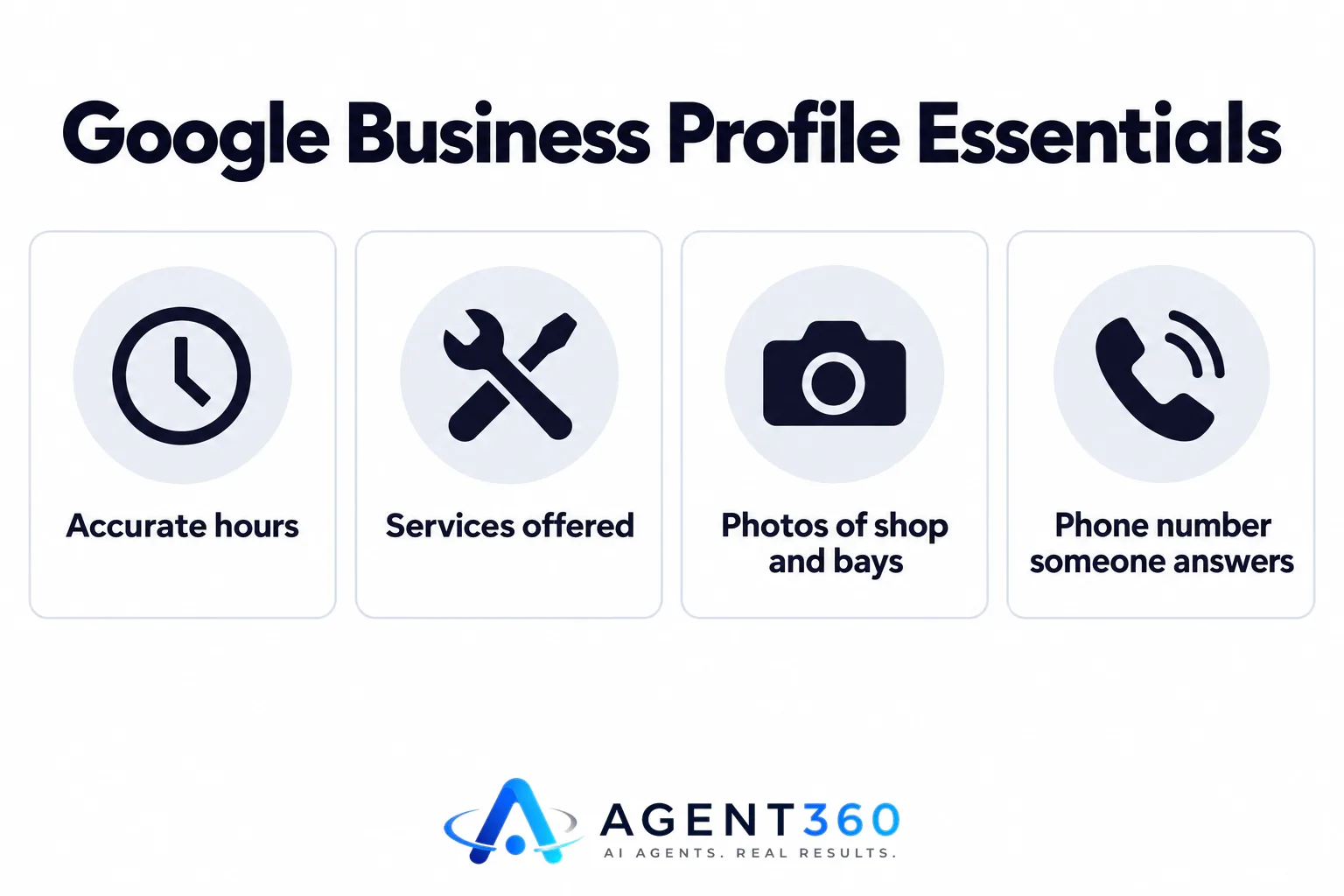
Accurate hours. Services offered. Photos of the shop and bays. A phone number somebody actually picks up during business hours. A profile that's incomplete or shows the wrong hours gets skipped even when it ranks well. Specific steps for setting this up correctly are covered in this guide to Google Business Profile optimization.
How do online reviews affect new customers?
Reviews are often what decides between two shops that both show up in the same search. A shop with 150 reviews and a 4.7 rating beats one with 12 reviews and a 4.9, because volume signals the shop is busy and trusted. Ask for the review right when a customer picks up their car, while the experience is still fresh.
How do I get more repeat customers for my repair shop?
Build a simple reminder system so past customers come back for routine service instead of shopping around. New customer acquisition costs more than keeping an existing one happy. Most shops lose repeat business not because the customer was unhappy, but because nobody reminded them it was time for an oil change or inspection.
Does a loyalty or reminder program work?
A basic text or email reminder tied to mileage or time since the last visit brings people back without any ad spend. It doesn't need to be complicated. A spreadsheet and a monthly reminder batch is enough for a single-location shop to start.
How do I win commercial and fleet maintenance accounts?
Reach out directly to businesses with vehicles — fleet managers rarely search for a shop the way a walk-in customer does. Delivery companies, HVAC and plumbing contractors, landscaping businesses, and local dealerships all need regular maintenance on multiple vehicles. That's recurring revenue a single ad campaign won't generate on its own.

Who should I contact at a fleet or local business?
Usually the operations manager, office manager, or owner at a small business — whoever handles vehicle upkeep. At larger companies it's a dedicated fleet manager. These contacts don't respond to a flyer on a windshield. They respond to a direct call or email that addresses their maintenance costs and downtime.
- List target businesses with vehicle fleets. Contractors, delivery services, and local dealerships within a reasonable drive of your shop are a good starting point.
- Find the right contact. Look for an operations manager, office manager, or owner rather than a general info line.
- Make direct contact. A short call or email explaining your turnaround time and fleet pricing gets more response than a mailer.
- Offer a trial job. One vehicle, one visit, no long-term commitment — let the work speak for itself.
- Follow up on a schedule. Fleet decisions often take more than one touch, so a planned follow-up beats a single pitch.
How much should an auto repair shop spend on marketing?
Most shops split spending between local visibility work and direct outreach once walk-in traffic plateaus. There's no single percentage that fits every shop. It depends on how much of your revenue already comes from repeat and commercial customers versus one-time walk-ins.
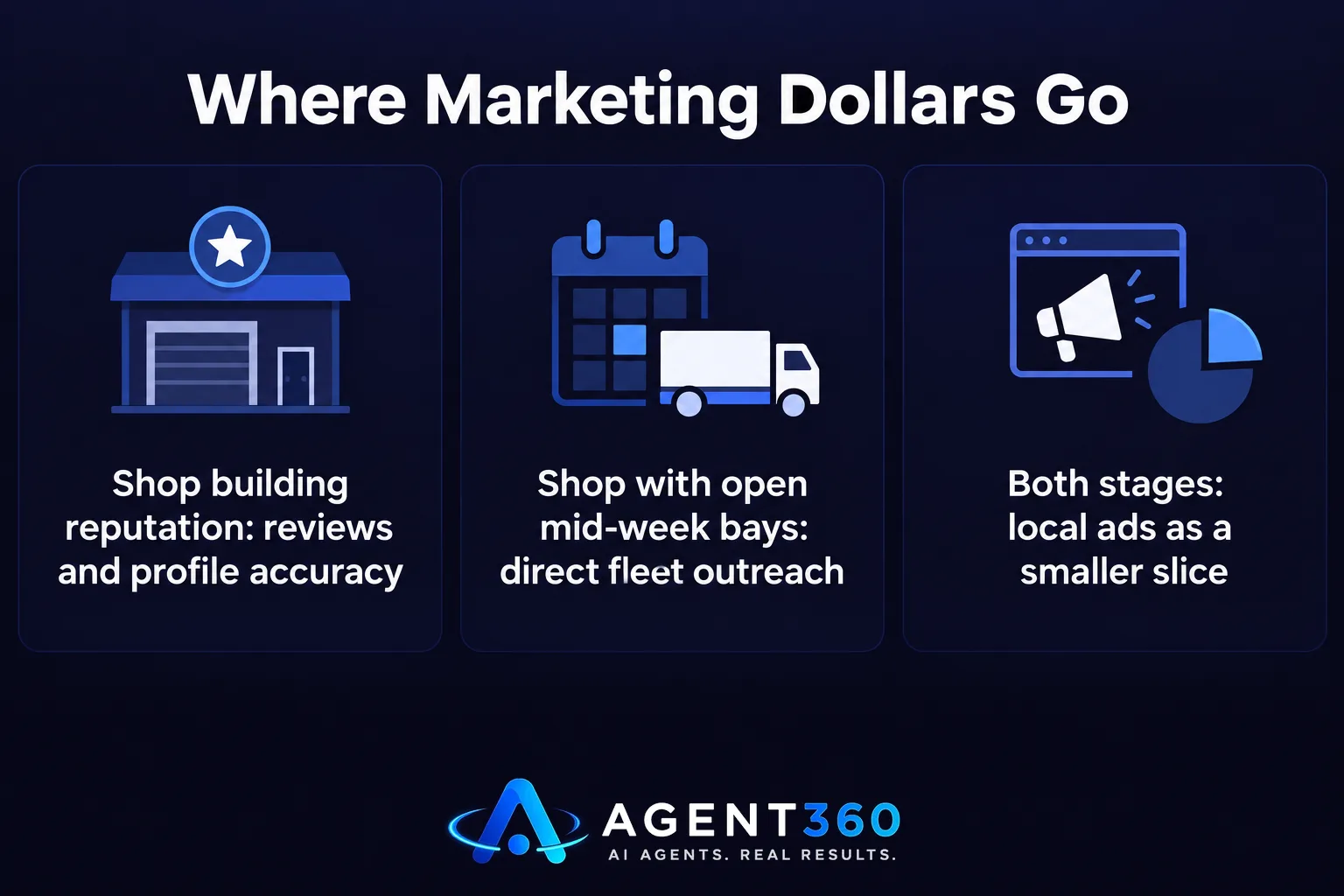
A shop still building its reputation should weight spending toward reviews, profile accuracy, and basic local ads. A shop with a solid local reputation but a schedule that still has open bays mid-week is usually better served by time spent on direct outreach to commercial accounts — that's what fills the gaps ads alone won't touch.
Build a Pipeline of Fleet and Commercial Accounts
Local search and reviews bring in walk-ins. Filling the schedule with recurring commercial work takes direct outreach — and most shop owners don't have time to find fleet managers, track who's responded, and follow up on a schedule on top of running the shop.
Agent360 handles that outreach work. The AI Prospecting tool finds local businesses with vehicle fleets and flags buying signals, Multi-channel Outreach reaches the right contact by email, LinkedIn, or phone, and Meeting Booking puts the conversation straight on your calendar. The Agent360 Platform starts at $99/month with leads included and unlimited seats at no per-user fee, or the VIP Done-For-You plan runs the whole outreach process for you at $2,000/month plus $250 per booked meeting.
See how the process works on the how it works page, or book a demo to go through your target list of local businesses.
Frequently Asked Questions
How do I advertise my auto repair shop locally?
Start with an accurate, complete Google Business Profile, then collect reviews consistently, and run local search or map ads once the profile and reviews are solid. Advertising before the basics are in place usually wastes the spend — the clicks just land on a thin or inaccurate listing.
Is Google Business Profile enough to get new customers?
It's enough to get found, but reviews and response time usually decide who actually books the appointment. A complete profile without reviews or a fast response rate still loses customers to a competitor who answers the phone faster.
How do I get commercial fleet accounts for my shop?
Identify local businesses with vehicles, find the operations or office manager, and contact them directly rather than waiting for them to search for a shop. Offering a single trial job before asking for a full fleet contract lowers the barrier to saying yes.
What marketing channels work best for auto repair shops?
Local search visibility and reviews work best for walk-in customers. Direct outreach by phone, email, or LinkedIn works best for commercial and fleet accounts. Flyers and general print ads tend to underperform both for most shops.
How long does auto repair shop marketing take to show results?
Review and profile improvements can show up in search results within weeks, since they affect how Google ranks and displays the listing. Commercial account outreach usually takes longer to close — fleet decisions often involve more than one point of contact and a trial period before anyone signs a full contract.
More articles
- How Many Connection Requests Can You Send on LinkedIn?
- Google Business Profile Optimization: A Practical Guide
- Agent360 vs Expandi: A Fair, Side-by-Side Comparison
- Apollo vs Smartlead: Built-In Data Versus Your Own Lists
- MSP Sales Leads & Appointments: A Practical Playbook
- AI Competitor Gap Analysis Agent: What It Actually Does
- Skylead vs Dripify: Which LinkedIn Tool Fits Your Team?
- Cold Email for Recruiters: What Actually Works
