Hire an SDR or Use Software? How to Decide
Whether to hire an SDR or use software comes down to one question: do you need a person who can think on their feet in a conversation, or do you need volume and consistency across email, LinkedIn, and calls without adding headcount. Both can book meetings. They fail in different ways, and they cost you in different currencies — one in salary and management time, the other in setup and monitoring time.
This isn't a case for one side. It's a way to work out which one actually fits your stage, your pipeline goal, and how much time you have to manage either option.
Key Takeaways
- An SDR costs more than salary alone once you add ramp time, management, and the tools they'll need to do the job.
- Software gives you consistent volume across channels from day one, but it won't handle objections in a live call.
- If you've never run outbound yourself, read Should I Hire an SDR? A Founder's Decision Guide before you commit to either path.
- Most founders running their own outbound get more mileage from software first, then add a person once meetings are consistent.
- The decision should follow your pipeline math, not your gut feeling about which option sounds more serious.
Table of Contents
What Does Hiring an SDR Really Involve?
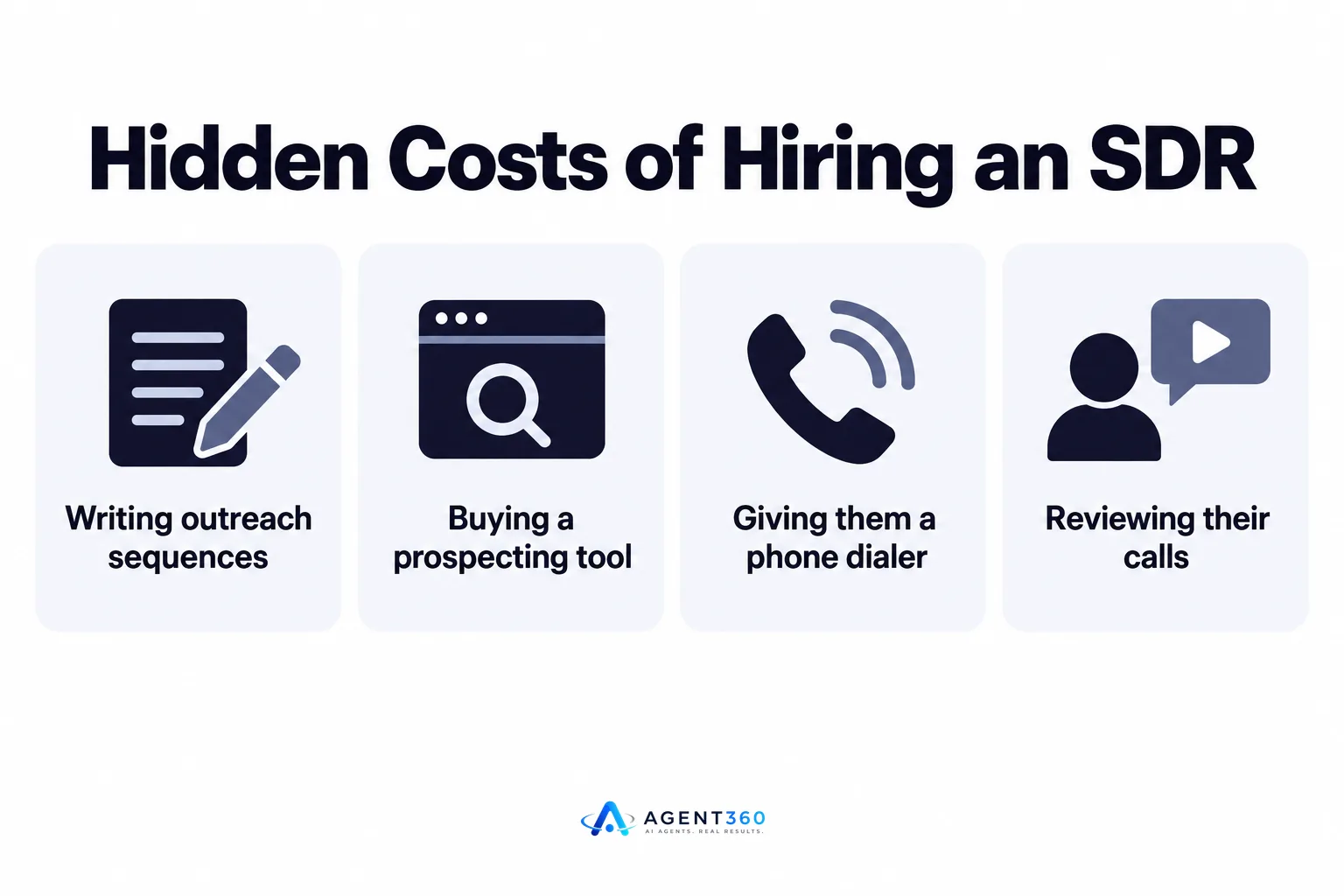
Hiring an SDR means paying for a full-time person plus the time it takes to train, manage, and tool them up before they book a single meeting. The salary is the visible cost. The hidden cost is everything around it: writing the outreach sequences, buying them a prospecting tool, giving them a phone dialer, reviewing their calls, and correcting their messaging when replies don't come in.
How long does an SDR take to become productive?
New SDRs typically need weeks to learn your offer, your ideal customer, and your objection handling before their numbers stabilize. During that stretch you're paying full salary for partial output, and someone on your team has to manage them closely enough to catch bad habits early.
What happens if the SDR doesn't work out?
You've lost the ramp time, the salary paid during it, and you're back to square one on pipeline with a gap to fill while you hire again. That risk is the real argument for testing the role carefully before committing to a full-time hire.
What Does Outbound Software Actually Do for You?
Outbound software finds likely buyers, reaches them across channels, and puts booked meetings on your calendar without a new employee. It doesn't get sick, doesn't need a ramp period measured in months, and doesn't require you to manage someone's daily call volume.
Can software replace cold calling and LinkedIn outreach?
Software can run outreach across email, LinkedIn, and phone in parallel, which is more channel coverage than one SDR can realistically manage alone. What it can't do is improvise in a live negotiation the way an experienced rep can — it's built to generate and qualify conversations, then hand the close to you or your team.
When Does Hiring an SDR Make More Sense Than Software?
An SDR makes sense once you have proven messaging, enough deal volume to keep one person fully booked, and a manager who can coach them. Hiring before any of those three exist usually means paying someone to figure out what should have been tested with software first.
What if you already have a strong close rate but no pipeline?
That's the clearest signal for either path — you need volume, not more selling skill. Software is built for exactly that gap: generating the volume of conversations your close rate can convert.
How Do You Decide Between the Two?
Work through your pipeline math before you choose, since the right answer depends on numbers you already have. Follow these steps in order.
- Count your current meetings booked per month. If it's close to zero, you have a volume problem before you have a people problem.
- Calculate what one SDR costs fully loaded. Add salary, tools, ramp time, and the hours you or a manager will spend coaching them.
- Compare that number against software priced for your volume. Check pricing that doesn't charge per seat, since adding team members later shouldn't multiply your cost — see pricing for how that works.
- Decide who closes the meetings software books. If that's still you, make sure you have time in your week for it before you add volume.
- Set a trial period for whichever option you pick. Give it a fixed number of weeks and a specific meetings-booked target before judging it.
Take the Next Step With Agent360
Agent360 handles the volume side of this decision without adding a headcount line. It finds ideal buyers and surfaces buying signals for your target market, runs outreach across LinkedIn, email, and phone, books meetings directly on your calendar, and gives you CRM tools to track the pipeline once it's moving.

That combination is built for founders running their own outbound and sales teams who need more pipeline without hiring another SDR to generate it. The AI handles the reach-out at volume; you still handle the conversations that close.
See what's included at outreach or book a demo to walk through your numbers before you decide.
Frequently Asked Questions
Is it cheaper to hire an SDR or use software?
Software is usually cheaper upfront since it skips salary, benefits, and ramp time, but the right comparison depends on your deal size and how much volume you need. Run the full cost of an SDR — salary plus tools plus management hours — against your software quote before deciding.
Can one founder run outbound with software instead of hiring an SDR?
Yes, that's exactly the gap outbound software is built to fill: covering the channels and volume a solo founder can't manage manually while still booking the meetings directly on a calendar.
Does software work as well as an SDR for booking meetings?
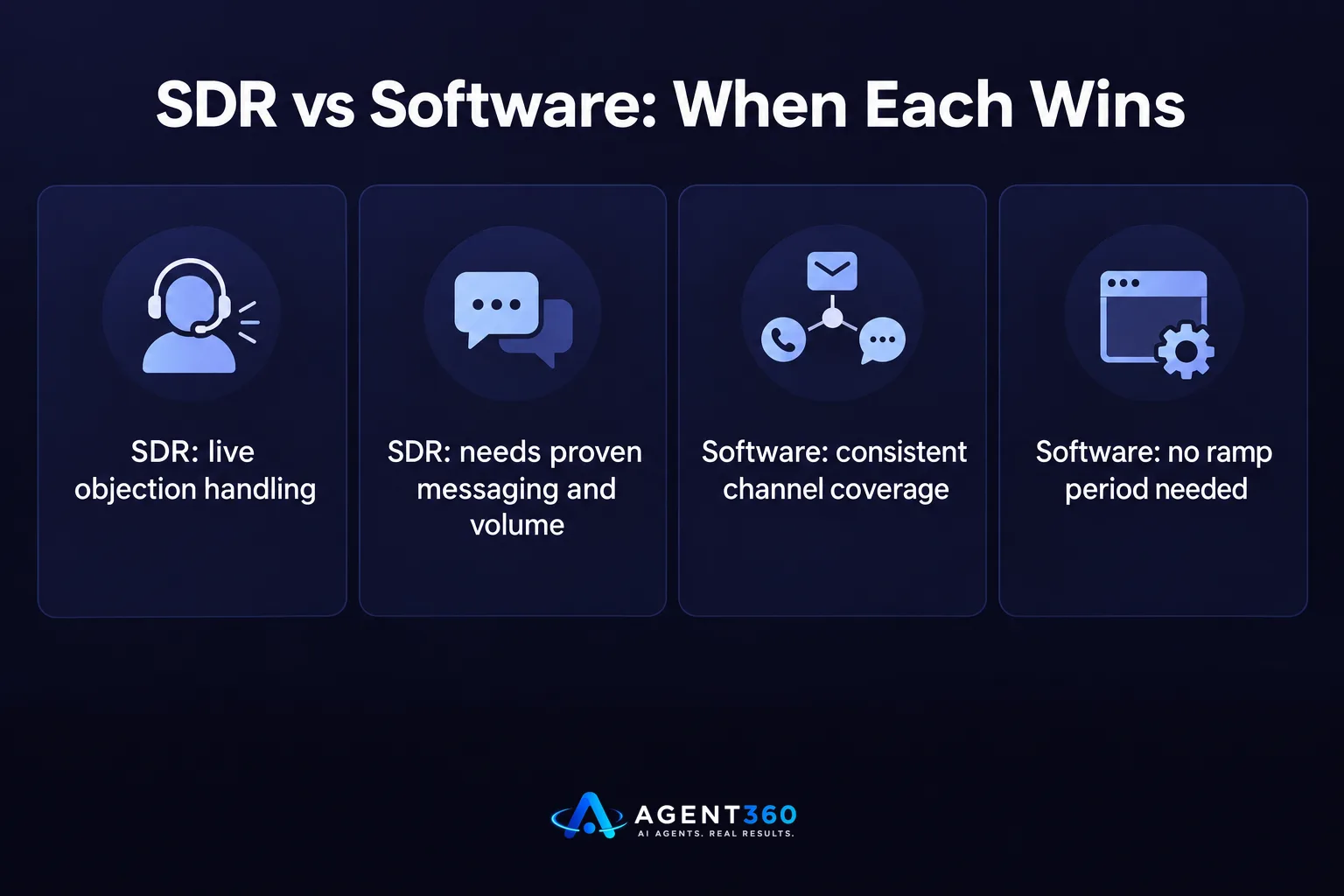
Software tends to win on volume and consistency across channels; an SDR tends to win on live objection handling and judgment calls mid-conversation. Many teams use software to generate and qualify the volume, then add a person once that volume needs more hands-on closing.
How do I know if I'm ready to hire an SDR?
You're ready when you have proven messaging, enough deal flow to keep one person fully booked, and someone available to coach them in the first weeks. Hiring before those three exist usually means paying someone to run experiments that software can run faster and cheaper.
What's the risk of hiring an SDR too early?
The main risk is paying full salary through a ramp period that doesn't convert, then losing that investment if the hire doesn't work out. That's the scenario covered in Should I Hire an SDR? A Founder's Decision Guide.
Can I switch from software to an SDR later without losing progress?
Yes — the messaging, target lists, and pipeline tracking built while using software carry over directly to a new hire, which usually shortens their ramp time instead of starting from zero.
More articles
- First Sales Hire vs Outbound Software: Which First?
- What Does an SDR Cost? The Real, Fully Loaded Number
- AI SDR vs Hiring an SDR: Which Fills Pipeline Faster?
- Should I Hire an SDR? A Founder's Decision Guide
- Sales Software for Founders: What to Buy First
- B2B Outbound for Small Companies: A Practical Playbook
- How to Book Sales Meetings Without Hiring an SDR
- Cold Email for Founders: A Practical Way to Start
