What's a Good MSP Lead Generation Agency for Appointments?

A good MSP lead generation agency for appointments is one that puts qualified meetings with IT decision-makers directly on your calendar, not one that hands you a spreadsheet of names and calls it a day. The difference matters because most MSP owners do not need more contacts. They need fewer, better conversations with buyers who are already showing signs they are ready to switch providers.
Judging an agency on “leads delivered” is how a lot of MSPs end up paying for lists they never work. Judging an agency on appointments booked, show rates, and whether those prospects match your actual service area and ideal client profile tells you much faster whether the spend is doing anything.
This article breaks down what a good MSP lead generation agency should deliver, how to spot the buying signals that actually matter in this space, and the questions to ask before you sign anything.
Key Takeaways
- Judge any agency by booked, qualified appointments on your calendar, not by the number of contacts or emails sent.
- Ask upfront how the agency finds MSP-specific buying signals, like expiring contracts or recent compliance deadlines, before you sign.
- Multi-channel outreach across email, LinkedIn and phone tends to book more meetings than one channel alone, because IT buyers do not respond the same way twice.
- Compare agency pricing against running outbound yourself with software before committing to a retainer.
- Get the handoff process for replies and booked meetings in writing before the contract starts.
Table of Contents
What should an MSP lead generation agency actually deliver?
A good agency delivers booked meetings with qualified IT buyers, not just a list of names with phone numbers attached. Lead generation and appointment setting are often sold as the same service, but they are not. A lead list tells you who might be a fit. An appointment means someone with budget authority has agreed to a specific time to talk. If an agency's deliverable stops at the list, you still have to do the hardest part yourself.
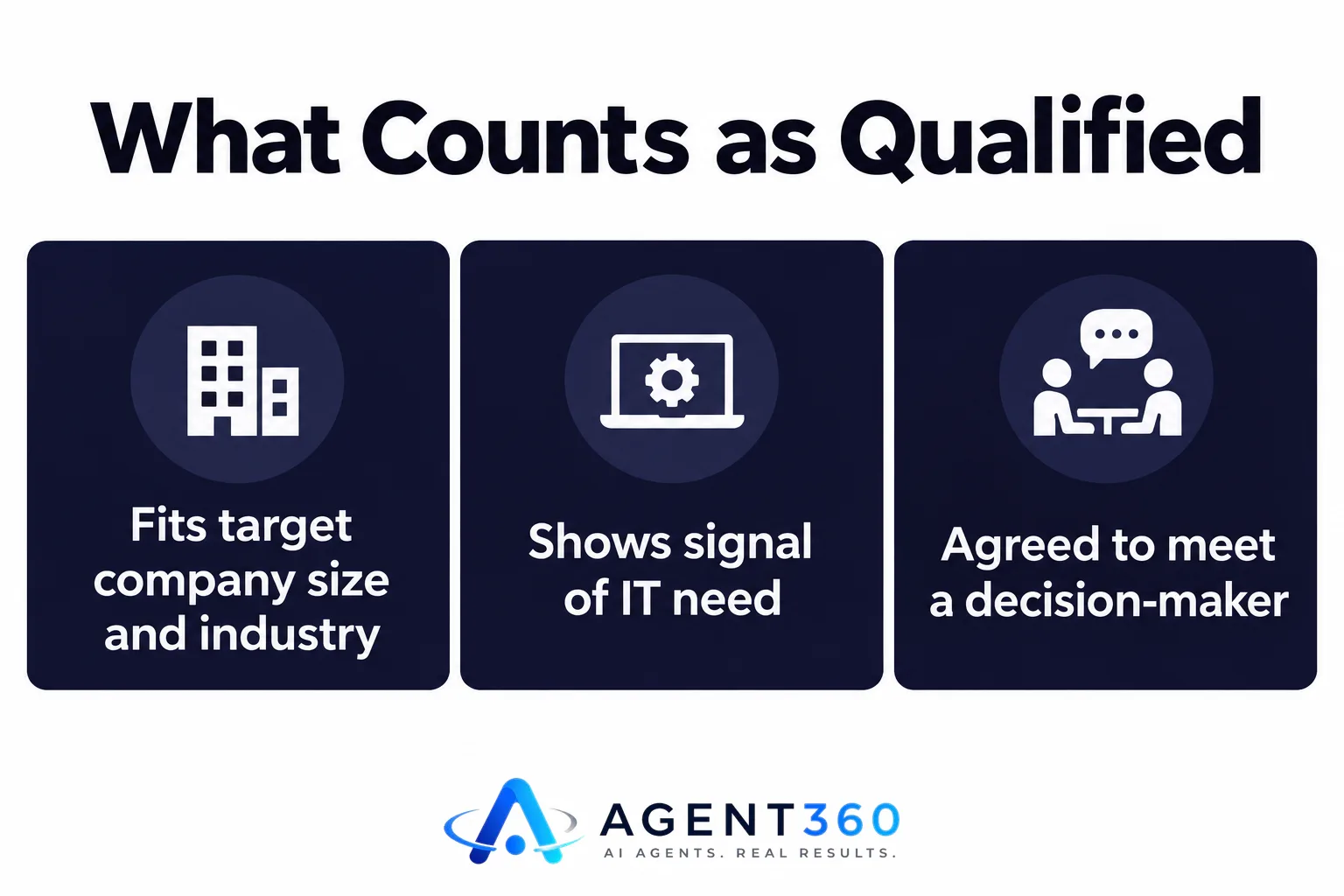
What counts as a qualified appointment for an MSP?
A qualified appointment usually means the prospect fits your target company size and industry, has some signal of IT need (growth, compliance, a recent incident, or a contract coming up), and has agreed to a meeting with someone who can actually make a decision, not a gatekeeper filling time.
How many appointments should you expect per month?
There is no honest universal number here, because it depends on your target list size, service area, and how narrow your ideal client profile is. What a good agency can show you instead is their methodology: how they build the list, which channels they run, and how they define “qualified” before the first campaign starts.
How do you spot buying signals that matter for MSP outreach?
Buying signals for MSPs usually come from events that make current IT support look inadequate, not from generic firmographic filters like company size alone. A company renewing a three-year IT contract, hiring a compliance officer, growing headcount past the point their current provider can support, or recovering from a breach are all moments when MSP buyers start looking around.
An agency or buying-signal tool worth paying for should be able to explain which of these signals it tracks and how recently the data was refreshed, not just that it has “intent data” as a line item.
Where do these signals come from?
They typically come from a mix of public records (contract and compliance filings), hiring activity, company news, and technology footprint changes. No single source covers everything, which is why a narrow list built on one signal type tends to underperform a list built on several.
How do you vet an MSP lead generation agency before signing a contract?
Vet an agency the same way you would vet a new IT vendor: ask specific, checkable questions before you commit budget. Vague answers about “proven processes” or “proprietary data” are a reason to keep looking, not a reason to sign.

- Ask for their channel mix. Find out whether they run email, LinkedIn, and phone, or just one. A single channel is easier to ignore than three working together.
- Ask how they define a qualified appointment. Get this in writing so there is no dispute later about what you are paying for.
- Ask about contract length and pricing structure. Per-seat or long-term retainer pricing can punish you if volume is lower than expected; ask what happens if results fall short.
- Ask what happens when a prospect replies. Find out whether a human reviews replies before they hit your calendar, and how fast that happens. See what should happen when a prospect replies as a benchmark for the standard to expect.
- Ask for references inside the MSP space specifically. Appointment setting for software companies and appointment setting for MSPs are different skills; a generalist agency may not know the buying triggers above.
Should you hire an agency or run MSP outbound yourself?
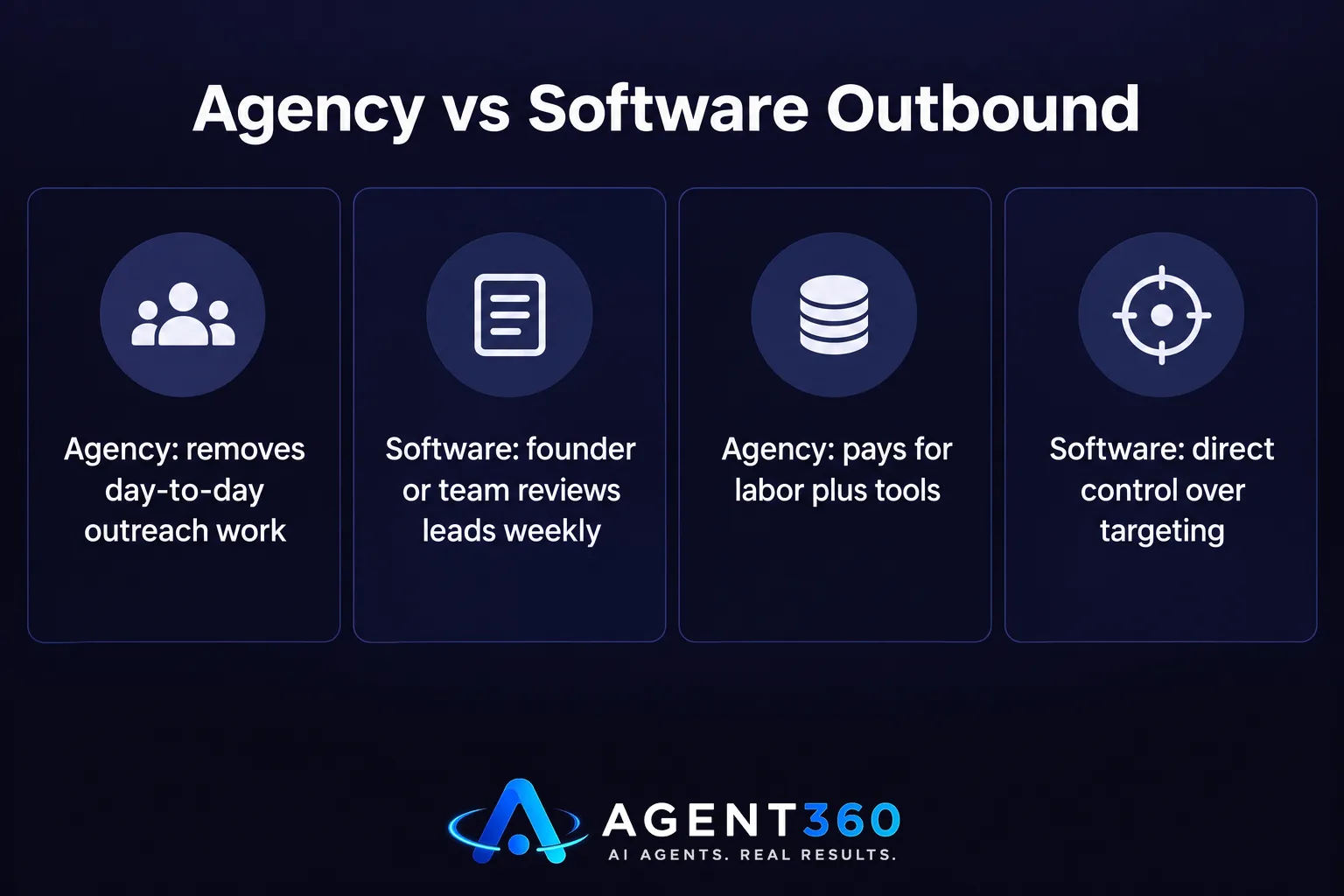
It depends on whether you have the hours to run outreach consistently, not just the budget to pay for it. An agency removes the day-to-day work of prospecting, sequencing, and follow-up. Software built for outbound does the same job at a different price point, with you or someone on your team keeping an eye on it.
When does an agency make more sense than software?
An agency tends to make more sense when nobody at the company has time to review replies, manage sequences, or adjust targeting week to week, and the budget supports paying for that labor on top of the tools.
When does software make more sense than an agency?
Software tends to make more sense when a founder or a small team can spend a few hours a week reviewing leads and replies, and wants to control targeting directly instead of handing it to a third party. A comparison of outbound software against hiring an SDR or agency is worth reading before deciding either way.
Take the Next Step Toward Booked MSP Appointments
Agent360 combines AI prospecting, multi-channel outreach across LinkedIn, email and phone, and meeting booking directly on your calendar, with CRM tools to track the pipeline once meetings are scheduled. For an MSP, that means buying signals get matched to outreach automatically instead of sitting in a spreadsheet waiting for someone to act on them.
The AI handles the volume of prospecting and sequencing; a human reviews replies before anything lands on your calendar, which keeps the appointments relevant instead of just numerous.
If you want to see what a done-for-you setup actually includes before you compare it against an agency retainer, check what Agent360's done-for-you service covers, or book a demo to see it against your own target list.
Frequently Asked Questions
What does an MSP lead generation agency typically charge?
Pricing varies widely by agency, ranging from flat monthly retainers to per-appointment fees. Ask for the full pricing structure in writing, including what counts toward a billable appointment, before comparing quotes across agencies.
Is per-appointment pricing better than retainer pricing for MSPs?
Per-appointment pricing ties cost directly to results, which protects you if volume is lower than expected. Retainer pricing can offer more consistent service and attention, but only if the agency is transparent about what you get each month regardless of outcomes.
How long before an MSP lead generation agency books the first meeting?
This depends on list quality, outreach channels, and how narrow the target market is. A good agency should be able to walk through a realistic timeline for your specific target list rather than quoting a generic number.
Can I run MSP lead generation myself instead of hiring an agency?
Yes, with the right tools for prospecting, outreach, and meeting scheduling, a founder or small team can run this process directly. The tradeoff is time spent managing sequences and replies instead of paying an agency to do it.
What channels work best for MSP appointment setting?
Email, LinkedIn, and phone each reach IT decision-makers differently, and combining them tends to book more meetings than relying on one alone. The right mix depends on how your specific buyers prefer to be contacted, which an agency or outbound tool should test rather than assume.
More articles
- Who to Use for Outsourced SDR Instead of Hiring?
- Cognism Alternative: What to Check Before You Switch
- ZoomInfo Alternative: What B2B Teams Need Beyond Data
- Smartlead Alternative: What to Look for Beyond Cold Email
- The Best Lemlist Alternative for Full-Funnel Outbound
- An Instantly Alternative That Does More Than Send Email
- Apollo Alternative: What to Look for Beyond Contact Data
- Can One Person Run Outbound Sales? Yes, With the Right Setup
