Who to Use for Outsourced SDR Instead of Hiring?
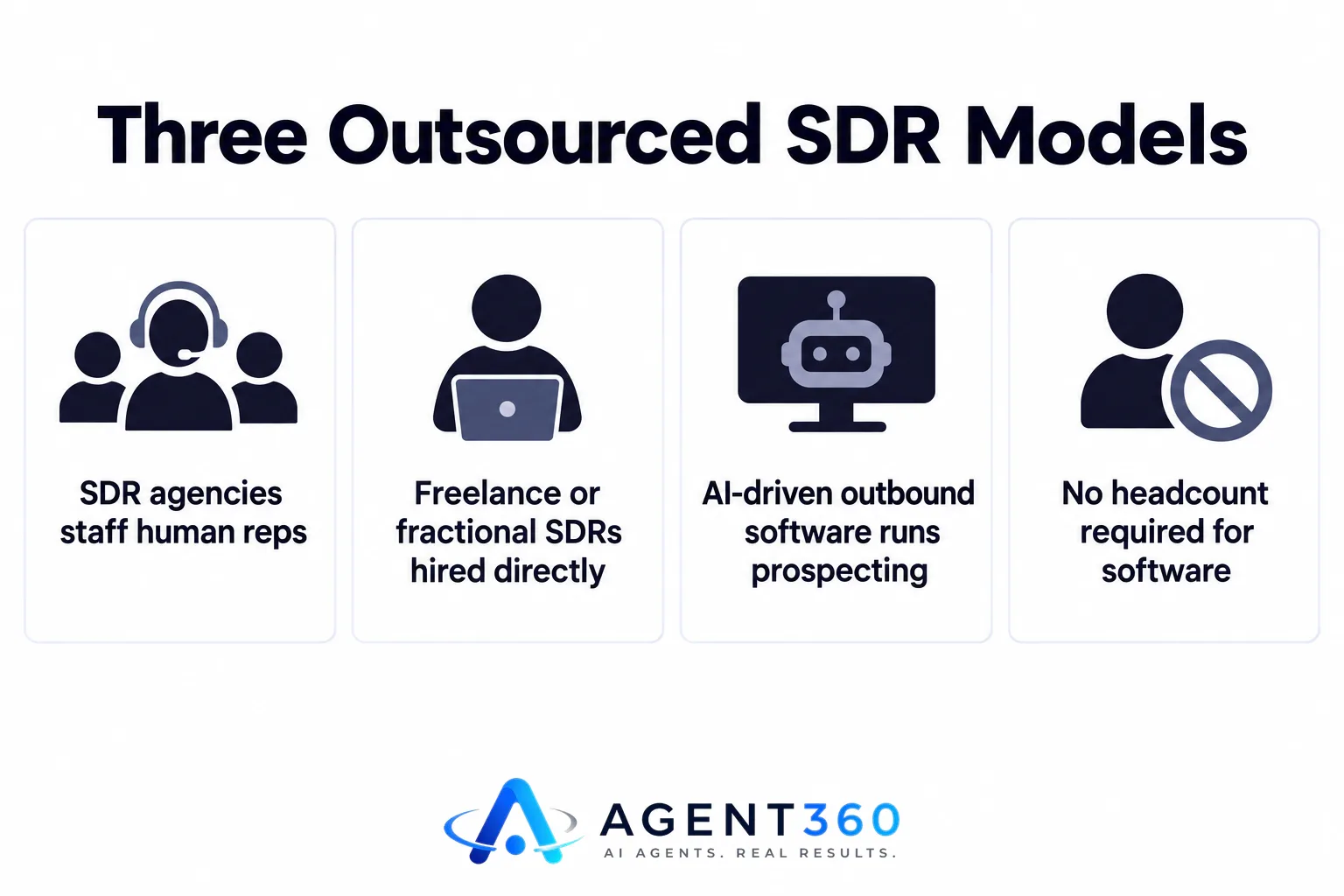
Outsourced SDR options fall into three groups: SDR agencies that staff human reps on your behalf, freelance or fractional SDRs you hire directly, and AI-driven outbound software that runs prospecting and outreach without a headcount at all. Which one fits depends on how fast you need meetings, how much you can spend monthly, and how much control you want over messaging.
Founders asking this question are usually trying to avoid a $70,000-plus hire before they know outbound will work for their offer. The right outsourced option should prove out the channel first, then scale once it is booking meetings.
Key Takeaways
- SDR agencies, freelance SDRs, and AI outbound software are the three real outsourced options, each with a different cost and control trade-off.
- Software-based options remove the per-seat cost problem entirely, since you are not paying a salary for every rep added.
- Check references, reply-handling process, and contract length before signing with any agency or freelancer.
- Compare the fully loaded cost of hiring against outsourcing with a real SDR cost breakdown before deciding.
- Run a short trial period with any option before committing to a long-term contract.
Table of Contents
What Counts as an Outsourced SDR Option?
Three models cover most of the market: agencies, freelancers, and outbound software. Each replaces a different part of what an in-house SDR does.
What does an SDR agency actually provide?
An SDR agency assigns one or more human reps to prospect, write outreach, and book meetings for your company, usually under a monthly retainer. You get a managed team without doing the hiring or management yourself, but you are paying for people, so cost scales with the number of reps and the channels they work.
What is a freelance or fractional SDR?
A freelance SDR is a single contractor you hire directly, often part-time, to run outreach on your behalf. It costs less than an agency retainer but puts all the risk of quality and consistency on one person, and you still have to manage them like an employee.
How Do I Choose Between an Agency, a Freelancer, and Software?
Match the option to how proven your outbound motion already is. If you do not yet know which message, audience, or channel converts, paying a human team top dollar to guess alongside you is expensive. If the motion is proven and you just need volume, a managed option can execute faster than you can.
When does AI-driven outbound software make more sense than people?
Software makes sense when you want prospecting, multi-channel outreach, and meeting booking running every day without adding a salary line. Platforms built for this combine AI prospecting with outreach across LinkedIn, email, and phone, so one founder or a small team can run what used to take two or three reps. The trade-off is that you still set the offer and the target list; software does not replace strategy, it executes it.
When does an agency or freelancer make more sense?
An agency or freelancer makes more sense when your outreach needs heavy customization per prospect, like relationship-based enterprise selling where a human voice on the phone matters more than volume. It also suits teams that want someone else fully accountable for the output and are comfortable with the higher monthly cost that comes with paying for people.
What Should I Check Before Signing With an Outsourced Provider?
Check their reply-handling process, contract length, and what happens to your data if you leave. These three details separate a provider that fills your pipeline from one that leaves you starting over in six months.

- Ask who replies to a warm prospect. If a prospect responds at 9pm, find out whether a human or a bot answers, and how fast.
- Ask for the minimum contract term. Agencies often require three to six months; software options should let you test month to month before committing longer.
- Ask what you keep when you leave. Your contact lists, sequences, and CRM data should be portable, not locked inside the provider's system.
- Ask how meetings get verified. A provider should show you booked meetings landing on your actual calendar, not just activity metrics like emails sent.
How Does the Cost Compare to Hiring an SDR?
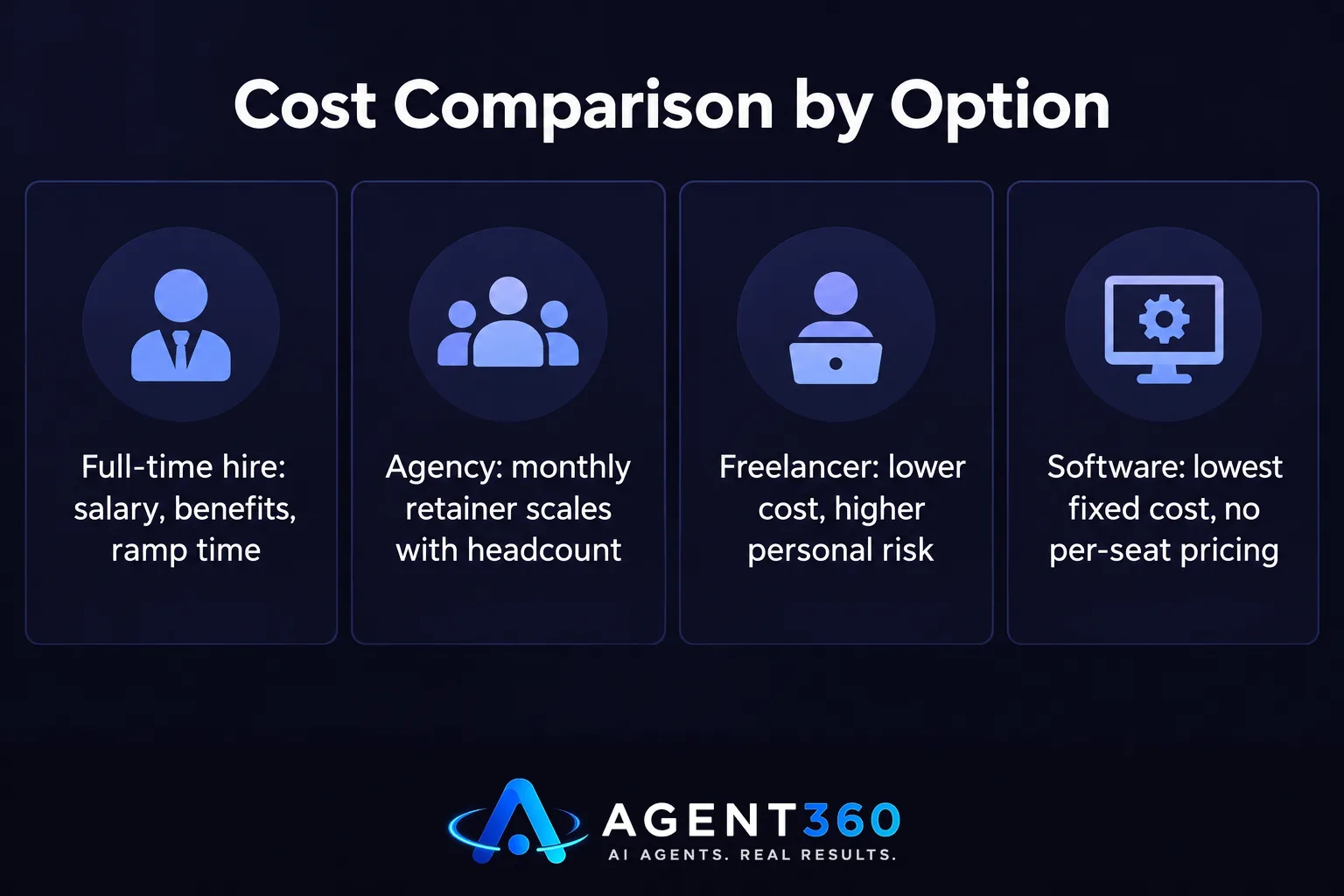
Outsourcing almost always costs less upfront than a full-time hire, but the gap narrows as you add volume. A full-time SDR carries salary, commission, benefits, and ramp time before they book a single meeting, a figure broken down in detail in what an SDR actually costs. Agencies and freelancers charge monthly retainers that are usually lower than that fully loaded number but still scale with headcount. Software-based outbound tends to have the lowest fixed cost because you are paying for a tool, not a person, and some options charge a flat rate with unlimited seats instead of per-rep pricing.
Does outsourcing ever cost more than hiring?
It can, if you stack an agency retainer for prospecting with separate tools for email, LinkedIn, and CRM tracking. Reader should total the full monthly stack, not just the agency invoice, before comparing it to a hire. A side-by-side read of outsourced versus in-house options in outsourced SDR vs in-house SDR walks through that math in more detail.
Take the Next Step on Outsourced Outbound
If the goal is a steady flow of booked meetings without adding a salary to the payroll, software built for this job can run prospecting, outreach, and booking in one place. Agent360 combines AI prospecting with multi-channel outreach across LinkedIn, email, and phone, books meetings directly on your calendar, and includes CRM tools to track the pipeline as it fills, all without per-seat pricing that punishes you for adding more outreach.
Founders running their own outbound and staffing or recruiting firms selling to hiring managers use the same engine to keep pipeline moving without hiring an SDR first.
See how the process works and book a demo to find out if it fits your outbound.
Frequently Asked Questions
Is outsourced SDR cheaper than hiring full time?
Usually yes in the first year, because you avoid salary, benefits, and ramp-up time. The gap shrinks as retainer size or seat count grows, so the cost comparison should be run at the volume you actually plan to send.
Can one person replace an SDR with software alone?
Software can handle prospecting, outreach, and meeting booking, which covers most of what an SDR does day to day. A founder or small team still needs to set the target list and offer, since that strategy work is not something software decides on its own.
How long does an outsourced SDR option take to start booking meetings?
Agencies and freelancers typically need a few weeks to onboard, learn the offer, and write sequences before outreach starts. Software options can start sending once a target list and messaging are set, though email deliverability still needs a warm-up period before full volume.
What should a staffing or recruiting firm look for differently?
A staffing firm is often prospecting two audiences at once, hiring managers and candidates, so the outreach tool or provider needs to run both without separate systems. Check whether the option can segment and sequence by audience type before signing.
Should I try outsourced SDR before hiring my first SDR?
Testing outsourced options first can validate that outbound works for the offer before committing to a full-time salary. If the motion proves out and volume grows past what outsourcing covers efficiently, that is the point to revisit an in-house hire.
More articles
- What's the Best Alternative to HeyReach for Outreach?
- What's a Good MSP Lead Generation Agency for Appointments?
- Cognism Alternative: What to Check Before You Switch
- ZoomInfo Alternative: What B2B Teams Need Beyond Data
- Smartlead Alternative: What to Look for Beyond Cold Email
- The Best Lemlist Alternative for Full-Funnel Outbound
- An Instantly Alternative That Does More Than Send Email
- Apollo Alternative: What to Look for Beyond Contact Data
