An AI Blog Writer Will Cannibalize Your Own Rankings
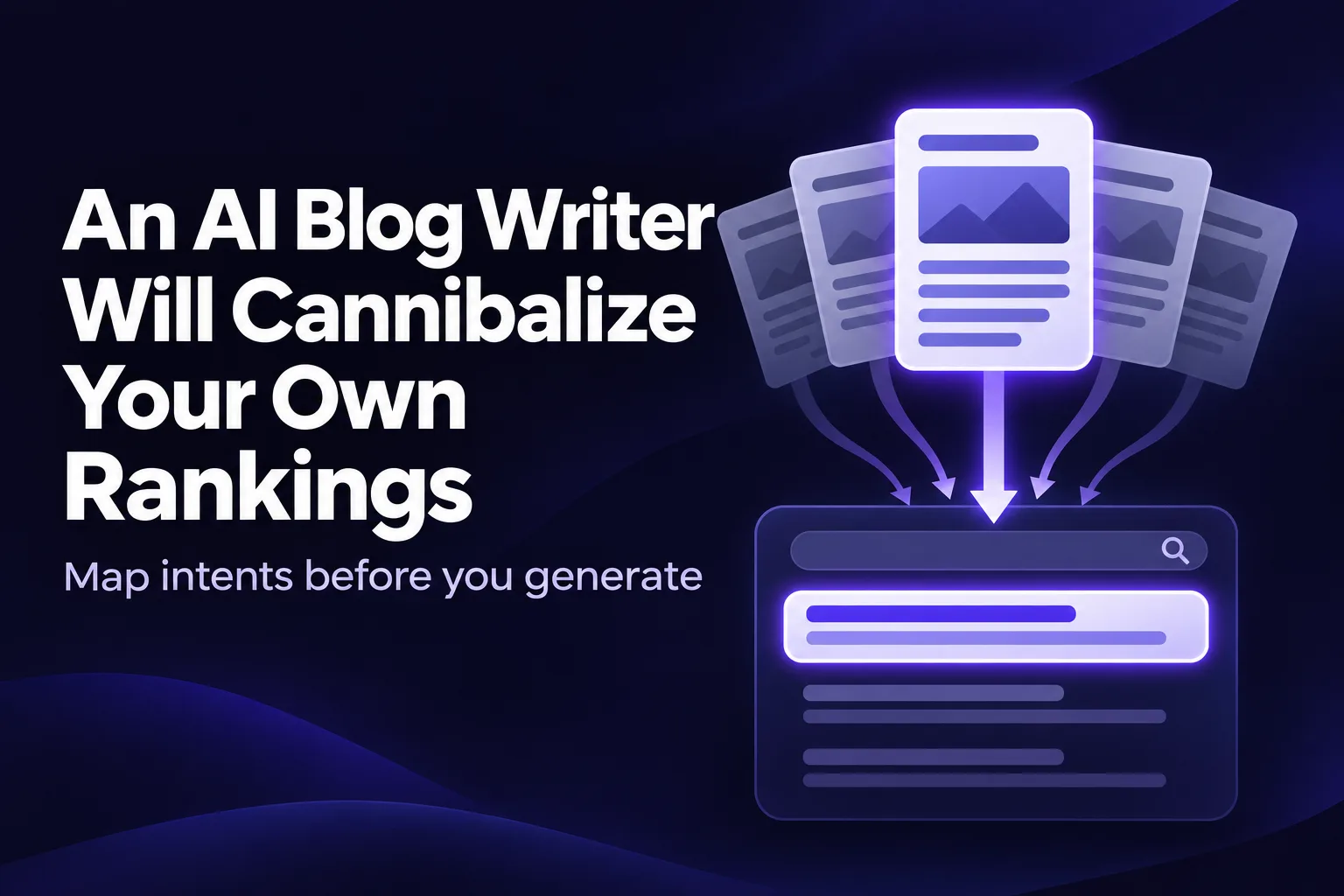
The draft that hurts you is the good one, written on a search your site already answers. Writing used to be the slow part, which kept near-duplicates rare. Now a draft costs almost nothing. The only thing between you and five pages fighting each other is whatever you decide before you press generate.
Most advice on this topic is about draft quality: voice, facts, editing. That matters, and there is a six-check review queue for it. This post sits one layer up. Which drafts should exist at all?
Volume turns one topic into five near-duplicates
Hand a writer a list of keywords and it will write one article per line. But a list of keywords is not a list of intents. “How to choose a payroll provider”, “payroll provider buying guide”, “what to look for in payroll software” and “payroll provider checklist” are four lines. For most buyers they are one question.
Google has to pick which of your pages answers it. Give it four candidates with the same promise and it may rotate them, pick the weakest, or rank none of them well. Your internal links and any outside mentions get split across pages that should have been one. It is the same mechanism described in our guide to pages that compete, only produced faster and in bulk.
A human writer tends to remember what they wrote last month. A writing agent only knows what you tell it. Brief it with a keyword and you get a new page for that keyword, whether or not you already have one.
Keep a one-row-per-intent map before you generate anything
The fix is dull, and it works: one row for every intent your site should own. Four columns are enough.
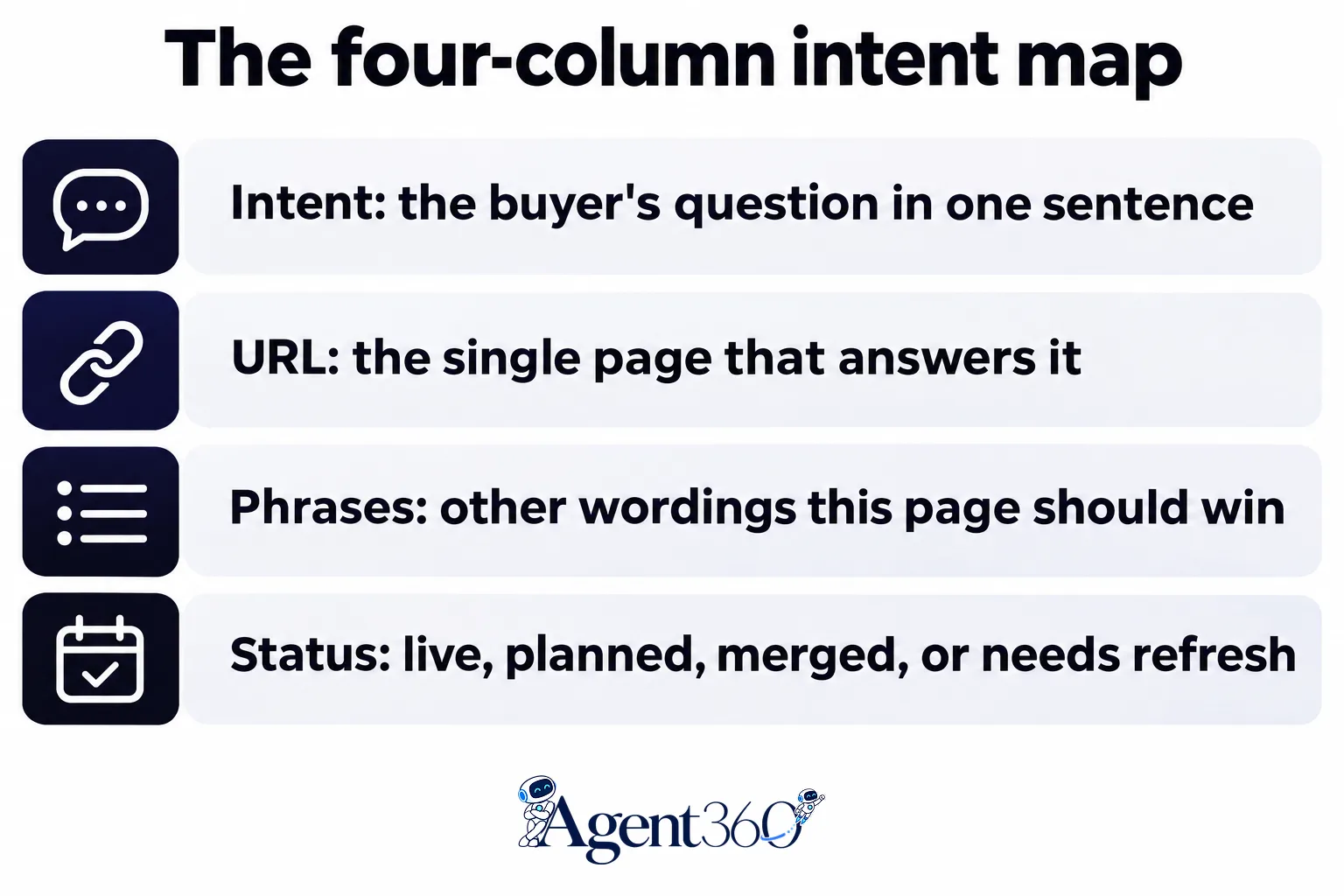
- Intent: the buyer's question in one plain sentence, not a keyword.
- URL: the single page that answers it, or “planned”.
- Phrases: the other wordings of that same question that this page should also win.
- Status: live, planned, merged, or needs refresh.
To tell whether two phrases are one intent, search both and compare the top ten. If many of the same pages show up for both, Google treats them as one question, and so should you. That is a rule of thumb, not a Google rule, but it beats trusting your own sense of how the wordings differ. If the results are mostly different pages, you have two intents and can write two articles.
The map doubles as a content plan. A template with the columns that matter is in this content plan walkthrough. The only addition here is the “phrases” column, and that column is what stops duplicates.
Check every draft against the map in two minutes
Before you approve a generated article, ask three questions. Can't answer them? The draft isn't ready.

- Which row is this? If there is no row, either add one with a real reason or reject the draft.
- Does that row already have a URL? If yes, the new draft is a refresh candidate, not a new page.
- Would a buyer who lands on the old page and this one feel they got the same answer? If so, they are the same page.
Then search your own site for the draft's main phrase and read the first three results. If your domain shows up with an older page, you have your answer before you read a word of the draft.
This is where we part ways with the popular “publish every day” advice. A daily schedule only makes sense if you have enough distinct intents to fill it. If you don't, the schedule itself creates the overlap.
When a draft collides, update the old page instead
A collision isn't wasted work. The draft often has better structure, fresher examples or a clearer answer than the page it runs into, so treat it as raw material. What you do next depends on what the old page is doing:
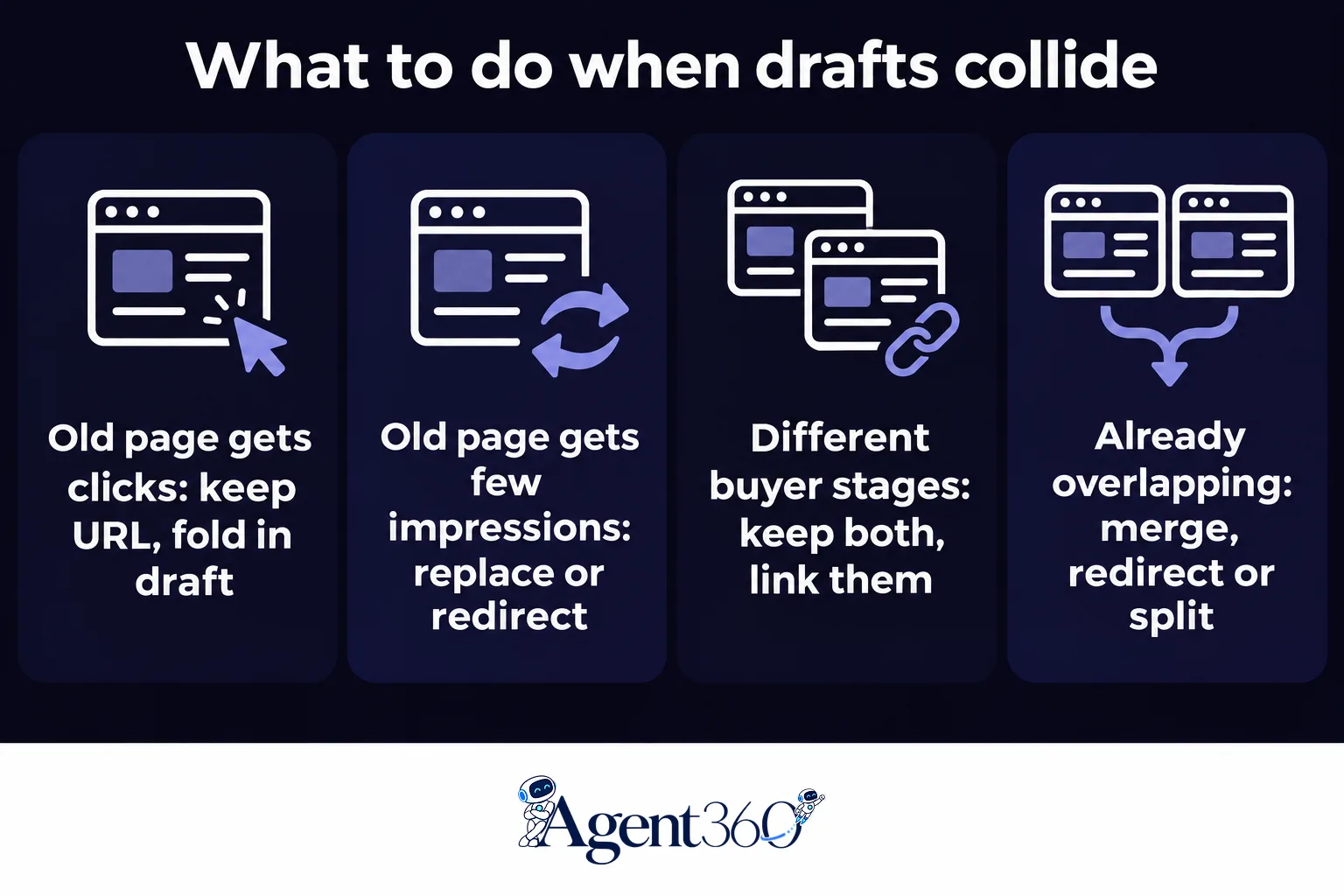
- The old page gets impressions and clicks in Search Console: keep its URL, fold the best parts of the new draft into it, and do not publish the draft separately.
- The old page gets almost no impressions: replace its content with the better draft, or redirect it to the new one. Keep one URL either way.
- The two serve different stages of the buyer's decision: keep both, make the difference explicit in titles and opening paragraphs, and link them to each other.
Already have overlap? The merge, redirect or split decision applies to the pages you have, not just the ones you are about to write.
Slow the schedule until the map exists
Can't fill a month of publishing with rows that have no URL yet? Then the right output is fewer articles, not more. Set the pace from the number of real gaps in your map. Setting posts per week from your gap list covers the arithmetic. When the gaps run out, point the writer at pages that are slipping. That is usually the better use of a draft anyway.
One caveat. A map takes an afternoon to build and steady discipline to maintain. If nobody on your team will own it, an AI writer will quietly out-produce your ability to manage it. Better to know that before you subscribe.
Where SearchAgent fits
SearchAgent's Strategy Agent builds page ideas from the searches you lose and the AI questions where nobody named you, so each idea starts from a real gap rather than a keyword list. You approve the ideas you want, and the content plan sends them to the Writer Agent. Articles arrive as drafts for your approval by default, with auto-publish optional, so the two-minute check above still has a place to happen. On the Pro and Scale plans, an Overlaps view flags pages that compete. Plans start at $297 a month, month to month; see pricing. It publishes to a blog we host on your domain, not into WordPress or Webflow.
Questions readers ask
Can an AI blog writer hurt my SEO?
Yes, mainly through volume. It can publish several pages for one search intent, which splits Google's attention and your links across pages that should be one. A map of one page per intent, checked before each draft is approved, prevents most of it.
How do I know if two keywords need separate articles?
Search both phrases and compare the top ten results. If many of the same pages rank for both, Google treats them as one question and one article should cover both. If the results are mostly different, write two.
Should I publish AI articles automatically?
Only after you trust the topic selection. Automatic publishing is safe when every article comes from a mapped, unclaimed intent. Until that map exists, approve each draft by hand and search your own site for its main phrase first.
More articles
- AI Visibility Monitoring: What a Good Score Really Is
- Local Teaser Pack: What It Is and How to Get Into It
- Reject AI Blog Drafts Fast: A Six-Check Review Queue
- Get Found on Google AI: Three Surfaces, Three Fixes
- AI Overviews Optimization Starts With Pages You Already Have
- Set Posts Per Week From Your Gap List, Not a Calendar
- GEO Tools: Buy the Fix, Not Another Dashboard
- SEO Reporting for Small Business: One Page, Five Numbers
