SEO Content Plan Template: The 9 Columns That Matter

A content plan template earns its keep when every row forces a decision: publish this, or don't. Most templates fail long before that test, because they track topics and due dates instead of the evidence that should decide priority. Twenty topic ideas in a spreadsheet with no scoring behind them isn't a plan. It's a wishlist with a publish date stapled to it.
Below is a structure that holds up under use: nine fields, each answering something a generic content calendar leaves out. Copy the columns into a sheet, or build them into whatever tool you already run.
Track the query, not just the topic
“Blog post about onboarding” is a topic. “How long does SaaS customer onboarding take” is a query. Only one of those can be checked against actual search behavior. Your first column should be the exact phrase a buyer types — pulled from Search Console, from autocomplete, or from a support ticket where someone used those words. If you can't point to where a query came from, it's a guess wearing a research costume.
Score priority by gap size, not by how excited you are about the idea
Every row needs a priority score built from three inputs: do you rank for this today, who outranks you, and how far off you are. A term where you sit at position 14 behind three thin competitor pages beats a term where you rank nowhere against five established domains. The first is a gap you can close in weeks. The second might take a year. Run a proper competitor gap analysis before filling in this column, or you'll end up ranking the plan by gut feel instead.

Add a column for AI answers, or you're planning for half the game
A template built only around the ten blue links is incomplete now. Buyers ask ChatGPT and Google's AI Overviews the same questions they used to type into search, and a page can rank fine on Google while never getting named in an AI answer. Add a column that records whether an AI assistant named you for that query today — yes, no, named a competitor instead — and treat a “no” the same way you'd treat a ranking gap. The gap between optimizing for search results and optimizing for the answer itself isn't academic. It changes what you write and how you structure the page.
Separate net-new pages from pages that need surgery
A plan that only lists new articles misses half the work. Some of your best opportunities are pages you already published that are close but not quite there — missing a section, buried under a vague heading, or competing with another page on your own site for the same query. A column flagged “new” versus “fix existing” keeps you from writing a fifth article on a topic when the real problem is two existing pages splitting the same search intent.
Set a refresh date before you publish, not after rankings slip
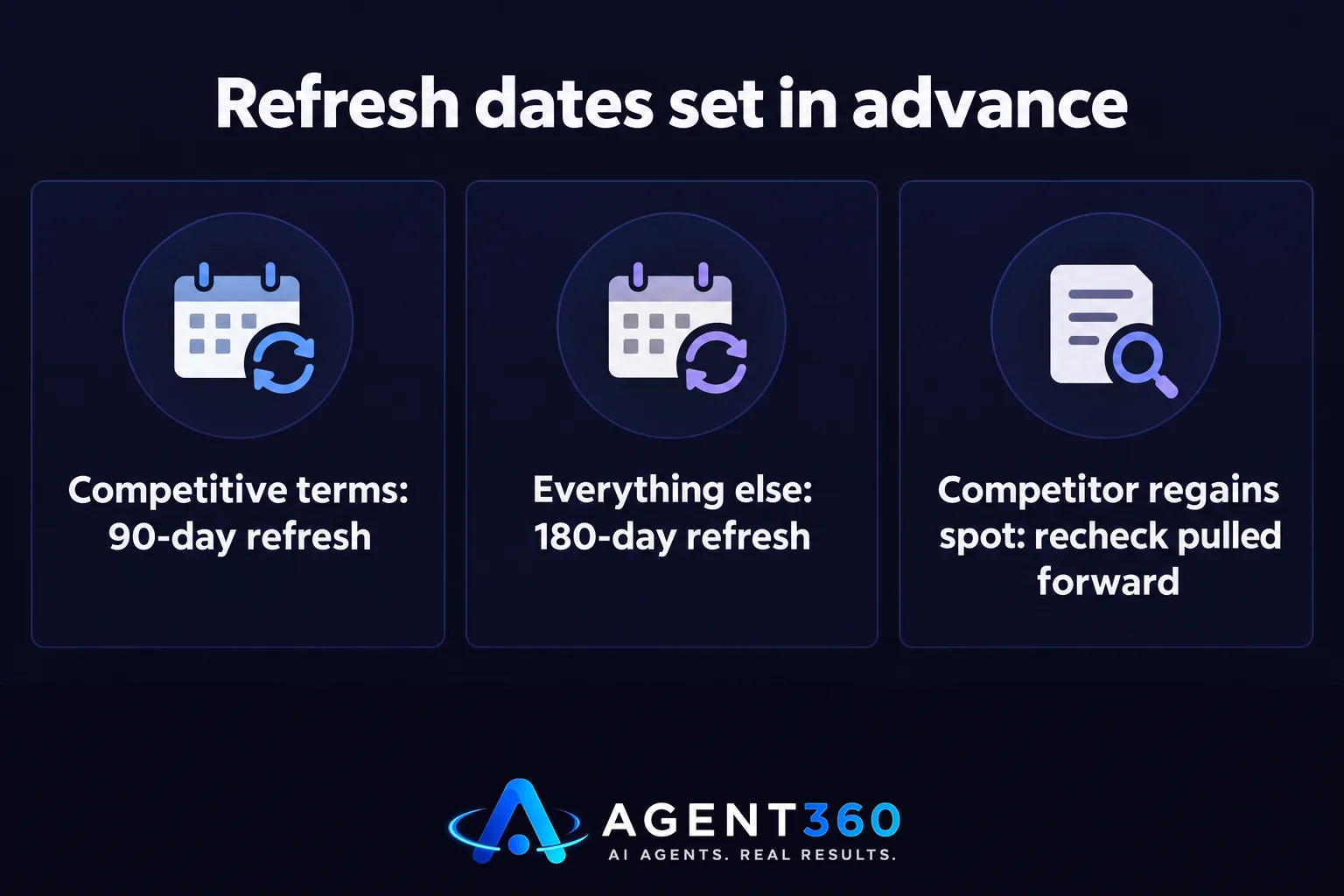
Decide the recheck date when you approve the brief, not three months after the page has quietly dropped from page one to page three. A reasonable default: 90 days for competitive terms, 180 for everything else, pulled forward if a competitor-gap recheck shows someone new has taken the spot. Templates that treat publishing as the finish line are why so many sites have a graveyard of articles nobody has looked at since 2022.
The 9 fields, in order
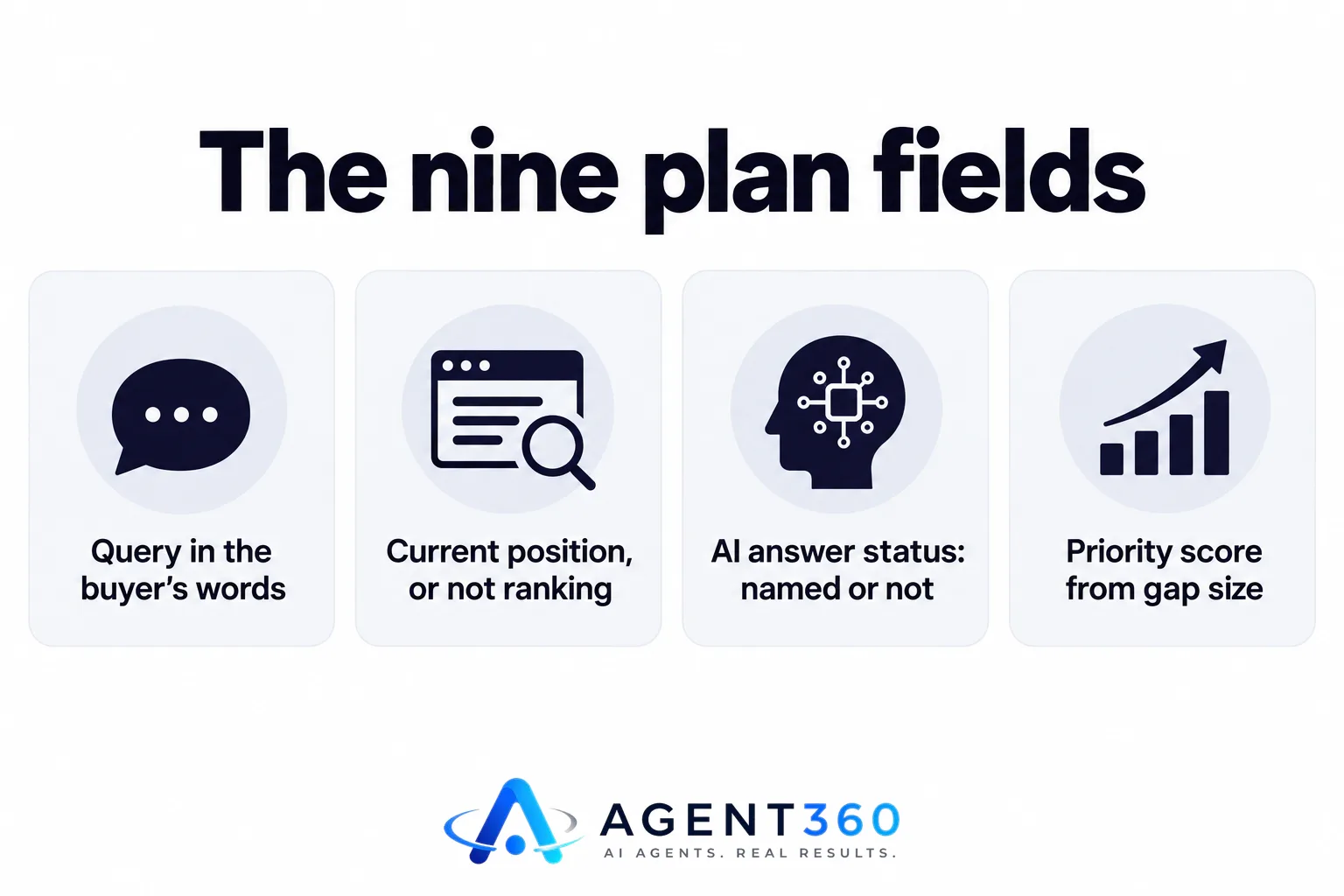
- Query — the exact phrase, in the buyer's words
- Source — where it came from: Search Console, autocomplete, support tickets, sales calls
- Current position — your rank today, or “not ranking”
- Top competitor — who holds the spot you want, and their angle
- AI answer status — named, not named, or names a competitor
- Action — new page, or fix an existing URL
- Priority score — a 1–5 built from gap size, not enthusiasm
- Owner and target date — who writes it, by when
- Refresh date — when you recheck it, set in advance
Fill these nine fields in for even ten rows and it will beat a fifty-row list of topic ideas, because every row answers the only question that matters: why this, why now.
Keep the plan smaller than you want it to be
A backlog of two hundred “ideas” isn't ambition. It's a place good ideas go to get stale. Cap the active plan at what you can realistically write and refresh in the next quarter — if that's eight articles, the plan has eight rows, not eighty. Ask how many posts a week your site actually needs before you pad the list. The honest answer for most small sites is lower than content calendars assume, and a shorter, scored list beats a long, vague one every time. Settle the question of how much output SEO actually needs before you fill in a single row.
If building and scoring this by hand every month is more than your team has time for, SearchAgent's content plan agent builds the same structure on its own — pulling the queries you're losing on Google, the AI questions where nobody named you, and your own notes into scored page ideas you approve before anything gets written.
Questions people ask
How many rows should an SEO content plan have at once? Keep the active list to what you can write and refresh in the next 60 to 90 days — for most small teams that's somewhere between five and fifteen rows, not fifty. A long backlog of unscored ideas doesn't move rankings; a short, prioritized list does.
Should the template include AI search engines or just Google? Include both. A page can rank well on Google and still never get mentioned when someone asks ChatGPT or sees a Google AI Overview for the same question, so a plan that only tracks Google positions is missing half of where buyers now look.
How often should the plan be updated? Recheck priority scores monthly, and refresh dates as they come due. Competitor positions and AI answers shift often enough that a plan built once and never revisited goes stale within a quarter.
More articles
- Competitor Keyword Gap Analysis: Find What You're Missing
- Google Search Console for Beginners: Where to Start
- Keyword Cannibalization Fix: Merge, Redirect, or Split
- Content Refresh SEO: What Actually Moves Rankings
- How Many Blog Posts a Week Does SEO Actually Need?
- SEO Agency Alternative: What Actually Replaces the Retainer
- SEO for Local Businesses: Win the Map, the List, and the Answer
- Automated SEO for Small Business: What to Automate First
