How Much Does a LinkedIn Ghostwriter Cost in 2025?
A LinkedIn ghostwriter can cost you a few hundred dollars a month for four or five posts, or several thousand for a full content strategy with editing, engagement and reporting built in. The gap is that wide because “ghostwriter” isn't one job. It's a label covering everyone from a freelancer dashing off a weekly post to a strategist running your entire presence.
Founders and agency owners usually start shopping for one at the same moment: they realize posting consistently on LinkedIn takes more hours than they actually have. So the question isn't just “what does it cost,” it's “what am I actually buying at that price.”
This guide breaks down what moves the price, where cheap and expensive options actually differ, and what to check before you sign anything.
Key Takeaways
- Expect pricing to scale with volume, experience and whether strategy and engagement are included, not just the writing itself.
- Per-post freelancers are the cheapest option but rarely include strategy, editing or posting schedules.
- A monthly retainer with a strategist costs more but usually includes planning, drafts and revisions.
- AI tools can draft posts cheaply, but they still need a human to edit, approve and post for the voice to sound right, which is why services like a LinkedIn marketing agency pair the two.
- Before paying anyone, decide whether you need a writer, a profile fixer, or a full content system.
Table of Contents
What are ghostwriters actually charging?
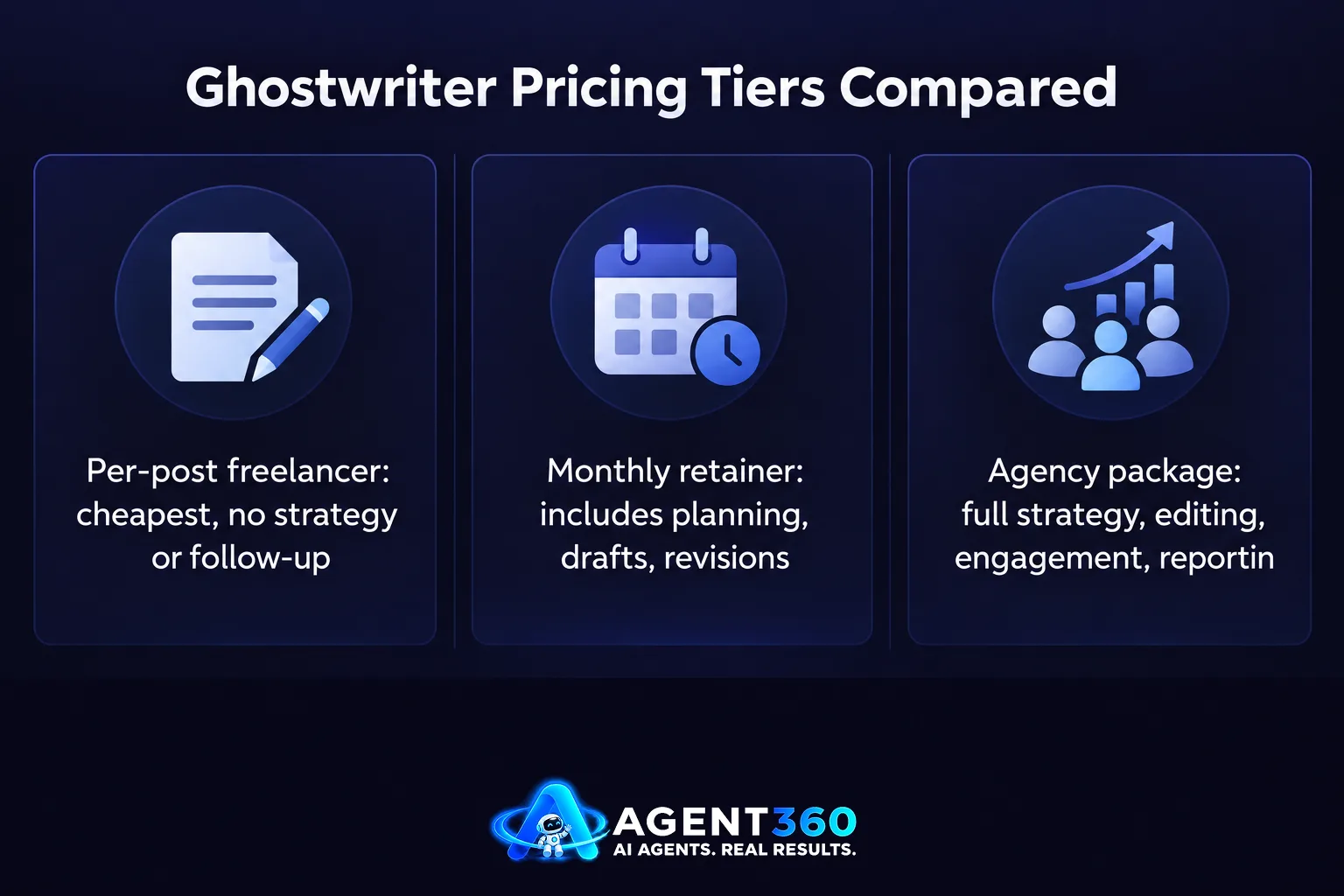
Pricing usually falls into three tiers: per-post freelancers, monthly retainers, and agency packages. Each tier buys a different level of involvement, and the price reflects that, not just the word count on the page.
What does a per-post freelancer charge?
Per-post freelancers are the cheapest route, usually charging a flat fee per piece. Fine if you just need occasional help turning a rough idea into something postable. What you don't get: a content calendar, a developed voice, or any follow-up engagement after it goes live.
What does a monthly retainer include?
A retainer with an experienced ghostwriter usually bundles a set number of posts, a call to capture your ideas and voice, and revisions. It costs more than per-post work, and should. You're paying for consistency and strategy, not just drafting.
What determines the price of a LinkedIn ghostwriter?
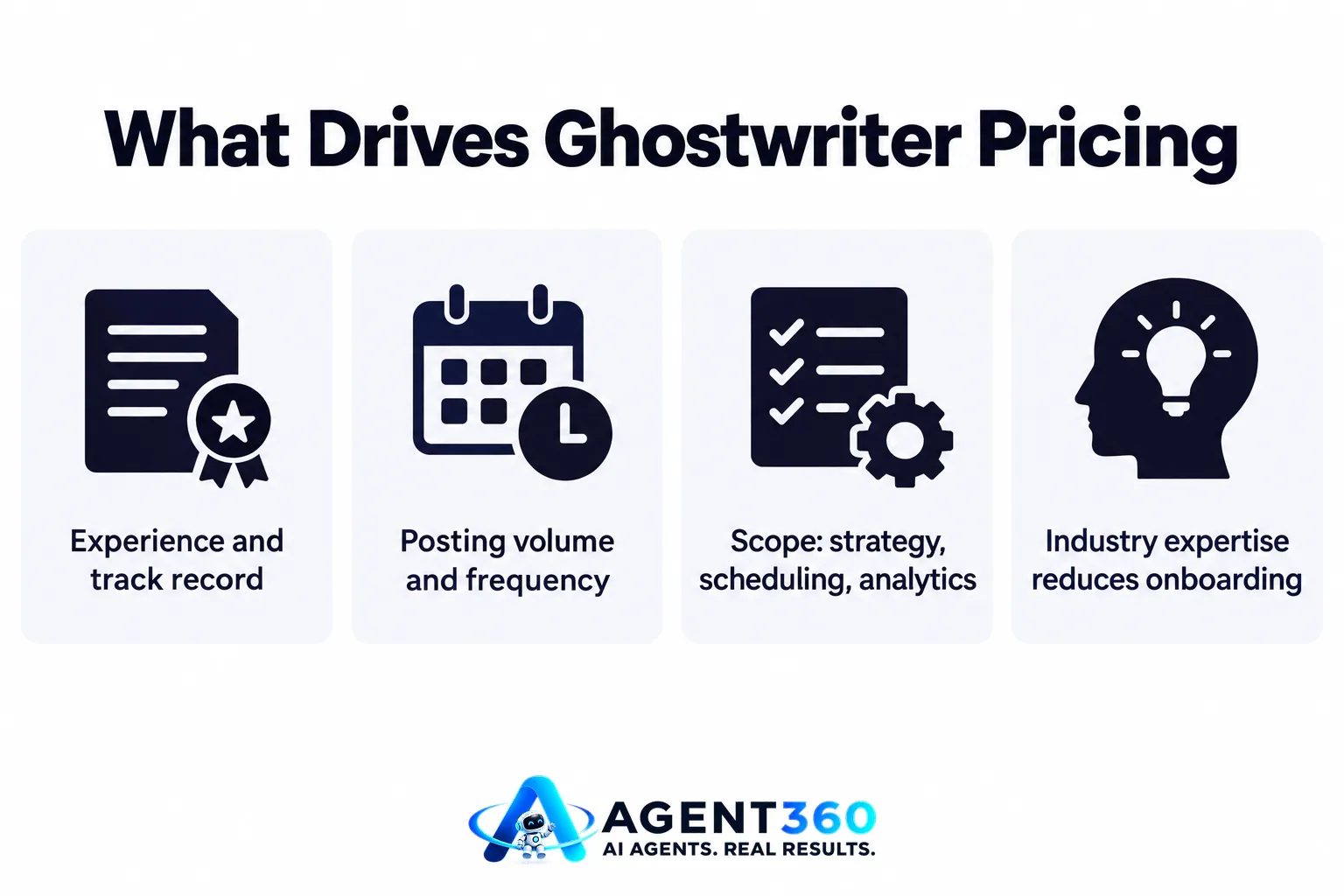
Experience, volume and scope are the three biggest price drivers. A writer with a track record among founders in your industry will cost more than someone new to it, and a package that adds strategy, scheduling and analytics costs more than writing alone.
Does posting frequency change the price?
Yes. Four posts a month costs less than daily posting, because daily output means more research calls, more drafts, more editing hours. Before you commit to a frequency, check what cadence actually fits your sales cycle. Founders selling into long B2B cycles often don't need to post every day to stay visible.
Does industry expertise matter?
It does. A writer who already understands your market, whether that's staffing, SaaS or professional services, needs less onboarding and can write credible posts faster. That speed is usually why they charge more than a generalist.
Can ChatGPT be my ghostwriter?
ChatGPT can draft a post, but it can't replace the judgment a ghostwriter brings to tone, timing and what's worth saying. It's good at churning out a first draft fast and cheap, which is exactly why many ghostwriters now use it as a starting point instead of writing from a blank page.

The gap shows up in two places. AI doesn't know which of your opinions will actually land with your buyers, and it won't catch a generic, off-brand line the way a human editor will. Go the AI-only route and you should plan on spending real time rewriting and fact-checking before anything goes live. Tools that automate drafting and formatting, like the ones covered in a content calendar system, cut down the busywork, but someone still has to approve the final post.
Can I pay someone to build my LinkedIn profile?
Yes, and it's a different service from ongoing post writing. Profile writing is usually a one-time project covering your headline, About section and experience descriptions, priced separately from a monthly content retainer.
Some ghostwriters offer profile rewrites as an add-on, others sell it standalone, since a strong profile matters most at the exact moment someone clicks through from a post you wrote. If your profile reads like a resume instead of a pitch, fix that first. It often does more for inbound interest than another month of posts. A content plan also compounds better once the profile backing it up is solid, which is part of why turning existing material into new posts works better after that foundation is in place.
Take the Next Step With a System That Covers Content and Outbound
Hiring a ghostwriter solves one piece of your visibility problem: what you post. It doesn't solve who sees it, who follows up, or how those conversations turn into booked meetings. That's where a broader system pays off.
Agent360's BrandAgent builds and publishes on-brand posts, images and video for LinkedIn and other platforms, and you approve every post before it goes live, so you keep the editorial control a ghostwriter would otherwise charge for. It's part of the same platform that runs outbound outreach, so content and conversations stay connected instead of living in separate tools and separate invoices.
Go see how content and outreach actually connect on our LinkedIn marketing agency page.
Frequently Asked Questions
Are there any websites for ghostwriting that pay?
If you're asking as a business looking to hire, the more useful question is where to find vetted writers, which usually means freelance marketplaces, referrals from other founders, or agencies that employ writers directly. Vetting matters more than the platform, since quality varies widely even on reputable sites.
Can I pay someone to build my LinkedIn profile?
Yes, profile writing is typically sold separately from ongoing content work, often as a one-time project covering your headline, About section and experience bullets.
Can ChatGPT be my ghostwriter?
ChatGPT can produce a usable first draft quickly, but it still needs a human to edit for voice, check for generic phrasing, and decide what's actually worth posting. Most ghostwriters now use AI as a drafting tool rather than a replacement for their judgment.
Has Jay Z ever used a ghostwriter?
Ghostwriting has long been part of the music industry, and questions about specific artists using one have circulated publicly for years without a definitive public confirmation in every case. The broader point for business owners is that ghostwriting is a normal, widely used practice, not something to be embarrassed about using for your own content.
What's the difference between a ghostwriter and a content agency?
A ghostwriter is usually one person handling writing and sometimes strategy, while an agency brings a team that can cover writing, design, scheduling and reporting under one plan. Agencies typically cost more but reduce the risk of losing your content pipeline if one freelancer becomes unavailable.
How long before a LinkedIn ghostwriter shows results?
Consistent posting usually needs a few months before engagement and inbound interest become noticeable, since LinkedIn's audience needs repeated exposure to your name and perspective before they act on it. Judging a ghostwriter after a handful of posts rarely gives a fair read on whether the approach is working.
More articles
- Clay vs LeadSwift: Which Fits Your Outbound Job?
- Local SEO Checklist: What to Fix First, in Order
- Agent360 vs Belkins: a fair, side-by-side comparison
- Best done-for-you marketing package for local service businesses?
- How to Get Your Business Mentioned in Google AI Answers
- Who Should You Use for Done-For-You Auto Shop Marketing?
- What's a White Label GEO Agency and Who Offers It?
- The Best Marketing Strategy for an Auto Repair Shop
