How to Show Up in AI Overviews When Rivals Don't
An AI Overview pulls your page into the summary Google writes above its normal results, and that only happens to pages that already rank well and answer the question in a form Google's system can lift cleanly. No submission form. No toggle. No paid placement. Miss the top results for a query, and you miss its Overview too.
That one fact kills most of the advice floating around about “getting featured.” It also explains the three questions people actually ask once they hit this wall: why the Overview didn't show at all, whether there's a trick to game it, and what to put on the page so it picks you over the competitor three spots down.
Why AI Overviews not available for some searches
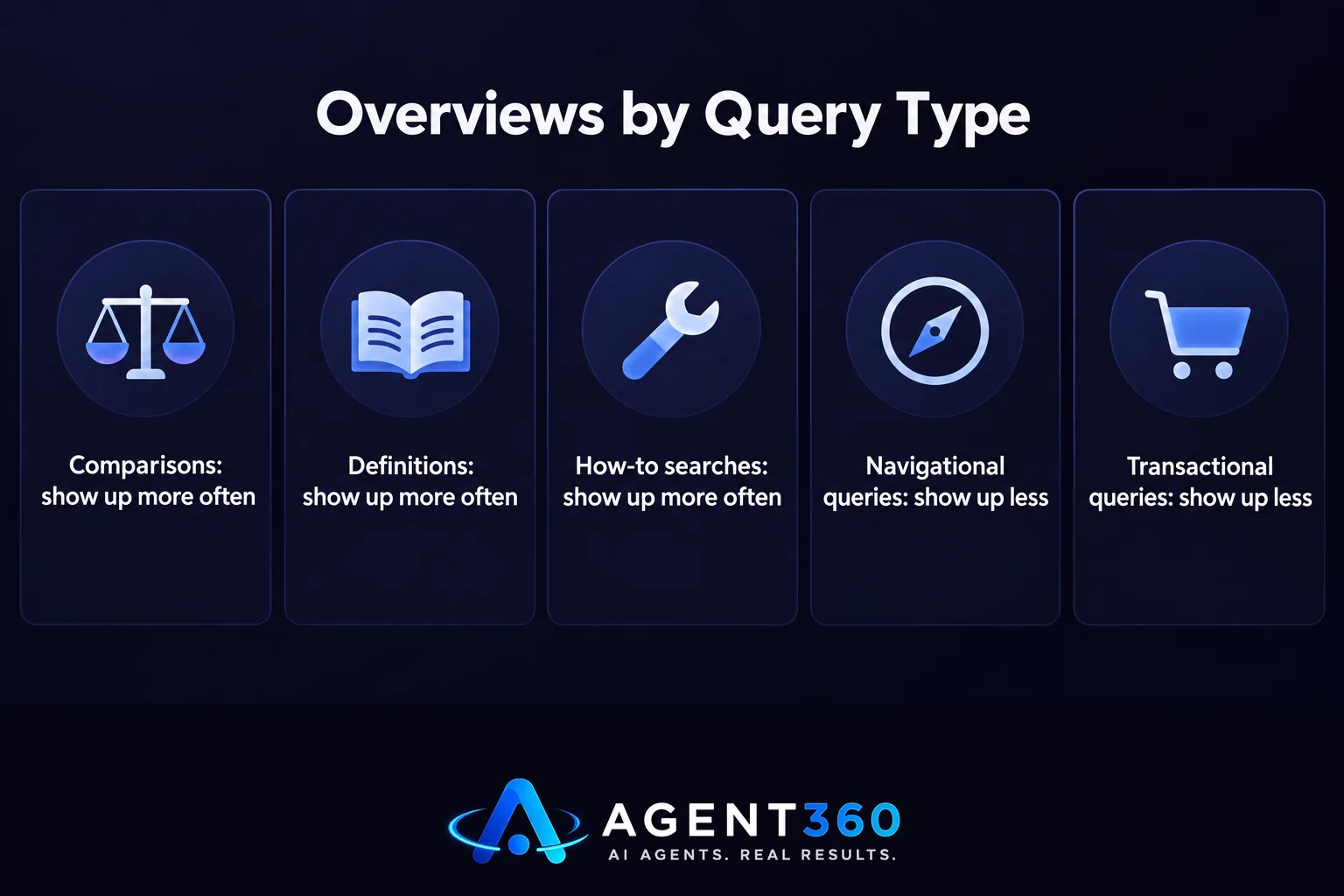
Google doesn't generate an AI Overview for every query, and there's no public list of which ones trigger it. Generally, Overviews show up more for questions with a researchable answer — comparisons, definitions, “best for” and “how to” searches — and less for narrow navigational or highly transactional queries, where a list of links already does the job. If your target search never shows an Overview, no amount of page work summons one. Check the actual results page first, before you optimize for a feature that was never there.
When an Overview exists but skips you, the cause is almost always one of two things. Your page doesn't rank high enough to be in the pool it draws from. Or it ranks fine but buries the answer — under a story, a hero image, three paragraphs of scene-setting before anyone gets to the point.
How to trick the AI Overview — and why that question is the wrong one
There's no prompt-injection trick, no hidden meta tag, no schema markup that forces an Overview to cite a page that wouldn't rank on its own. It's built from the same retrieval and ranking signals as Google's organic results, then summarized. Stuffing keywords into the first paragraph or hiding text for crawlers won't help — if anything, pages that read like they were written to game a system tend to rank worse, not better. Same quality signals apply either way.
What works is making the honest version of the page easier to lift: a direct answer near the top, in plain sentences, backed by specifics the summary can quote without mangling. Structured data and clean headings don't bribe the system — they just get out of its way. That's the whole trick. It isn't one.
How to show up in AI search: the signals that actually matter
Four things separate pages that get cited from pages that don't:
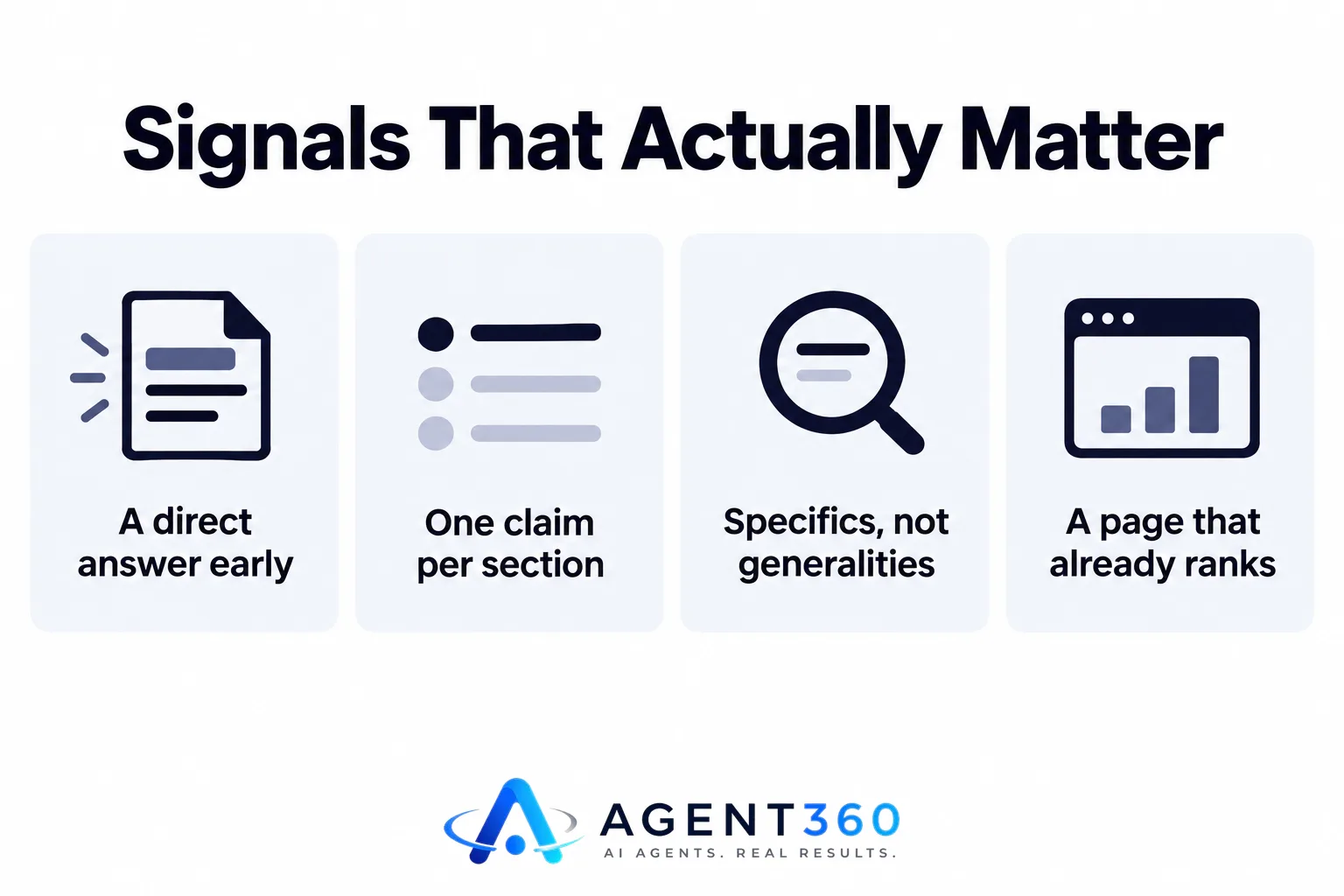
- A direct answer early. The first two or three sentences under a heading should answer what the reader actually asked — not set up the answer, answer it.
- One claim per section. Overviews summarize; they don't synthesize five arguments into one. A page that makes one clear point per heading is easier to extract from than one that hedges across paragraphs.
- Specifics, not generalities. Numbers, named steps, named failure modes. “It depends” never gets quoted.
- A page that already ranks. This is the gate everything else sits behind — see what AEO actually means for how this differs from plain ranking work.
Technical hygiene matters too, but it's a smaller lever than people expect. Valid FAQ or HowTo schema, a clean heading hierarchy, a crawlable page — these help the system parse what you've already written well. They won't rescue a page that never answers the question.
The checklist for getting featured in Google AI Overviews
- Search the exact phrase your buyer would type and confirm an Overview even appears for it.
- Check your current ranking position for that phrase — page one is the realistic bar.
- Rewrite the section that answers it so the first sentences carry the full answer.
- Add one specific number, step count, or named example per section.
- Add FAQ markup if the page answers a question people would literally type. A primer on the file most sites get wrong before worrying about schema is here: what llms.txt is and whether you need one.
- Re-check in a few weeks. Overviews reshuffle as new pages rank; a snapshot today tells you nothing about next month.
Track it instead of guessing
Checking this by hand means running the same searches on a schedule and writing down who got named — tedious past week one, abandoned by week three. SearchAgent's AI Visibility Agent asks the questions your buyers ask across ChatGPT, Claude and Google AI Overviews on a schedule, logs who got named, and turns every miss into a page to write. Plans start at $297 a month on the pricing page, month to month.

Questions
How to trick the AI Overview? You can't — not in the sense of forcing a citation your rank hasn't earned. The Overview summarizes pages that already rank well and answer directly. The only lever is making the honest answer easier to extract, not dressing up a weak one.
How to show up in AI search? Rank well for the query first, then put a direct, specific answer in the first few sentences under a clear heading. Schema and formatting help the system parse what's already good; they don't replace it.
Why are AI Overviews not available for some searches? Google doesn't generate one for every query. Informational and comparison searches trigger them more often than narrow transactional or navigational ones. Check the live results page before assuming your page is the problem.
More articles
- How Long Does SEO Take? The Honest Timeline
- The Local SEO Checklist That Actually Moves the Map Pack
- B2B SEO Strategy: How to Compete When Buyers Ask AI First
- How to Get Backlinks Without Outreach Emails
- SEO Content Plan Template: The 9 Columns That Matter
- Competitor Keyword Gap Analysis: Find What You're Missing
- Google Search Console for Beginners: Where to Start
- Keyword Cannibalization Fix: Merge, Redirect, or Split
