How to Get Backlinks Without Outreach Emails
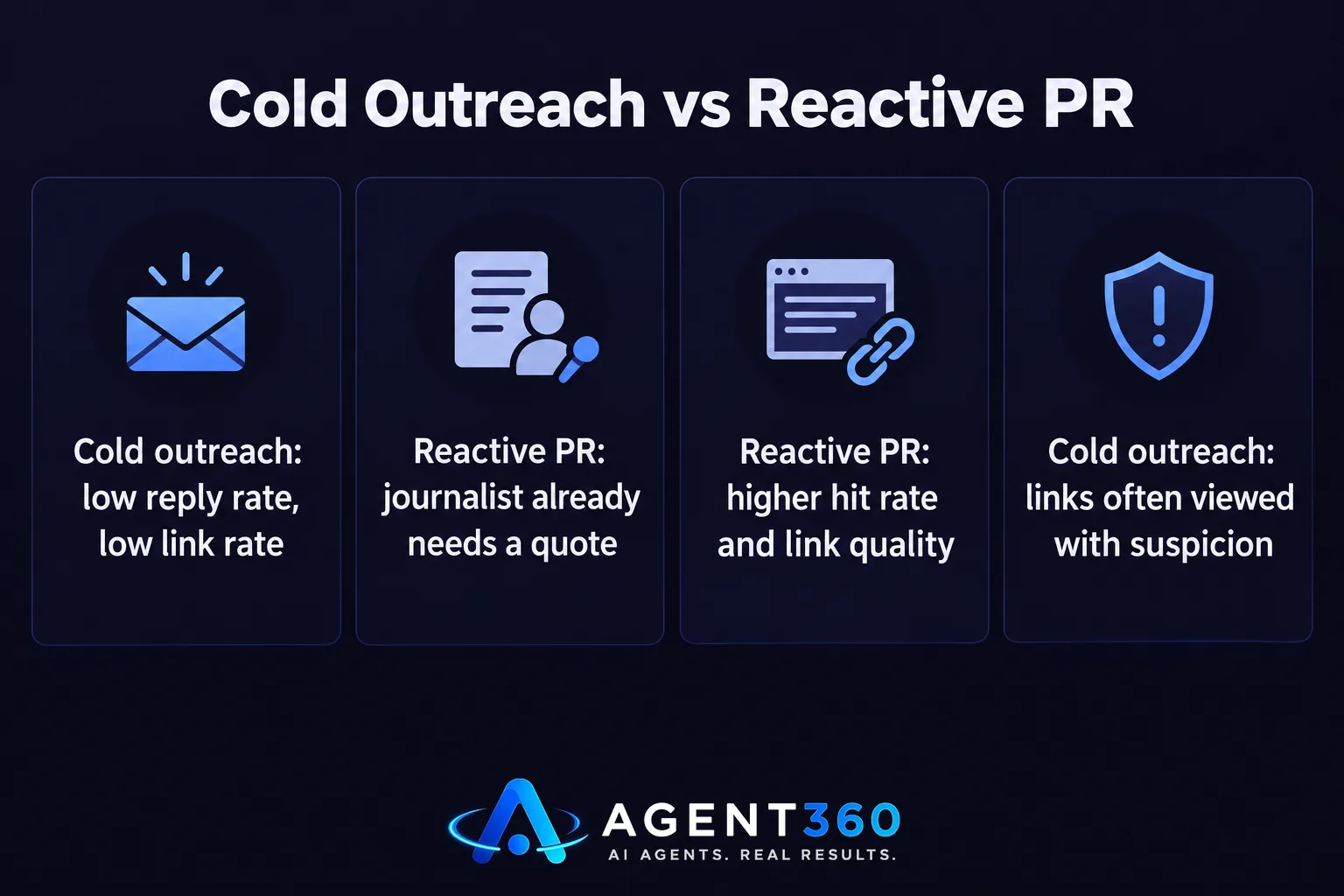
Nobody links to you because of a cold email. Most backlinks that stick come from relationships you already have, questions journalists already ask in public, or pages good enough that someone links to them without being asked. Outreach campaigns — the hundred-email-a-week kind — have a low reply rate and an even lower link rate, and the links they do produce are often the kind Google treats with suspicion anyway. None of the methods below involve pitching a stranger.
Reclaim the links you already earned but never got
Search your company name, your product name and your founders' names in quotes, in the regular Google search box. You'll find mentions of you on other sites — a quote in an article, a listing in a roundup, a reference in someone's resource page — where the writer just didn't bother linking. This isn't outreach in the cold sense. You're writing to someone who has already decided you're worth mentioning. Ask for the link to be added, or for the plain-text mention to become a hyperlink. Reply rates on these beat cold pitches by a mile, because the relationship already exists in the text.
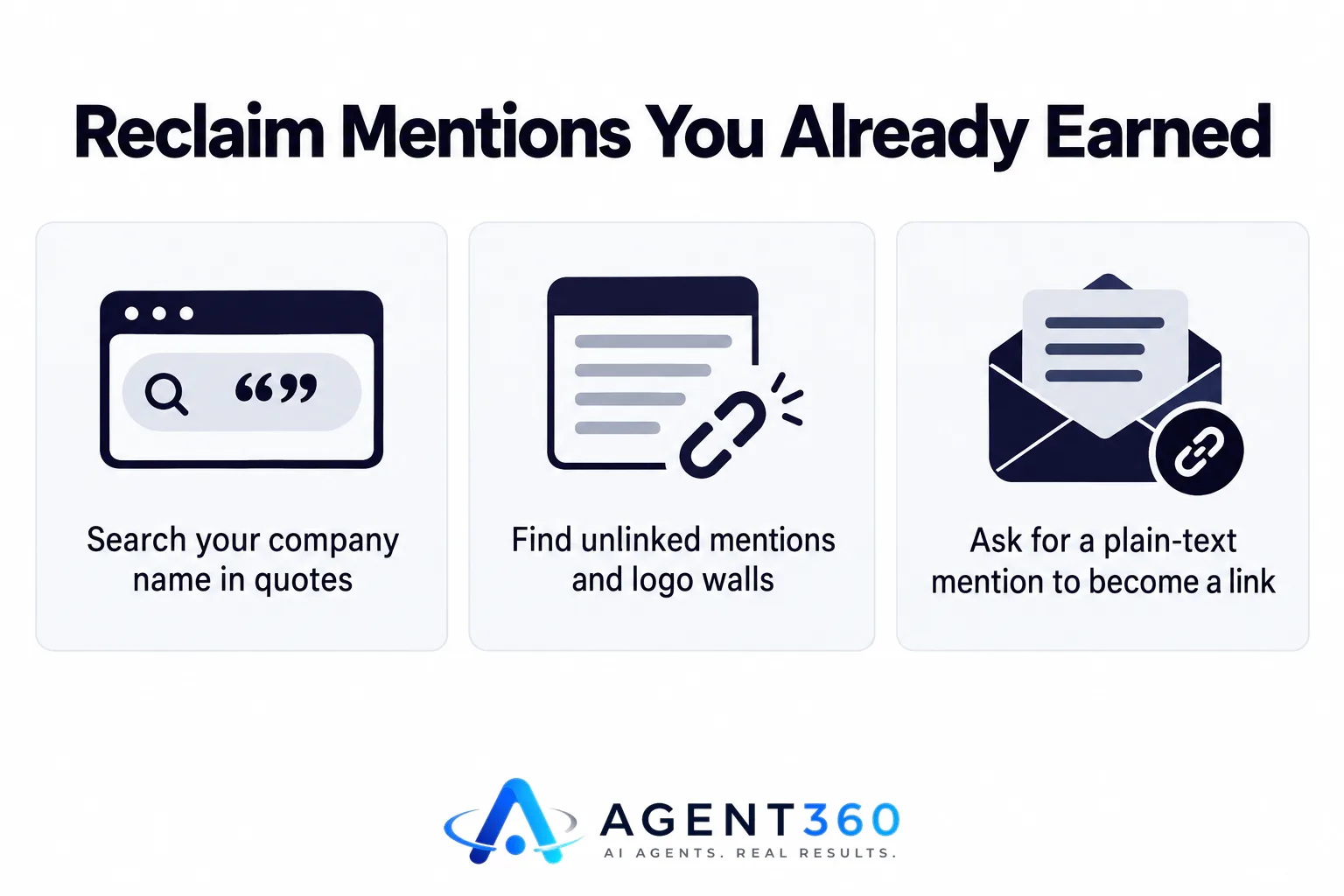
Do the same for your logo. If you sponsor anything, belong to any association, or have ever appeared on a partner's customer page, check whether your logo links back to you. A surprising number of “as seen on” logo walls forget the href.
Use the links your existing relationships already offer
Every vendor you pay has a customer page, a case study slot, or a directory of users — most will link to you if you ask, because a happy customer quote is marketing for them too. Every chamber of commerce, trade association, supplier and local business group you belong to probably has a members directory with a dead or missing link next to your name. None of this requires finding a stranger's email address. It just requires going down a list of people who already know who you are.
If you're a local business, that list is longer than it looks: your bank, your landlord, your insurance broker, your POS or booking software, any award or “best of” list you were ever named on. Checking who already links to competitors in your category — and who hasn't yet linked to you — is exactly the kind of gap a competitor gap check is built to surface, since it shows who holds the spots you don't.
Answer journalists instead of pitching them
Reactive PR platforms connect journalists who need a quote with people willing to give one — the journalist posts the question, you answer it, and if they use your quote you usually get a link. This flips outreach on its head. Instead of guessing what a writer wants and pitching cold, you're responding to something they've already said they need. It takes longer per link than a mass email blast, but the hit rate and the quality of the resulting link both beat it, because the writer chose you instead of being chased down.
Publish the thing that makes outreach unnecessary
Original data, a free calculator, a genuinely useful comparison — these get linked to because writers need something to cite, not because anyone asked them to. A page that answers “what does the average X cost” with real numbers from your own business, or a tool that saves someone five minutes, collects links passively over years in a way no email campaign matches. This is also the one category of link-earning content that overlaps directly with ranking and AI-answer work. A page built to be cited is the same page that shows up when someone asks ChatGPT or Google's AI Overview for a recommendation — the logic behind getting named in AI answers rather than just linked to in search results.

How to get backlinks without paying
Paying for links — through guest-post marketplaces, “sponsored content” that's really a link swap, or private blog networks — breaks Google's guidelines, and the risk isn't priced evenly. A cheap link rarely moves rankings, and a detected pattern of paid links can suppress the pages you cared about. The methods above cost time, not money, and the links that come out of them tend to land on pages that already rank for something, which is most of why they carry weight in the first place. If you want a shortcut that isn't paying for links, it's picking the three or four relationship-based sources above and working through them methodically, rather than renting links by the dozen.
Where this fits with the rest of your SEO work
Backlinks only compound a page that's already worth linking to — they don't fix a thin one. SearchAgent doesn't build or buy links; its agents track your Google rankings and AI answer mentions, then write and publish the comparison pages, data pages and FAQ-style content that give link-earning something to work with. The content plan turns the searches you're losing into page ideas, and plans start at $297 a month, month to month, with no setup fee.
How to get backlinks without paying?
Reclaim unlinked mentions of your brand, ask existing partners and vendors to link from pages they already control, answer reactive journalist queries instead of pitching cold, and publish original data or tools that get cited on their own. None of it requires a payment — just time spent on relationships and content you already have reason to build.
Is buying links against Google's rules?
Yes. Paid links that pass PageRank without a nofollow or sponsored tag violate Google's link scheme guidelines, and sites caught in a pattern of them can see affected pages drop out of rankings rather than rise.
How long do earned backlinks take to show up in rankings?
There's no fixed window. It depends on how fast the linking page gets crawled and how much authority it carries. Watching your Search Console rankings on the pages you've been building links to is really the only way to tell whether a given link moved anything at all.
More articles
- SEO Content Plan Template: The 9 Columns That Matter
- Competitor Keyword Gap Analysis: Find What You're Missing
- Google Search Console for Beginners: Where to Start
- Keyword Cannibalization Fix: Merge, Redirect, or Split
- Content Refresh SEO: What Actually Moves Rankings
- How Many Blog Posts a Week Does SEO Actually Need?
- SEO Agency Alternative: What Actually Replaces the Retainer
- SEO for Local Businesses: Win the Map, the List, and the Answer
