How to Get Your Firm Featured in Google's AI Overviews
Rank in the top handful of organic results for the question you want to own — that's the whole starting point for getting your firm into Google's AI Overview. The Overview is assembled from pages Google already trusts for that query. It isn't a separate directory you apply to, and there's no form to submit. If your page isn't on page one, it isn't in the pool the Overview draws from. Full stop.
That single fact explains most of the confusion firms run into. They treat the AI Overview as some new channel to chase, when it's really a reward for organic work done well — plus a few habits that make a page easy for a machine to lift.
How to get featured in Google's AI overview
Start with the mechanics. The Overview gets generated by summarizing content from pages already ranking for the query, and it favors pages that answer the question plainly near the top rather than ones that build up to it. A firm's “about our approach” page, written for a prospect who already called, rarely gets pulled. A page with an H2 that mirrors the actual question, followed by a 40 to 60 word direct answer, gets pulled far more often — the model can lift that paragraph almost as written.
Write the direct answer first. Expand with specifics, numbers, and named services after. Google's summarizer doesn't reward length. It rewards a clean, quotable claim it can trust.
Rank first, get cited second
Pages that already win a featured snippet or show up in “People also ask” boxes are disproportionately represented in Overviews, because Google has already decided those pages answer the question cleanly. Don't know which of your pages hold those positions today, or which competitor holds them instead? That's the gap to close before you write anything new — not after.
How do I get my company to show up on AI searches
Google's Overview is one surface. ChatGPT and Claude are a different problem entirely, because neither crawls your site fresh for every answer — they lean on training data and, increasingly, retrieval from a narrower set of sources. Getting named there has less to do with any single page's SEO score and more to do with how consistently your firm's name attaches to the specific claim, across your own site, comparison pages, and anywhere else your category gets discussed. One well-optimized page rarely moves this; a pattern of plainly stated mentions does. The mechanics differ enough by engine that it's worth reading what GEO actually means before you plan content for ChatGPT and Google as if they were the same audience.
Give the machine something to lift, not a brochure paragraph
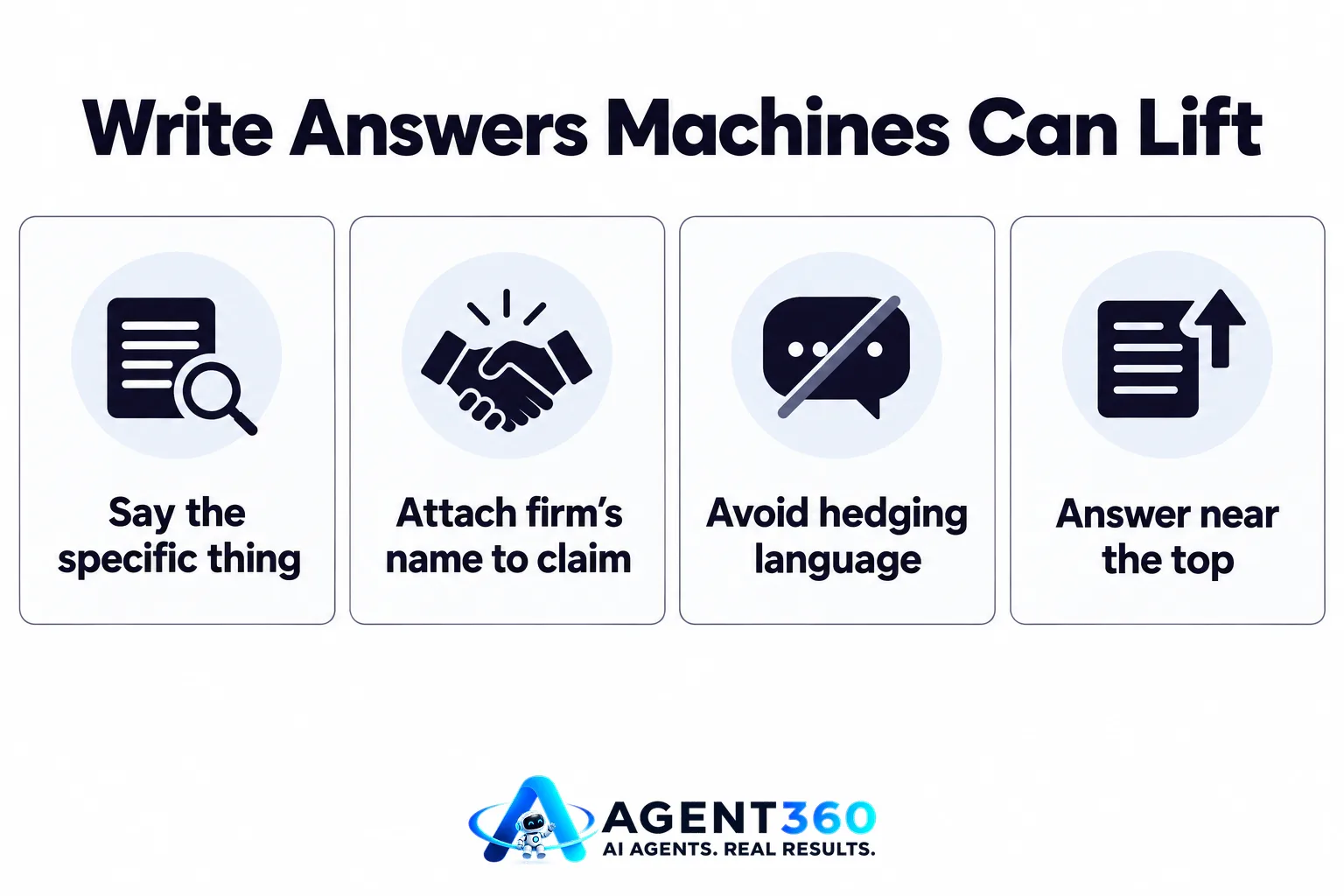
A paragraph buried in a hero banner, a PDF, or an image never gets quoted — nothing can read it. Neither does a sentence that hedges. “We strive to provide comprehensive solutions tailored to your needs” says nothing a summarizer can safely attribute to you. Say the specific thing: what you do, for whom, and what makes the claim true. Attach your firm's name to the claim in the same sentence, not two paragraphs later.
How to get your business featured on Google
Separate from the Overview, your basic Google presence still matters: a complete, accurate Business Profile if you have a physical office or serve a local area, consistent name-address-phone details across directories, and genuine reviews that mention the services you want to be known for. None of this gets you into an AI Overview by itself. But it's the floor everything else stands on, and plenty of firms still skip it.
Check your structured data before you chase content
FAQ markup, clear heading structure, and a working llms.txt file make it easier for crawlers — human-facing and AI-facing — to find and trust the answer you've written. None of it substitutes for the answer itself. But a well-written page with broken markup or blocked crawlers loses to a mediocre page that's easy to parse. Haven't looked at this yet? What llms.txt actually does is worth five minutes before you publish anything else.
Where SearchAgent fits
Checking whether your firm actually gets named in an Overview — not just whether you rank — is tedious to do by hand across dozens of questions on a schedule. SearchAgent's AI Visibility Agent asks the questions your buyers ask across ChatGPT, Claude and Google AI Overviews on a recurring schedule, records who got cited, and turns every miss into a page to write. Plans start at $297 a month, month to month, with no setup fee.

How do I get my company to appear in Google searches?
Appearing at all requires that Google can crawl and index your pages — check that nothing in your robots file or site settings blocks it — and that each page targets a specific question your buyers actually type, rather than a generic service name. Firms that publish one page per service and stop there usually plateau. Firms that answer the narrower questions underneath each service keep showing up for more searches over time.
Does this work for Perplexity or Gemini too?
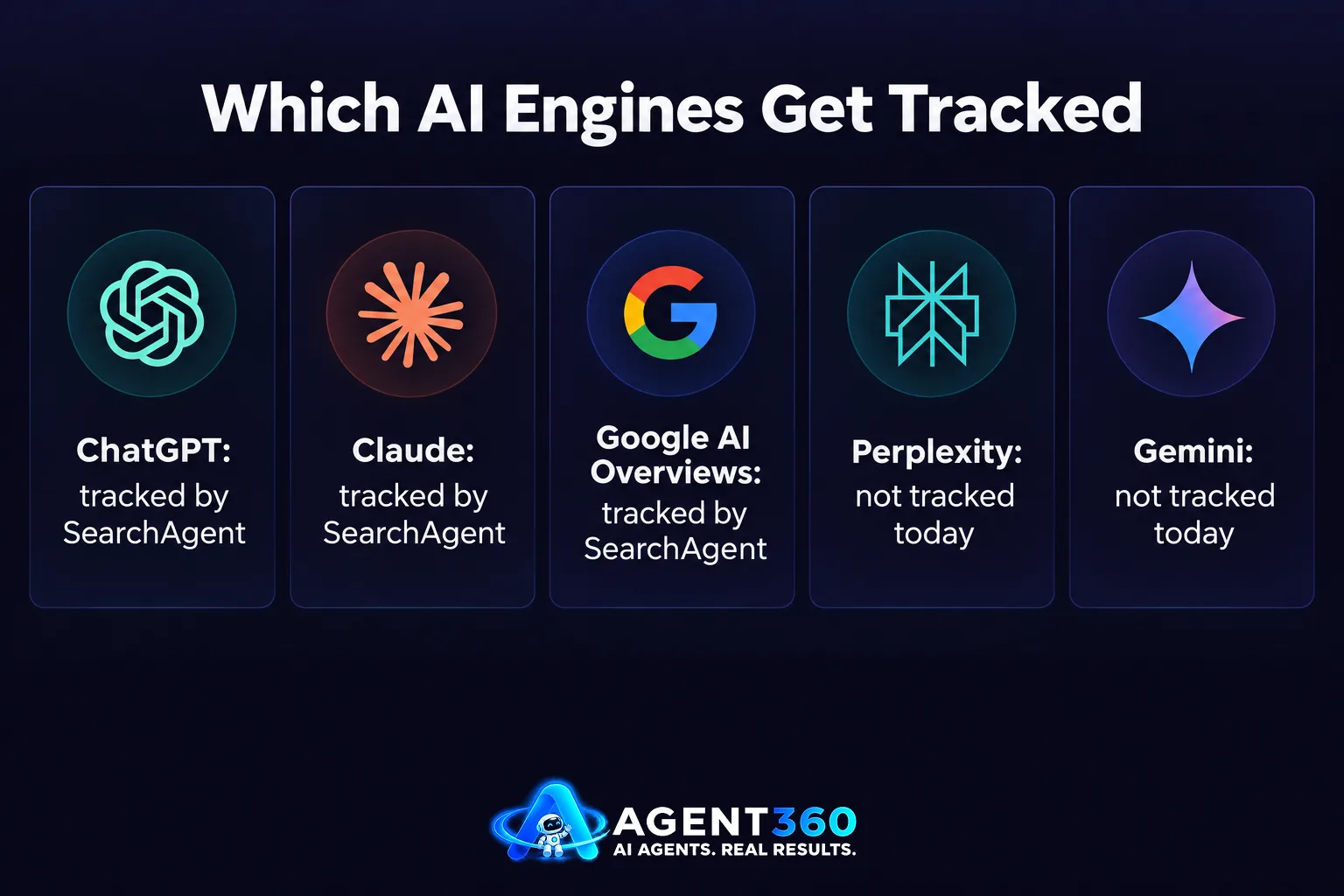
The core habits — a direct answer near the top, consistent naming of your firm, clean structured data — help across any engine that summarizes the web, including ones not widely tracked yet. But if you need to measure results specifically: most AI visibility tools, including SearchAgent, track ChatGPT, Claude and Google AI Overviews rather than Perplexity or Gemini. Treat those two as a byproduct of good habits, not a channel you can verify directly today.
More articles
- Set Posts Per Week From Your Gap List, Not a Calendar
- GEO Tools: Buy the Fix, Not Another Dashboard
- SEO Reporting for Small Business: One Page, Five Numbers
- AI Overview Search Visibility: Check It, Then Fix It
- How to Appear in AI Overviews (and Why You Can't Opt In)
- Keyword Cannibalization at Enterprise Scale: The Real Fix
- How to Get Into Google's AI Overview, Really
- Hur du rankar i ChatGPT (och vad det egentligen betyder)
